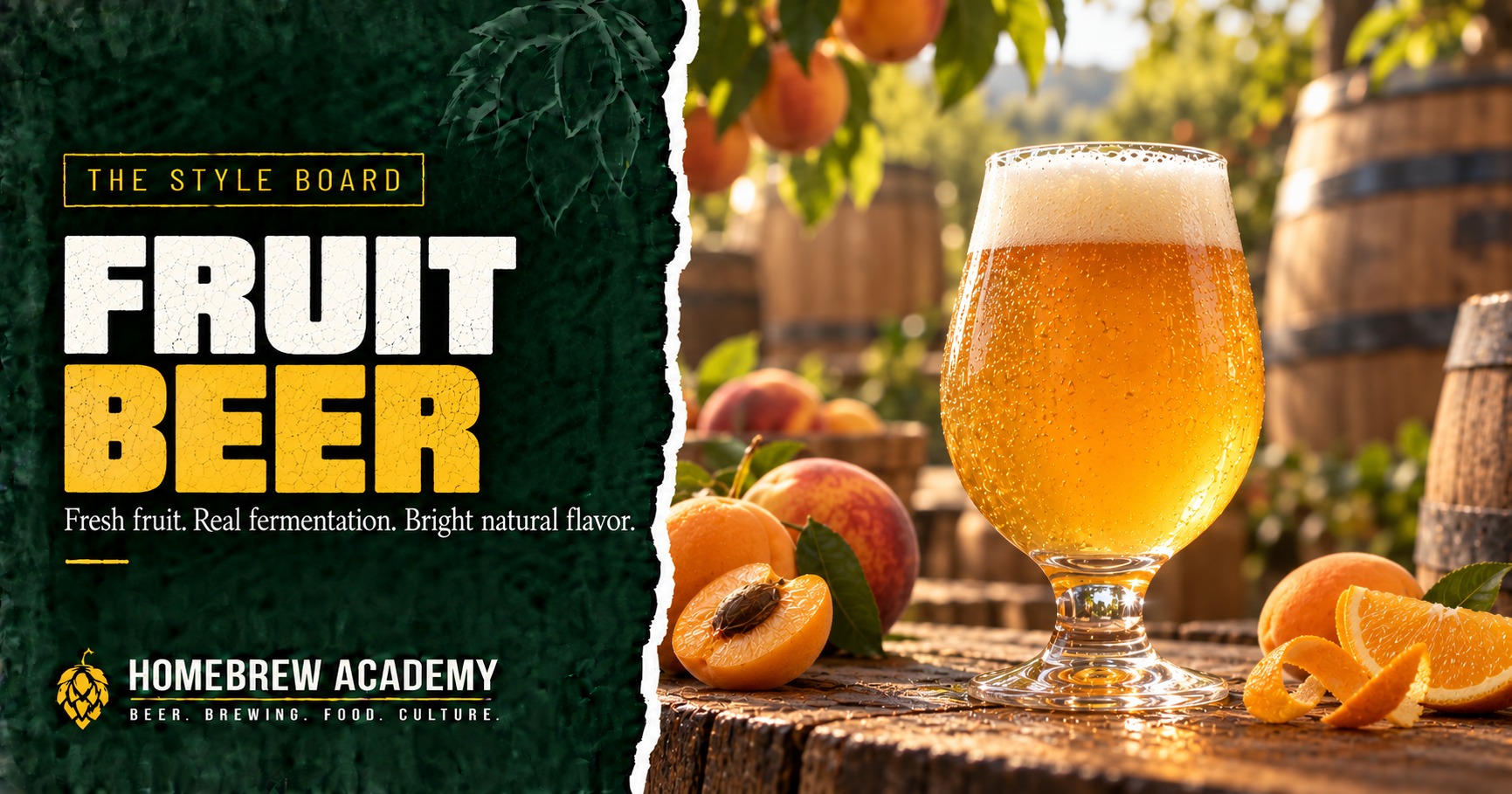
Fruit Beer Family: 10-Beer Comparison Flight and Style Guide
Fruit beer works when the fruit and the underlying beer make each other easier to understand. Cherry can sharpen dark malt, raspberry can brighten wheat, grapefruit can amplify hops, and tropical fruit can reshape a sour ale. The goal is integration, not simply the largest possible fruit addition.
This category separates into three useful lanes. Classic fruit beer pairs fruit with a recognizable base. Fruit and spice beer gives both fruit and another seasoning a meaningful role. Specialty fruit beer adds a second category-defining idea such as wild fermentation, salt, unusual grain, barrel aging, or a hybrid base.
The Three Fruit Beer Styles in This Category
Fruit Beer
Classic fruit beer keeps the fruit and base style clearly recognizable. Raspberry wheat beer should still taste like wheat beer; cherry brown ale should retain malt structure; grapefruit IPA should remain an IPA. Sweetness is optional because fermentation can leave fruit character dry, tart, or vinous.
Fruit and Spice Beer
Fruit and spice beer combines fruit with herbs, chile, citrus peel, coriander, vanilla, cinnamon, or another culinary ingredient. Neither addition should feel accidental. The base beer, fruit, and seasoning must form one flavor direction rather than three competing layers.
Specialty Fruit Beer
Specialty fruit beer joins fruit to another defining fermentation or brewing feature. Wild cultures, salt, smoked malt, unusual fermentables, barrel aging, or style hybrids can all qualify. The specialty element should be strong enough that calling the beer only “fruit beer” would leave out an essential part of its identity.
What fruit changes in beer
Fruit contributes fermentable sugar, water, acid, tannin, color, aroma, pectin, and sometimes microorganisms. Yeast may consume nearly all of the fruit sugar, which is why a beer can smell intensely of ripe fruit yet finish dry. Skin, seeds, and pulp influence bitterness, texture, and clarity.
Timing changes the result. Fruit in primary fermentation loses more fresh aroma but integrates deeply. Secondary additions retain more recognizable fruit. Post-fermentation concentrate offers precision but can taste detached when used carelessly. Oxygen control matters at every stage because fruit aroma oxidizes quickly.
Ten Fruit Beer Family references and comparisons
Ten selections map recognizable fruit beer, prepared beer mixtures, fruit and culinary seasoning, and specialty sour or wild fermentation. Stiegl Radler retains its beer-and-soda identity. Cherry Berlin mixtures and fruit lambics are clearly distinguished from clean fruit ale; no bottle is relabeled simply to force a competition category.
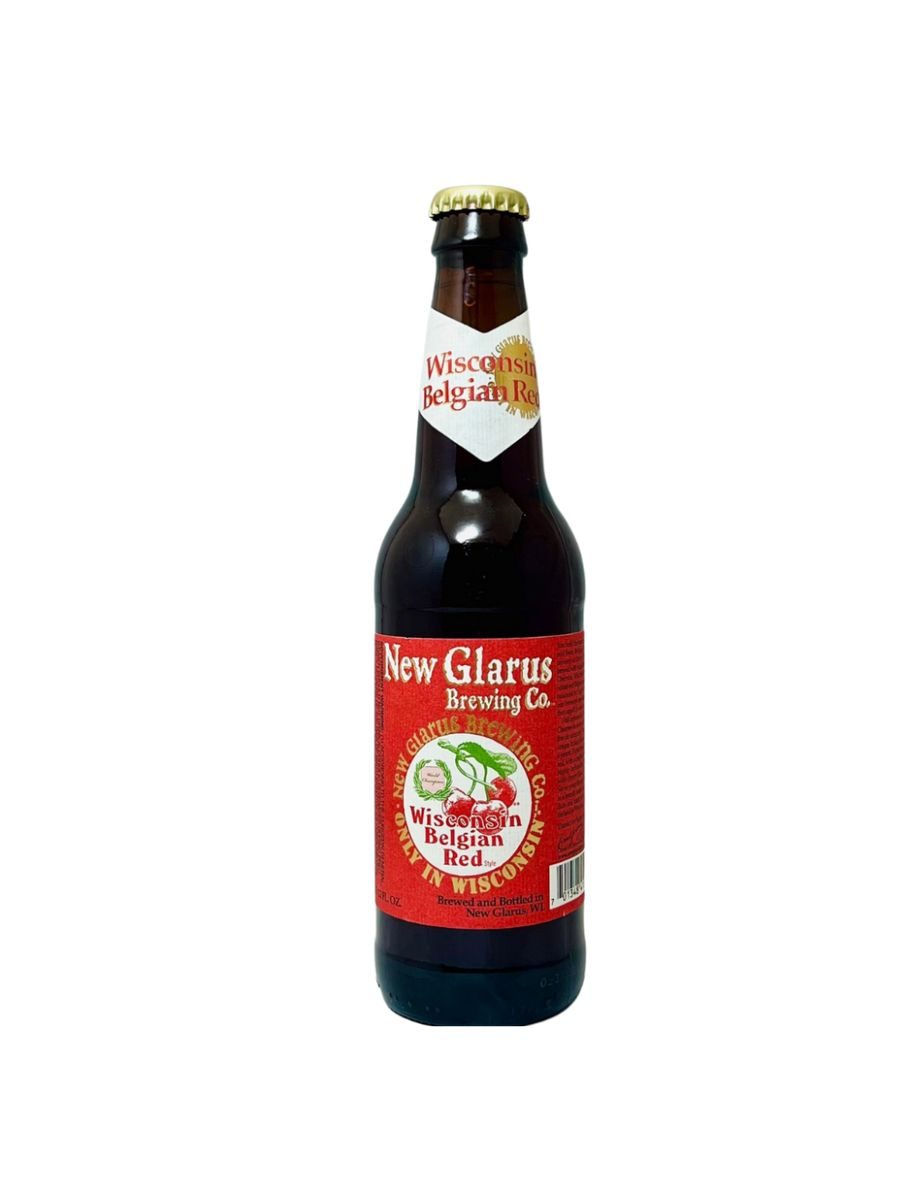
Wisconsin Belgian Red
Brewed by New Glarus Brewing Company
Concentrated cherry with a rounded sweet-tart malt foundation.
BAR NOTES
Wisconsin Belgian Red uses whole Montmorency cherries with Wisconsin wheat and Belgian roasted barley. New Glarus describes oak-vat aging and hops aged for a year; this Wisconsin fruit beer is not claimed to be a spontaneously fermented Belgian lambic.
Concentrated fruit does not make the base irrelevant. Look for cherry skin, rounded malt and the way carbonation lifts sweetness; Wisconsin-only distribution also matters when planning a comparison rather than assuming national availability. Cherry fruit beer helps frame that comparison.

Rübæus
Brewed by Founders Brewing Co.
Ripe raspberry balances tart fruit and malt sweetness.
BAR NOTES
Founders lists standard Rübæus at 5.7% and 15 IBU, emphasizing fresh raspberry with both sweet and tart impressions. This selection is the regular packaged raspberry ale, distinguished from the separately served nitrogen version in the brewery’s taproom.
Raspberry aroma and residual sweetness answer different questions. Pair this straightforward fruit ale with a dry raspberry wild beer, then compare body and finish before crediting oak or fermentation for flavors that came from the fruit. Raspberry comparisons helps frame that comparison.

Stiegl Radler Grapefruit
Brewed by Stiegl
Grapefruit refreshment illustrates blending rather than fruit fermentation.
BAR NOTES
Stiegl’s Grapefruit Radler blends forty percent lager with sixty percent grapefruit soda at 2.0%. It is a beer mixture used here as a proportion comparison, not a claim that fruit fermented into the base lager.
Use the Radler to demonstrate how a post-fermentation blend lowers strength and changes texture. Its soda component makes a useful comparison with fermented fruit, but it should retain its mixture identity throughout the flight. Beer blending helps frame that comparison.

Kirsch Weisse
Brewed by Lemke Berlin
Tart cherry, pink foam and a marzipan-like fruit impression.
BAR NOTES
Lemke’s Kirsch Weisse is the 4.0% cherry beer made with real cherries and Brettanomyces in traditional mixed fermentation. It is a separate selection from the brewery’s newer sweet-sour cherry beer mixture at 3.0%.
Real cherries and a mixed-culture Berlin base introduce fermentation as another variable. Compare this four-percent Kirsch Weisse with Lemke’s separate three-percent sweet-sour mixture; similar names conceal different ingredients, strength and intended balance. Berliner Weisse foundations helps frame that comparison.

Duchesse Cherry
Brewed by Verhaeghe
Real cherry fruit enriches the oak-aged red foundation.
BAR NOTES
Duchesse Cherry is currently specified at 6.8%, using real Belgian cherries from the Sint-Truiden region. Verhaeghe explicitly distinguishes its mixed-fermentation Flanders red base from the lambic base associated with traditional Belgian kriek.
Cherry can reinforce an already fruity fermented base. The Flanders red foundation brings a different balance from lambic, so identify malt and acidity before judging whether the extra fruit dominates or integrates. Flanders Red structure helps frame that comparison.

Key Lime Pie Gose
Brewed by Westbrook Brewing Co.
Tart lime, dessert-like spice and a salted wheat foundation.
BAR NOTES
Westbrook’s standard Key Lime Pie Gose is listed at 4.0%, combining key lime with cinnamon, vanilla, coriander and its salted sour wheat foundation. The producer lists February–May availability. It is distinct from Key Lime Pi, the separate stronger pastry release named for the mathematical constant.
Lime alone would tell only part of this beer’s story. Cinnamon and vanilla create the dessert association, while salt and wheat support it; compare aroma with actual sweetness instead of treating pie-like fragrance as sugar. Fruit and spice choices helps frame that comparison.

SeaQuench Ale
Brewed by Dogfish Head Craft Brewery
Bright lime and salt meet a crisp blended sour foundation.
BAR NOTES
Dogfish Head describes SeaQuench as a sequential mash-up of Kölsch, Gose and Berliner Weisse brewed with black limes, sour lime juice and sea salt. At 4.9%, its specialty identity involves the hybrid base and salt as well as citrus.
This low-strength hybrid shows that specialty fruit beer need not be a strong cellar bottle. Lime, salt and a deliberately combined base matter together; serving with seafood is a useful test of its refreshing balance. Specialty fruit beer helps frame that comparison.

Duchesse Cherry Chocolate
Brewed by Verhaeghe
Cherry and chocolate add two specialty variables to the red base.
BAR NOTES
The selected Duchesse Cherry Chocolate is 6.8%, with whole sour cherries and natural chocolate aroma. The brewery describes two hundred grams of cherries per liter and oak maturation, identifying a flavored specialty rather than plain Flanders Red.
The chocolate aroma adds a second expressive ingredient to cherry and a wood-matured red base. Compare with the cherry-only version to hear the added note clearly, keeping fermentation fruit separate from declared real cherries. Chocolate beer comparisons helps frame that comparison.

Coolship Red
Brewed by Allagash Brewing Company
Fruit joins years of oak-barrel fermentation.
BAR NOTES
Allagash’s current Coolship Red is 5.6%, brewed with Pilsner malt, 40% raw wheat and aged hops. After more than two years of spontaneous fermentation and French-oak aging, raspberries are added for another four to five months before packaging.
Raspberry sits over a spontaneous fermentation rather than a simple clean ale. Age and fruit maceration change the balance, so compare with Rübæus at similar temperatures and identify acidity and dryness before measuring fruit intensity. Wild fruit fermentation helps frame that comparison.

Consecration
Brewed by Russian River Brewing Company
Dark malt, black currants and Cabernet barrels.
BAR NOTES
Consecration combines a dark malt base with black currants, Brettanomyces and bacteria in used Cabernet Sauvignon barrels. Russian River lists 10% alcohol and natural bottle refermentation, with fruit, chocolate, tobacco and subtle oak in its full-bodied sour profile.
Blackcurrants accompany Cabernet-barrel maturation and mixed organisms in this strong dark beer. Use a smaller pour near the end of the flight, where oak, tannin and alcohol will not overwhelm the delicate fruit selections. Mixed-culture maturation helps frame that comparison.
How to taste fruit beer
Begin with low-acid, straightforward fruit beer, then move toward spice, sourness, wild fermentation, and barrel strength. Compare aroma with sweetness: they are not the same thing. Also notice whether the fruit supports the base beer or erases it.
Fresh fruit aroma is often fragile, so check packaging dates and store the beer cold unless the producer recommends cellaring. Strong, acidic, or mixed-fermentation fruit beer may develop for years; delicate citrus and hop-fruit combinations usually reward freshness.
Keep exploring beer through fruit
Fruit can brighten wheat beer, deepen a dark ale, ferment bone-dry in a wild beer, or share the glass with spice and specialty ingredients. Follow the category from straightforward fruit expression to its most creative edges.