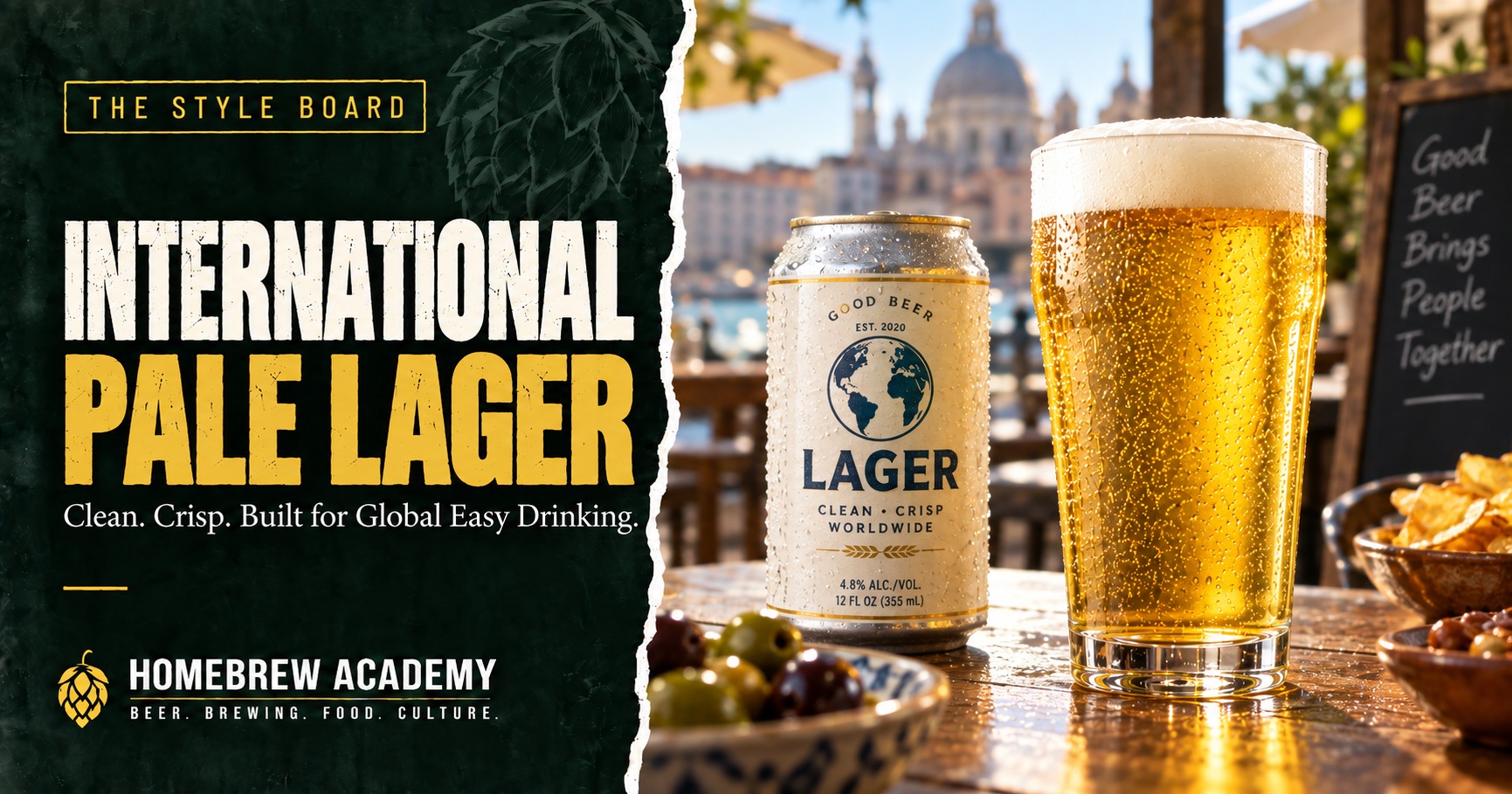
International Pale Lager: Top 10 Current Beers and Style Guide

THE CLEAN GLOBAL LAGER

International Pale Lager is a crisp, highly attenuated lager with restrained grain, measured bitterness and enough carbonation to make the finish feel brisk.

It is the familiar premium lager shape found across many countries, but the style is not defined by one nation or brand. The best examples balance quiet malt and hops without strong flavors.

The quick answer

Expect pale straw to gold color, very clear beer, high carbonation and a dry finish. Malt may suggest grain, crackers or faint corn, while hops can add light floral, spicy or herbal notes.

MeasureBJCP range
Original gravity1.042–1.050
Final gravity1.008–1.012
Bitterness18–25 IBU
Color2–6
Alcohol4.5–6.0%

What International Pale Lager tastes like

Aroma begins low: clean fermentation, pale grain and perhaps a touch of corny sweetness. Hop aroma can range from nearly absent to moderately noticeable, but it should remain floral, spicy or herbal rather than tropical and saturated.

The palate is more balanced than American Lager. Bitterness reaches 18–25 IBU, enough to sharpen the finish without turning the beer into Pilsner. Carbonation can add a light bite, and the body stays light to medium.

Top 10 current International Pale Lager references

These HBA editorial picks compare restrained grain, clean fermentation and finishing dryness across current international pale lagers. This is a style-learning board, not a blind-tasting result. Specifications follow the market identified in each card; current production does not guarantee local stock.

Heineken Original
#1 in this roundup
Beer profile

Heineken Original

Brewed by Heineken

StyleDutch Pale Lager
ABV5.0%
Style signalBalanced export lager
Brewed inZoeterwoude, Netherlands

Pale grain, light bread, grass and a clean bitter snap make a familiar international reference.

BAR NOTES

Heineken sits near the recognizable center of international pale lager: pale grain, modest herbal bitterness and a clean finish with enough body to feel more substantial than American light lager.

Choose a can or a freshly handled bottle when possible. The famous skunky note associated with green glass is light damage, not a required flavor and not evidence of hop variety. Soft malt and clean fermentation also make the helles roundup a useful comparison, although Bavarian helles has its own balance and competition boundaries.

Asahi Super Dry
#2 in this roundup
Beer profile

Asahi Super Dry

Brewed by Asahi Breweries

StyleJapanese Dry Lager
ABV5.0%
Style signalExtra-dry finish
Brewed inJapan

Brisk carbonation and a famously dry finish show the leaner end of international pale lager.

BAR NOTES

Asahi’s “dry” identity points to attenuation rather than high bitterness. The middle of the sip is lean, and brisk carbonation clears the palate almost immediately.

That fast finish works especially well with fried food, sushi and salty snacks. It is also a useful calibration beer for detecting residual sweetness in other pale lagers. Compare the American lager board to hear how other pale lagers balance restrained grain, carbonation and finishing dryness without relying on the word dry in their branding.

Corona Extra
#3 in this roundup
Beer profile

Corona Extra

Brewed by Grupo Modelo

StyleMexican Pale Lager
ABV4.6%
Style signalLight, dry refresher
Brewed inMexico City, Mexico

Very pale malt, restrained sweetness and brisk carbonation form a globally familiar warm-weather lager.

BAR NOTES

Corona Extra demonstrates the lighter, softer side of the category. Its pale grain and faint sweetness stay restrained, while high carbonation supplies most of the snap.

Lime changes both aroma and perceived bitterness, so taste the beer plain first if you are studying the style. Clear glass also makes careful storage particularly important. The Mexican lager selections extend that comparison into pale and Vienna-descended amber beers, making recipe and color more useful than a shared country label.

Birra Moretti L'Autentica
#4 in this roundup
Beer profile

Birra Moretti L'Autentica

Brewed by Birra Moretti

StyleItalian Pale Lager
ABV4.6%
Style signalSoft malt balance
Brewed inItaly

Soft grain, light honey, herbal hops and gentle bitterness favor balance over intensity.

BAR NOTES

Birra Moretti keeps the format gentle but not blank. Light honeyed malt and herbal hops give the beer enough shape to work naturally with pizza, cured meat and tomato-based dishes.

The balance is the lesson: neither malt nor bitterness takes over. Let it warm a few degrees above refrigerator temperature and the soft grain character becomes easier to find. For a more aromatic hop contrast, try the Italian pilsner selections after this softer lager; the country of origin does not make the styles identical.

Red Stripe
#5 in this roundup
Beer profile

Red Stripe

Brewed by Desnoes & Geddes

StyleJamaican Pale Lager
ABV4.7%
Style signalLight fruity edge
Brewed inJamaica

Light grain, soft fruit and gentle bitterness finish crisp in the unmistakable stubby bottle.

BAR NOTES

Red Stripe adds a mild fruity edge without losing the clean, dry lager frame. That small fermentation accent makes it recognizable while keeping the overall intensity low.

Its light body and gentle bitterness suit jerk chicken, fried fish and grilled food. Serve it cold, but not frozen, or the quiet grain and fruit disappear completely. Use the blonde-ale board as a fermentation comparison when you want another approachable golden beer with a different tradition and a potentially more expressive yeast profile.

Sapporo Premium
#6 in this roundup
Beer profile

Sapporo Premium

Brewed by Sapporo Breweries

StyleInternational Pale Lager
ABV4.9%
Style signalClean lager fermentation
Brewed inSapporo, Japan (brand origin)

A crisp Japanese-origin lager that makes finish and malt restraint easy to compare.

BAR NOTES

Sapporo publishes 4.9% ABV for Premium in the U.S. market. Its restrained malt and crisp finish give this board another Japanese reference alongside Asahi, without suggesting that the two breweries use identical recipes or production methods.

The Japanese origin identifies the brand, rather than every brewing location: Sapporo lists U.S., Canadian and Vietnamese production for U.S. products. Compare fresh packages with the American lager selections to separate fermentation style from a beer’s country of origin.

Peroni Nastro Azzurro
#7 in this roundup
Beer profile

Peroni Nastro Azzurro

Brewed by Birra Peroni

StyleInternational Pale Lager
ABV5.0%
Reference marketUK bottle · 5.0%
Brewed inRome, Italy (brewery origin)

A bright Italian pale-lager reference; this card follows the current 5.0% UK retail version.

BAR NOTES

Peroni Nastro Azzurro brings another Italian reference after Moretti, with pale grain and a brisk finish. This card follows the current 5.0% UK bottle listing; the brewery’s international page also lists a 5.1% version, so check the market and label.

Regular Nastro Azzurro and the separate zero-alcohol extension should not be treated as interchangeable products. Use the Italian pilsner roundup for a contrasting flight with more deliberate hop aroma, rather than assuming every Italian pale lager belongs to that dry-hopped specialty.

Carlsberg Danish Pilsner
#8 in this roundup
Beer profile

Carlsberg Danish Pilsner

Brewed by Carlsberg

StyleInternational Pale Lager
ABV5.0%
Reference marketInternational version · 5.0%
Brewed inCopenhagen, Denmark (brand origin)

The 5.0% international version supplies a Danish export-lager comparison.

BAR NOTES

Carlsberg’s international product page lists Danish Pilsner at 5.0% ABV, with restrained malt sweetness and a crisp hop finish. That specific version is the reference here; the substantially lower-strength UK recipe has a different alcohol specification.

The word Pilsner on the label does not make every export lager a German or Czech competition template. Compare the pilsner board when you want to study more pronounced hop structure, and judge bitterness separately from alcohol strength.

Tsingtao Classic Lager
#9 in this roundup
Beer profile

Tsingtao Classic Lager

Brewed by Tsingtao Brewery

StyleInternational Pale Lager
ABV4.7%
Style signalClean lager fermentation
Brewed inQingdao, China

A Chinese flagship with a modest malt impression and a refreshing lager finish.

BAR NOTES

Tsingtao’s current export portfolio lists Classic Lager at 4.7% ABV and describes a crisp, refreshing beer with malt aroma. It belongs here as the regular flagship, rather than the separate wheat, strong or alcohol-free products sold under the brand.

Qingdao’s brewing history explains the European influence, but today’s product should still be judged by its own balance. Compare it with the Czech lager selections to hear the difference between quiet export-lager refreshment and a more pronounced malt-and-hop conversation.

Singha
#10 in this roundup
Beer profile

Singha

Brewed by Boon Rawd Brewery

StyleInternational Pale Lager
ABV5.0%
Style signalClean lager fermentation
Brewed inBangkok, Thailand

An all-barley-malt Thai lager with a fuller grain impression than the leanest pours.

BAR NOTES

Singha’s current product page lists 5.0% ABV for the regular lager. Its barley-malt identity adds a useful recipe contrast to beers using adjunct grains, while the overall purpose remains refreshment rather than strong malt, fruit or heavy roast.

Put Singha alongside the leaner pale pours before introducing amber lager, so color does not become your shortcut for body. The helles selections offer another comparison built around soft grain and clean fermentation, with a different Bavarian brewing brief.

How the style is brewed

The base may use two-row or six-row barley. Rice, corn or sugar can appear as adjuncts, although many commercial versions are all malt. The target is attenuation and balance, not a strong ingredient signature.

Cool fermentation, healthy yeast and patient conditioning create the clean profile. Oxygen control after fermentation matters because papery oxidation and dull sweetness are obvious in a beer with so little flavor camouflage.

Where the style came from

The style developed along two related paths: premium versions of American lager and more accessible interpretations of European Pilsner-type beer. Large breweries then exported the formula widely.

Regional versions can differ, but the shared idea is remarkably durable—pale, polished lager that can be served cold, paired broadly and understood without explanation.

Serving and food pairing

Serve at roughly 38–43°F in a narrow tumbler, pilsner glass or simple pint. A clean glass preserves the white head and lets high carbonation do its work.

The style is unusually flexible with food: fried seafood, pizza, tacos, grilled chicken, sushi and salty snacks all benefit from the dry finish and restrained bitterness.

How it differs from nearby styles

Compared with American Lager, it generally has more body, bitterness and flavor. Compared with German Pils, it is less bitter and less hop-driven. Czech Premium Pale Lager carries more malt richness and hop depth.

A Munich Helles can overlap at the fuller end, but Helles normally presents a rounder, more distinct malt character. International Pale Lager is usually drier, more neutral and sometimes more adjunct-like.

International Pale Lager FAQ

Is skunky aroma part of International Pale Lager?

No. Skunkiness is caused by light exposure, especially in clear or green bottles. It is a handling fault rather than a style characteristic.

Can International Pale Lager use corn or rice?

Yes. Rice, corn or sugar may be used, although many examples are all malt. Adjuncts should support a clean, dry profile rather than dominate the flavor.

Is International Pale Lager the same as Pilsner?

No. It is usually less bitter and less hop-forward than German Pils, and less malt-rich and characterful than Czech Premium Pale Lager.

Why does the beer finish so dry?

High attenuation leaves relatively little residual sugar, while firm carbonation and moderate bitterness reinforce the crisp impression.

What glass works best?

A pilsner glass highlights clarity and carbonation, but a clean tumbler or pint glass also serves the style well.

Style ranges and definitions follow the BJCP 2021 Beer Style Guidelines.

KEEP THE FLIGHT GOING

Take crisp lager in a new direction.

Keep the clean finish, then compare softer malt, firmer hops and the full pale-to-dark family.