Kentucky Common: 10-Beer Comparison Flight and Style Guide
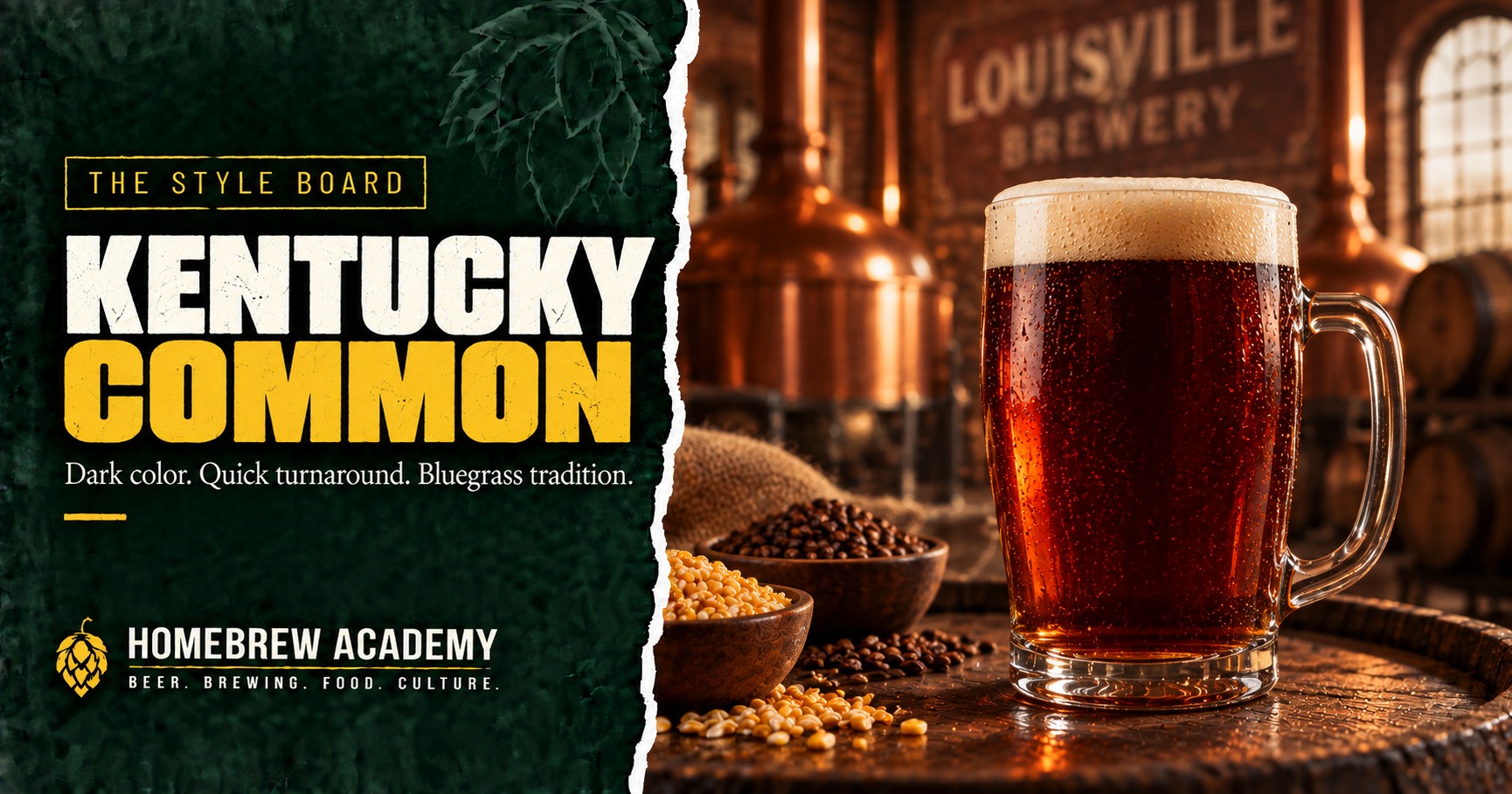
Kentucky Common was built for speed, price, and refreshment. It was a dark, modest-strength ale brewed around Louisville, sold young, and consumed close to where it was made. Think toasted grain and light caramel in a quick, dry pint—not a small porter and not automatically a sour beer.
Its appeal is practical. A little color and flavor from darker malt meets a highly drinkable base that often included corn and six-row barley. The beer should feel complete without becoming heavy.
Kentucky Common at a glance
| Original gravity | 1.044–1.055 |
|---|---|
| Final gravity | 1.010–1.018 |
| Bitterness | 15–30 IBU |
| Color | 11–20 SRM |
| Alcohol | 4.0–5.5% ABV |
What it tastes like
Expect light toast, grain, caramel, and perhaps a restrained cocoa or dark-bread note. Hop bitterness is supportive and the fermentation profile is generally clean, sometimes with a soft fruitiness. The body lands around medium-light, and the finish should invite another swallow.
Historical discussions sometimes cast the style as tart because breweries used pitched wooden vessels and sold it quickly. Evidence for deliberate sourness is weak. A modern interpretation may have a faint tang, but pronounced lactic acidity pushes the beer away from its everyday saloon character.
Why Louisville made this beer
Before national lager brands dominated American drinking, local breweries supplied beers suited to local ingredients and distribution. Louisville had a large German-American brewing community, access to corn, and a dense saloon trade. Kentucky Common could be fermented, conditioned, and sold on a short schedule.
Prohibition broke that ecosystem. Breweries closed, consumer habits changed, and the style did not return as a mass-market category. Its modern revival owes much to brewing historians and homebrewers piecing together records rather than to an unbroken commercial lineage.
Ten Kentucky Common references and comparisons
The Colonel is the named packaged Kentucky Common revival. Nine neighboring beers compare amber lager, blonde ale, California Common, alt-style ale, American Amber, Dark Mild, Kölsch and a richer amber lager. They are not claimed as nine additional Kentucky Commons. The commercial Colonel ingredient list is reported as published rather than assigned corn from a generic historical recipe.
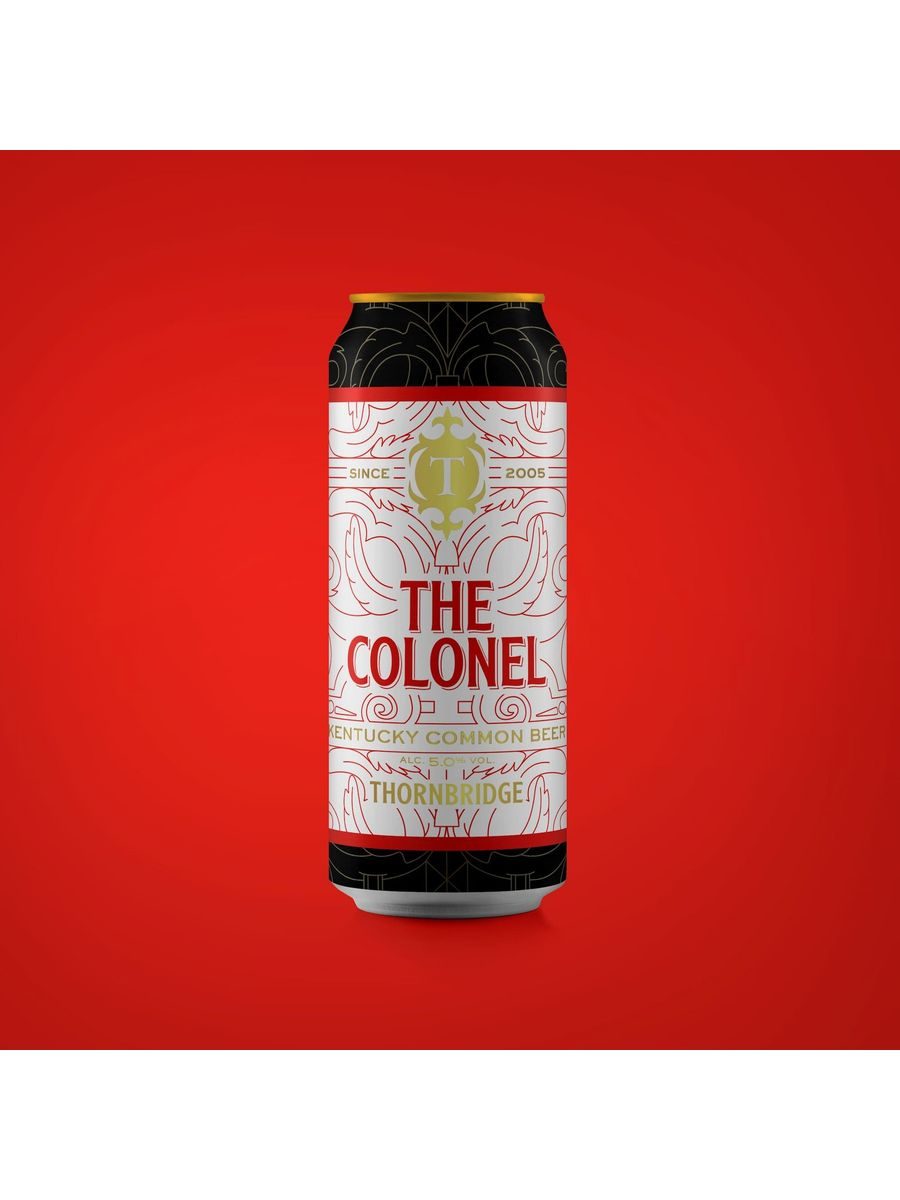
The Colonel
Brewed by Thornbridge Brewery
A named revival with a declared malt-and-hop recipe.
BAR NOTES
Thornbridge lists The Colonel as a 5% Kentucky Common in a 440 ml can. Low Colour Maris Otter, Munich and Crystal T50 malts accompany Crystal and Cluster hops; the published commercial recipe does not declare corn.
Begin with the named Kentucky Common and note toast, caramel and hop balance without assuming an undocumented corn ingredient. Kentucky Common brewing describes the historical recipe framework; the actual commercial malt list remains the evidence for this particular revival.

Yuengling Traditional Lager
Brewed by D. G. Yuengling & Son
An amber American lager, distinct from pale historical lager.
BAR NOTES
Yuengling Traditional Lager is a 4.5% amber lager with 12 IBU and Cascade and Cluster hops. Its modern revival dates to 1987 and draws on a nineteenth-century recipe; that history does not make the amber beer a pale Pre-Prohibition Lager template.
The amber lager is a fermentation comparison, not a Kentucky Common ale. Taste the shared modest-strength malt balance, then use American historical lager context to distinguish nineteenth-century inspiration from proof that two modern beers follow the same brewing tradition.

805 Original Blonde Ale
Brewed by Firestone Walker
Light malt and measured hops establish the softer side of the family.
BAR NOTES
The current 805 Original is a 4.7% blonde ale with a listed 15 IBU. Introduced in 2012, it remains brewed and packaged on California’s Central Coast; the Original should be distinguished from 805 Cerveza, flavored Cheladas and the alcohol-free version.
805 supplies a pale, restrained modern American ale control. Ask what changes when the amber malt layer is reduced, using American Blonde Ale to explain the clean-drinking comparison rather than treating a similar alcohol percentage as shared Kentucky identity.

Firemans #4
Brewed by Real Ale Brewing Company
Smooth malt with a zesty hop accent and a Texas cycling connection.
BAR NOTES
Real Ale currently specifies Firemans #4 at 5.1% and 23 IBU. Its name honors Firemans Texas Cruzer and the brewery’s fourth year-round beer, tying the blonde’s history to bicycles rather than a claim about firefighting or smoked ingredients.
Firemans #4 adds another blonde ale at nearly the Kentucky revival’s strength. Compare hop bitterness and malt weight before color, with the pale American ale family providing the neighboring style context; this commercial beer is not a historical Kentucky reconstruction.

33 Acres of Life
Brewed by 33 Acres Brewing Company
Toast, faint fruit and a crisp finish make the hybrid method clear.
BAR NOTES
33 Acres describes Life as an amber lager rooted in the California Common tradition. Its current 4.8% profile combines faint fruit, toasted malt and light caramel with sharp carbonation, while Northern Brewer contributes a restrained evergreen impression.
California Common provides a different American regional tradition built around an amber beer and lager yeast. California Common keeps that distinction visible while toasted malt, restrained fruit and carbonation provide concrete comparison points against the Kentucky ale.

Alaskan Amber
Brewed by Alaskan Brewing Company
A malt-led alt-style neighbor separates amber color from American hop balance.
BAR NOTES
Alaskan explicitly identifies Amber as an alt-style ale, with slow, relatively cool ale fermentation contributing to its smooth finish. Its current 5.3% and 18 IBU favor rich malt with enough hop backing to stay composed.
Alaskan Amber is an alt-style ale, a useful cool-fermentation comparison rather than a lager or Kentucky Common. American amber and brown beer offers the broader map; compare its rich malt and smooth finish with the lighter historical revival.

Full Sail Amber
Brewed by Full Sail Brewing Company
Pale, crystal and chocolate malt support a floral, spicy hop close.
BAR NOTES
Full Sail’s current Amber is a year-round 6.0% ale with 31 IBU. Pale, crystal and chocolate malts provide its sweet-seeming malt center, while Columbus and Cascade hops bring a spicy, floral finish that keeps the beer moving.
The stronger contemporary amber ale pushes caramel malt and American hop character beyond the central reference. American Amber Ale explains the neighboring balance; note whether strength and floral hops change the finish before attributing every difference to beer color.

Yards Brawler
Brewed by Yards Brewing Company
A year-round American English Mild with documented malt and restrained bitterness.
BAR NOTES
Yards explicitly brews Brawler in the style of an English Mild. Its current specifications list 4.2% alcohol, 12 IBU, crystal and amber malts, and roasted barley, with cans, bottles and draft in a year-round portfolio.
Brawler’s English Mild interpretation tests dark malt at moderate strength without claiming Kentucky ancestry. Dark Mild supplies the comparison: separate restrained bitterness and roasted-grain flavor from the toast-and-hop relationship in The Colonel rather than relying on the dark appearance.

Früh Kölsch
Brewed by Cölner Hofbräu Früh
A gentle Cologne reference for separating Blonde Ale from Kölsch.
BAR NOTES
Früh’s selected 4.8% Kölsch provides a deliberately neighboring German comparison. The brewery describes a pale, top-fermented beer with mild hop character and patient maturation; those shared clean-drinking qualities do not make Kölsch interchangeable with American Blonde Ale.
The Kölsch comparison isolates a pale, clean-drinking top-fermented beer with patient maturation. pale European beer context explains the neighboring tradition; the absence of the Kentucky revival’s amber malt layer is the useful lesson, not a claim of historical equivalence.

Great Lakes Eliot Ness
Brewed by Great Lakes Brewing Company
Munich and caramel malt define an amber lager comparison, not warm lager fermentation.
BAR NOTES
Great Lakes currently labels Eliot Ness an Amber Lager at 6.1%. Munich and caramel malt make it a richer commercial Vienna-style reference, above the usual California Common strength band, with its own lager identity kept explicit.
Eliot Ness is a richer amber lager and a higher-strength boundary comparison. Vienna Lager connects its malt character with the appropriate family, while fermentation and alcohol should remain separate observations when contrasting it with the Kentucky Common ale.
How to brew it
A base of six-row or pale malt with corn provides the right lean framework. Add enough caramel and dark malt for amber-brown to dark-brown color, but keep roast restrained. Cluster or another traditional American hop fits naturally, though any clean, woody-spicy variety can work.
Use a clean ale strain, oxygenate well, and ferment on the cool side of its range. The historical beer moved quickly, but speed came from an efficient brewery—not from serving unfinished beer. Package only after attenuation and cleanup are complete.
How to serve it
A nonic pint or simple mug suits the style. Serve cool, not numbingly cold, with fried chicken, a hot brown, smoked pork, beans, or sharp cheddar. Its combination of toast, modest bitterness, and low weight handles rich food without adding more richness.
Kentucky Common is most convincing when it feels ordinary in the best sense: flavorful, affordable in spirit, and easy to finish.
Keep digging through beer history
These revived styles trace old regional ingredients, industrial change, local drinking culture, and brewing methods that nearly disappeared. Follow the family from salty wheat beer to smoked rye, American saloon lager, and juniper-filtered farmhouse ale.