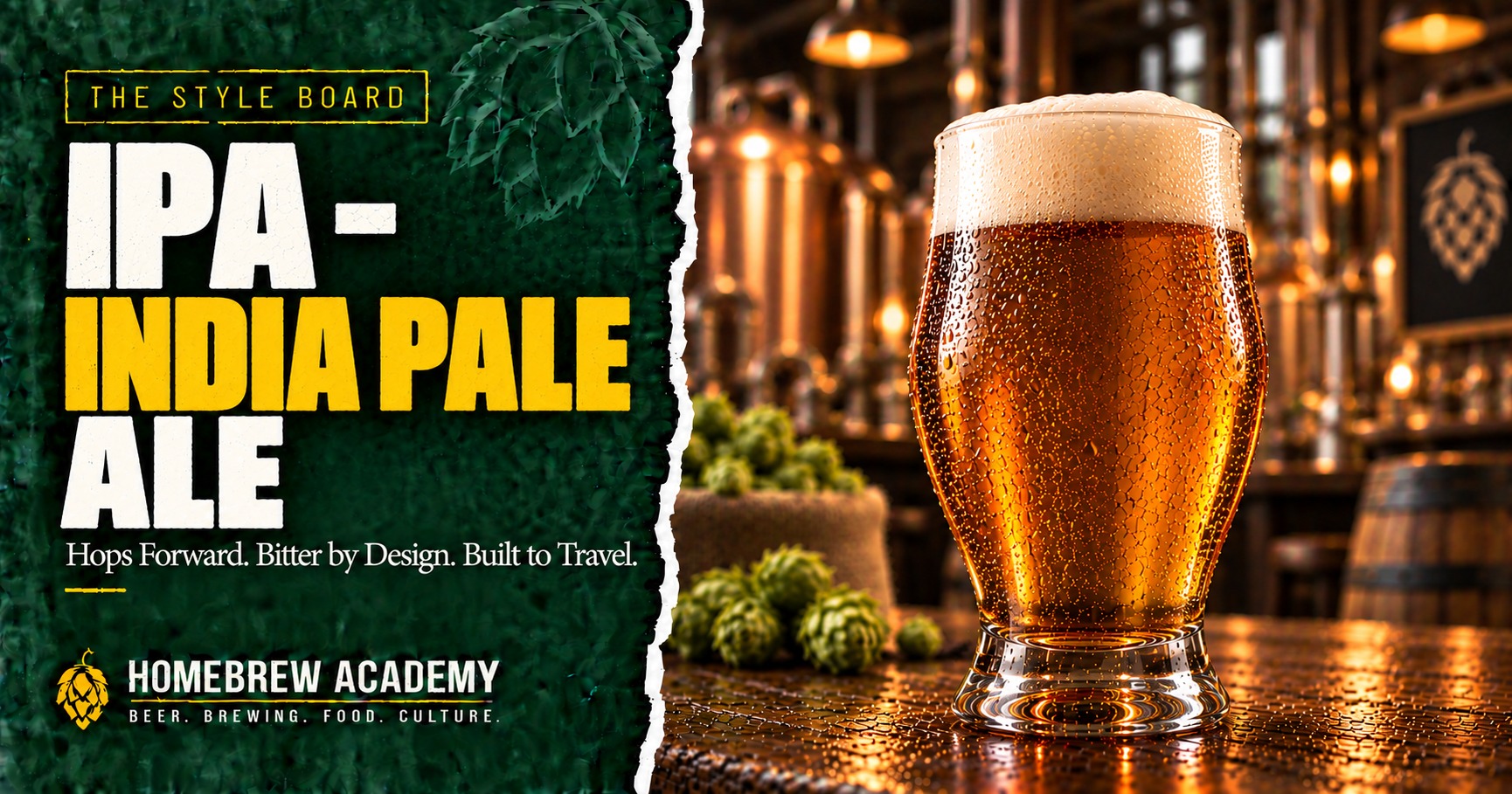
India Pale Ale and Specialty IPA: 10-Beer Comparison Flight and Style Guide
India pale ale is a family of hop-forward beers, not a single wall of bitterness. American IPA provides the clean citrus-and-pine center, while Belgian, black, brown, red, rye and white versions change the yeast, grain or malt beneath the hops.
The useful way to understand IPA is to follow the balance. Hops remain the defining ingredient in every version, but a successful specialty IPA gives its second idea enough room to matter without losing the dry, aromatic character that makes the beer an IPA.
This HBA family covers American IPA and six Specialty IPA types. BJCP 2021 also recognizes Brut IPA within 21B and Hazy IPA as 21C; this seven-guide navigation does not represent the complete competition-category list.
The IPA family at a glance
| Style | Typical ABV | IBU | What changes |
|---|---|---|---|
| American IPA | 5.5–7.5% | 40–70 | Clean fermentation and expressive American or New World hops |
| Belgian IPA | 6.2–9.5% | 50–100 | Peppery, fruity Belgian yeast and very high attenuation |
| Black IPA | 5.5–9.0% | 50–90 | Dark color with restrained cocoa, coffee and toast |
| Brown IPA | 5.5–7.5% | 40–70 | Nutty, caramel and chocolate malt beneath IPA hopping |
| Red IPA | 5.5–7.5% | 40–70 | Caramel-rich red malt with citrus, pine or resin |
| Rye IPA | 5.5–8.0% | 50–75 | Peppery grain spice, dryness and fuller texture |
| White IPA | 5.5–7.0% | 40–70 | Wheat, citrus and Belgian-style spice |
The Seven IPA Styles in This Category
Every style below keeps hops at the center, but changes the fermentation, grain, or malt supporting them. Those changes are large enough that two IPAs can share a family name while delivering completely different drinking experiences.
American IPA
American IPA is the clean, hop-forward center of the family. Citrus, pine, resin, tropical fruit, flowers, or berries lead over a pale, dry malt base, while neutral fermentation keeps the hop selection easy to read. Bitterness can be firm, but freshness and aroma matter more than simply chasing the highest IBU number.
Belgian IPA
Belgian IPA combines assertive hopping with a highly attenuative Belgian yeast strain. Pepper, pear, citrus, clove, and other fermentation notes overlap with American or European hop character, producing a strong, dry beer with more yeast expression than American IPA. The challenge is preventing two vivid flavor systems from becoming noisy.
Black IPA
Black IPA pairs the aroma and bitterness of IPA with dark color and restrained roast. Cocoa, toast, or light coffee may appear, but the beer should not drink like a stout carrying extra hops. The most convincing versions use smooth dark malt and a dry finish so citrus, pine, and resin remain distinct.
Brown IPA
Brown IPA places American hop intensity over the nutty, caramelized, and lightly chocolate-like malt of American brown ale. It is richer than standard IPA but more aromatic and bitter than brown ale. Malt should broaden the flavor without leaving enough sweetness to smother the hops.
Red IPA
Red IPA uses caramelized and lightly toasted malt to create a deep amber-red beer with greater malt presence than American IPA. Citrus, pine, or resin still leads, while the malt contributes toffee and bread crust. A firm bitterness keeps the richer center from becoming sticky.
Rye IPA
Rye IPA adds peppery grain flavor, a drier impression, and a fuller, silkier texture to a hop-forward ale. The spice is produced by rye itself rather than an added seasoning. Citrus and pine hops are especially effective because they sharpen the grain’s earthy, savory edge.
White IPA
White IPA crosses IPA with Belgian witbier. Wheat softens the body, Belgian yeast adds fruit and pepper, and coriander or orange peel may reinforce bright hop aromatics. It should remain dry and refreshing rather than becoming a sweet wheat beer with an oversized dry hop.
What every IPA needs
Fresh hop aroma is the common thread. Citrus, pine, resin, flowers, herbs, tropical fruit, berries and white grape can all belong, depending on variety and process. Bitterness should provide structure, while the finish stays dry enough that the next sip sounds reasonable.
Oxygen is IPA’s most effective enemy. It mutes aroma, darkens color and turns bright hops toward stale fruit, honey or cardboard. Fresh packaging, cold storage and careful transfers matter as much as the recipe.
A ten-beer IPA family tasting flight
This ten-beer family flight spans the seven companion guides: two American IPAs, two Belgian IPAs, two Black Rye IPAs, one double-strength Brown IPA, one Red IPA, one Red Rye IPA and one White IPA. The crossover beers connect more than one branch. Each companion guide expands the route into ten references and labeled comparisons.
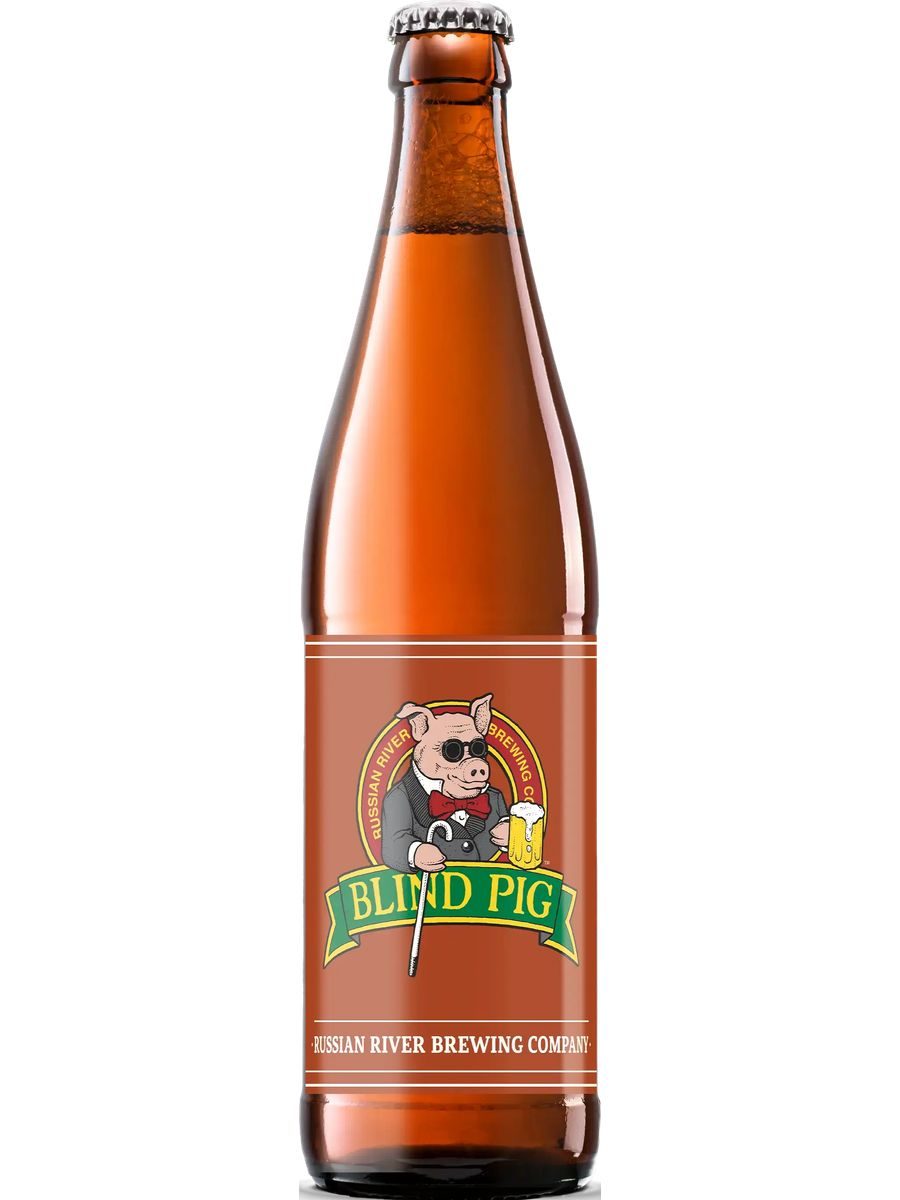
Blind Pig IPA
Brewed by Russian River Brewing Company
A dry, refrigerated West Coast reference with a long bitter finish.
BAR NOTES
Blind Pig connects Russian River’s modern flagship range with Vinnie Cilurzo’s earlier Temecula brewery. The current recipe combines Amarillo, Citra, Cascade, Tangier, Nectaron and CTZ, building citrus, pine and woody character without needing dark malt.
Use it as the clean fermentation control beside Belgian, rye or dark IPAs. Keep the bottle cold and consume it fresh: stale hop aroma makes grain and yeast comparisons much harder to interpret. West Coast IPA explains the broader balance.
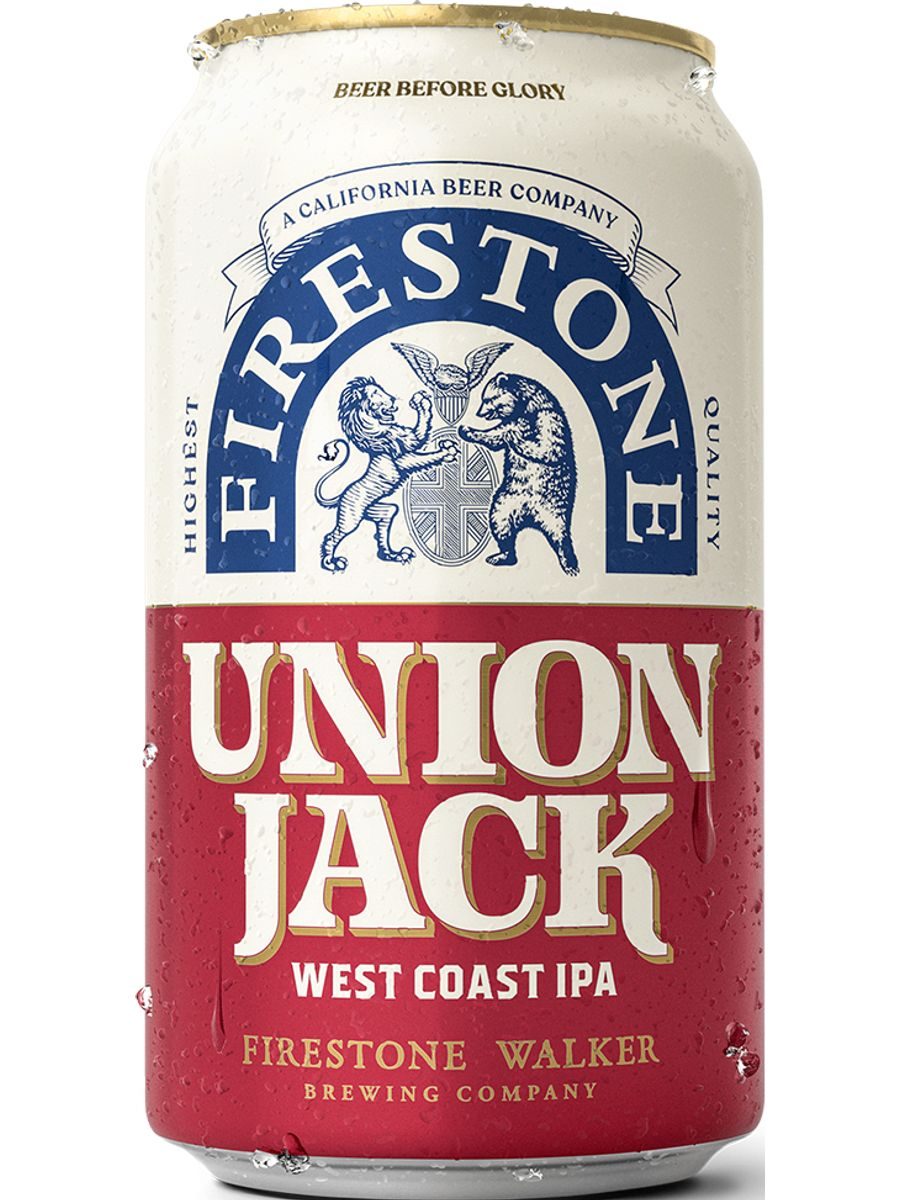
Union Jack
Brewed by Firestone Walker Brewing Company
Pine and citrus offer a firm, clean West Coast benchmark.
BAR NOTES
Union Jack is Firestone Walker’s original West Coast IPA, currently listed at 7.0% ABV and 70 IBU. Its featured hop profile includes Simcoe and Chinook, reinforcing pine, citrus and a firm finishing bitterness.
It works well as an unmodified control beside Wookey Jack from the same brewery. Compare how a clean IPA finish changes when midnight wheat, dark malt and rye enter the picture; bitterness should remain distinct from roast. Black IPA explores that challenge.
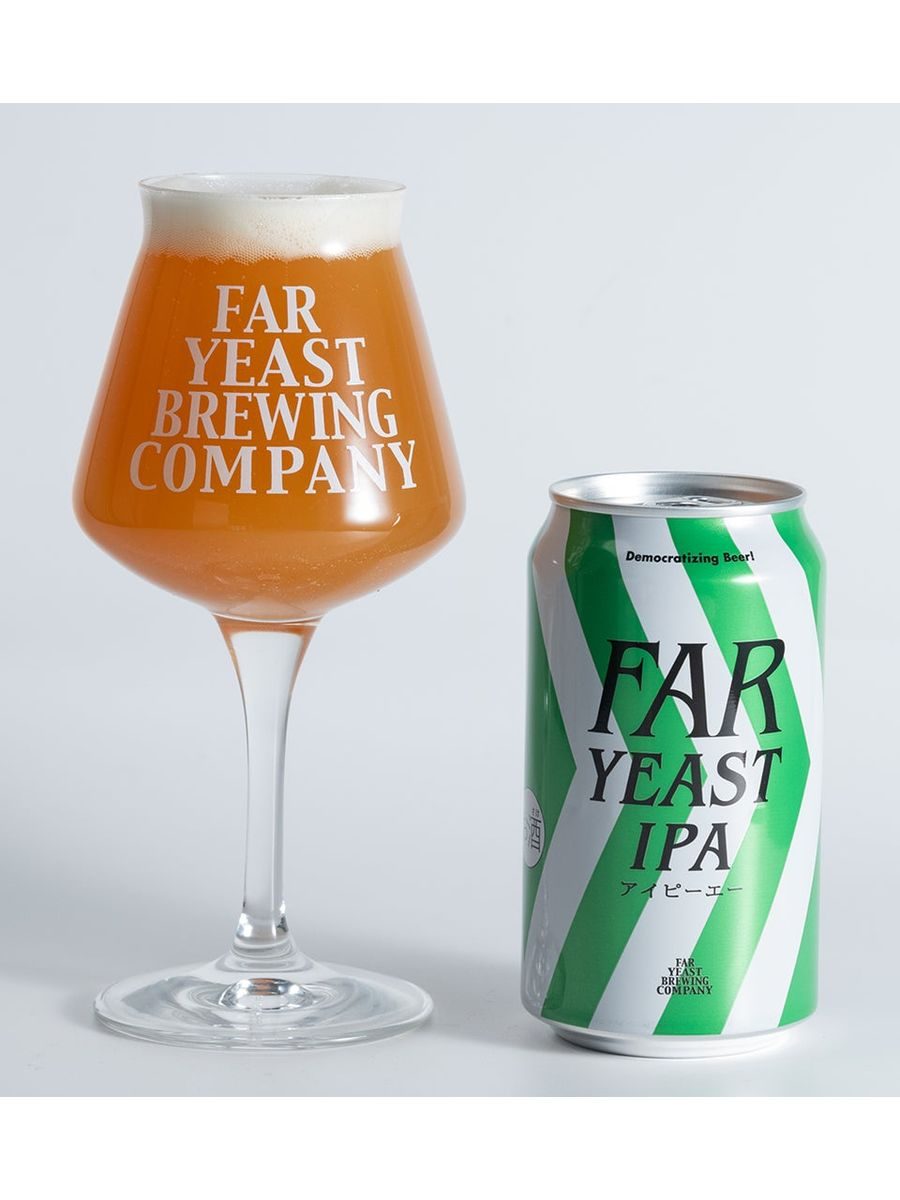
Far Yeast IPA
Brewed by Far Yeast Brewing
Belgian yeast meets Cascade, Comet, Merkur and Columbus.
BAR NOTES
The current Far Yeast IPA continues the Belgian-yeast-and-American-hop concept associated with Tokyo IPA, but uses the updated name and green packaging. The current recipe is 6.0% ABV and 50 IBU, with Cascade, Comet, Merkur and Columbus.
This is a direct Belgian IPA reference brewed in Japan, though its 6.0% ABV falls just below the style’s 6.2% lower boundary. Fermentation character matters more than geography. Distinguish it from the brewery’s White saison and Blonde golden ale, and check the current package and freshness. Belgian IPA brewing requires agreement between yeast and hops.
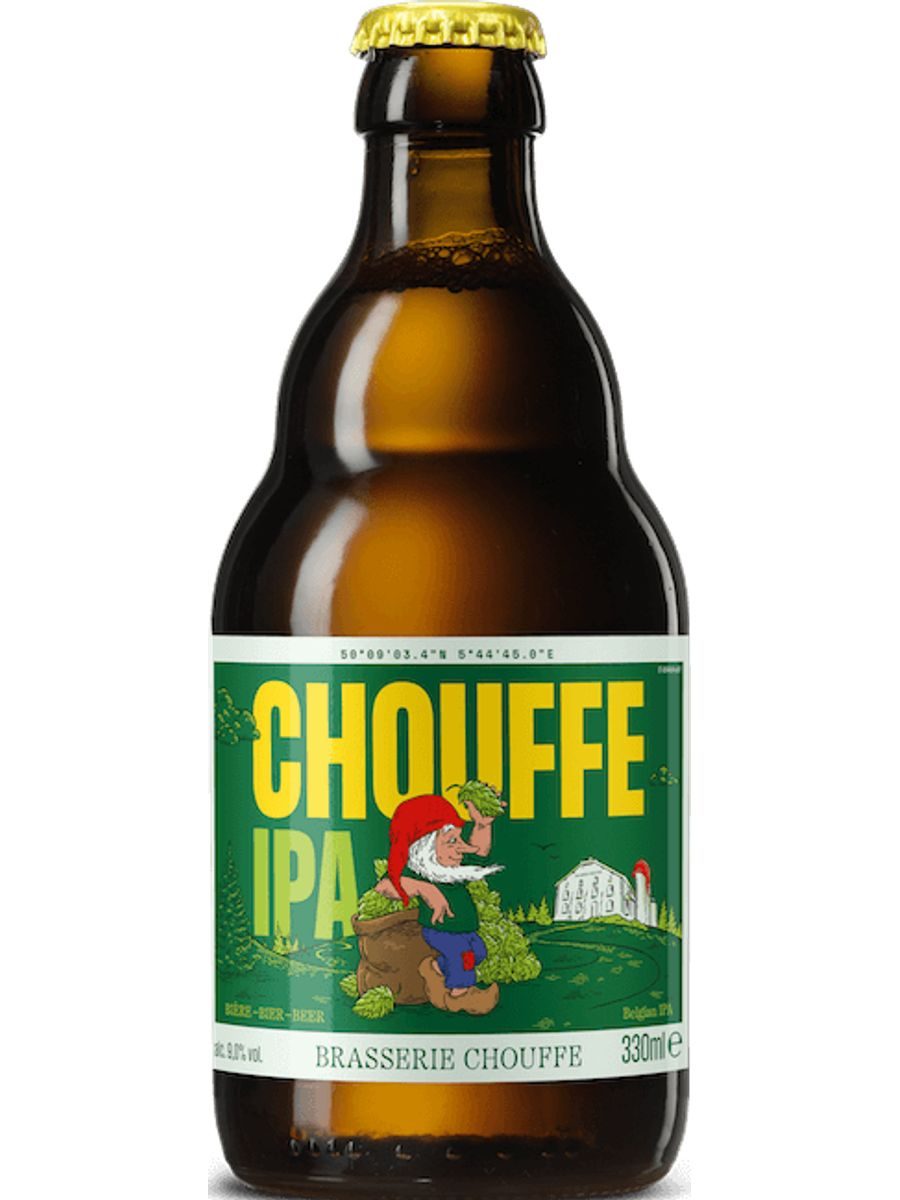
Chouffe IPA
Brewed by Brasserie d’Achouffe
Three hops create fruit and grapefruit over Belgian fermentation.
BAR NOTES
The current Chouffe IPA branding identifies the beer as Belgian IPA at 9.0% ABV. The brewery describes a three-hop blend, fruity notes and grapefruit, with a pale blond, slightly hazy appearance and substantial foam.
Use the current bottle to connect the older Houblon Chouffe reference with today’s packaging. At 9.0%, it is double strength under Specialty IPA entry labels but still within Belgian IPA’s overall 6.2–9.5% range. Keep the pour modest. serving glassware changes how alcohol, yeast and hops present.
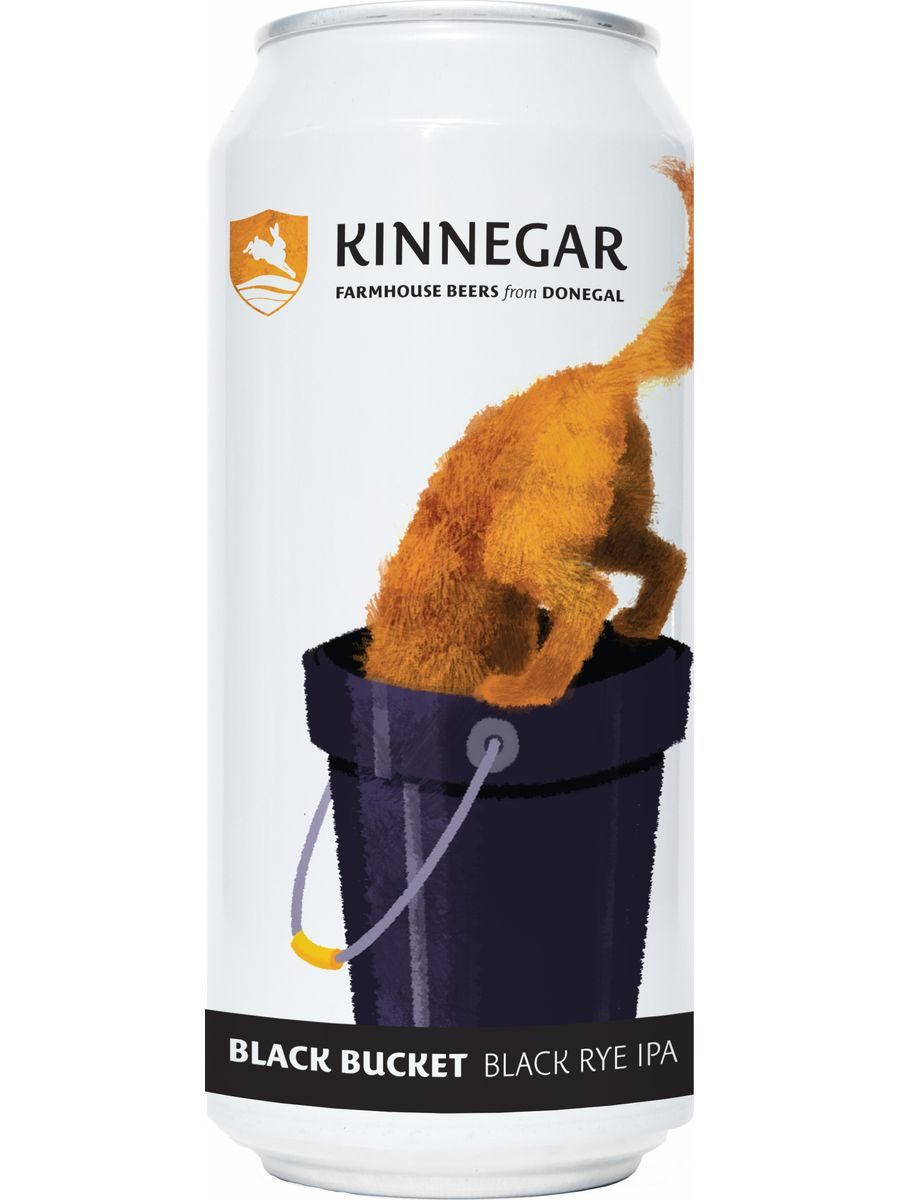
Black Bucket
Brewed by Kinnegar Brewing
Rye and roasted malt frame fresh hop flavor at standard strength.
BAR NOTES
Black Bucket is the darker, stronger relative of Kinnegar’s Rustbucket. The current core-range beer combines rye and roasted malt with fresh hop flavor, making it a direct comparison for how the same grain can operate in pale and dark IPA.
At 6.5% it offers a standard-strength contrast to Wookey Jack’s 8.3%. Taste them for balance rather than ranking the bigger beer automatically higher: the rye should add structure and spice while hops remain recognizable through the darker malt. Black IPA brewing priorities apply here.
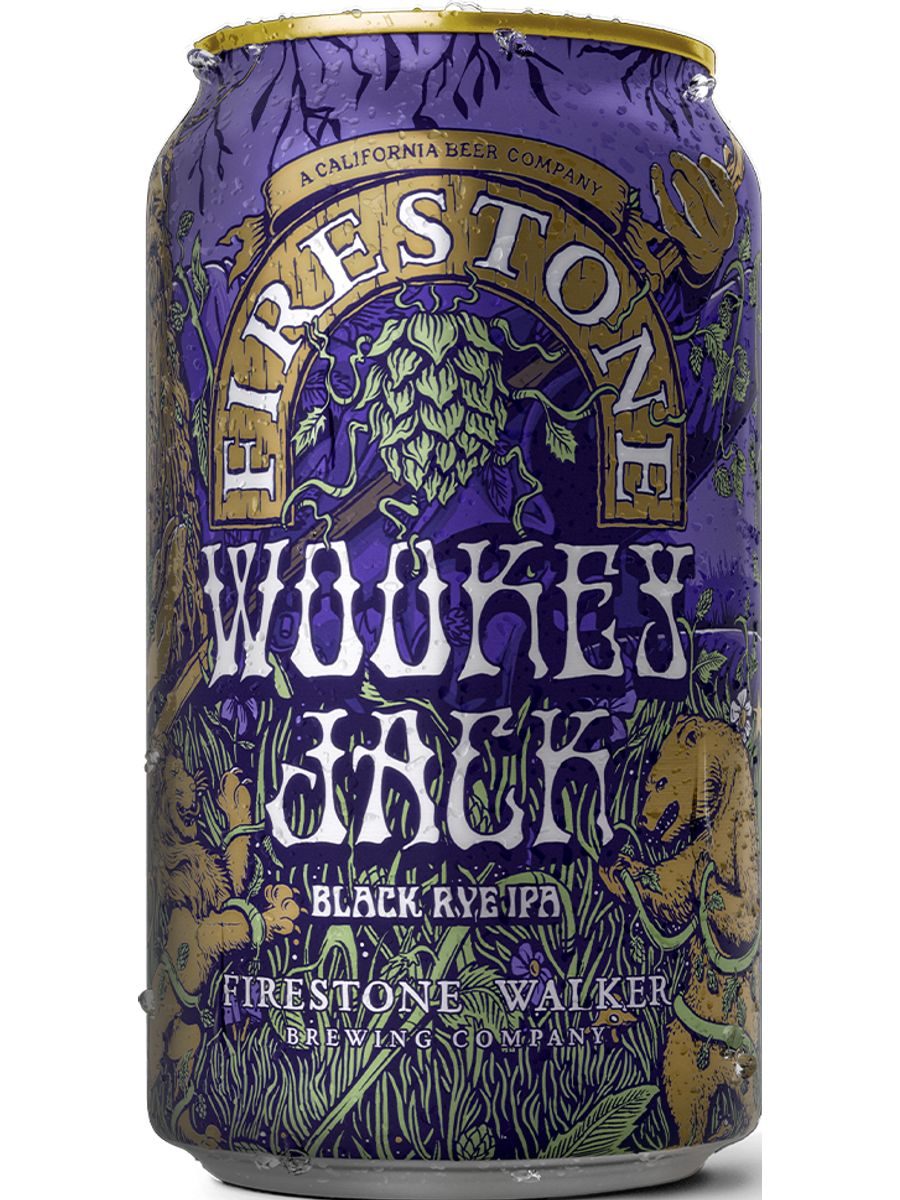
Wookey Jack
Brewed by Firestone Walker Brewing Company
Dark malt, rye and bright American hops meet at double strength.
BAR NOTES
Wookey Jack combines Amarillo, Citra and Simcoe with a dark grain bill that includes midnight wheat. It is a Black Rye IPA, not an ordinary stout, and its 8.3% strength is double strength under Specialty IPA entry labels. It remains within Black IPA’s overall 5.5–9.0% range, while sitting slightly above Rye IPA’s 8.0% ceiling.
Firestone Walker lists it as a limited release in 12-ounce six-packs. Treat its return as a release to check, not a year-round promise; in the glass, compare hop brightness, grain spice and roast as three separate sensations. Rye IPA explains the grain side.
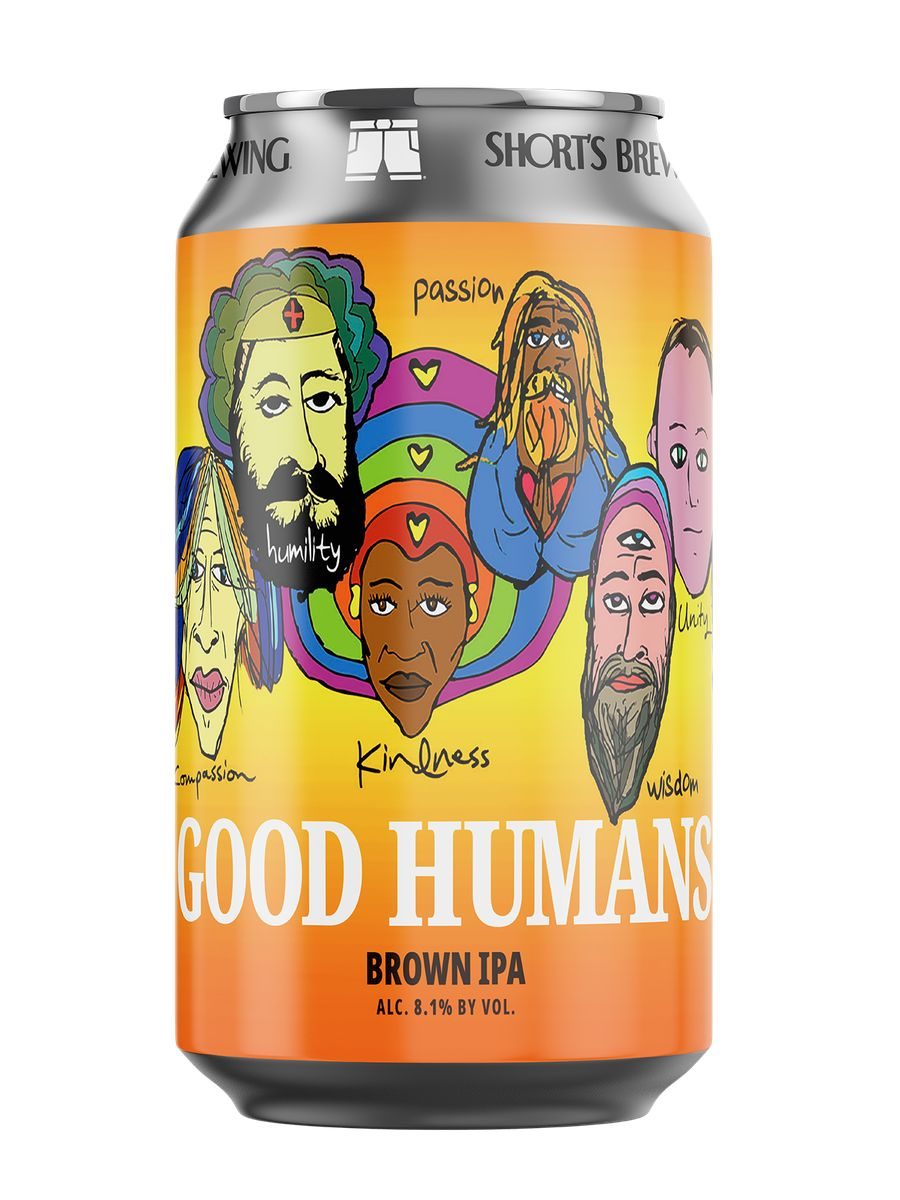
Good Humans
Brewed by Short’s Brewing Company
Caramel and toffee meet Simcoe and Golding at stronger brown-IPA strength.
BAR NOTES
Good Humans is currently labeled a dry-hopped Brown IPA at 8.1% ABV and 48 IBU. Short’s uses caramalt, Simcoe and Golding to connect caramel and toffee with a fragrant hop impression.
The current beer exceeds the standard Brown IPA alcohol band, so it is explicitly a stronger reference. Its origin story dates to a 2009 single batch and Seth Bernard’s napkin artwork; release availability remains limited. Brown IPA still needs a hop-led finish beneath its richer malt.
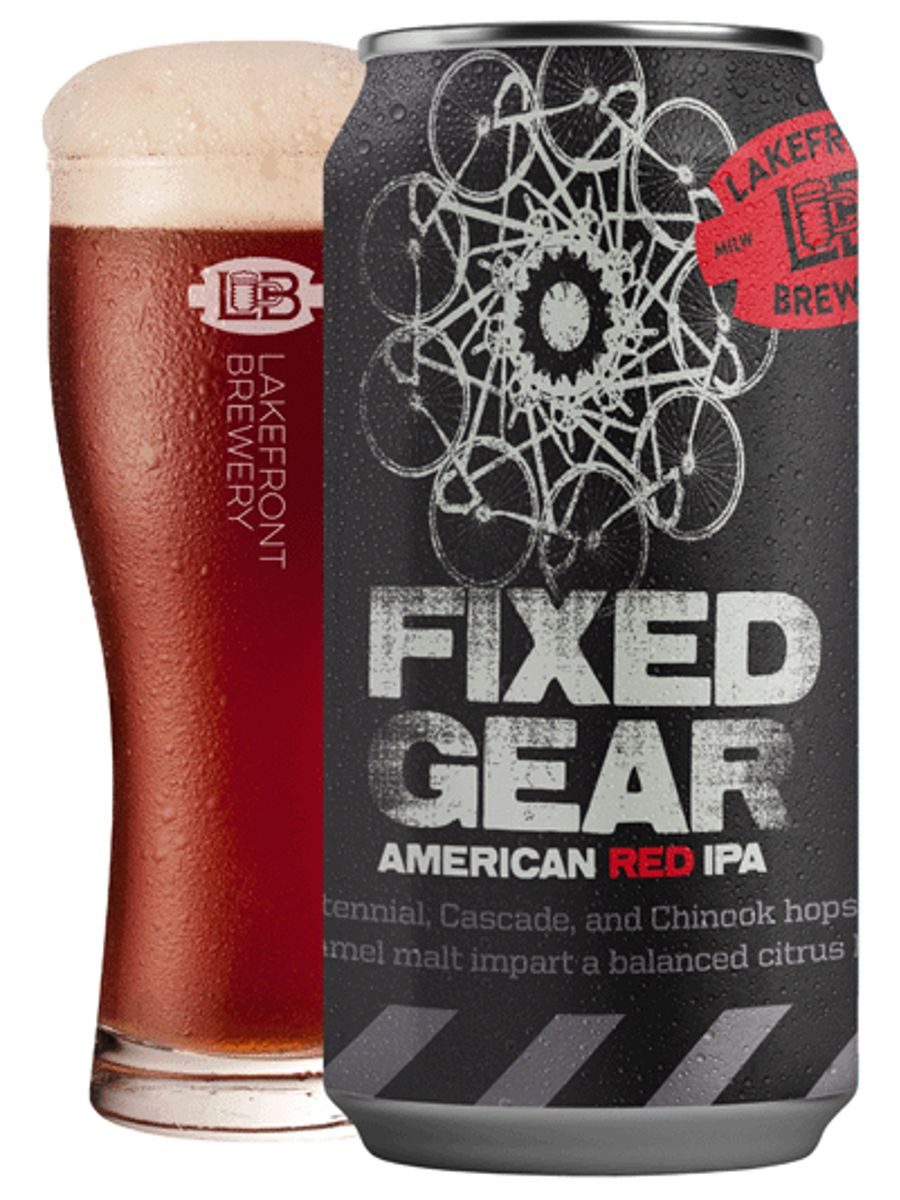
Fixed Gear
Brewed by Lakefront Brewery
Crimson caramel malt supports floral citrus and a firm finish.
BAR NOTES
Fixed Gear uses two-row pale, Crystal 60 and Belgian dark aromatic malt. Centennial, Cascade and Chinook dry hopping builds floral citrus over its crimson malt frame, while Wisconsin Magnum contributes to the bittering structure.
Its 6.1% ABV and 46 IBU fit standard Red IPA bands. Lakefront pairs the hop profile with tandoori chicken and vindaloo; taste how caramel and spice interact without confusing a red malt color with roasted stout flavor. amber malt recipe design keeps the finish hop-led.
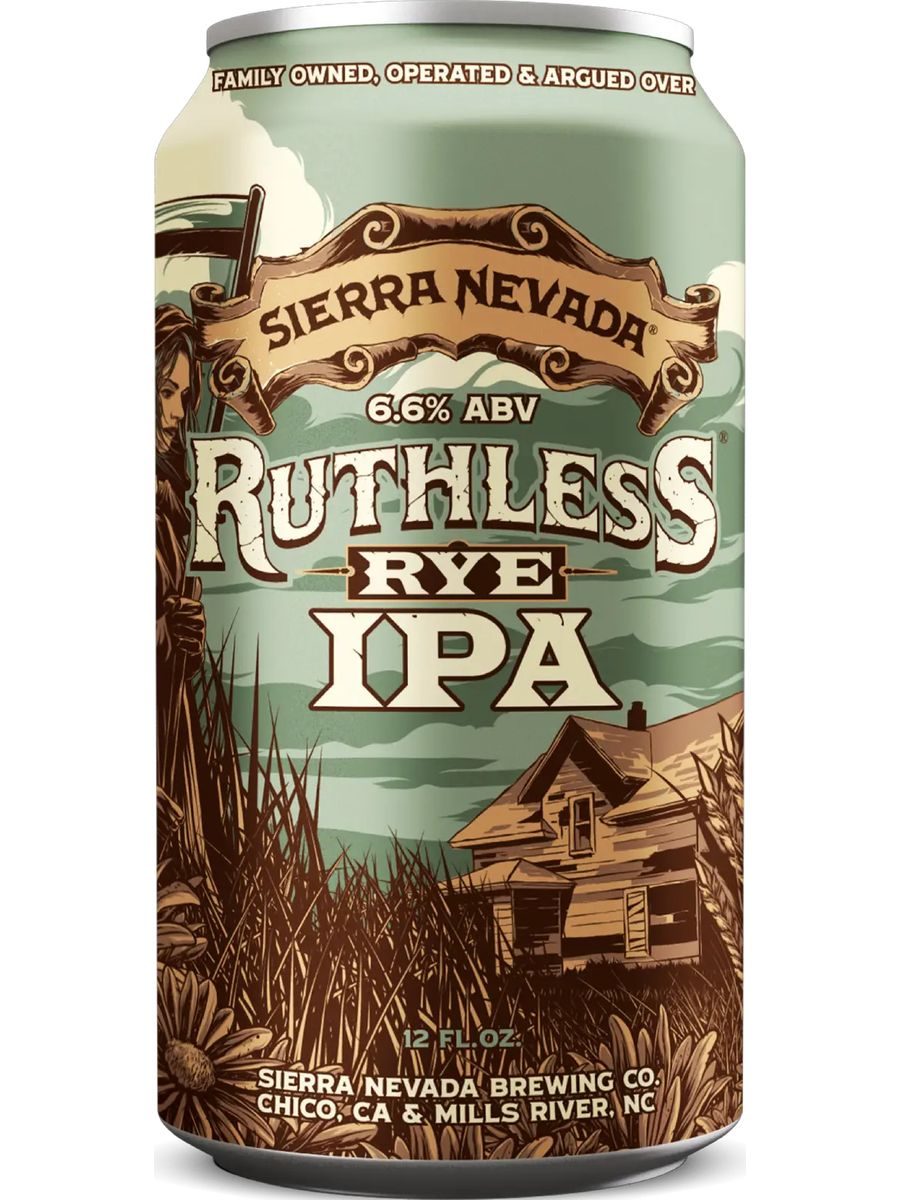
Ruthless Rye IPA
Brewed by Sierra Nevada Brewing Company
Peppery rye, caramel and bright citrus connect the red and rye branches.
BAR NOTES
Ruthless Rye’s current specification is 6.6% ABV and 58 IBU. Caramelized, chocolate, rye and two-row malt meet Chinook, Citra, CTZ, Ekuanot and El Dorado, adding grain spice beneath bright citrusy hops.
This is a crossover reference for both Red and Rye IPA, with availability described as limited rather than year-round. Compare the peppery grain impression with Fixed Gear’s dark caramel profile and Rustbucket’s lighter frame. Red IPA explains the malt-and-hop relationship.
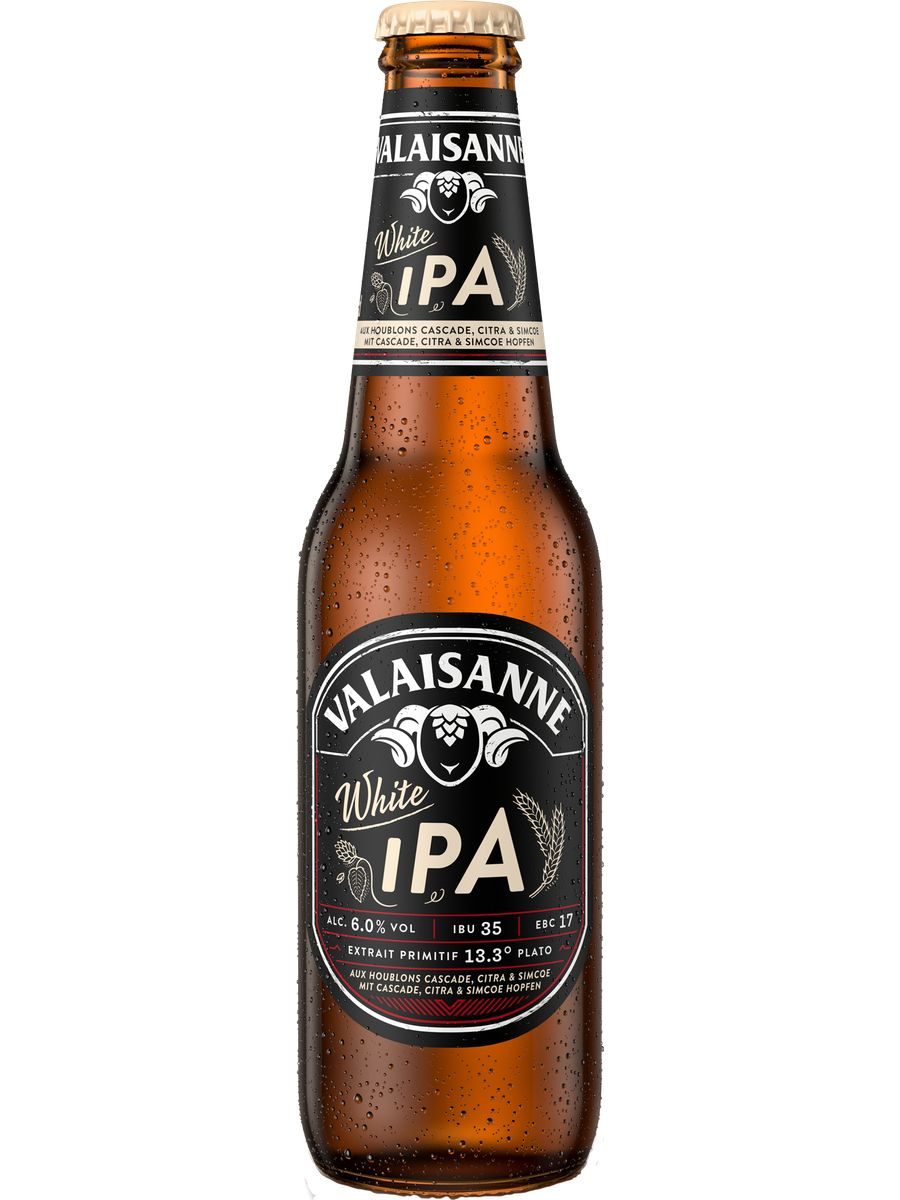
Valaisanne White IPA
Brewed by Brasserie Valaisanne
Banana and clove meet Cascade, Citra and Simcoe.
BAR NOTES
Valaisanne explicitly describes wheat-beer yeast character, including banana and clove, alongside Cascade, Citra and Simcoe. Its current 6.0% ABV fits White IPA’s alcohol band, while its reported 35 bitterness units sit below the usual 40–70 IBU profile.
This Swiss version demonstrates why White IPA should not be reduced to ordinary IPA made cloudy. Yeast aroma is part of its identity; compare it with clean-fermented wheat IPA and a witbier before deciding where the spice impression originates. wheat and other brewing grains affects body as well as appearance.
How the specialty versions work
Belgian and white IPA change fermentation most dramatically. Belgian strains add pepper, fruit and high attenuation; white IPA also uses wheat and often coriander or orange peel. Rye IPA changes the grain, adding spice and texture without necessarily changing color.
Black, brown and red IPA change the malt. Black IPA should look dark while tasting much less roasty than stout. Brown IPA uses nuts, toast and chocolate. Red IPA brings caramel and bread crust. In every case, hops must remain clear rather than fighting a muddy malt bill.
Choosing the right IPA
- Choose American IPA for the clearest hop showcase.
- Choose Belgian or white IPA when yeast spice and fruit sound as interesting as hops.
- Choose black IPA for pine, citrus and a dry cocoa edge.
- Choose brown or red IPA when caramel, toast and nuts should carry more weight.
- Choose rye IPA for peppery grain spice and a firmer, drier texture.
Brewing priorities
A fermentable wort, healthy yeast and oxygen control matter across the family. Specialty malt should support rather than smother hops. Dry hopping creates aroma but also brings oxygen risk and possible hop burn, so quantity, contact time and packaging technique all deserve restraint.
Water can make the difference between crisp and harsh. Sulfate sharpens bitterness and dryness; chloride rounds the palate. The best profile depends on subtype, but extreme mineral levels rarely rescue an unfocused recipe.
IPA FAQ
Does IPA have to be extremely bitter?
No. IPA needs hop-forward aroma and flavor, but modern examples range from firmly bitter and dry to softer and fruitier. Balance within the chosen subtype matters more than chasing an IBU number.
Why do IPAs taste different after a few weeks?
Hop aroma compounds are volatile and oxygen-sensitive. Warm storage accelerates their decline, so buy fresh, store cold and drink hop-forward beer on a shorter timeline than malt-led styles.
Are dark IPAs stouts with more hops?
No. Black and brown IPAs use dark malt carefully so citrus, pine and resin remain dominant. A beer led by heavy roast and stout-like body has moved away from the intended balance.
Choose your next IPA direction
Start with American IPA, then follow hops into Belgian fermentation, dark malt, caramel-rich red and brown variants, spicy rye or wheat-and-citrus white IPA.