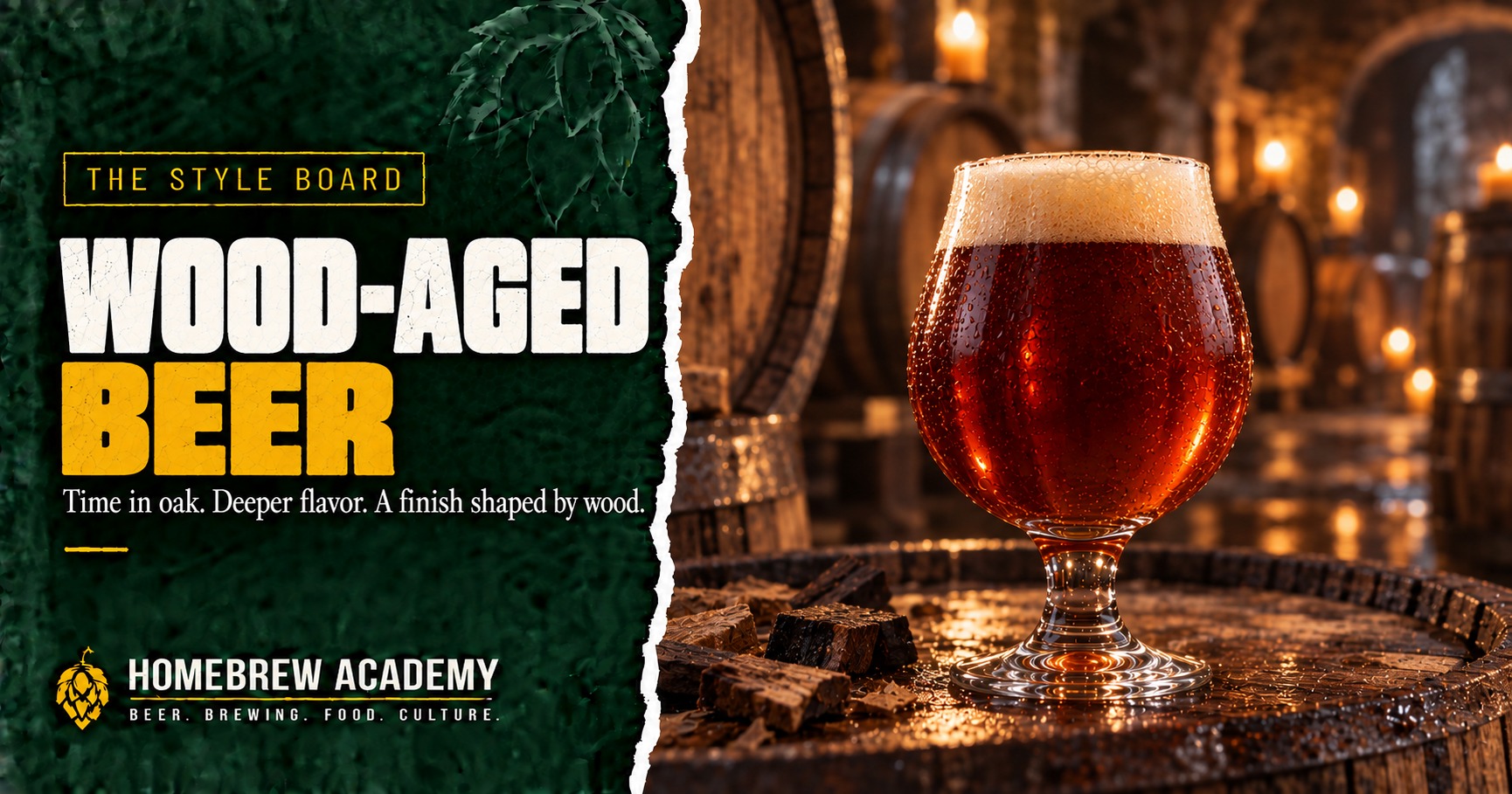
Wood-Aged Beer: Oak, Toast, Tannin & Time
Wood-Aged Beer focuses on the flavor of wood and time without obvious alcohol character from a barrel’s previous use. Think oak, vanilla, toast, coconut, spice, tannin, and gentle oxidation—not a stout that tastes unmistakably of bourbon.
For classification, wood must be noticeable and not already fundamental to the base style. Flanders red and lambic remain in their established styles; subtle wood can remain within a base style. The comparison flight below explicitly identifies its sour, fermentation, smoke and spirit-cask controls.
The distinction is sensory rather than logistical. A reused barrel can work if its former contents no longer contribute. A fresh bourbon barrel cannot be treated as neutral simply because the brewer wants to emphasize the oak.
What the wood should contribute
American oak tends to express more vanilla and coconut, while French oak often feels tighter, spicier, and more tannic. Toasted wood can add caramel, bread crust, nuts, coffee, cocoa, or butterscotch. Raw wood tastes green and lumber-like when extraction goes too far.
The wood must support the declared base. Strong ale, porter, stout, barleywine, and other full beers have enough malt and alcohol to absorb a large oak contribution. Pale or delicate beer needs a lighter touch because tannin and vanilla become obvious quickly.
Barrels, foeders, and alternatives
Small barrels extract quickly because more beer touches wood, but they also admit oxygen faster. Large foeders change beer more slowly and can host long-running cultures. Cubes, spirals, chips, and staves offer control without the cost or maintenance of a barrel.
Wood products do not reproduce every feature of a cask. They supply extractable flavor but not the same headspace, oxygen transfer, resident microbiology, or previous-use history. That can be an advantage when the goal is clean, repeatable oak.
Knowing when to stop
Taste on a schedule. Early samples may seem disjointed, then round into balance before tannin, oxidation, or raw wood takes over. Aging longer is not automatically aging better.
After packaging, the beer continues to change. Strong examples can develop dried fruit and sherry notes, but delicate wood aromatics fade. Store bottles cool and dark, then compare dates rather than assuming the oldest bottle wins.
Ten Wood-Aged Beer references and comparisons
Stingo, Bush Prestige and Petrus Aged Pale supply listed commercial references. Flanders reds, a sour brown, oak fermentation, oak-smoked malt and two spirit-cask beers are explicitly labeled comparisons. This is a ten-beer teaching flight, not a claim of ten strict 33A entries.
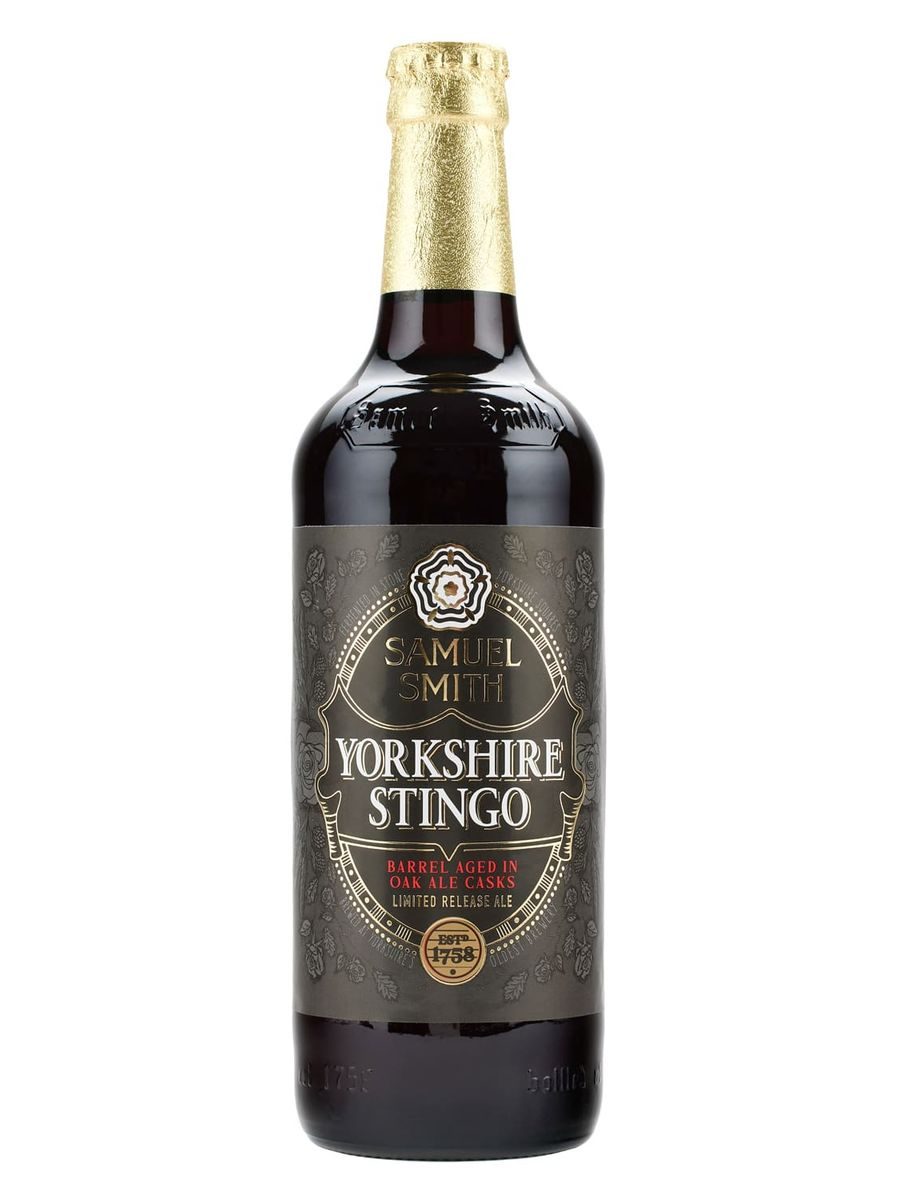
Yorkshire Stingo
Brewed by Samuel Smith Old Brewery
A direct wood-aged reference with no declared spirit contribution.
BAR NOTES
Yorkshire Stingo matures in the brewery’s used oak ale casks before bottle conditioning. The brewer gives an eight-to-nine-percent strength range; dried fruit, toffee and oak illustrate how strong English malt can support maturation without a declared bourbon or wine contribution.
This is the direct strong-ale anchor for wood without a declared spirit contribution. Taste the cask-developed notes against the remaining English malt character; prolonged aging is valuable when it adds depth while leaving the beer recognizable, not merely because the cask is old.
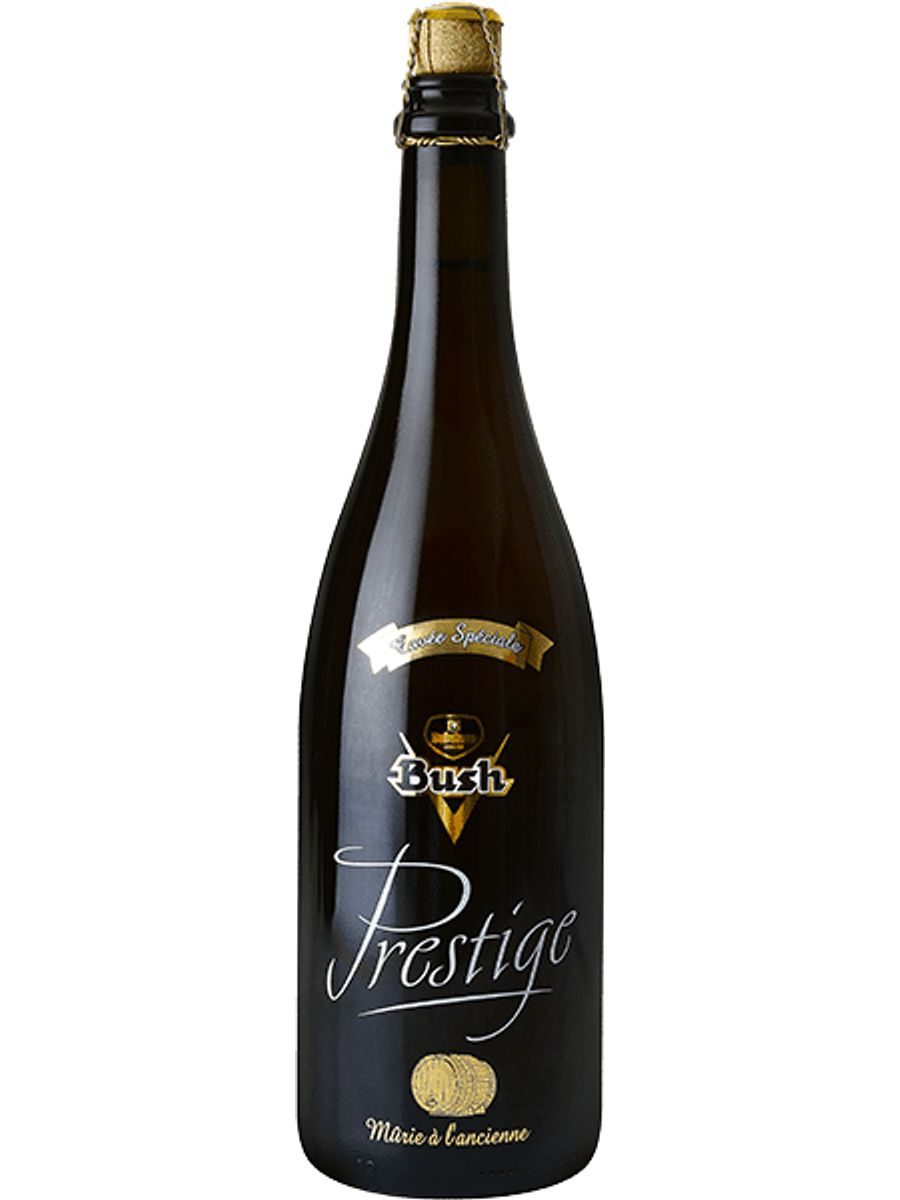
Bush Prestige
Brewed by Brasserie Dubuisson
Oak maturation extends a strong Belgian amber foundation.
BAR NOTES
Bush Prestige starts with Bush Caractère and matures for six to nine months in oak casks before refermentation in bottle. The brewery currently lists 12.5 percent alcohol. Its whisky-like aromatic description does not establish that the casks previously contained whisky.
The Belgian strong ale supplies another listed commercial example with a different fermentation foundation. Keep the brewery’s current strength and stated maturation window together; whisky-like aroma is a useful sensory comparison, while an unsupported claim of whisky barrels would change its category story.
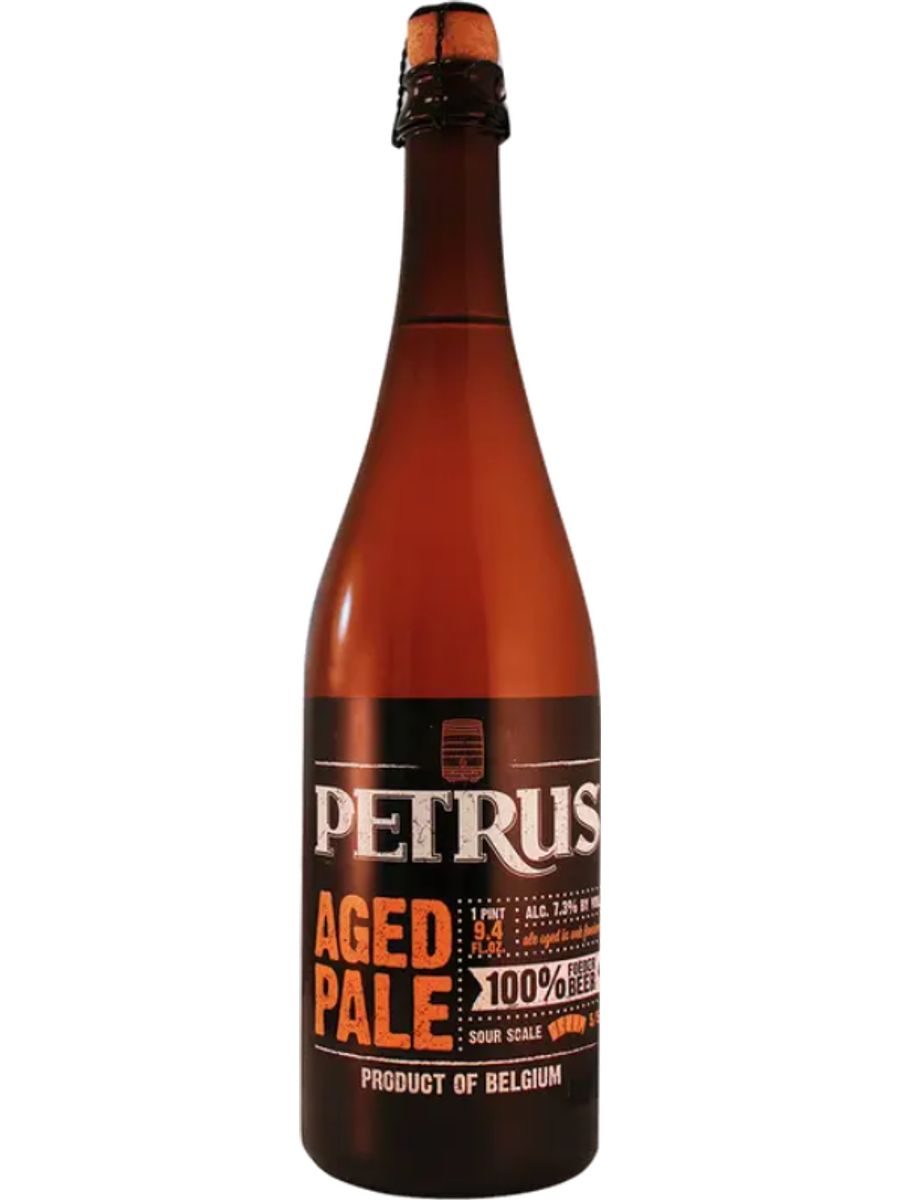
Petrus Aged Pale
Brewed by Brouwerij De Brabandere
A listed wood-aged example at the tart edge of the discussion.
BAR NOTES
Petrus Aged Pale is an unblended foeder beer matured for twenty-four months in oak. At 7.3 percent alcohol, its pale, tart profile provides a listed wood-aged example, but its acidity should not become a rule that every oak-aged sour belongs in this category.
Petrus is a listed example that also makes the sour boundary worth discussing explicitly. Compare its acidity with the Flanders reds rather than assuming a single rule from this bottle; beer style, fermentation and declared wood character all matter when choosing a competition category.
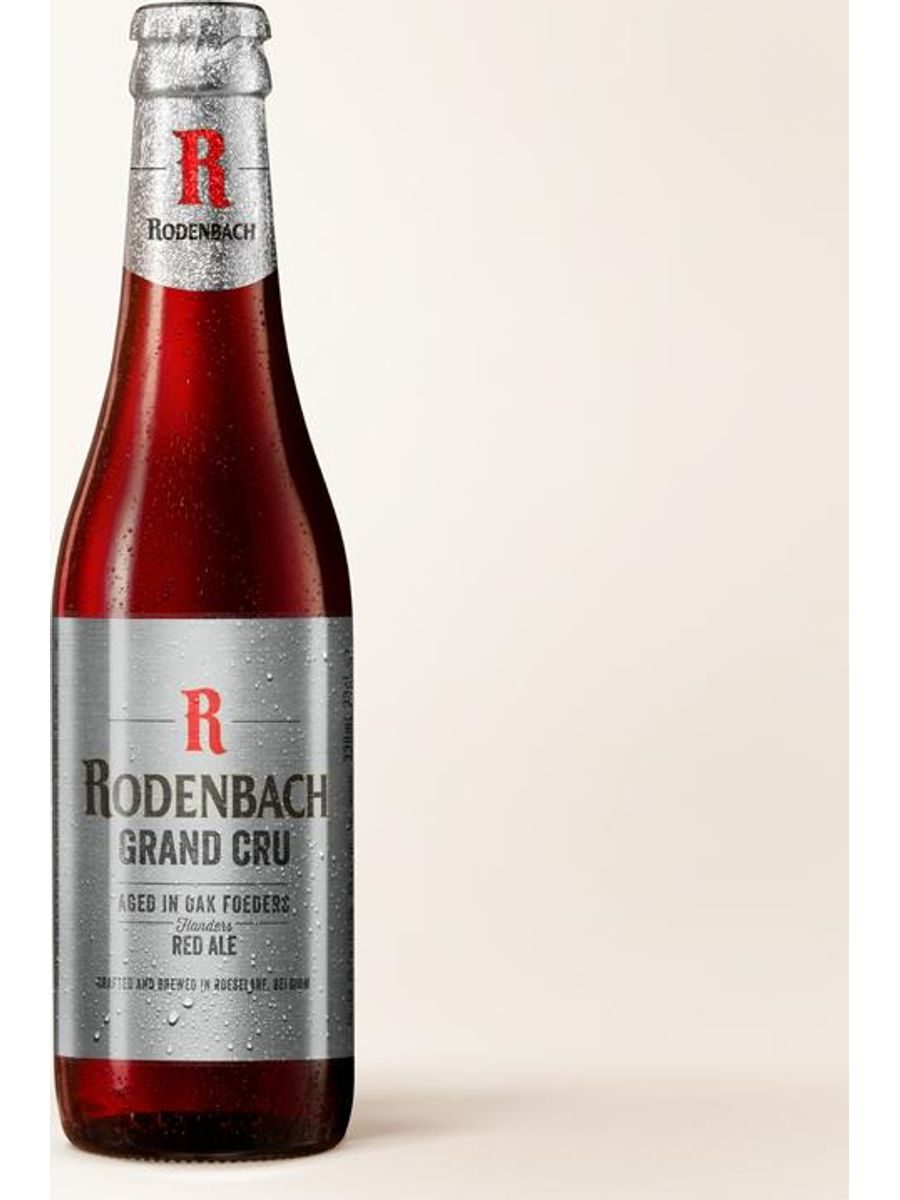
Rodenbach Grand Cru
Brewed by Brouwerij Rodenbach
A dedicated Flanders red style rather than a strict 33A example.
BAR NOTES
Rodenbach Grand Cru blends two-thirds beer matured in oak foeders with one-third young beer at six percent alcohol. Oak maturation and blending belong to its established Flanders red identity; it is a comparison for this flight, not a strict Wood-Aged Beer entry.
This Flanders red is deliberately a control rather than a strict 33A entry. Compare the proportion of mature beer with Classic and watch how sourness, fruit and dryness change; wood already belongs in the base style’s established definition.
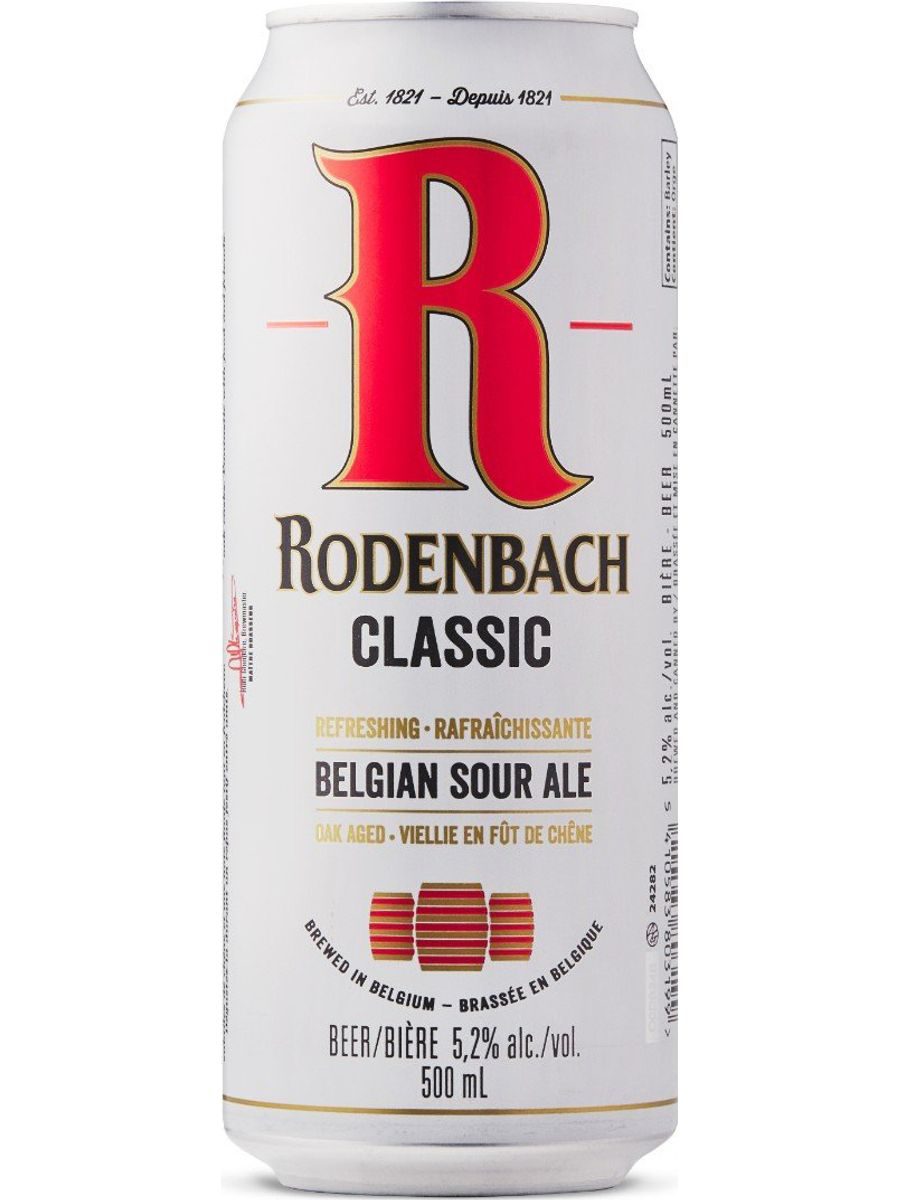
Rodenbach Classic
Brewed by Brouwerij Rodenbach
The younger blend puts Grand Cru’s maturation into perspective.
BAR NOTES
Rodenbach Classic reverses Grand Cru’s emphasis by blending two-thirds young beer with one-third oak-matured beer. At 5.2 percent alcohol, it supplies a useful comparison for blending and sourness while remaining a Flanders red reference with wood already inherent in its style.
The younger blend helps distinguish the contribution of maturation from the house identity of a single brewery. Use equal small pours beside Grand Cru and focus on balance; both remain Flanders red references, even though the amount of oak-matured beer differs substantially.
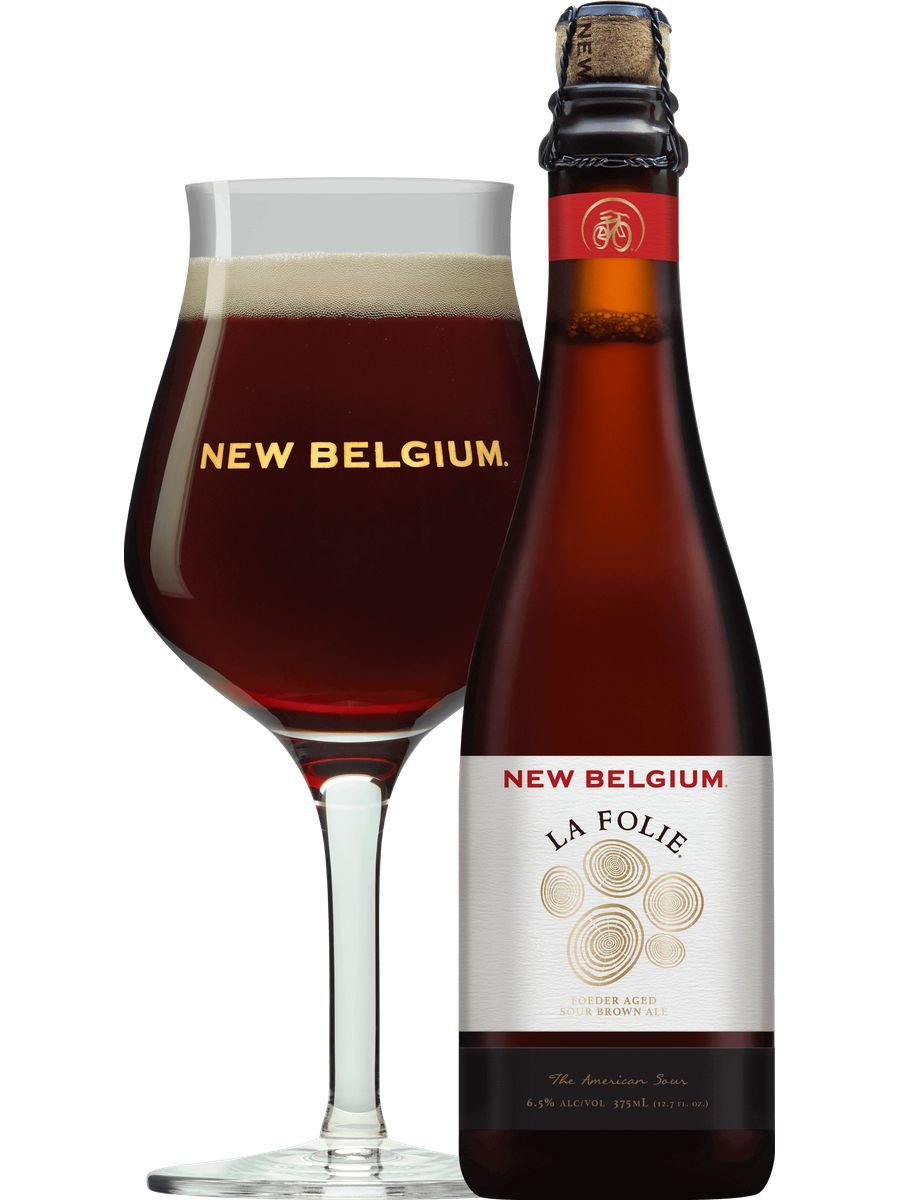
La Folie
Brewed by New Belgium Brewing
A sour-wood comparison with a different fermentation story.
BAR NOTES
La Folie is a 6.5-percent sour brown ale matured in French oak foeders. Its sour character and established mixed-culture maturation are central to the beer; this flight uses it to compare wood environments rather than certify it as a clean, nonsour 33A entry.
The sour brown broadens the comparison to a different foeder program and fermentation profile. Look for acidity and dryness before assigning oak flavors; this card illustrates how wood environments shape beer, while avoiding a claim that every sour foeder beer is a clean 33A example.
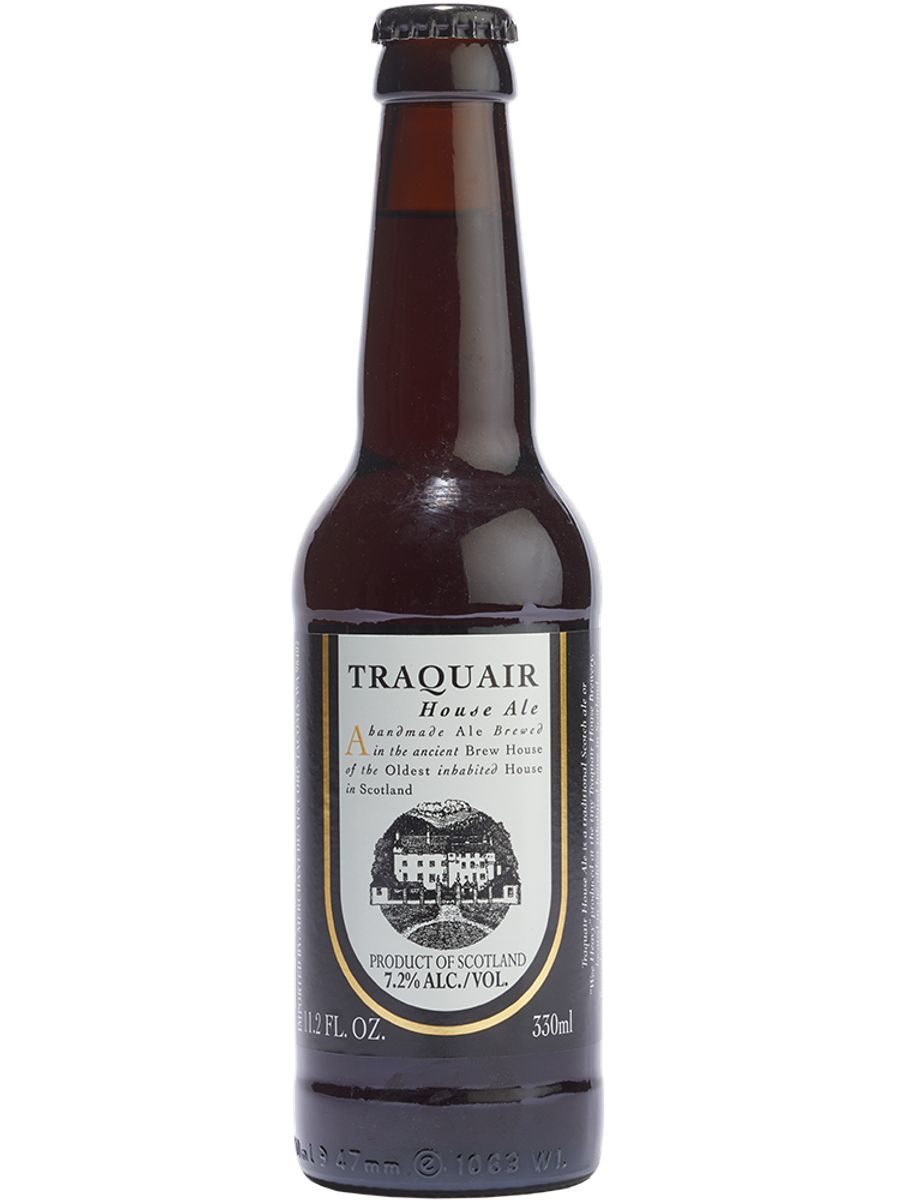
Traquair House Ale
Brewed by Traquair House Brewery
Oak fermentation is distinct from extended barrel maturation.
BAR NOTES
Traquair House Ale uses traditional oak fermentation vessels at 7.2 percent alcohol. Its malty Scottish strong-ale foundation gives the flight a process comparison: fermenting in wood is not the same claim as years of aging in a cask or acquiring character from a previous spirit.
Traquair is the fermentation-in-wood comparison rather than evidence of prolonged barrel maturation. Its strong malt foundation helps distinguish process from time: ask whether wood character is perceptible and meaningful before using oak vessels alone as a reason to leave the base style.
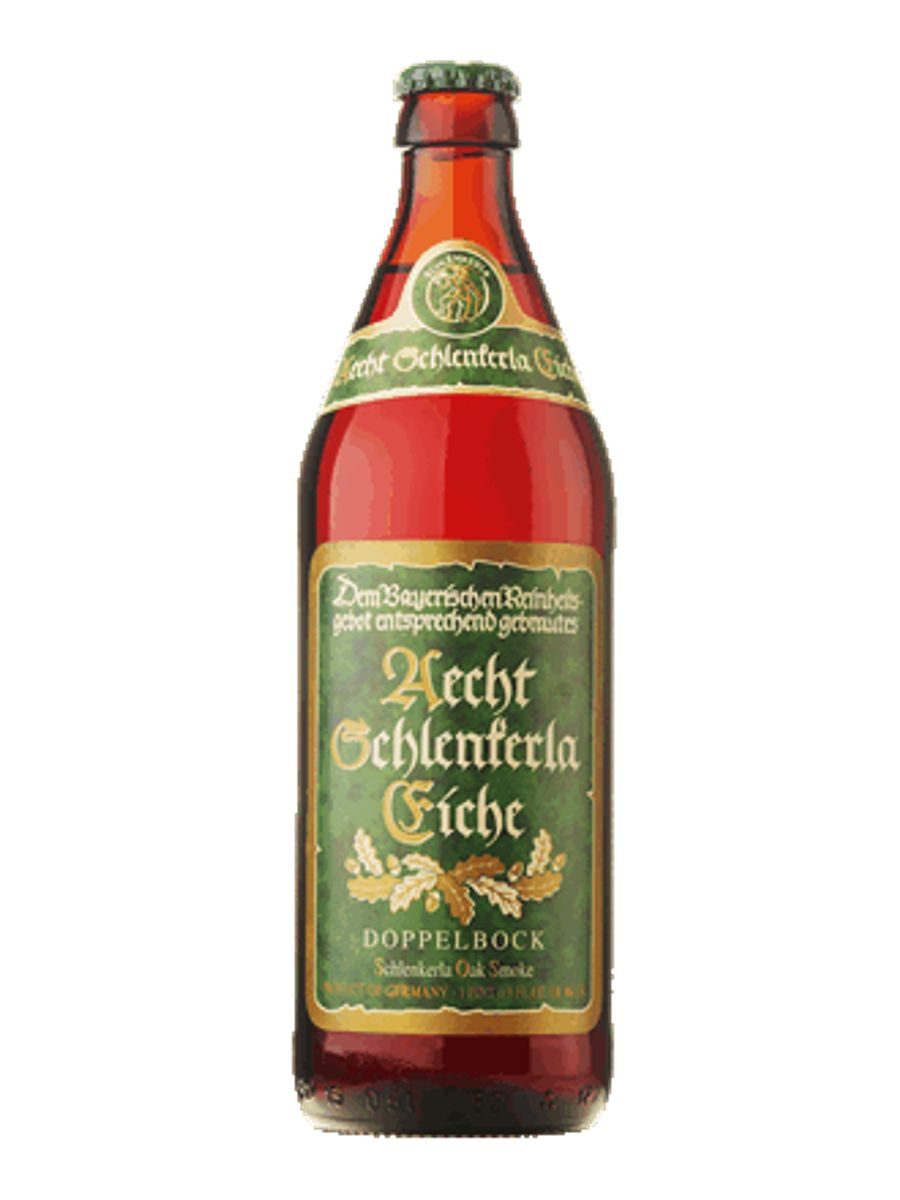
Aecht Schlenkerla Eiche Doppelbock
Brewed by Schlenkerla / Heller-Bräu Trum
Smoke from malt kilning is separate from wood maturation.
BAR NOTES
Eiche uses malt dried over an oak fire, creating an eight-percent smoked doppelbock at thirty-five IBU. Oak is the smoke source rather than evidence of barrel aging; this deliberate control helps separate wood-fired malt flavor from actual contact with wood during beer maturation.
This is the intentional smoke control, not a wood-aged example. The classic smoked guide explains the oak-fired malt; tasting it beside cask-matured beer separates a smoke source in kilning from wood extraction during contact with finished beer.
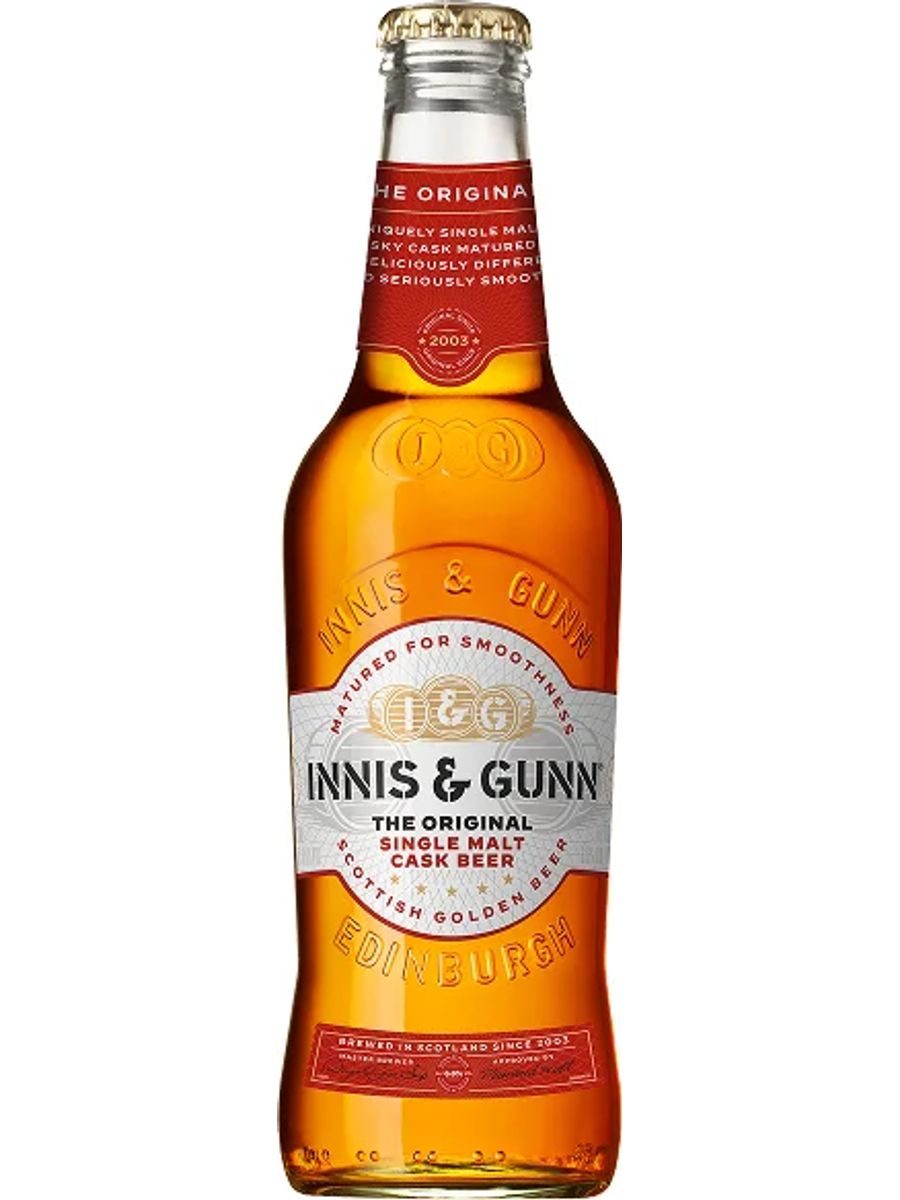
The Original
Brewed by Innis & Gunn
A lighter malt frame for identifiable whisky-cask influence.
BAR NOTES
Innis & Gunn currently describes The Original as a 6.6-percent beer matured using single malt whisky casks. This current description supplies a whisky comparison beside bourbon stouts; the card does not repeat an older generic bourbon-oak description or invent a fixed aging duration.
The whisky-cask beer is the previous-alcohol control beside the clean-wood references. The specialty branch explains that distinction; identifiable whisky contribution matters more than the mere presence of a cask or a vanilla aroma shared with fresh oak.
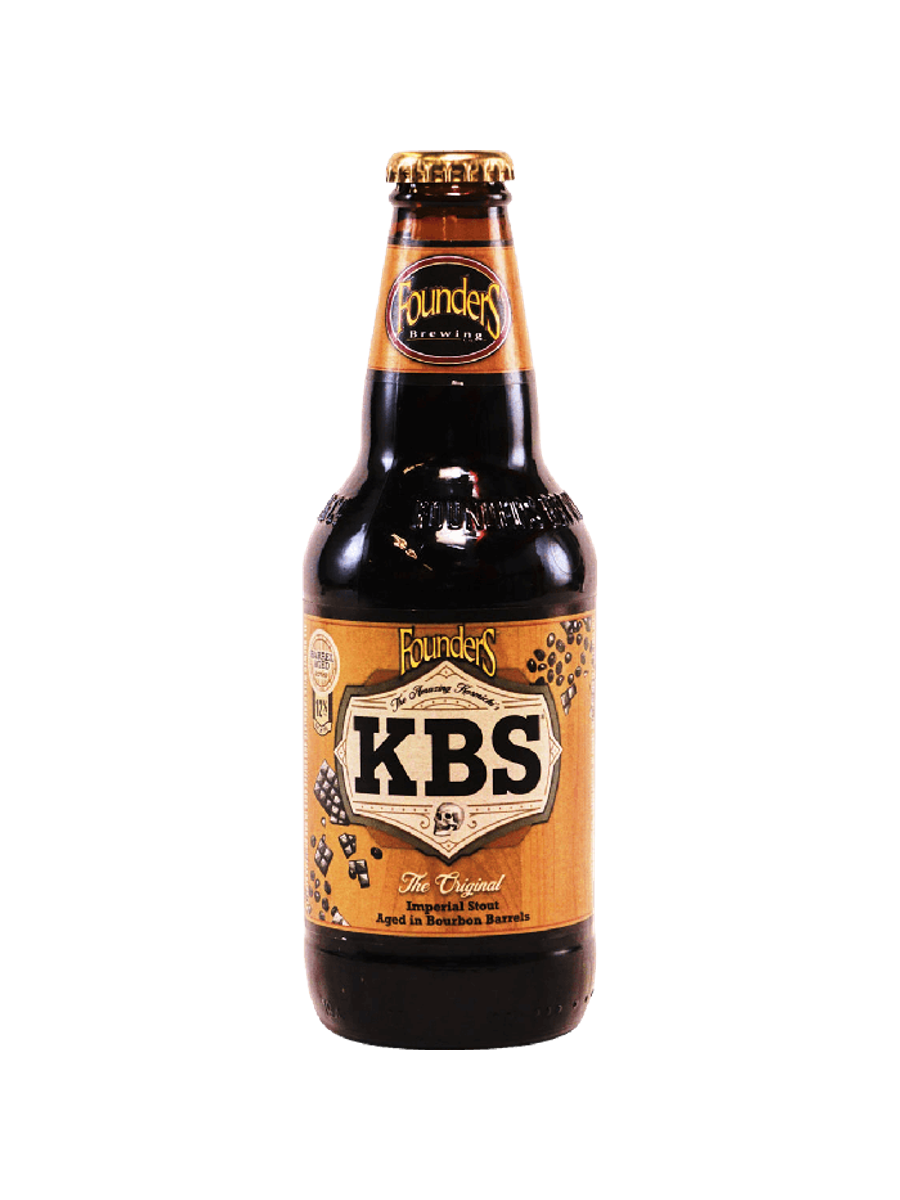
KBS
Brewed by Founders Brewing Co.
Declared coffee and chocolate accompany the bourbon barrels.
BAR NOTES
KBS combines declared coffee and chocolate with bourbon-barrel maturation in a twelve-percent imperial stout at forty-five IBU. This is a direct specialty wood-aged comparison: the barrel’s spirit character joins the recipe, while coffee and chocolate are actual ingredients rather than inferred tasting analogies.
KBS closes the flight with an unmistakable spirit-barrel and adjunct comparison. Coffee, chocolate and bourbon make its recipe different from the direct wood-only anchors; these ten cards are teaching comparisons, not a claim that all ten beers qualify for 33A.
Keep Exploring Wood-Aged Beer
Compare clean wood character with spirit-barrel influence, then explore related barrel-aged styles.