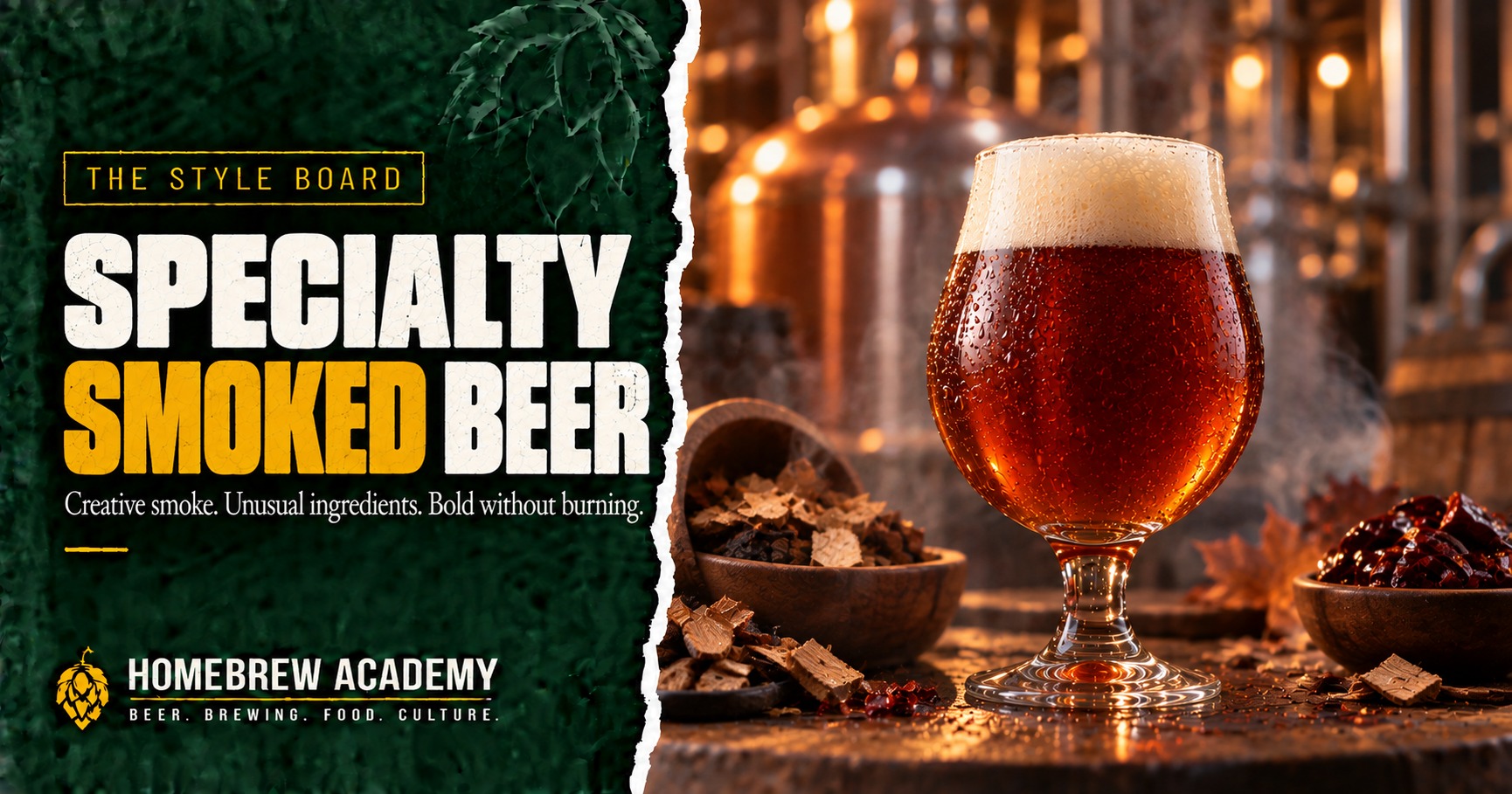
Specialty Smoked Beer: 10-Beer Comparison Flight and Style Guide
Specialty smoked beer pairs clear smoke character with a base outside a specified classic style, additional specialty ingredients, or a process that meaningfully transforms the beer. Smoked porter is not automatically specialty: a specific classic porter base can belong in 32A. Fruit, spices, honey, or a genuinely transformed hybrid can support 32B; wood species alone does not decide.
The extra creativity raises the bar for clarity. A drinker should be able to identify the base, the smoke, and any additional specialty element without the beer turning into an indistinct wall of roast and phenols.
Why porter works so well
Chocolate, coffee, toast, and dark bread naturally overlap wood smoke. Porter therefore supports a larger smoked-malt proportion than many pale styles while retaining enough bitterness and dryness to keep the result drinkable.
That compatibility can also become a trap. Heavy roast plus harsh smoke quickly turns ashy. Smooth alder or beech smoke, restrained black malt, and a rounded brown-malt center usually create more depth than simply maximizing every dark flavor.
Choosing smoke for the base
Beechwood suits bread-forward lagers and many balanced ales. Alder is at home with porter and can feel softer. Oak can add dry wood and vanilla-adjacent tones. Cherry and maple may seem sweeter or more aromatic, while peat tends toward medicinal earth and demands exceptional restraint.
Pale, dry bases expose smoke clearly, so small additions go a long way. Strong or dark bases absorb more smoke but also risk palate fatigue. The right level is the one that remains interesting after a full serving.
Fresh versus aged
Smoke changes with time. Fresh beer shows brighter wood and sharper phenols. Age can knit those edges into malt and reveal dried fruit or oxidation-derived sherry notes, particularly in stronger porter. Too much time eventually leaves stale malt with little smoke lift.
Serve most specialty smoked beers cool, not refrigerator-cold, in a glass that allows aroma to gather. Pair dry versions with grilled meat or mushrooms and richer porters with braises, aged cheese, or restrained chocolate desserts.
Ten Specialty Smoked Beer references and comparisons
The maple and bourbon-barrel porter anchors the specialty discussion. Lager blending, a low-alcohol approach and a Grodziskie-inspired interpretation supply boundary comparisons; cherrywood, plain smoked porter, oak-smoked doppelbock, schwarzbier, Grodziskie and Rauchbier clarify what smoke alone does not establish. This is a ten-beer comparison flight, not a claim of ten strict 32B examples.
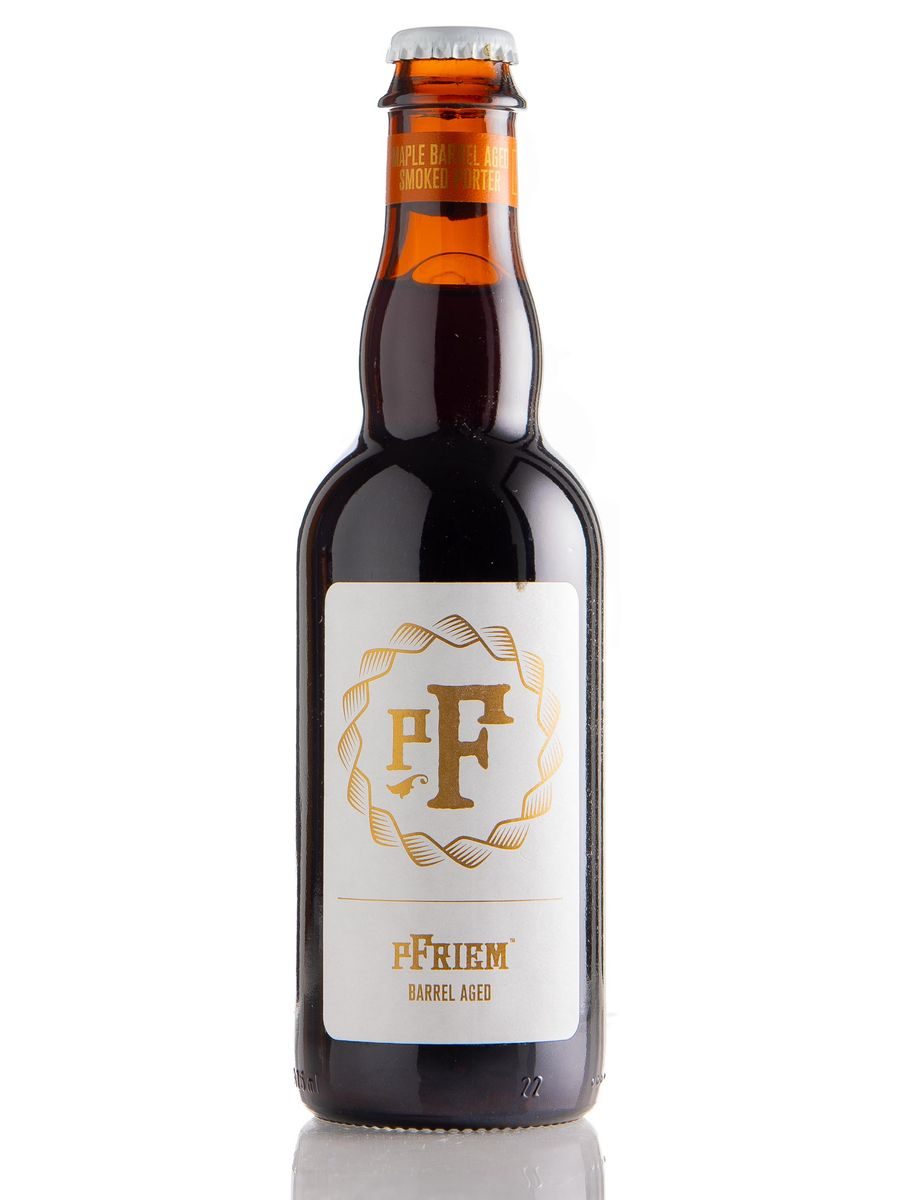
Barrel Aged Maple Smoked Porter
Brewed by pFriem Family Brewers
An explicit specialty example with smoke, maturation and maple.
BAR NOTES
pFriem combines beechwood-smoked malt, bourbon-barrel maturation and a finishing addition of maple syrup in this 9.1-percent porter. Those declared ingredients and processes supply a direct specialty comparison; walnut, coffee and chocolate impressions do not establish separate nut, coffee or cocoa additions.
This is the direct specialty anchor: smoke, maple syrup and bourbon-barrel maturation are all declared parts of the beer. The wood beer family separates wood contact from wood-fired malt; compare each contribution rather than assuming every sweet or dessert-like aroma represents another ingredient.
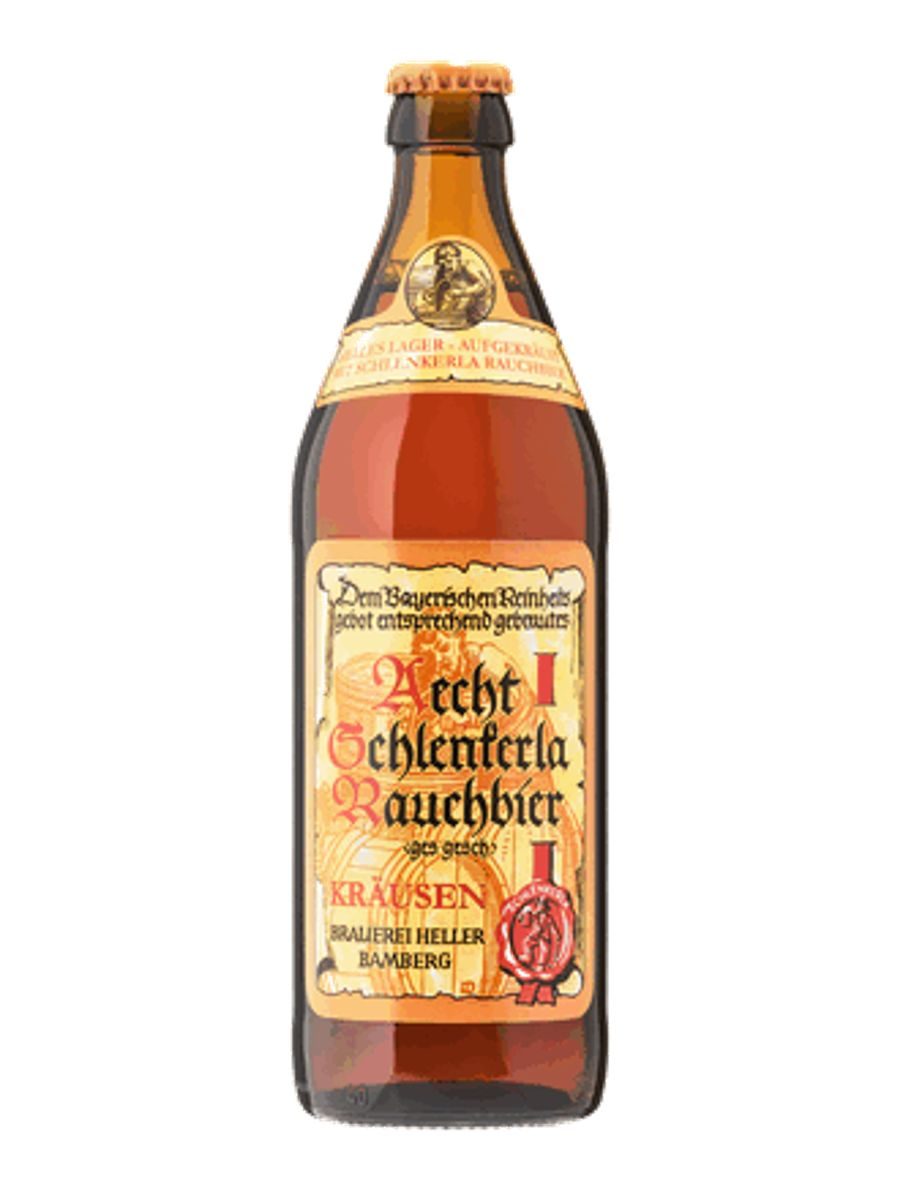
Aecht Schlenkerla Kräusen
Brewed by Schlenkerla / Heller-Bräu Trum
A process comparison built from two lager identities.
BAR NOTES
Kräusen starts with matured Helles and is blended with young Märzen Rauchbier before filling. The resulting 4.5-percent lager hybrid has a lightly smoky character; blending and renewed fermentation are the useful process comparison rather than an invented spice or fruit addition.
The Helles–Märzen hybrid is a process comparison that can prompt a useful specialty discussion when its overall character falls outside a single base. Do not classify it solely from the word blend; explain the target flavor and what renewed fermentation contributes.
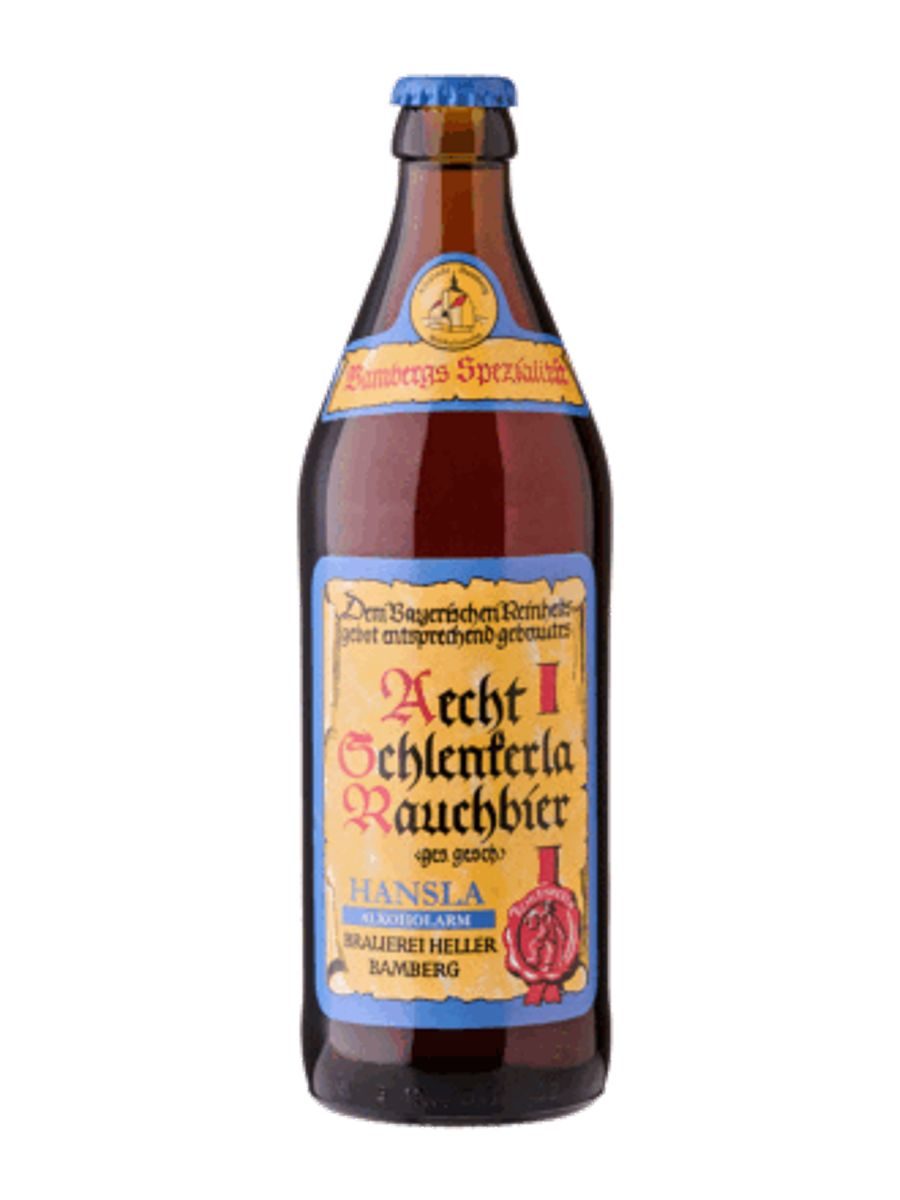
Aecht Schlenkerla Rauchbier Hansla
Brewed by Schlenkerla / Heller-Bräu Trum
Small strength changes the balance without removing smoke.
BAR NOTES
Hansla brings a historical low-alcohol brewing approach into a hoppy, mildly smoky beer at 0.9 percent alcohol and thirty-five IBU. It is a low-alcohol boundary comparison, not a conventional Märzen scaled down in name or an alcohol-free claim.
Low alcohol provides another boundary case for describing a beer beyond a conventional classic base. Its smoke and hops remain explicit while its strength stays below one percent; this guide treats it as a comparison rather than claiming the brewery publishes a competition classification.
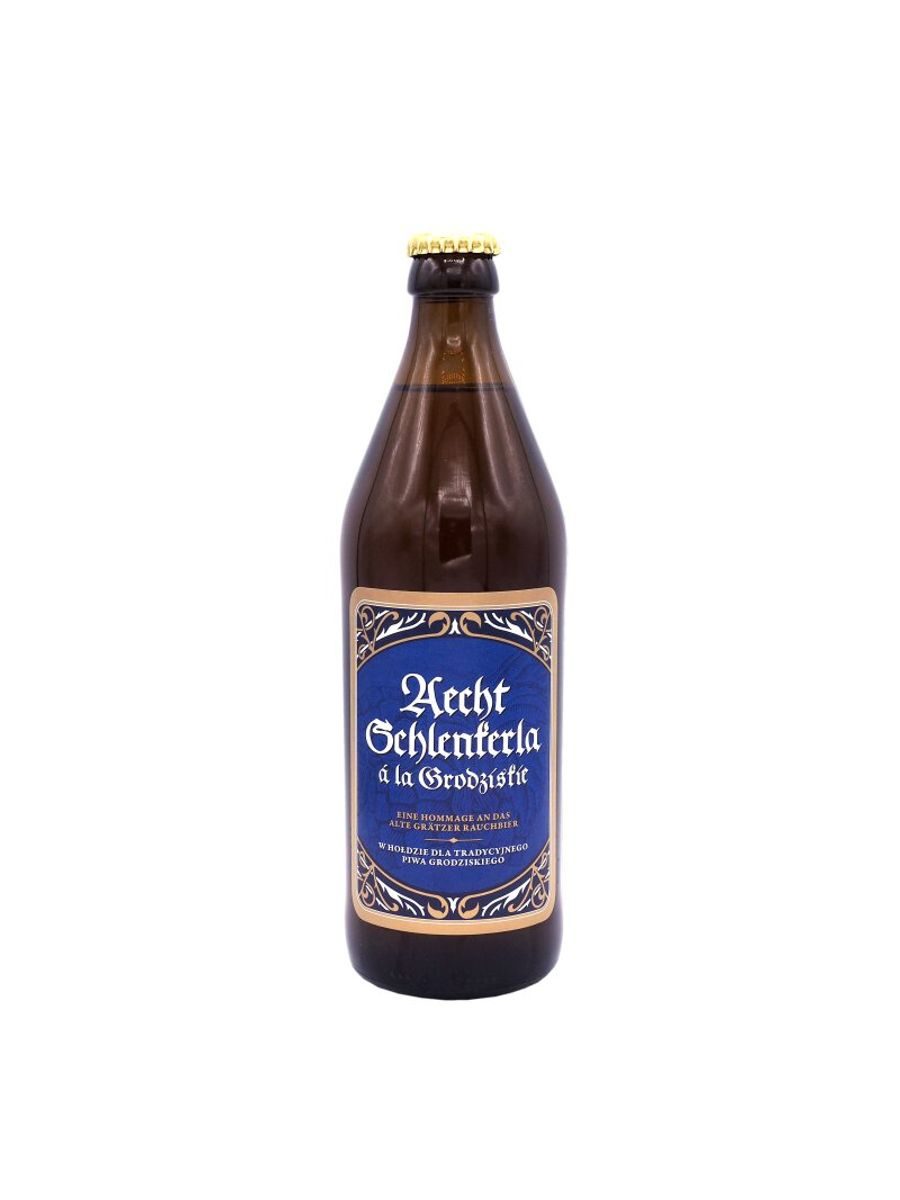
Aecht Schlenkerla à la Grodziskie
Brewed by Schlenkerla / Heller-Bräu Trum
Bottom fermentation distinguishes this Polish-style interpretation.
BAR NOTES
Schlenkerla’s Grodziskie interpretation uses oak-smoked wheat malt and Lubelski hops at 2.9 percent alcohol. The brewery specifies bottom fermentation and lists barley alongside wheat; retain those differences from the entirely wheat-based, top-fermented Polish historical beer rather than treating the two as identical.
The interpretation is useful because its departures from traditional Grodziskie are declared, not guessed from a label. Compare with the Polish example later in the flight: bottom fermentation and barley matter, while oak-smoked wheat alone cannot establish that both beers are interchangeable.
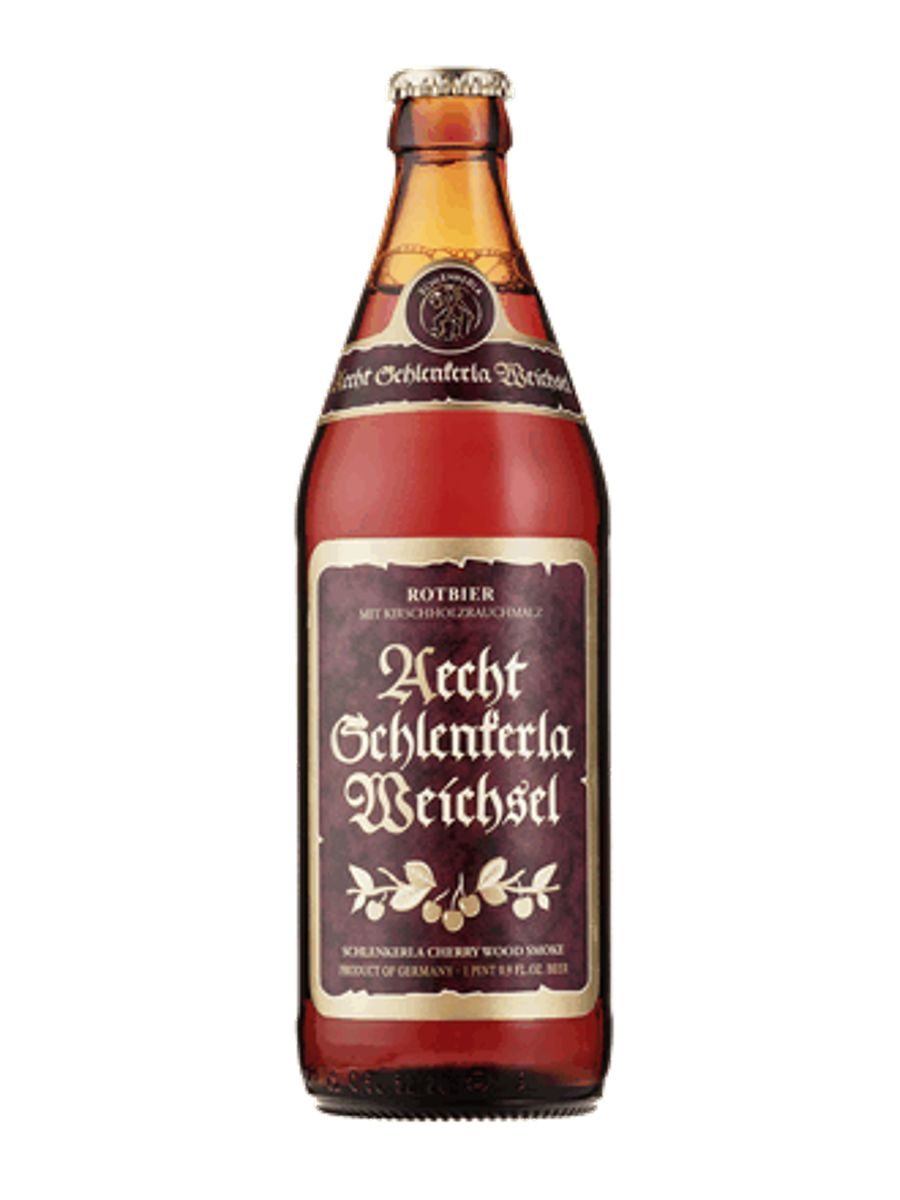
Aecht Schlenkerla Weichsel Rotbier
Brewed by Schlenkerla / Heller-Bräu Trum
Cherry refers to the smoke wood rather than a fruit addition.
BAR NOTES
Weichsel is a red lager made with cherrywood-smoked malt at 4.6 percent alcohol and twenty-eight IBU. Its fruit-like smoke and hop impressions are tasting character; the recipe is not presented as cherry fruit beer merely because the wood comes from cherry trees.
This red lager tests a frequent mistake: cherrywood does not mean cherry fruit. Before choosing 32B, identify the base and any actual specialty ingredient or transformative process; a varietal wood aroma can remain compatible with a classic-style smoked beer.
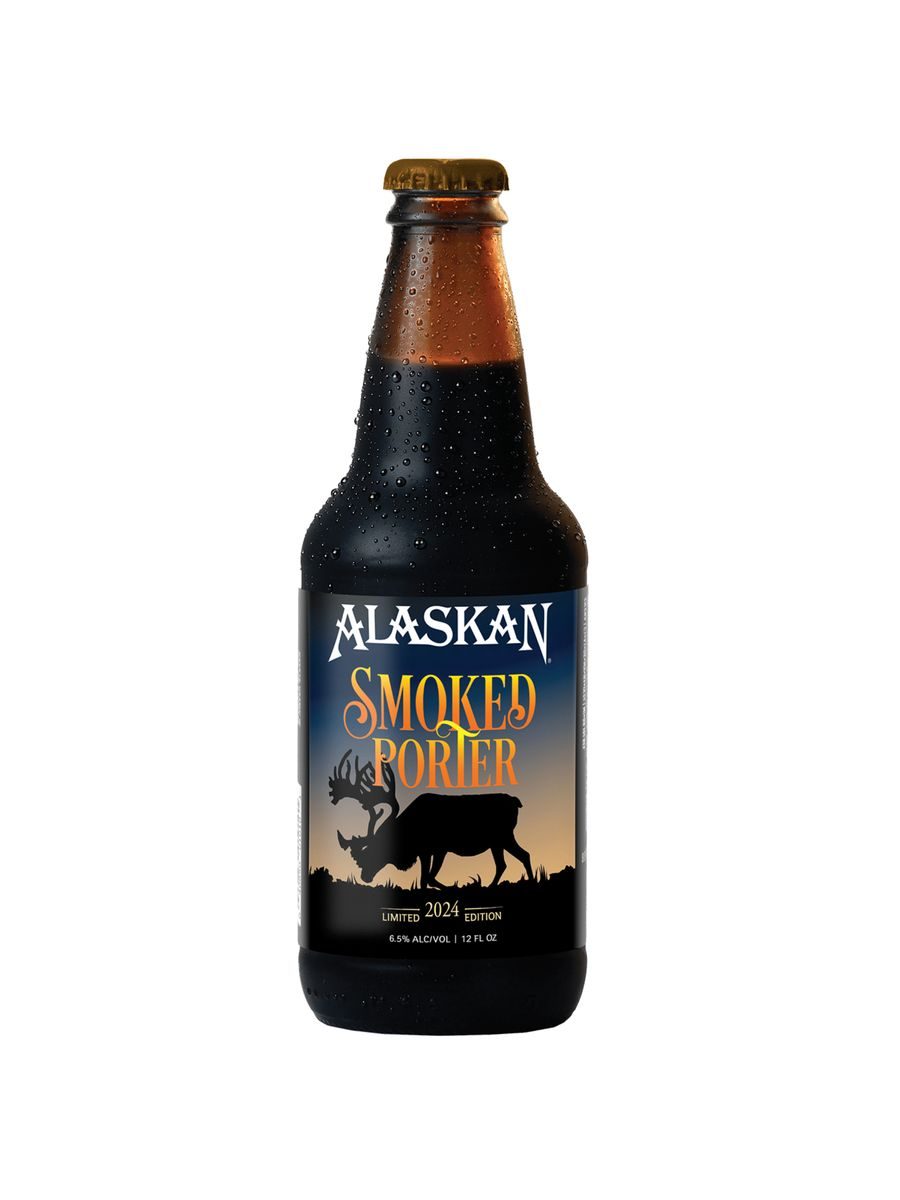
Alaskan Smoked Porter — 2024 vintage
Brewed by Alaskan Brewing Co.
Alder smoke supports a dark porter without added adjuncts.
BAR NOTES
Alaskan Smoked Porter uses selected malts smoked over local alder wood at 6.5 percent alcohol and forty-five IBU. The photographed bottle is the 2024 vintage; this is a classic-style smoke reference, not automatically a specialty entry because its base is porter.
The porter is the classic-style control beside the enriched pFriem recipe. Both are dark and smoky, but only the latter declares maple syrup and bourbon-barrel maturation; the classic smoked guide makes that ingredient-and-process distinction clearer than a simple porter-versus-lager rule.
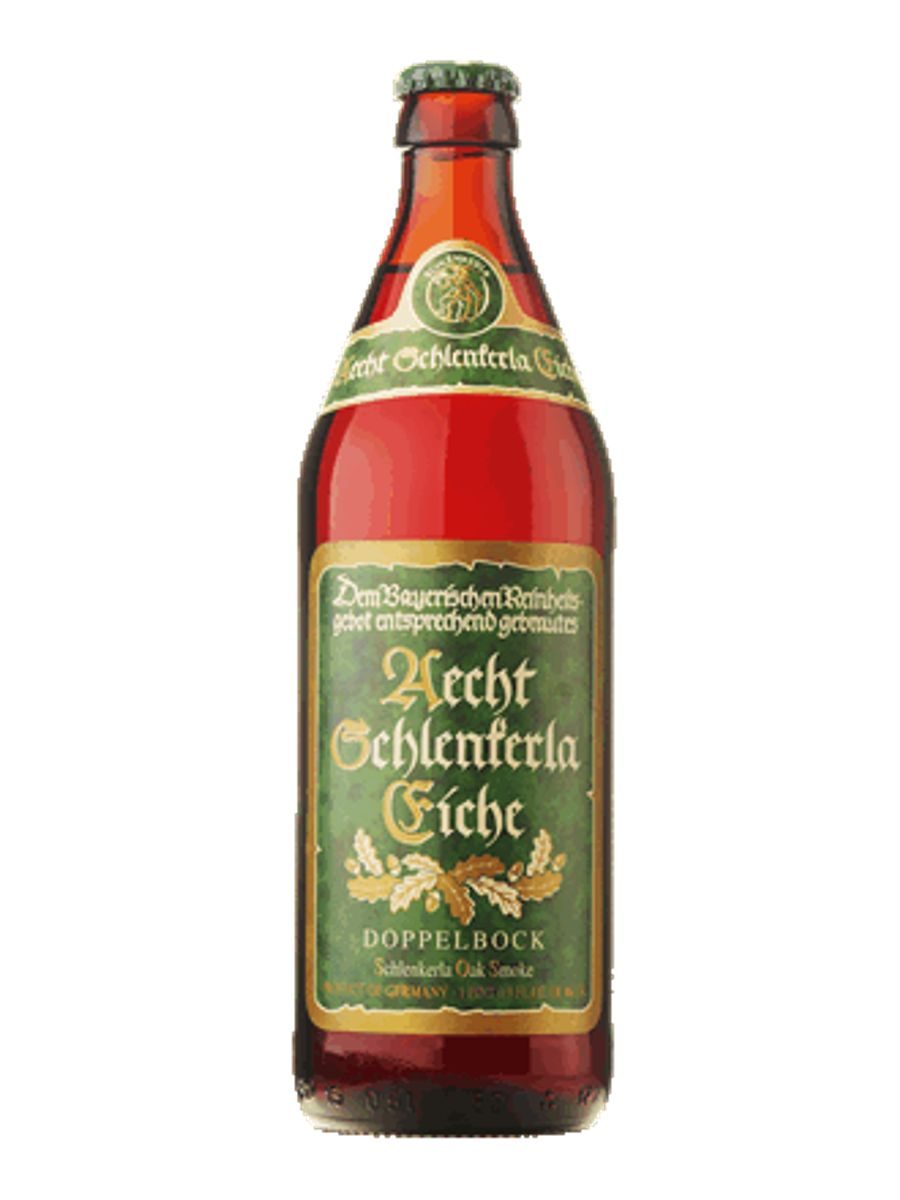
Aecht Schlenkerla Eiche Doppelbock
Brewed by Schlenkerla / Heller-Bräu Trum
Oak smoke is an ingredient choice, distinct from barrel aging.
BAR NOTES
Eiche uses malt dried over oak fire rather than the brewery’s usual beechwood. At eight percent alcohol and thirty-five IBU, its doppelbock base supports the smoke; oak-smoked grain does not itself establish that the finished beer was matured in a barrel.
Oak-smoked doppelbock supplies a stronger classic-style comparison without a declared fruit, spice or syrup addition. Separate the smoke source from actual barrel contact, and avoid using alcohol strength as a shortcut for calling any beer specialty smoked.
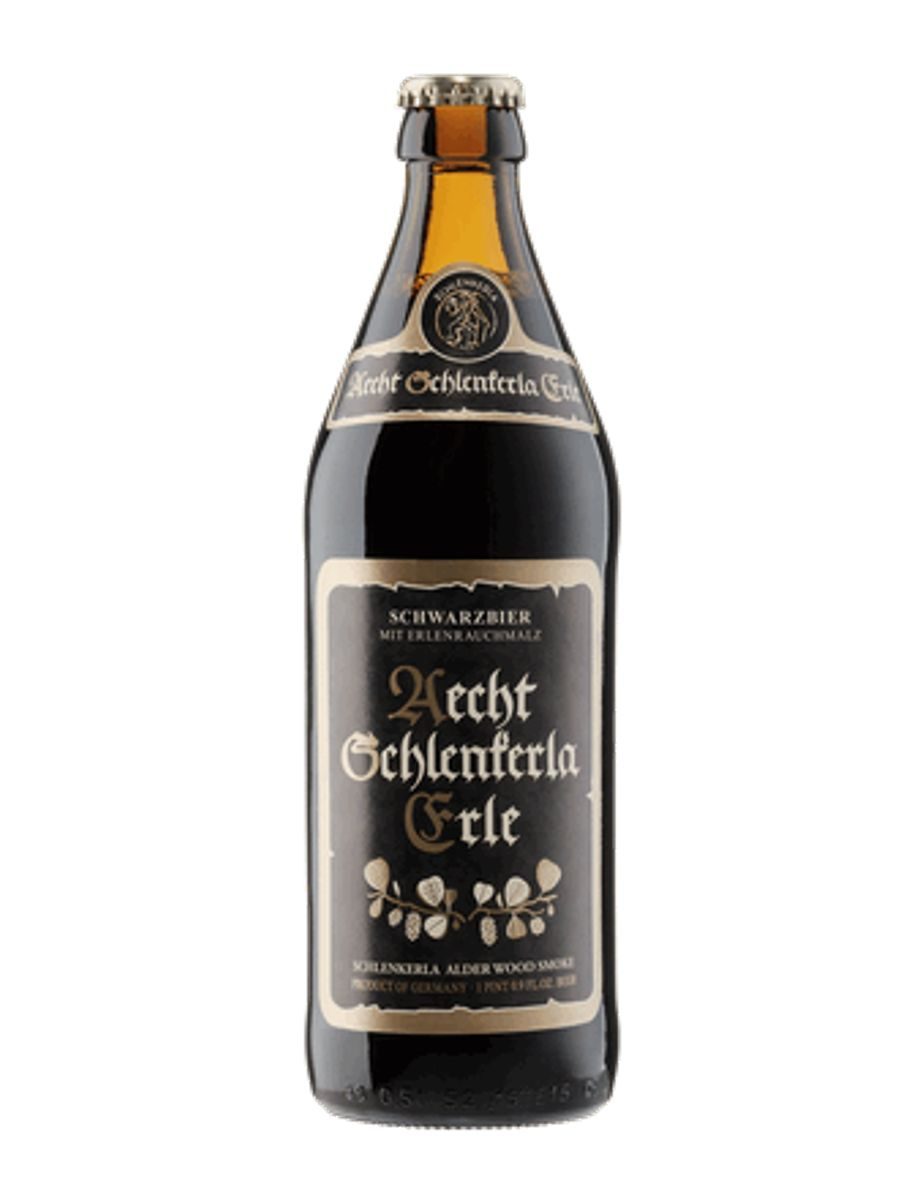
Aecht Schlenkerla Erle Schwarzbier
Brewed by Schlenkerla / Heller-Bräu Trum
A dry black-lager comparison at moderate strength.
BAR NOTES
Erle combines alder-smoked malt with a substantial roasted-malt contribution at 4.2 percent alcohol and twenty-five IBU. The wood changes the smoke while the black-lager base changes the roast; neither dark color nor alder alone makes it a specialty smoked beer.
Compare the alder-smoked black lager with the classic porter before returning to the maple example. Roast and smoke may reinforce one another in both, but a dark appearance is not a specialty ingredient; the declared base remains the first useful classification question.
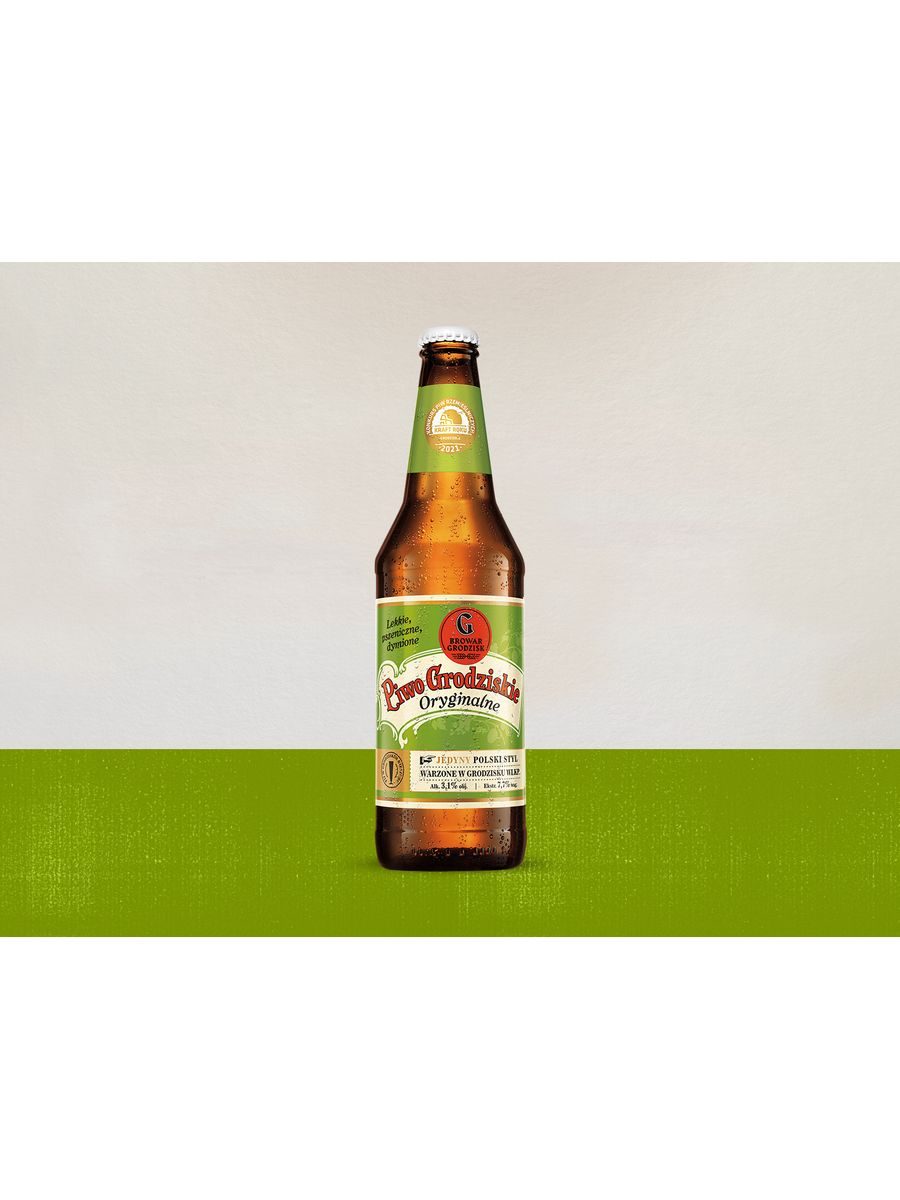
Piwo Grodziskie
Brewed by Browar Grodzisk
The Polish historical reference supplies an inherent-smoke control.
BAR NOTES
Piwo Grodziskie uses entirely oak-smoked wheat malt and is bottle conditioned at 3.1 percent alcohol. This Polish historical style includes smoke in its definition; it provides a category-boundary comparison, not a new specialty entry solely because it differs from Bamberg lager.
This historical beer includes smoke as part of its established identity, making it an inherent-smoke control. The Grodziskie guide explains the wheat-and-oak foundation; historical interest does not by itself turn a faithful example into a new specialty smoked beer.
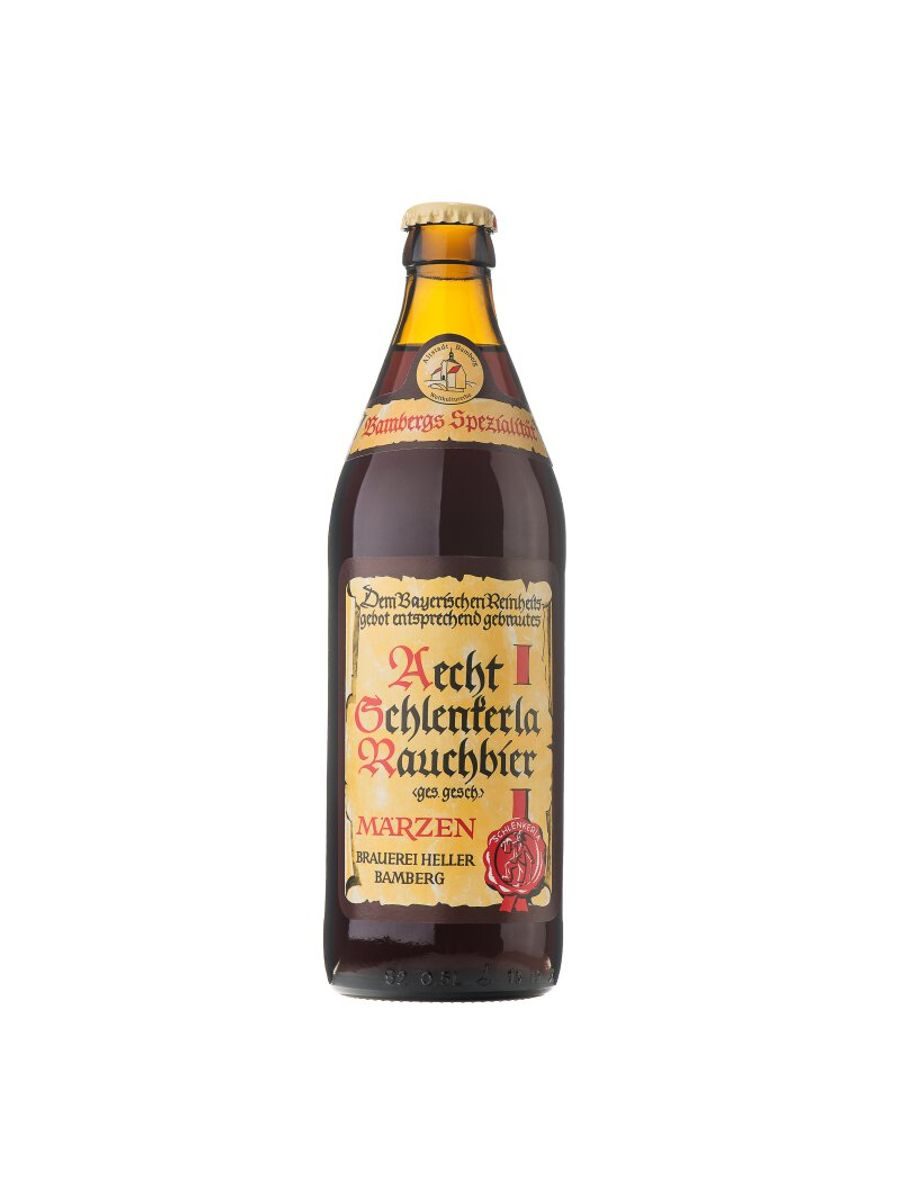
Aecht Schlenkerla Rauchbier Märzen
Brewed by Schlenkerla / Heller-Bräu Trum
Beechwood smoke over a recognizable amber lager.
BAR NOTES
Schlenkerla Märzen supplies the beechwood-smoked lager reference at 5.1 percent alcohol. Its amber malt and smoke belong together; for competition purposes, traditional Bamberg Rauchbier has its own category rather than becoming a 32A entry simply because it is smoky.
Finish the category discussion with the dedicated Rauchbier reference. Its place in the flight helps show why ten comparisons are not ten strict 32B entries: smoke can define an established style, enhance a classic base, or join additional specialty ingredients and processes.
Keep Exploring Smoked Beer
Compare classic smoked bases, specialty ingredients and the lager tradition that made smoke a defining beer flavor.