Scottish Light: 10-Beer Comparison Flight and Style Guide

SCOTLAND’S SMALLEST MALT-LED PINT

Scottish Light is a dark, low-alcohol ale with caramel, toast, toffee and light fruit balanced by a faint roasted dryness.

Its old 60-shilling association suggests economy and session strength, but the beer should still taste complete rather than thin.

The quick answer

Expect deep copper to dark brown color, medium-low to medium body and gentle carbonation. Malt leads throughout, while bitterness works quietly in the background.

MeasureBJCP range
Original gravity1.030–1.035
Final gravity1.010–1.013
Bitterness10–20 IBU
Color17–25 SRM
Alcohol2.5–3.3%

What Scottish Light tastes like

Toast, breadcrumbs, biscuit, caramel, toffee or butterscotch can appear, often with light apple- or pear-like fruit. The finish gains a slight dry edge from colored or roasted grain.

The style is not pale, smoky or hop-forward. Its challenge is packing recognizable malt flavor into very little alcohol while keeping residual sweetness under control.

The 60-shilling connection

Scottish Light is often called 60/-, but historic shilling labels described price and varied by brewery and period. The modern category uses the term as convenient shorthand for the weakest member of the Scottish ale family.

The style took its recognizable modern form after World War II. It was usually a draught product and is now uncommon, which makes a well-kept example especially valuable for understanding low-gravity brewing.

How Scottish Light is brewed

Pale ale malt forms the base, supported by crystal or colored malt and sometimes sugar, corn or wheat. Dark color does not require an aggressive dose of roasted grain.

Clean yeast, soft water and restrained English-type hops preserve malt clarity. Good attenuation and a small touch of roast are essential because a high finishing gravity can otherwise make the beer seem cloying.

Ten Scottish Light references and comparisons

This ten-beer flight begins with two Scottish Light references: a current 3.0% Sixty Shilling from Cubby Haus and 3.2% Belhaven Best, named in the BJCP guidelines. Eight deliberate comparisons explore English dark ales, stronger Scottish ales, a blonde ale and an alcohol-free brown ale. They are not ten strict Scottish Light examples. The 2021 style band is 2.5–3.3%, and light describes modest strength rather than pale color.
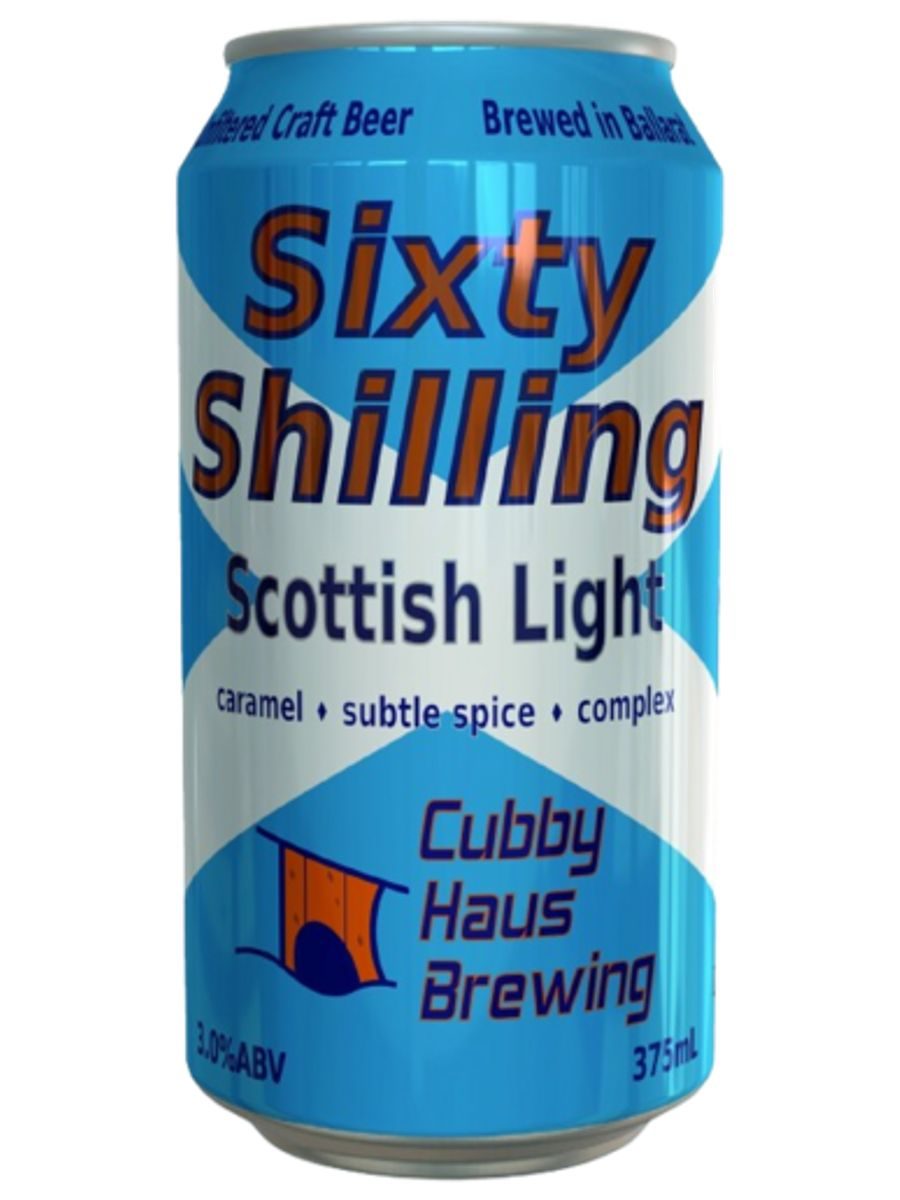
Cubby Haus Sixty Shilling Scottish Light
#1 in this roundup
Beer profile

Cubby Haus Sixty Shilling Scottish Light

Brewed by Cubby Haus Brewing

StyleScottish Light
ABV3.0%
Tasting roleExplicit 14A canned reference
Brewed inBallarat, Victoria, Australia

A current 3.0% Scottish Light in a 375ml can, brewed in Australia.

BAR NOTES

Cubby Haus explicitly identifies this 3.0% canned beer as Scottish Light. Its current listing describes caramel, bread and gentle spice, with pale, Munich, crystal, black and torrified-wheat malts. The current specification is 20 IBU; older pages gave a slightly different number.

Compare a gentle pour with Belhaven Best’s nitro instructions, keeping serving method in mind. Dark color and modest alcohol belong together here; light does not mean pale lager. The Scottish Light guide explains the small, malt-led end of the Scottish strength ladder.

Belhaven Best
#2 in this roundup
Beer profile

Belhaven Best

Brewed by Belhaven Brewery

StyleScottish session ale / Scottish Light reference
ABV3.2%
Tasting roleBJCP-listed Light reference
Brewed inDunbar, East Lothian, Scotland

A named Scottish Light reference at 3.2%, shown in its current nitro can.

BAR NOTES

Belhaven specifies Best at 3.2%, with pale, crystal and black malts behind its toffee and caramel character. It is a named Scottish Light commercial example in the 2021 BJCP guidelines. The selected nitro can emphasizes a creamy presentation; current bottles are also offered.

Follow the can’s hard-pour directions rather than assuming every packaged ale requires the same gentle treatment. Compare creamy texture with Cubby Haus’s conditioned can. The beer glass guide helps you keep the serving vessel consistent while comparing head, aroma and mouthfeel.

Harvey’s Dark Mild
#3 in this roundup
Beer profile

Harvey’s Dark Mild

Brewed by Harvey’s Brewery

StyleEnglish Dark Mild; comparison
ABV3.0%
Tasting roleLow-strength English dark malt
Brewed inLewes, East Sussex, England

An explicitly English Dark Mild comparison at the same 3.0% strength as Sixty Shilling.

BAR NOTES

Harvey’s current 3.0% bottled Dark Mild has a mahogany appearance, gentle sweetness and a dry nutty finish. It is an English Mild comparison at Scottish Light strength, not a Scottish Light made in Scotland. The brewery lists 500ml bottles throughout the year.

Compare its nutty dryness with the caramel and bread of Sixty Shilling. Similar alcohol makes the different malt balances easier to notice. The Dark Mild guide explains the English neighbor without treating two dark session beers as interchangeable styles.

Banks’s Mild
#4 in this roundup
Beer profile

Banks’s Mild

Brewed by Banks’s / Carlsberg Britvic

StyleEnglish Dark Mild; comparison
ABV3.5%
Tasting role3.5% neighboring session ale
Brewed inUK packaged reference; Marston’s Brewery Shop, Burton upon Trent

A 3.5% English Mild comparison, distinct from a Scottish Heavy reference.

BAR NOTES

Banks’s current brewery shop lists Mild at 3.5% in 500ml cans, with a smooth malty character. That strength overlaps Scottish Heavy, but the beer remains an English Mild comparison. The selected packaged listing supplies the facts without guessing its current production town.

At 3.5%, this English Mild is stronger than the Scottish Light band. Use it to see whether a small alcohol increase necessarily creates a heavier impression. Dark Mild’s style guide explains why the English malt balance also needs its own description.

Harvey’s Old Ale
#5 in this roundup
Beer profile

Harvey’s Old Ale

Brewed by Harvey’s Brewery

StyleEnglish Old Ale; comparison
ABV3.6%
Tasting roleLow-strength dark English neighbor
Brewed inLewes, East Sussex, England

A 3.6% English Old Ale comparison that keeps name and actual strength separate.

BAR NOTES

Harvey’s current bottled Old Ale is 3.6%, with producer descriptions of burnt sugars, roast and dried fruit. Its name does not establish high alcohol or whisky ageing. It provides an English dark-ale comparison inside the Scottish Heavy alcohol band, without changing its stated identity.

The 3.6% strength is above Scottish Light, so treat this as a neighboring English comparison. Its dried-fruit and burnt-sugar profile lets you test whether darker flavors imply stronger beer. The British dark-ale family supplies context for those neighboring malt styles.

Swannay Orkney Tartan
#6 in this roundup
Beer profile

Swannay Orkney Tartan

Brewed by Swannay Brewery

StyleScottish Ale; Heavy-strength reference
ABV3.7%
Tasting roleWithin the 2021 Heavy strength range
Brewed inSwannay, Orkney, Scotland

A 3.7% Scottish ale for the Heavy comparison; currently sold out at the producer.

BAR NOTES

Swannay describes Orkney Tartan as a full-bodied, sweet and roasty Scottish ale, made with pale malt and roasted barley at 3.7%. Its unfiltered 440ml can supplies a useful Heavy-strength reference. The fresh producer catalogue currently marks every pack size unavailable, so check stock before planning a purchase.

Move from Scottish Light into this 3.7% Scottish ale and compare body before assuming that every dark Scottish can belongs to the same style. The Heavy branch explains the next strength step; the producer’s current stock limitation remains worth checking.

Orkney Raven Ale
#7 in this roundup
Beer profile

Orkney Raven Ale

Brewed by Orkney Brewery

StyleScottish Heavy reference / amber pale ale
ABV3.8%
Tasting roleBJCP-listed Heavy reference
Brewed inQuoyloo, Orkney, Scotland

A current 3.8% bottled reference for Heavy, with biscuit malt and a spicy hop finish.

BAR NOTES

Raven is a named Scottish Heavy commercial example in the 2021 guidelines, while its brewer describes an amber pale ale. The current bottle is 3.8%. Pale, crystal and wheat malts meet East Kent Goldings and Fuggles, bringing biscuit, toast and a clean spicy-orange bitterness.

Raven is a Heavy reference at 3.8%, above Scottish Light’s range. Use its biscuit and hop finish to show what changes beyond the smallest dark pint. Scottish Heavy’s guide describes that stronger neighboring branch without treating the two categories as duplicates.

Orkney Northern Light
#8 in this roundup
Beer profile

Orkney Northern Light

Brewed by Orkney Brewery

StyleBlonde ale; Scottish Light name comparison
ABV4.0%
Tasting roleLight name does not mean 14A
Brewed inQuoyloo, Orkney, Scotland

A 4.0% blonde comparison whose Light name does not identify the Scottish Light style.

BAR NOTES

Northern Light is currently a 4.0% blonde ale in a 500ml bottle. Its producer describes citrus, fresh bread, spice and apricot with a crisp hop character. The name refers to the northern sky, not the traditional low-strength dark Scottish Light category.

Put its pale appearance beside Cubby Haus’s dark 3.0% can and let the distinction become obvious. Light on a label needs context. The Pale Commonwealth Beer family explores other pale ales while keeping color, alcohol and fermentation separate.

Samuel Smith’s Alcohol Free Sam’s Brown Ale
#9 in this roundup
Beer profile

Samuel Smith’s Alcohol Free Sam’s Brown Ale

Brewed by Samuel Smith’s Old Brewery

StyleAlcohol-free Brown Ale; comparison
ABVLess than 0.4%
Tasting roleBelow the Scottish Light alcohol band
Brewed inTadcaster, North Yorkshire, England

An alcohol-free brown comparison below 0.4% by the current shop specification.

BAR NOTES

Samuel Smith’s current shop describes Sam’s Brown Ale as below 0.4% alcohol, with a malt-forward nose and a dry satisfying finish. The bottle label uses the broader less-than-0.5% wording. This alcohol-free English Brown Ale is a contrast, outside Scottish Light’s 2.5–3.3% band.

Compare dark-malt aroma without expecting the body or warmth of an alcoholic Scottish ale. The shared brown color is a starting point, not a style verdict. The British Brown Ale guide explores the malt family behind this explicitly alcohol-free comparison.

Belhaven Scottish Ale
#10 in this roundup
Beer profile

Belhaven Scottish Ale

Brewed by Belhaven Brewery

StyleScottish Export
ABV5.2% bottled
Tasting roleNamed Export reference; current bottle
Brewed inDunbar, East Lothian, Scotland

The current 5.2% bottle, a named Export reference within the 2021 strength band.

BAR NOTES

The current Belhaven Scottish Ale bottle is 5.2%, with pale, crystal and black malts contributing biscuit and caramel. Belhaven describes modest bitterness, subtle fruit and an herbal undertone. Its 330ml bottle is offered for UK and export markets and is a named Scottish Export reference.

This 5.2% bottle is an Export reference, well above Scottish Light. Keep it as a deliberately fuller endpoint and compare biscuit malt with the lighter beer’s finish. Scottish Export’s guide explains the larger everyday Scottish ale without confusing it with Wee Heavy.

Scottish Light compared with nearby styles

Scottish Heavy shares the same flavors at slightly greater strength. Dark Mild can be similar in alcohol, but usually has a different balance and broader dark-malt character. Ordinary Bitter is paler, drier and more hop-driven.

KEEP THE FLIGHT GOING

Start with Scotland’s smallest dark pint

Compare Scottish Light with its stronger siblings and see how much malt fits below four percent.