Foreign Extra Stout: 10-Beer Comparison Flight and Style Guide
Foreign Extra Stout is a strong, very dark beer with prominent coffee and dark-chocolate roast, firm bitterness and a moderately dry finish.
It was built from the export-stout tradition and lands between Irish Extra Stout and Imperial Stout in strength and intensity.
The quick answer
Expect deep brown to black color, medium-full to full body and moderate carbonation. Roast is assertive but should avoid a harsh burnt bite.
| Measure | BJCP range |
|---|---|
| Original gravity | 1.056–1.075 |
| Final gravity | 1.010–1.018 |
| Bitterness | 50–70 IBU |
| Color | 30–40 SRM |
| Alcohol | 6.3–8.0% |
What Foreign Extra Stout tastes like
Coffee, dark chocolate and lightly burnt grain lead, supported by dried fruit, molasses or licorice. Bitterness is high enough to create a firm, structured finish.
Alcohol may add gentle warmth but should not become hot. The finish is drier and less sweet than Tropical Stout, even when both beers begin at similar gravity.
Why export stout was different
Historic export versions used more hops and longer maturation than domestic stout. The extra structure supported travel and created a beer with more bitterness, roast and keeping power.
Guinness traces Foreign Extra Stout to an 1801 beer made with additional hops for long-distance markets. Names such as Foreign Stout, Export Stout and Foreign Export Stout describe the same broad family.
How Foreign Extra Stout is brewed
Pale malt and dark roasted grain form the base, sometimes joined by brown or amber malt, sugar or adjunct grain. English-type hops primarily build bitterness.
The challenge is integrating large roast and bitterness without abrasive harshness. Adequate body and fermentation fruit round the edges while a dry finish preserves authority.
Ten Foreign Extra Stout references and comparisons
Six Foreign Extra Stout references lead this ten-beer flight. Two tropical stouts, an Irish Extra Stout and a milk stout provide clearly labeled contrasts. The usual 2021 Foreign Extra Stout alcohol band is 6.3–8.0%; selected current strengths and notable bitterness differences are stated, including the above-band Lion comparison and Pelican’s lower listed IBU figure.
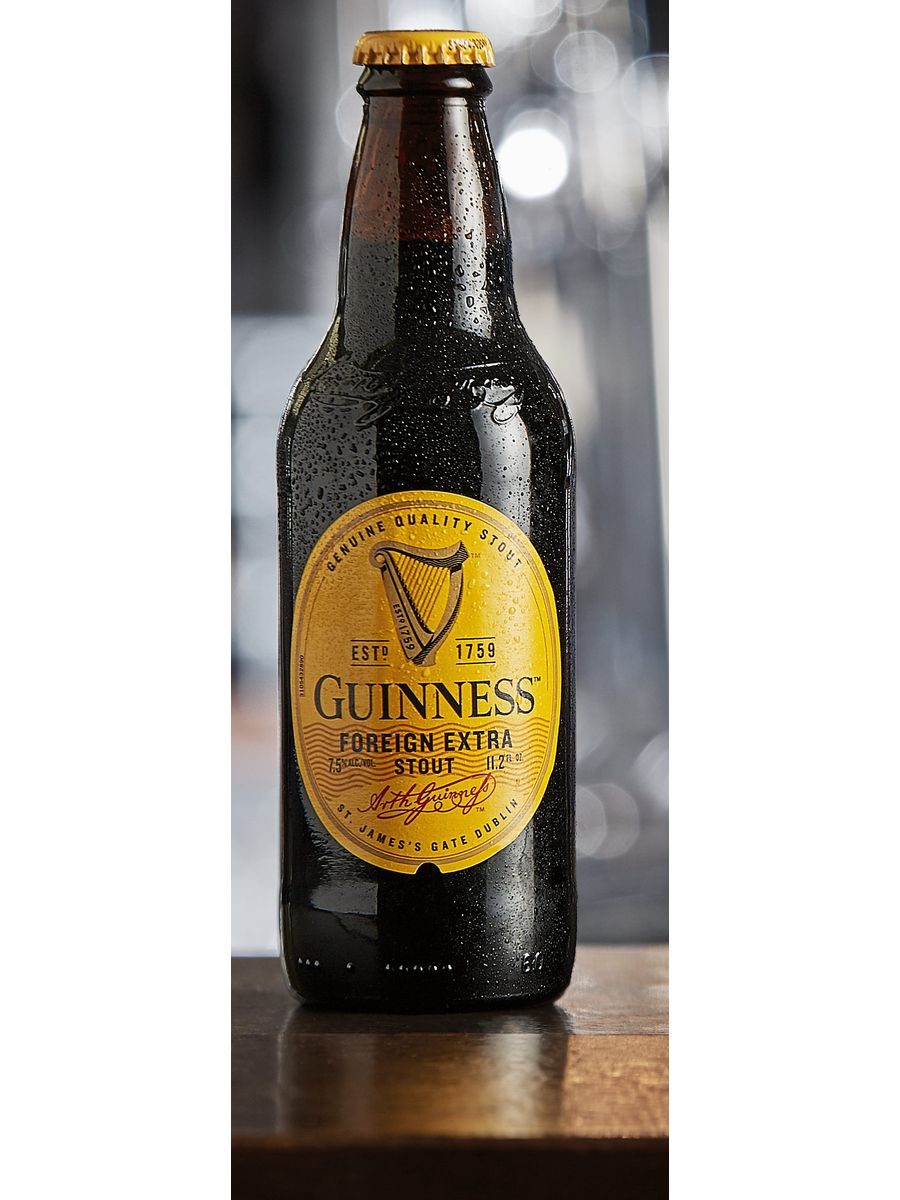
Guinness Foreign Extra Stout
Brewed by Guinness
A stronger boundary comparison with roast, chocolate and dark fruit.
BAR NOTES
The selected Guinness Foreign Extra specification is 7.5%, above Irish Extra Stout’s usual strength band. This is an explicit neighboring-style comparison, useful for showing that Extra and Foreign Extra are not interchangeable names.
Finish the stout comparison with a smaller serving of this stronger beer. The Imperial Stout roundup maps another step beyond the session pint; compare warmth and concentration while keeping the style boundaries visible.

Coopers Best Extra Stout
Brewed by Coopers Brewery
A stout contrast for the flight’s endpoint; its different style is explicit.
BAR NOTES
Coopers Best Extra Stout is a 6.3% dark beer in the brewery’s current range. Roasted malt, coffee and chocolate impressions make this the flight’s deliberately contrasting endpoint, rather than a beer to classify as Australian Sparkling Ale.
Use a small final pour to contrast roast-driven richness with the benchmark’s pale-malt and yeast character. Stronger alcohol alone cannot explain the difference. The Oceania beer roundup introduces Australia’s broader dark-beer tradition without allowing the geographic connection to erase style boundaries.

Export Stout London 1890
Brewed by The Kernel Brewery
Historic-recipe export reference.
BAR NOTES
The selected current brewery-shop batch is listed at 7.5% in a 330ml bottle. Its London 1890 recipe draws on a historical Truman brewing record, with multiple dark malts; other batches can carry a different labeled alcohol figure.
Compare this London interpretation with Guinness Foreign Extra before adding food, listening for differences in roast depth and finish. The historical recipe connection provides context, but the current batch label remains the right strength to record for the bottle you taste. Continue with the companion style guide.

Ridgeway Foreign Export Stout
Brewed by Ridgeway Brewing
Strong English export reference.
BAR NOTES
Ridgeway’s current Foreign Export Stout listing specifies 8.0% in a 500ml bottle. Its description moves from roast, coffee and spice toward licorice, caramel and raisin with development, accompanied by English leaf hops rather than a novelty flavor addition.
Start with a small pour and distinguish dark-fruit impressions from simple sweetness. Against a lower-strength Extra Stout, ask how alcohol and malt depth change the finish; strong export beer still benefits from structure rather than an indefinitely sugary aftertaste. Continue with the companion style guide.

Tsunami Export Stout
Brewed by Pelican Brewing Company
Named export-stout benchmark.
BAR NOTES
Pelican’s current Tsunami specification gives 7.0% and 45 IBU, with flaked barley and several roasted malts. The selected 19.2-ounce can matches those figures; its bitterness is below the guideline’s usual Foreign Extra Stout band despite its named benchmark status.
Watch the balance of roast, cappuccino-like aroma and finish rather than judging the style from the IBU number alone. Taste alongside Coopers or Guinness Foreign Extra to see how different breweries place bitterness around a substantial dark-malt foundation. Continue with the companion style guide.

Malpais Stout
Brewed by La Cumbre Brewing Company
American Foreign Extra interpretation.
BAR NOTES
La Cumbre currently lists Malpais Stout at 7.5%, with a seven-malt recipe and Foreign Extra Stout designation on the can. This year-round American interpretation adds another producer perspective without requiring flavored ingredients or imperial-stout strength.
Compare its roast shape with the historic-recipe Kernel bottle, then return to the first sample after both warm slightly. Different malt combinations can shift coffee, cocoa and dark-fruit impressions even when the selected beers share the same alcohol percentage. Continue with the beer flavor wheel.

Dragon Stout
Brewed by Desnoes & Geddes
Jamaican tropical-stout benchmark.
BAR NOTES
Dragon’s current nutrition information lists 7.5% alcohol, with barley, sugar, glucose syrup and hop extract among the ingredients. The selected Jamaican bottle makes a named tropical-stout reference that should be distinguished from stronger Dragon-branded variants.
Taste for the combination of dark malt, body and a rounded finish before comparing it with Foreign Extra Stout. Similar alcohol levels can conceal different balances: a tropical reference need not show the same dry, assertively bitter finish as an export interpretation. Continue with the companion style guide.

Lion Stout
Brewed by Lion Brewery
Named benchmark above usual ABV band.
BAR NOTES
The current Lion Stout can is listed at 8.8% by its importer, consistent with the brewery’s recent annual-report packaging. Although named among tropical-stout benchmarks, this selected edition exceeds the 2021 style’s usual 8.0% upper alcohol boundary.
Keep the above-band strength visible when building a tasting flight. Use a smaller pour and compare roast, warmth and body with Dragon; a named commercial benchmark can illuminate a style even when a current package falls outside a guideline range. Continue with the companion style guide.

O’Hara’s Leann Folláin
Brewed by Carlow Brewing Company
Mocha, biscuit and firmer hop balance in the stronger bottled branch.
BAR NOTES
Leann Folláin is listed at 6.0% and 42 IBU, explicitly as Extra Irish Stout. Its stronger malt base makes it a useful step up from the brewery’s 4.3% Stout while keeping the comparison inside the Irish Extra strength band.
Start with a small pour and revisit the session bottle afterward. The Irish Extra Stout guide helps distinguish added malt depth from added sweetness; note warmth, body and bitterness as three separate observations.

Left Hand Milk Stout Nitro
Brewed by Left Hand Brewing
Nitrogenated sweet-stout reference.
BAR NOTES
This nitrogenated milk stout is the 6.0% can edition. Its milk sugar and roasted malt provide the sweet-stout foundation, while the nitrogen dispense changes head structure and perceived texture alongside the familiar coffee-and-chocolate character.
Allow the cascade to settle before judging body. Compare it directly with the carbonated bottle to separate milk-sugar sweetness from the creamy sensation produced by nitrogen; identical strength does not guarantee an identical drinking experience. Continue with the glassware guide.
Foreign Extra Stout compared with nearby styles
Irish Extra Stout is weaker and less intense. Tropical Stout has similar strength but more sweetness and fruit. Imperial Stout is typically larger and more complex, while American Stout often adds pronounced American-hop aroma.
Trace stout built for the export trade
Compare Foreign Extra’s bitterness and dry roast with sweeter Tropical Stout and gentler British variants.