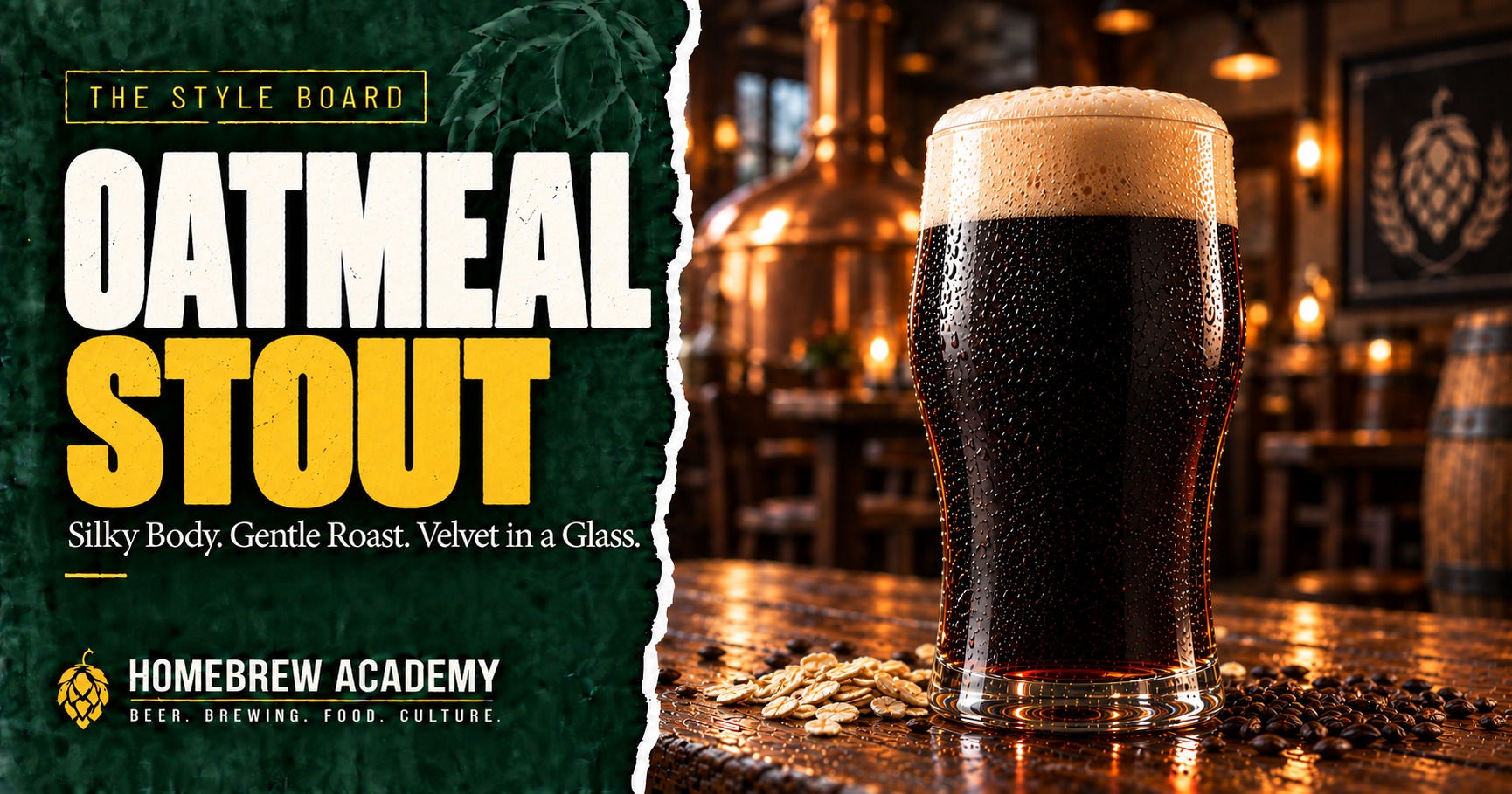
Oatmeal Stout: 10-Beer Comparison Flight and Style Guide
Oatmeal Stout is a dark, roasty ale with a smooth, silky body created by oats and a balance ranging from gently sweet to fairly dry.
Oats shape mouthfeel more reliably than flavor. A well-made example still tastes like stout, not breakfast cereal.
The quick answer
Expect brown to black color, medium-full body and low to moderate carbonation. Coffee, chocolate and roast are softened by a creamy texture, with restrained fruit and hops.
| Measure | BJCP range |
|---|---|
| Original gravity | 1.045–1.065 |
| Final gravity | 1.010–1.018 |
| Bitterness | 25–40 IBU |
| Color | 22–40 SRM |
| Alcohol | 4.2–5.9% |
What Oatmeal Stout tastes like
Roasted grain, coffee, cocoa and chocolate form the core. Oats may add earthy, nutty or grain-like nuances, but their main contribution is a fuller, silkier palate.
Sweetness varies. Some examples approach Sweet Stout, while others finish dry enough to emphasize coffee and bitterness. Harsh astringency and an oily, glue-like body are faults.
What oats do in beer
Oats contain proteins, gums and lipids that can increase body and smoothness. Used carefully, they soften the transition from dark grain to finish and make ordinary-strength stout feel substantial.
Too many oats can cause lautering problems and create an overly dense texture. Brewers typically pair them with a pale-malt base, roasted grain and enough bitterness to preserve definition.
Ten Oatmeal Stout references and comparisons
Five oatmeal-stout references begin this ten-beer flight, followed by two oat-containing neighboring stouts, a milk stout, a flavored chocolate stout and a Foreign Extra Stout. Each comparison is labeled. The usual 2021 Oatmeal Stout alcohol band is 4.2–5.9%; current commercial benchmarks can differ from the guideline bitterness range, so the brewery specifications are kept explicit.
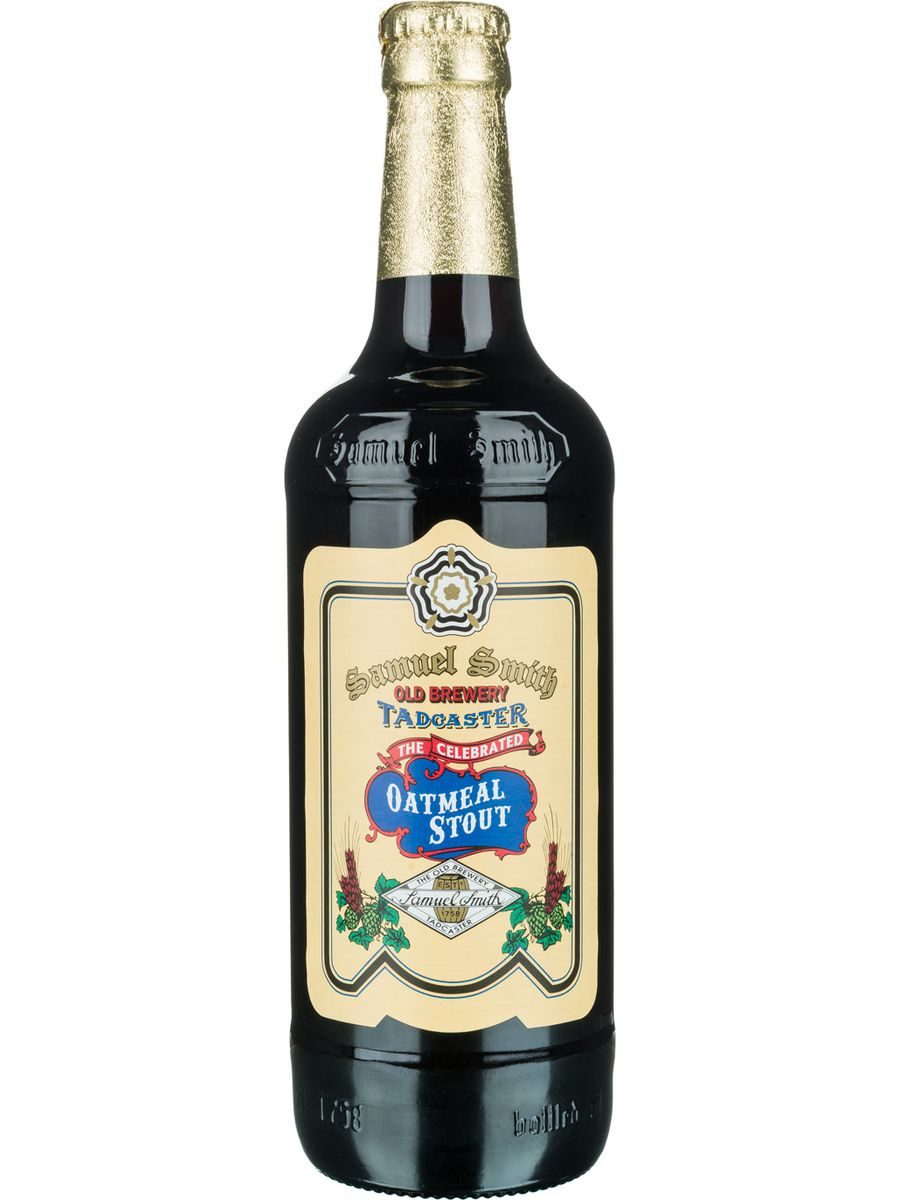
Samuel Smith Oatmeal Stout
Brewed by Samuel Smith’s Brewery
Traditional oatmeal-stout reference.
BAR NOTES
Samuel Smith lists Oatmeal Stout at 5.0% and describes fermentation in stone Yorkshire squares. Oatmeal joins the malt bill, but the beer’s medium-dry character makes it a useful reminder that oats do not automatically create dessert-like sweetness.
Take a sip before and after a small bite of cheese, watching how roast and body interact with fat. Compare the finish with a milk stout: similar smoothness can coexist with noticeably different sweetness and fermentation balance. Continue with cheese and beer pairings.
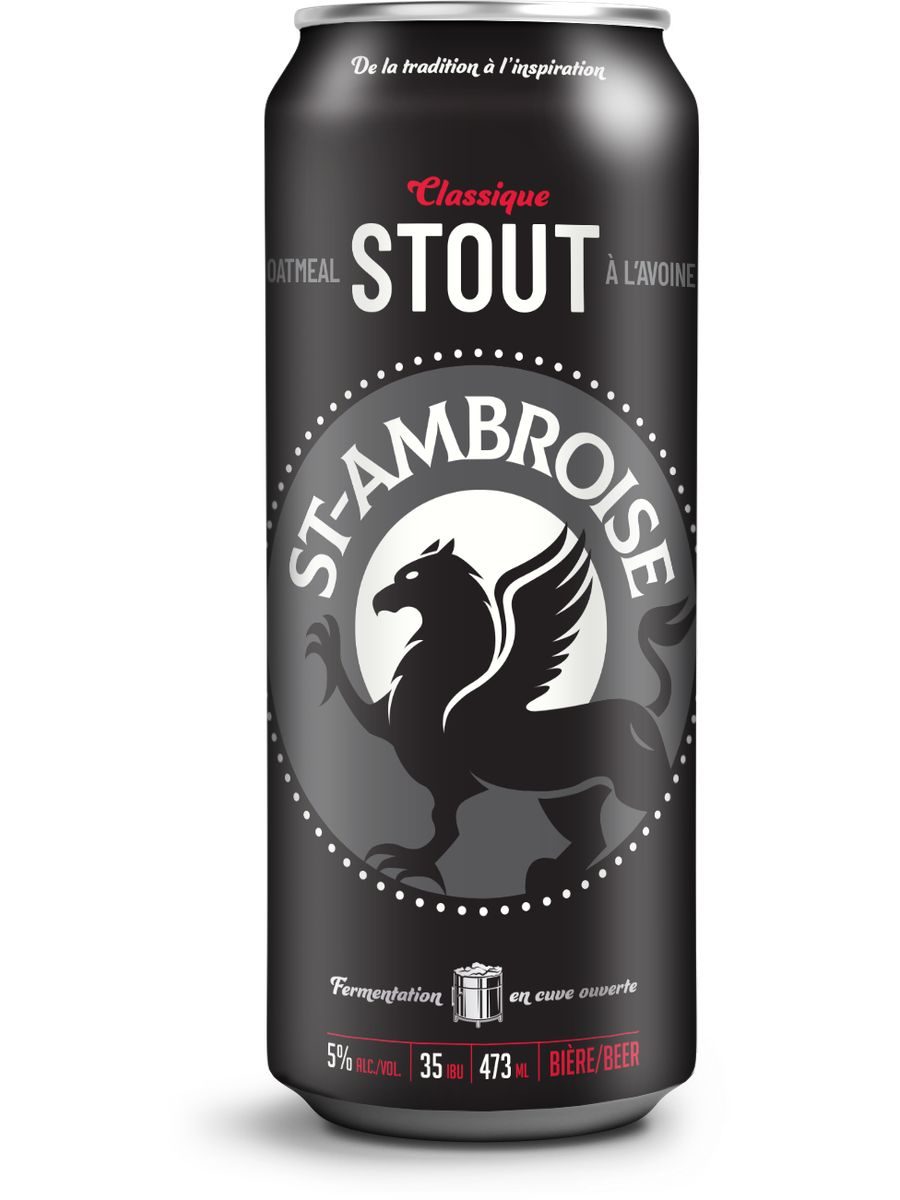
St-Ambroise Stout à l’avoine
Brewed by McAuslan Brewing
Canadian oatmeal-stout reference.
BAR NOTES
McAuslan’s current Stout listing specifies 5.0%, 45 IBU and a 473ml can carrying the Stout à l’avoine name. Oats and roasted malts underpin the brewery’s espresso-and-chocolate description, giving this Canadian reference a firmly dark-malt focus.
Set this beside a gentler oatmeal stout and examine the finish as well as the first impression. A creamy body need not erase bitterness or roast; the current 45-IBU specification also sits above the guideline’s usual oatmeal-stout bitterness band. Continue with the companion style guide.
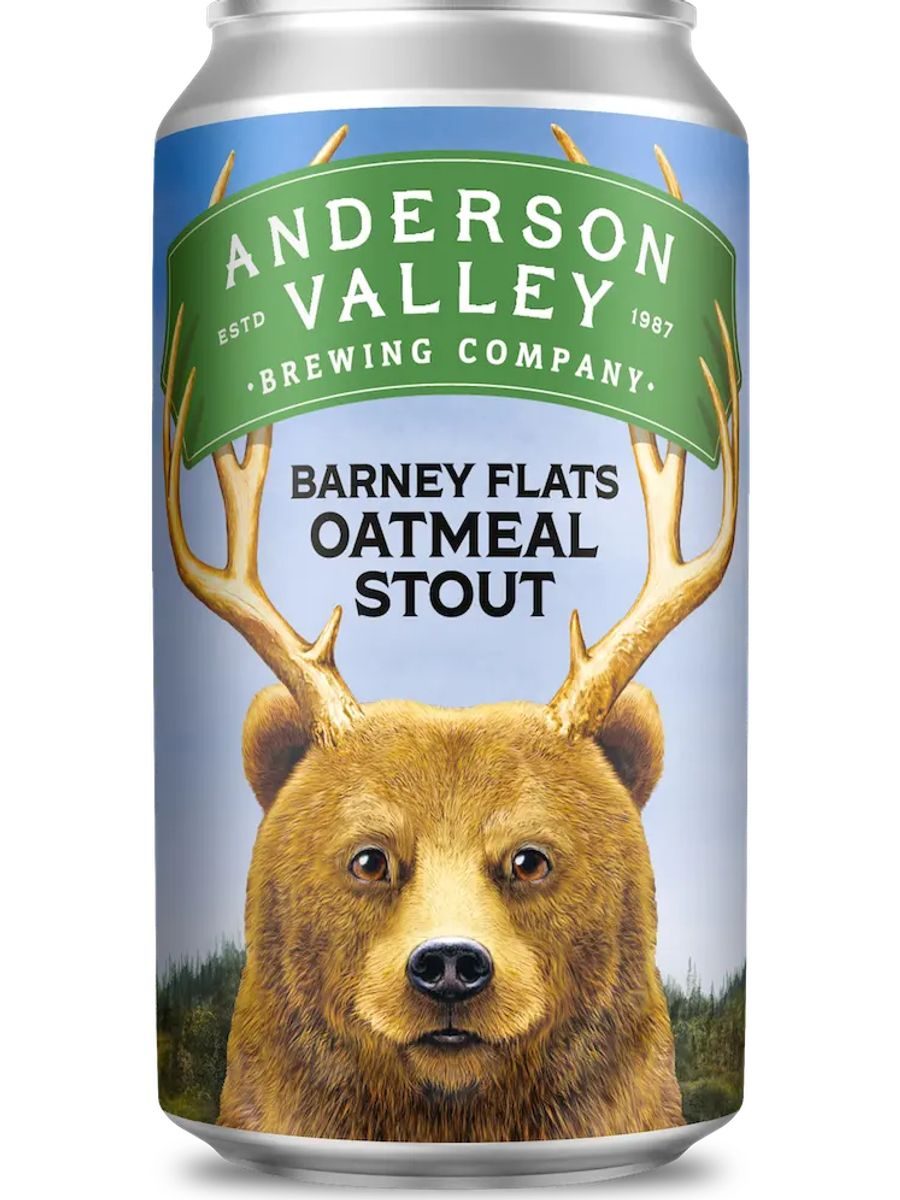
Barney Flats Oatmeal Stout
Brewed by Anderson Valley Brewing Company
Named oatmeal-stout benchmark.
BAR NOTES
Anderson Valley’s current year-round Barney Flats listing gives 5.8% and 14 IBU. Its grain bill includes oats alongside several malts, with Chinook and Northern Brewer hops; the brewery’s present bitterness figure is lower than the style’s usual guideline band.
Treat this named commercial benchmark as a beer to taste rather than a numerical template to force every recipe into. Compare body, roast and finish separately, particularly against St-Ambroise, whose current brewery specification describes a much higher bitterness. Continue with the companion style guide.
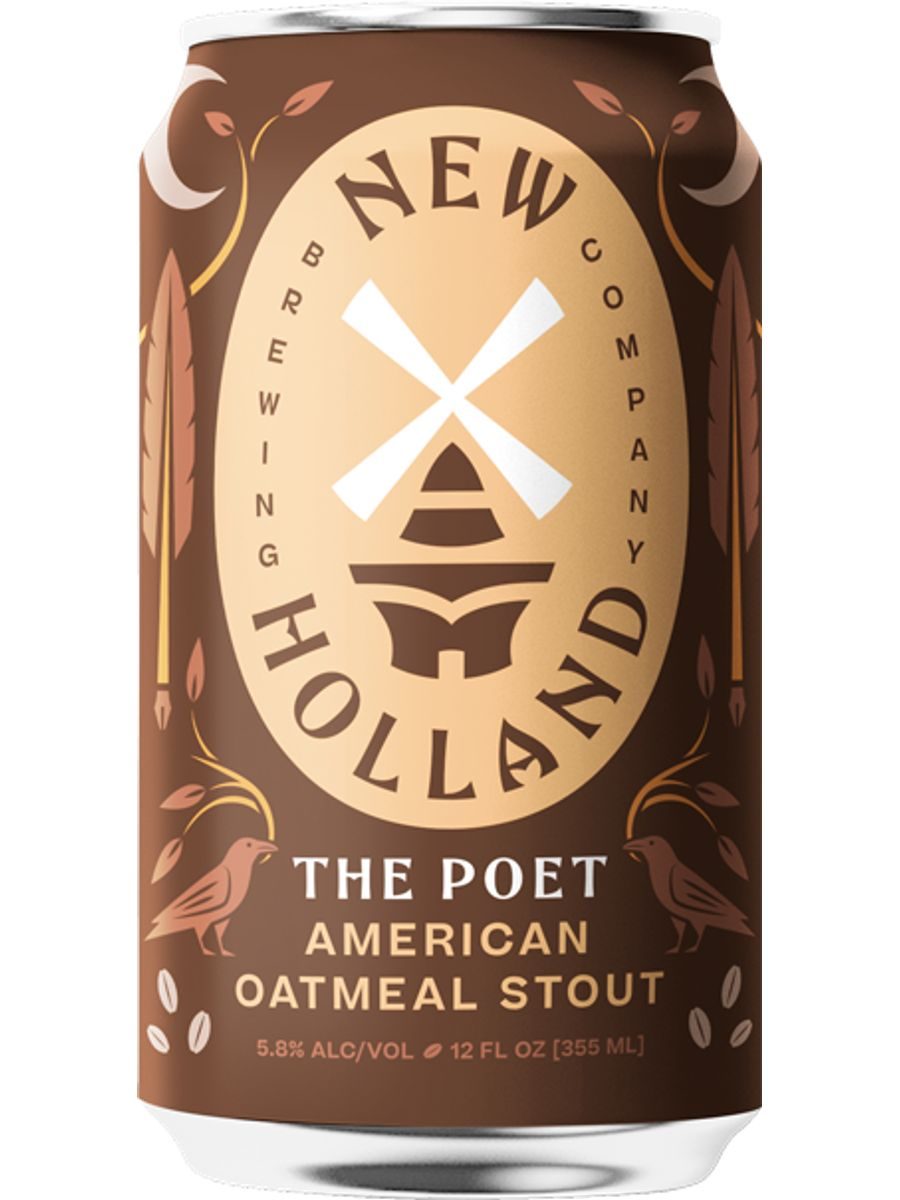
The Poet
Brewed by New Holland Brewing
American oatmeal-stout reference.
BAR NOTES
New Holland lists The Poet as a year-round oatmeal stout at 5.8%. Its oat-led creamy texture and roasted-malt character provide an American reference near the upper end of the guideline’s normal alcohol band without requiring imperial strength.
Let a small sample warm gradually and track the movement between roast aroma and body. Taste it beside Samuel Smith’s bottle to explore two oatmeal-stout interpretations, resisting the temptation to describe every dark, smooth beer with the same chocolate shorthand. Continue with the beer flavor wheel.
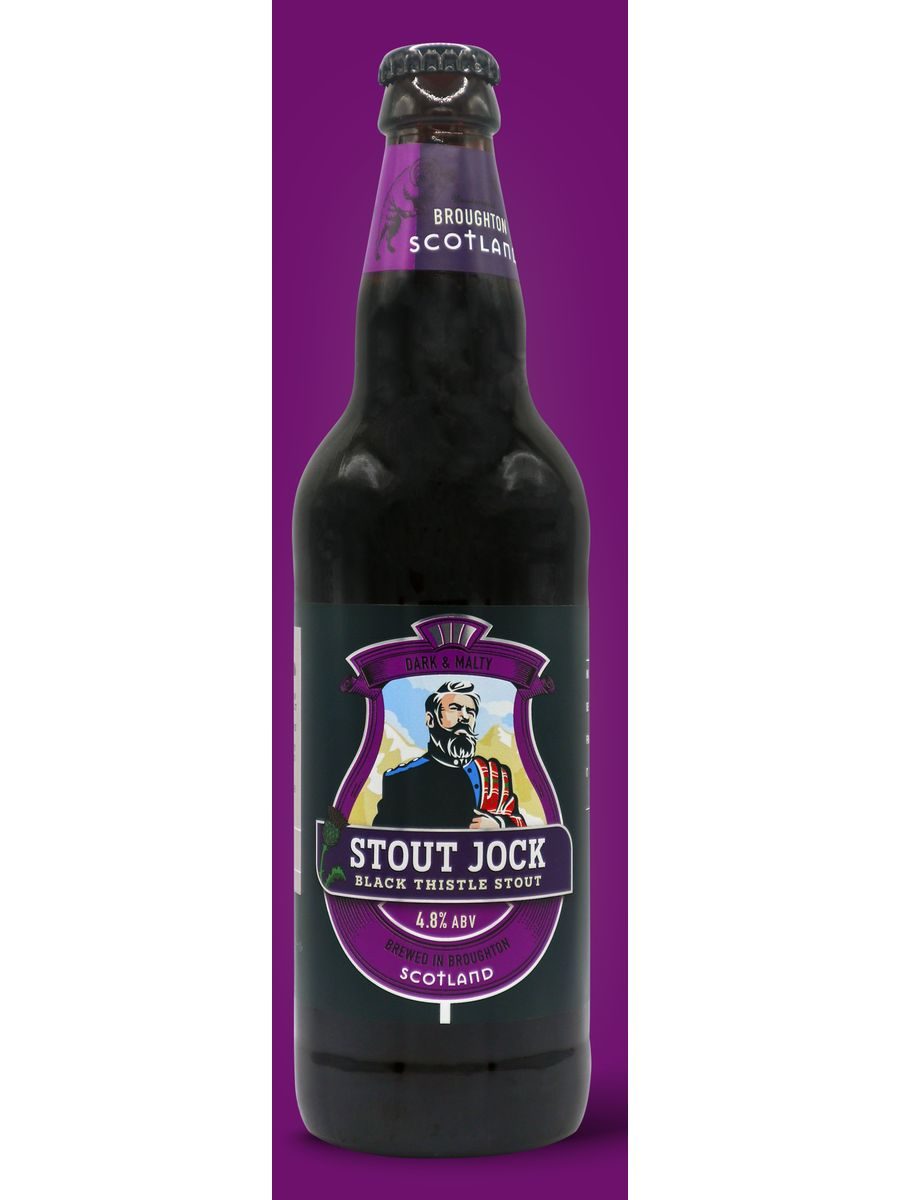
Stout Jock Black Thistle Stout
Brewed by Broughton Ales
Scottish oatmeal-stout reference.
BAR NOTES
The current Stout Jock listing gives Black Thistle Stout a strength of 4.8% and identifies an oatmeal-stout recipe. Its description combines caramel, roast and biscuit with oats, accompanied by First Gold, Fuggles and Perle hops.
Choose this for a lower-strength comparison within the oatmeal flight. Notice whether biscuit and caramel stay distinct from roast, then compare its texture with an oat-containing neighboring stout whose commercial style name does not specifically promise Oatmeal Stout. Continue with the malt-led beer guide.
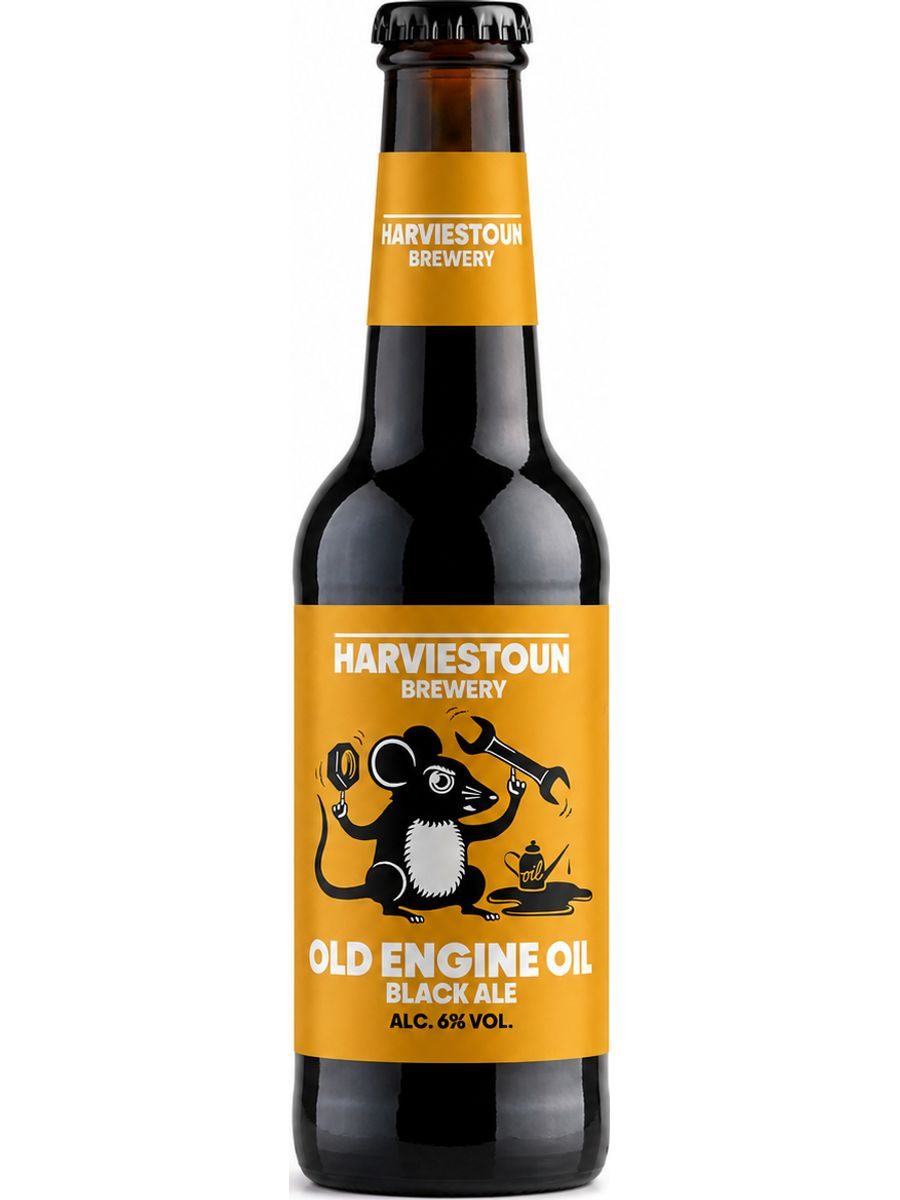
Harviestoun Old Engine Oil
Brewed by Harviestoun Brewery
A Scottish-brewed 6% stout for comparing roast, oats and a fuller body.
BAR NOTES
Old Engine Oil is a 6.0% Scottish craft stout, with lager malt, roasted barley and pinhead oats. Its bottle uses Black Ale wording. It belongs here as an Extra-strength comparison, rather than a claim of Irish origin.
Taste it alongside Leann Folláin and decide whether fuller body or lingering roast has the greater effect. A steak pairing gives a savory contrast when browned crust meets the stout’s dark-malt character.
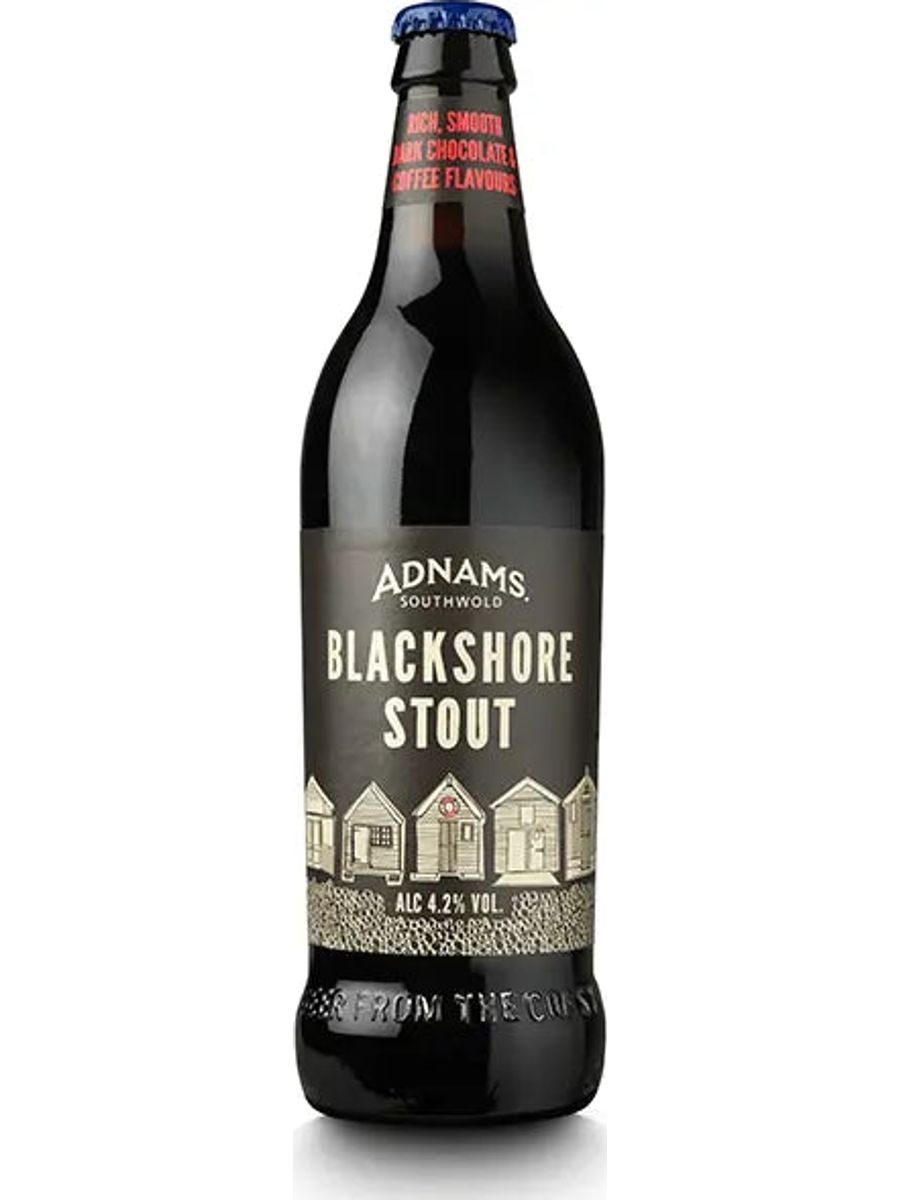
Adnams Blackshore Stout
Brewed by Adnams
An English session-strength stout with a broad malt bill and oats.
BAR NOTES
Blackshore is a 4.2% English stout using several dark malts, roasted barley and oats. Its coffee, chocolate and liquorice profile offers a neighboring stout comparison at similar strength, while its origin remains explicitly English.
Compare its malt breadth with the simpler roast impression of Guinness, then consider whether oats change fullness. Cooking with beer provides another way to explore how roast complements a savory dish without treating every black beer alike.
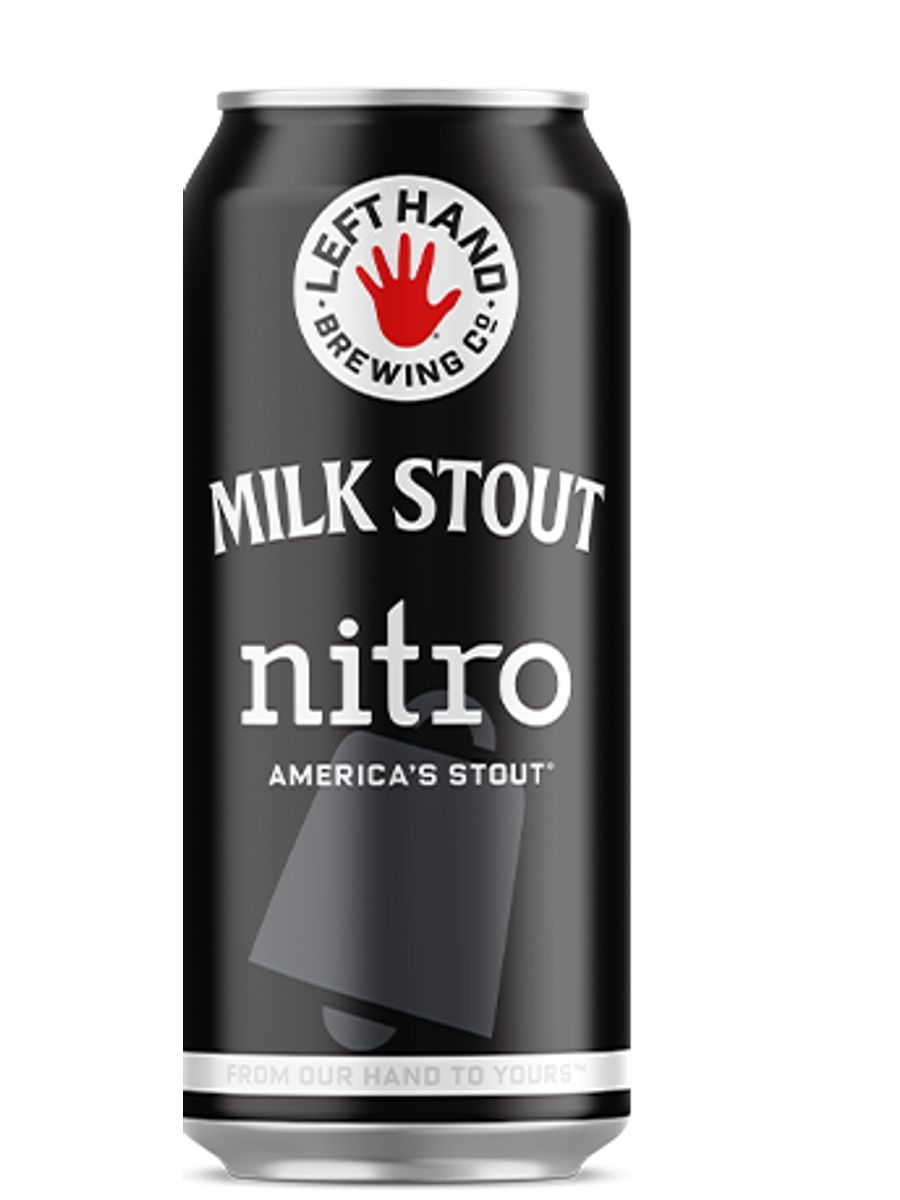
Left Hand Milk Stout Nitro
Brewed by Left Hand Brewing
Nitrogenated sweet-stout reference.
BAR NOTES
This nitrogenated milk stout is the 6.0% can edition. Its milk sugar and roasted malt provide the sweet-stout foundation, while the nitrogen dispense changes head structure and perceived texture alongside the familiar coffee-and-chocolate character.
Allow the cascade to settle before judging body. Compare it directly with the carbonated bottle to separate milk-sugar sweetness from the creamy sensation produced by nitrogen; identical strength does not guarantee an identical drinking experience. Continue with the glassware guide.
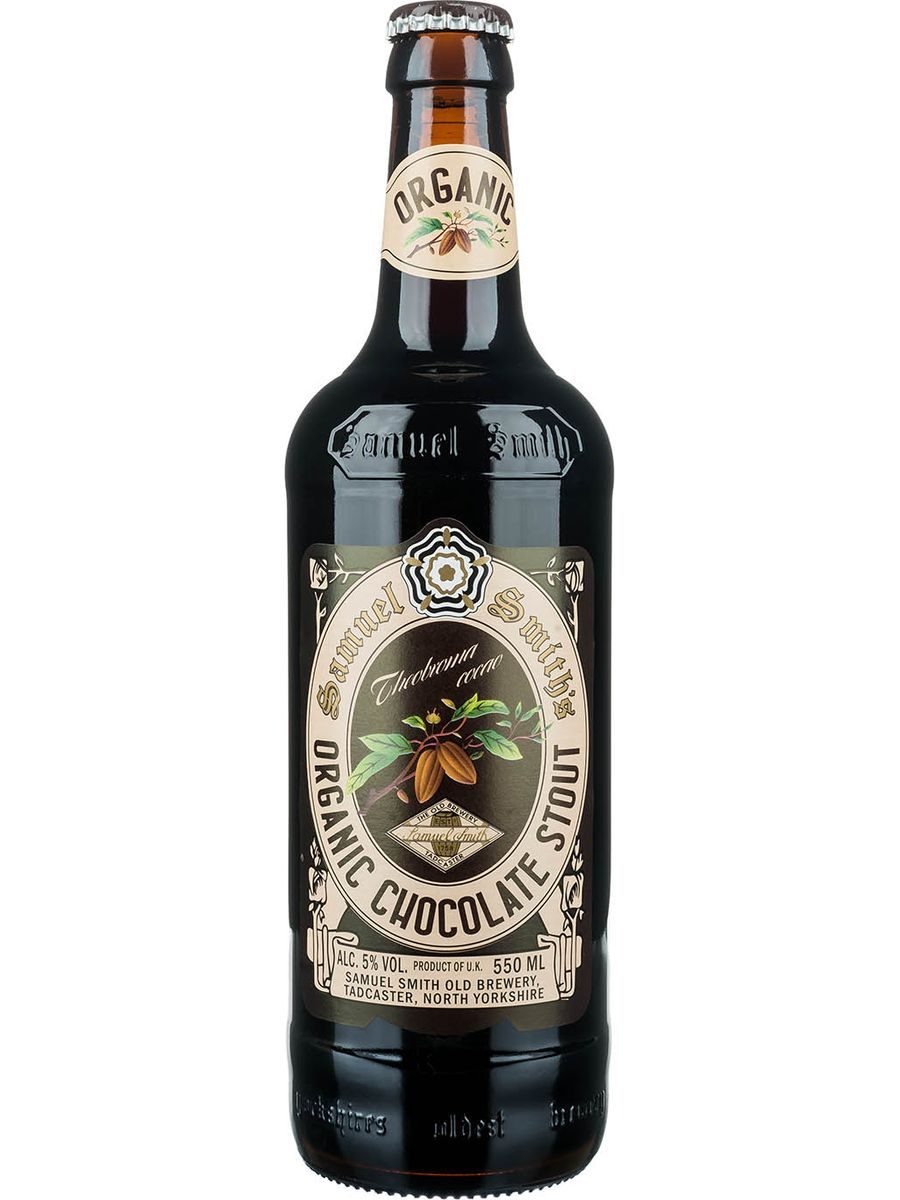
Samuel Smith Organic Chocolate Stout
Brewed by Samuel Smith’s Brewery
Flavored comparison; no lactose.
BAR NOTES
Samuel Smith’s Organic Chocolate Stout is listed at 5.0%, with organic barley, cane sugar and cocoa extract among its ingredients. It is a vegan chocolate stout, so chocolate sweetness here should not be mistaken for evidence of lactose.
Use this flavored comparison after the unflavored sweet stouts and notice what cocoa adds to the aroma. Chocolate character can come from an ingredient or from roasted grain; separating those routes makes the rest of the flight easier to interpret. Continue with the beer flavor wheel.
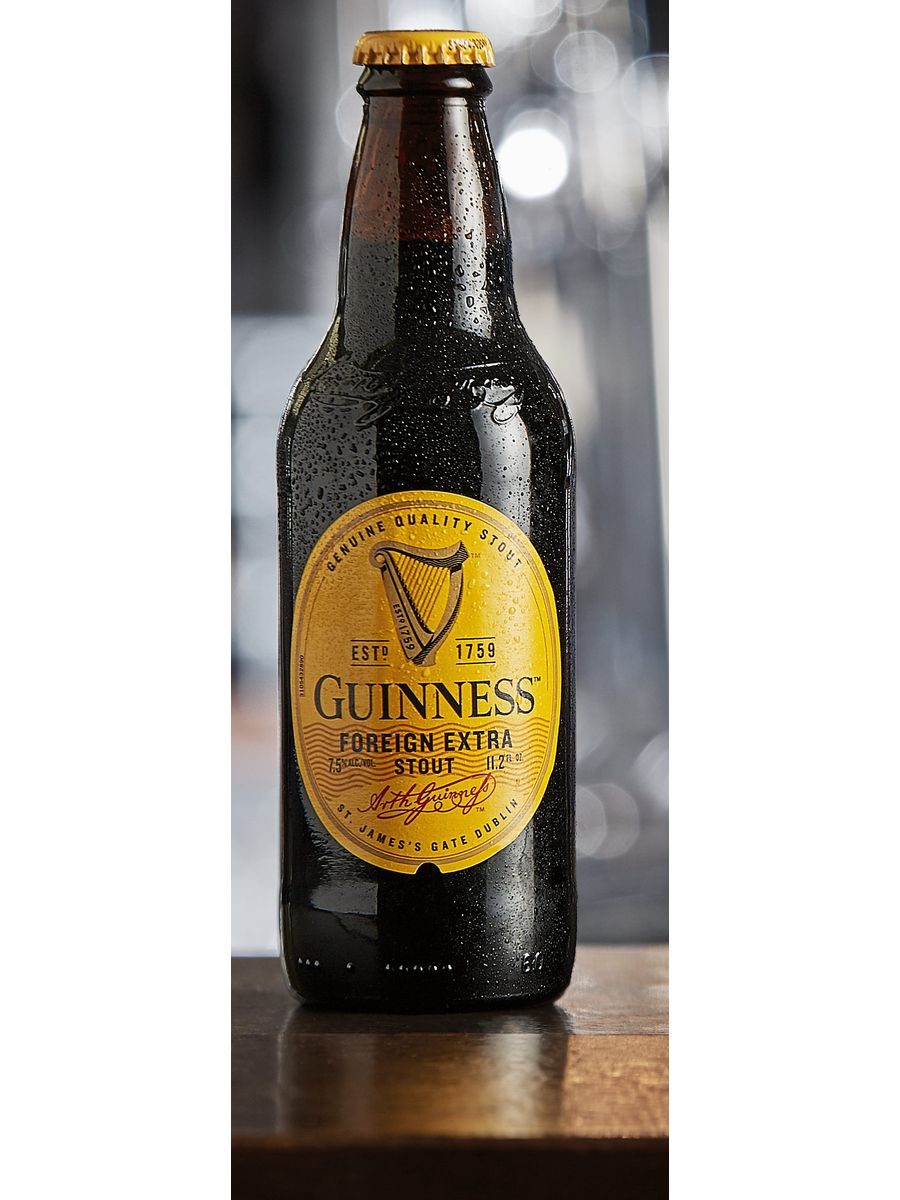
Guinness Foreign Extra Stout
Brewed by Guinness
A stronger boundary comparison with roast, chocolate and dark fruit.
BAR NOTES
The selected Guinness Foreign Extra specification is 7.5%, above Irish Extra Stout’s usual strength band. This is an explicit neighboring-style comparison, useful for showing that Extra and Foreign Extra are not interchangeable names.
Finish the stout comparison with a smaller serving of this stronger beer. The Imperial Stout roundup maps another step beyond the session pint; compare warmth and concentration while keeping the style boundaries visible.
Oatmeal Stout compared with nearby styles
Sweet Stout uses residual sugar for sweetness and fullness. Irish Stout is often drier and sharper. American Stout is more bitter and hop-forward, while Imperial Oatmeal Stout increases alcohol and malt intensity well beyond the classic range.
Explore what oats really add to stout
Compare Oatmeal Stout’s texture with lactose sweetness, tropical richness and export bitterness.