12 Best Rauchbiers and Smoked Beers to Drink in 2026
Great Rauchbier does not taste like someone dropped a hot dog into lager. Smoke is an ingredient, not the whole point.
These 12 beers move from Bamberg’s defining beechwood classics through softer Franconian lager, American interpretations, alder, oak, cherrywood, wheat beer and black lager.
The best Rauchbiers at a glance
Aecht Schlenkerla Rauchbier Märzen remains the essential benchmark. Spezial Lager is the softer Bamberg entry point; Schlenkerla Urbock supplies the strongest classic-lager depth. Weiherer Rauch broadens the Franconian picture, while Dovetail Rauchbier, Smoke & Dagger and Alaskan Smoked Porter show what American brewers do with the idea.
What Rauchbier should actually taste like
Rauchbier means smoked beer, but the classic Bamberg expression is still a disciplined lager. Beechwood-smoked malt sits over a Märzen-like base of bread crust, toast and clean fermentation, usually with enough bitterness and dryness to keep the smoke from becoming greasy.
Wood choice changes the result. Beech can read spicy and ham-like; alder is finer and softer; oak brings round woody depth; cherrywood can feel fruity. American smoked beer widens the base styles further into black lager and porter.
The 12 best Rauchbiers and smoked beers to drink in 2026
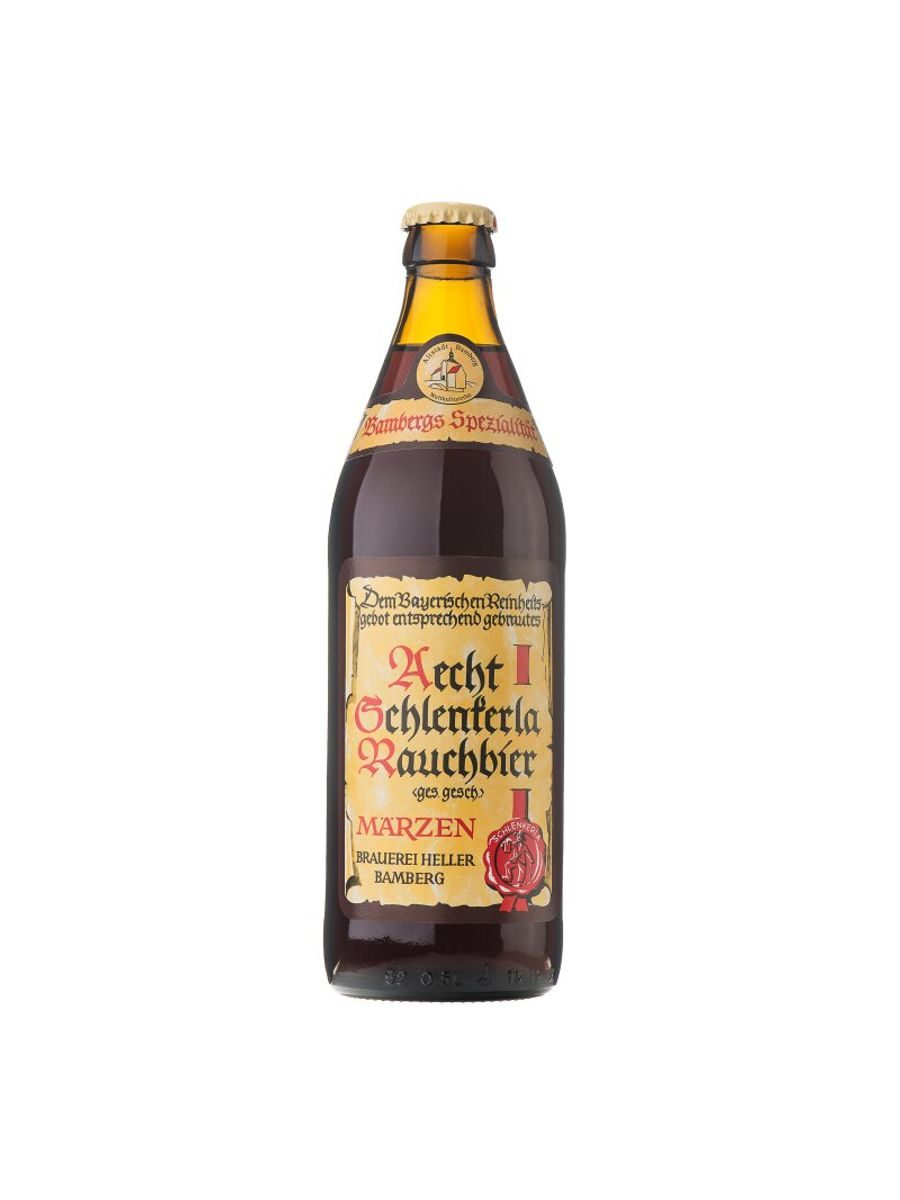
Aecht Schlenkerla Rauchbier Märzen
Brewed by Schlenkerla (Heller-Bräu Trum)
The world reference: deep beechwood smoke, toasted bread and a dry lager finish that grows more balanced with every sip.
BAR NOTES
Schlenkerla Märzen is the essential Rauchbier because its malt is dried over beechwood fire in the brewery’s own maltings. The first aroma can suggest smoked ham; underneath it sits sturdy bread crust and amber-lager malt.
Do not judge it from the first sip. Smoke fatigue quickly becomes smoke balance as the glass opens, especially beside bratwurst, roast pork or grilled mushrooms. It also anchors Homebrew Academy’s broader German beer ranking.
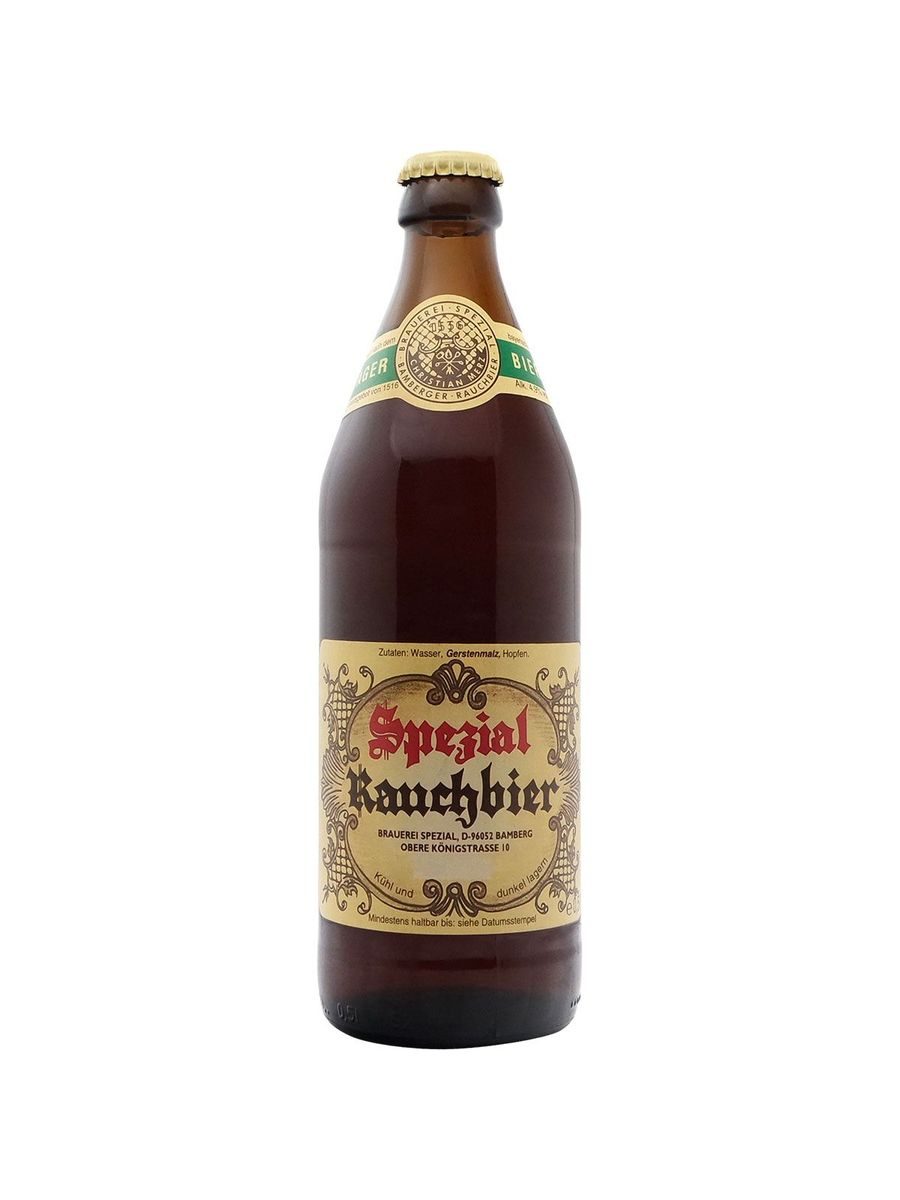
Spezial Lager Rauchbier
Brewed by Brauerei Spezial
Bamberg’s softer counterpoint to Schlenkerla: amber, gently smoky and unusually easy to drink for a fire-dried-malt lager.
BAR NOTES
Spezial preserves Bamberg’s other continuous smoke-beer lineage. Its beech-smoked malt lands more gently than Schlenkerla Märzen, allowing caramelized grain and clean lager fermentation to show before the campfire impression takes over.
Taste these two side by side rather than treating Rauchbier as one fixed intensity. Spezial is excellent with roast chicken, mild sausage or pretzels, foods that reward malt sweetness without doubling down on heavy smoke.
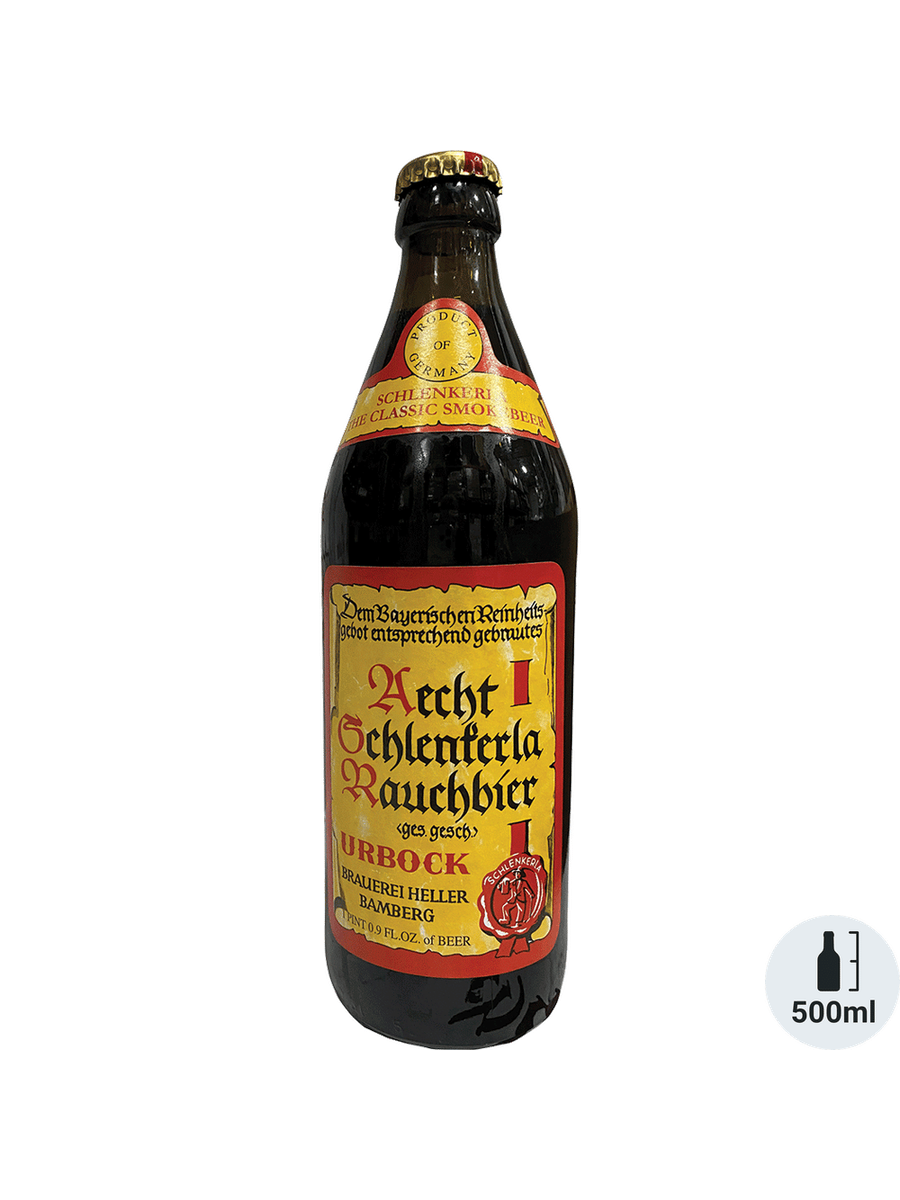
Aecht Schlenkerla Rauchbier Urbock
Brewed by Schlenkerla (Heller-Bräu Trum)
A stronger, autumnal Schlenkerla that pushes the classic beech-smoke profile into dark bread, caramel and warming bock depth.
BAR NOTES
Urbock takes Schlenkerla’s house smoke and gives it more gravity. Dark bread, caramelized malt and warming strength sit beneath the beechwood aroma, creating a slower and more substantial beer than the flagship Märzen.
Serve it around 48–52°F with pork shoulder, venison or aged cheese. The extra malt can stand up to richer food, while clean lager fermentation prevents this smoked bock from turning syrupy.
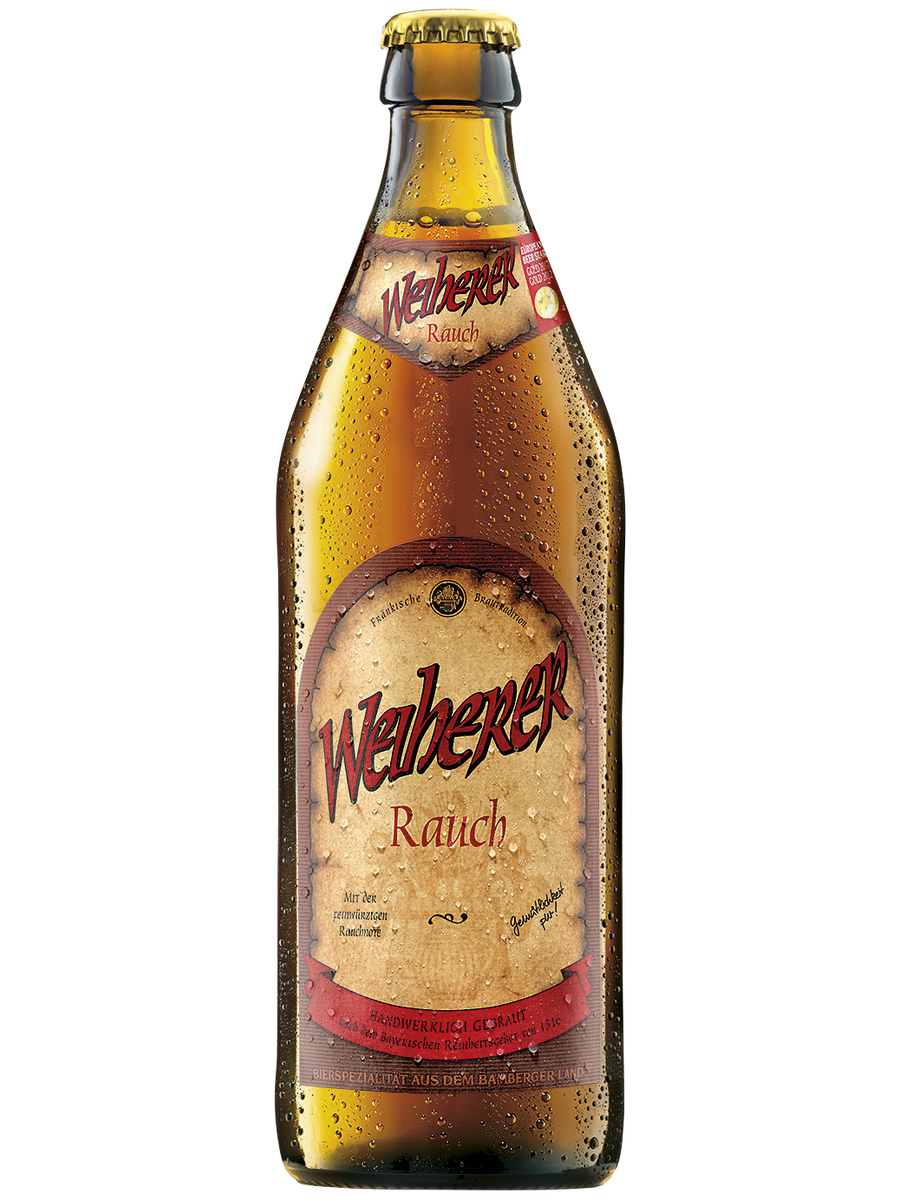
Weiherer Rauch
Brewed by Brauerei Kundmüller
Golden-bronze Franconian Rauchbier with fine spicy smoke, a cleaner malt center and enough bitterness to sharpen the finish.
BAR NOTES
Weiherer Rauch proves that Franconian smoke beer extends beyond Bamberg’s two famous city breweries. Its smoke is fine and spicy rather than aggressively meaty, backed by a polished golden-bronze lager profile and measured hop bitterness.
This is a strong bridge beer for drinkers who find Schlenkerla Märzen overwhelming. Pair it with grilled chicken, pork cutlets or nutty cheese, then return to the Bamberg classics with a better sense of smoke intensity.
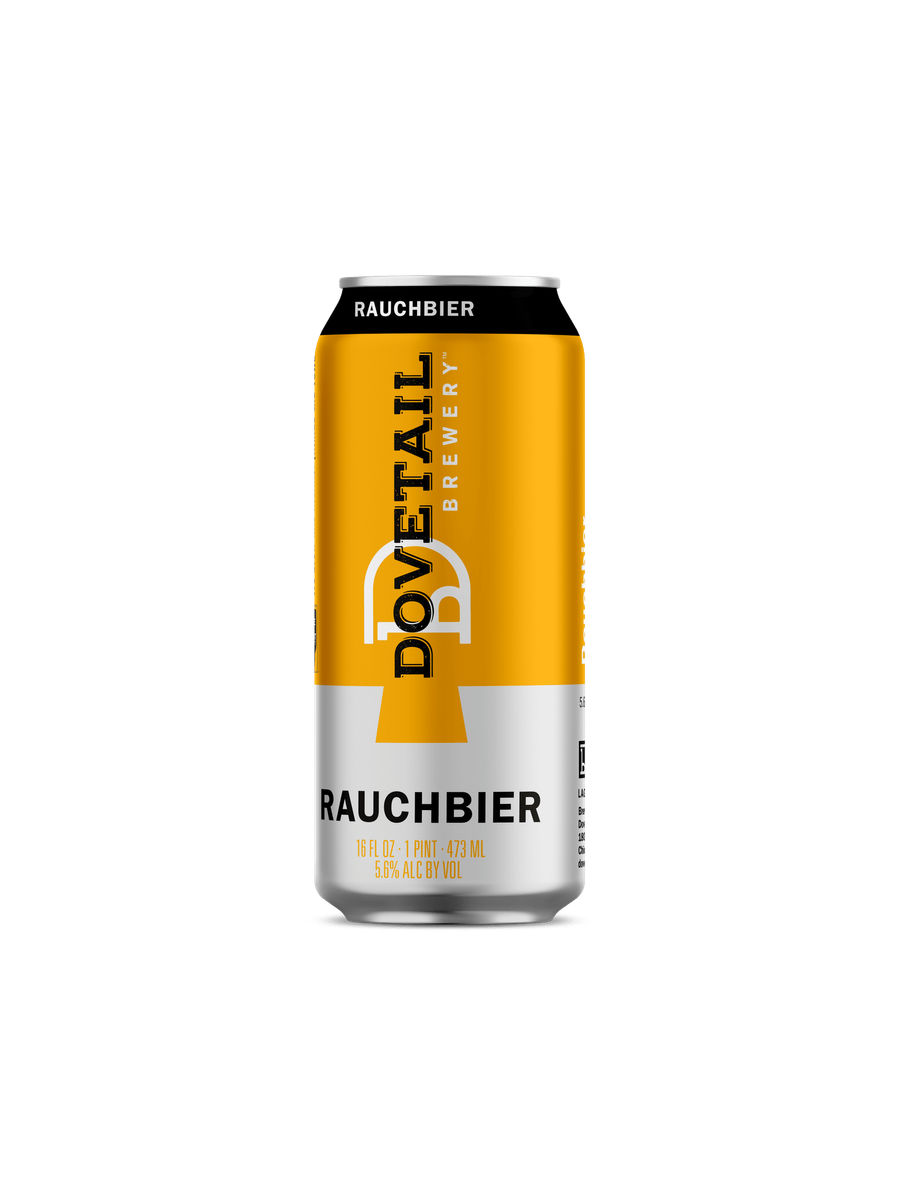
Dovetail Rauchbier
Brewed by Dovetail Brewery
Chicago’s disciplined Bamberg homage: reddish-dark, chocolatey and richly smoky, with traditional lager methods keeping it dry.
BAR NOTES
Dovetail builds its Rauchbier through double decoction, open fermentation, a coolship rest and horizontal lagering. Beechwood-smoked malt supplies the smokehouse character, while chocolate-like dark malt and generous hopping give it structure.
The result respects Bamberg without feeling like costume brewing. Serve it with grilled sausage, deep-dish pizza or roast mushrooms; the dry finish and carbonation keep smoke and dark malt from stacking too heavily.
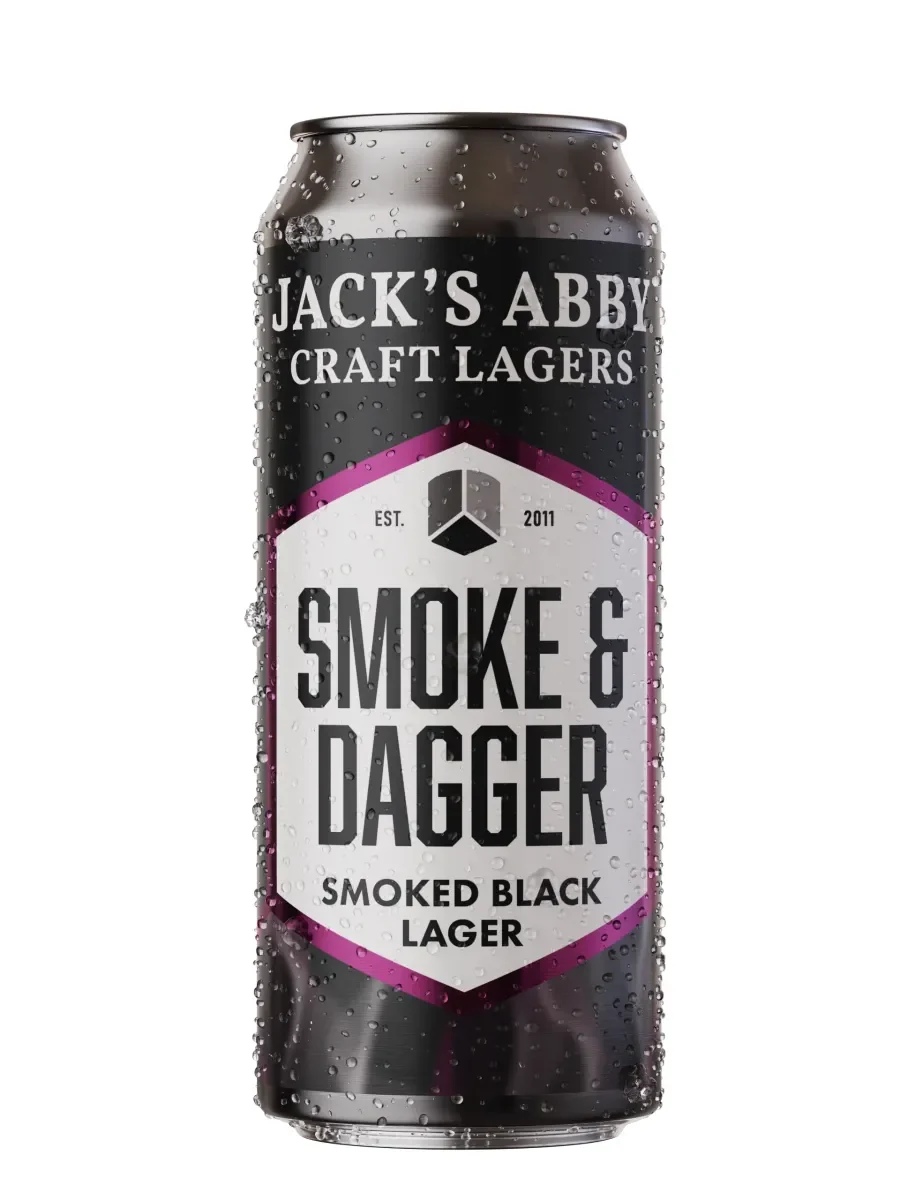
Smoke & Dagger
Brewed by Jack’s Abby Craft Lagers
A lean American black lager where subtle smoke, cocoa and toasted malt finish cleaner than the near-black color suggests.
BAR NOTES
Smoke & Dagger shifts the conversation from amber Märzen into black lager. Cocoa, toast and restrained smoke arrive in a body light enough for another pint, showing that smoke need not mean dense or aggressively savory.
Pour it around 44–48°F with burgers, charred vegetables or roast chicken. It belongs beside the site’s best dark lagers, where color and roast are judged separately from weight.
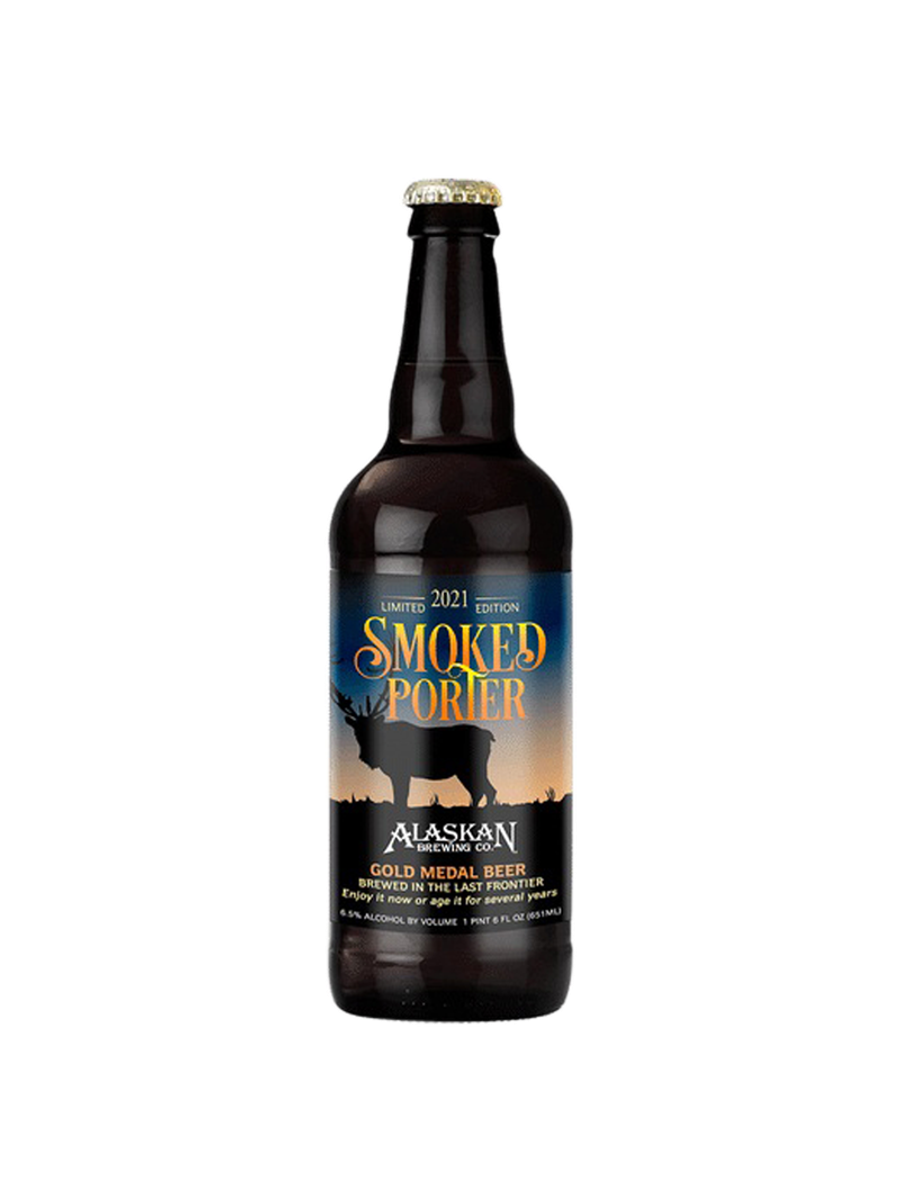
Alaskan Smoked Porter
Brewed by Alaskan Brewing Company
America’s landmark smoked porter combines alder fire, chocolate malt and cellar-worthy oxidation into a distinctly Alaskan classic.
BAR NOTES
Alaskan introduced this beer in 1988 using malt smoked over local alder wood, connecting the porter to Southeast Alaska’s smokehouse traditions. Chocolate, dark fruit and wood smoke deepen as different vintages age.
Fresh bottles emphasize roast and alder; older bottles can develop sherry-like fruit and softer smoke. Share one with smoked salmon, roast beef or dark chocolate, and note that availability often follows limited vintage releases.
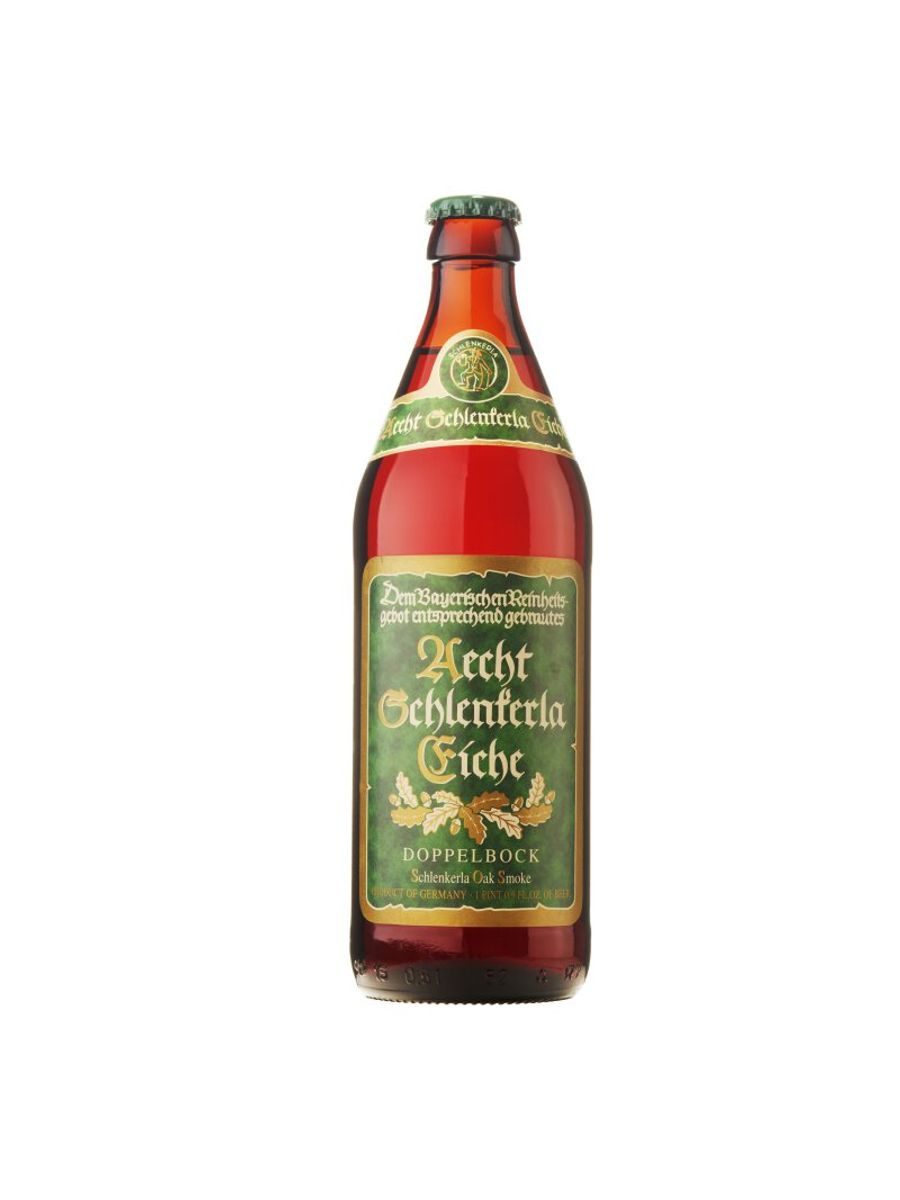
Aecht Schlenkerla Eiche Doppelbock
Brewed by Schlenkerla (Heller-Bräu Trum)
Oak-smoked malt replaces the brewery’s usual beechwood, producing a rounder, woodier smoke profile inside a powerful winter Doppelbock.
BAR NOTES
Eiche changes both the wood and the scale. Oak-kilned malt creates a rounder, less ham-like smoke than beechwood, while Doppelbock strength concentrates bread, caramel and warming alcohol into a deliberate winter pour.
Serve it near 50–54°F in a smaller glass with braised beef, blue cheese or roasted nuts. This is not the first Rauchbier to open; it works best after the lighter lagers have established the vocabulary.
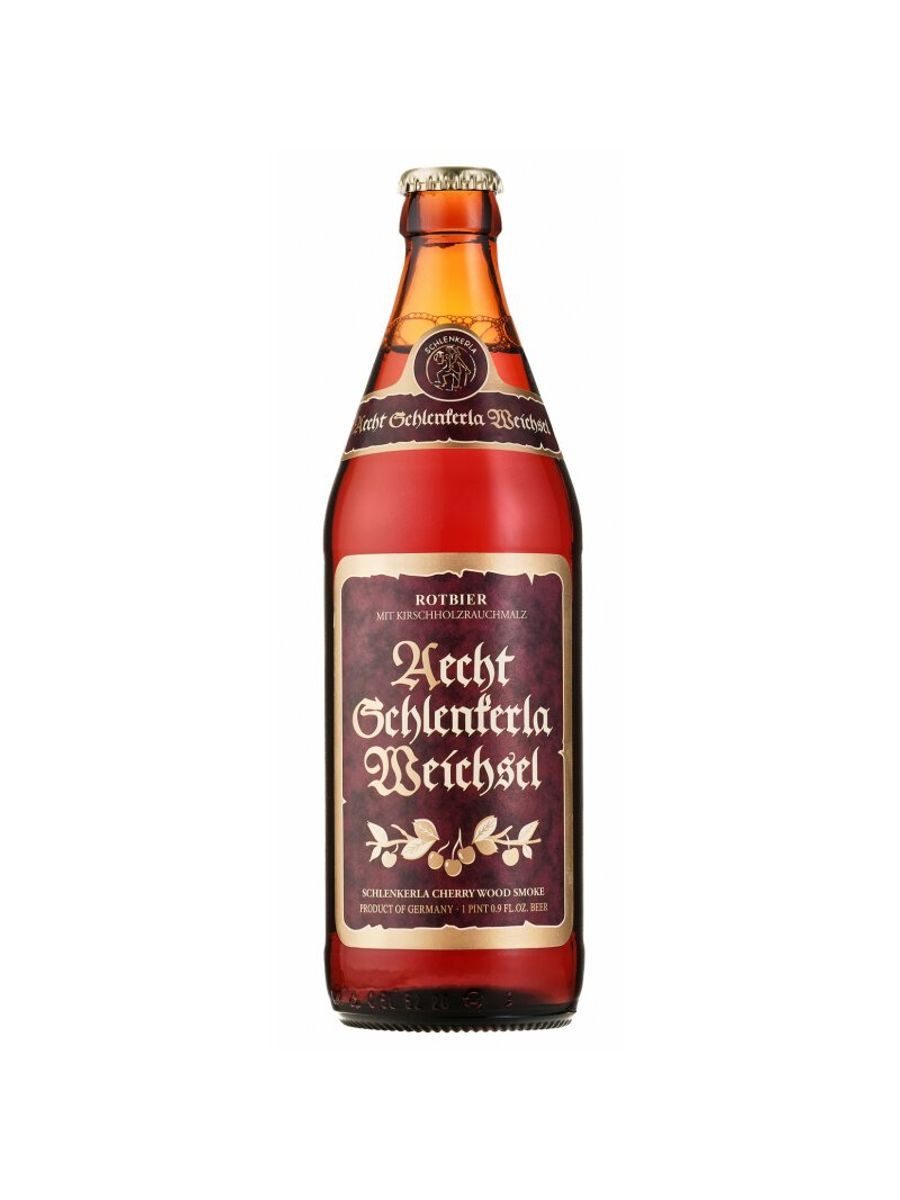
Aecht Schlenkerla Weichsel Rotbier
Brewed by Schlenkerla (Heller-Bräu Trum)
Cherrywood-smoked malt and berry-leaning aroma hops make this copper-red lager fruitier and sweeter-smelling than classic beech smoke.
BAR NOTES
Weichsel revives Franconian Rotbier with malt dried over cherrywood rather than beech. The smoke reads fruitier and almost sweet, while aroma hops add berry notes to the copper-red lager without turning it into fruit beer.
Try it with duck, pork tenderloin or a berry-glazed roast, where the wood and hop fruit can echo the food. At 4.6%, it remains far more drinkable than its layered aroma initially suggests.
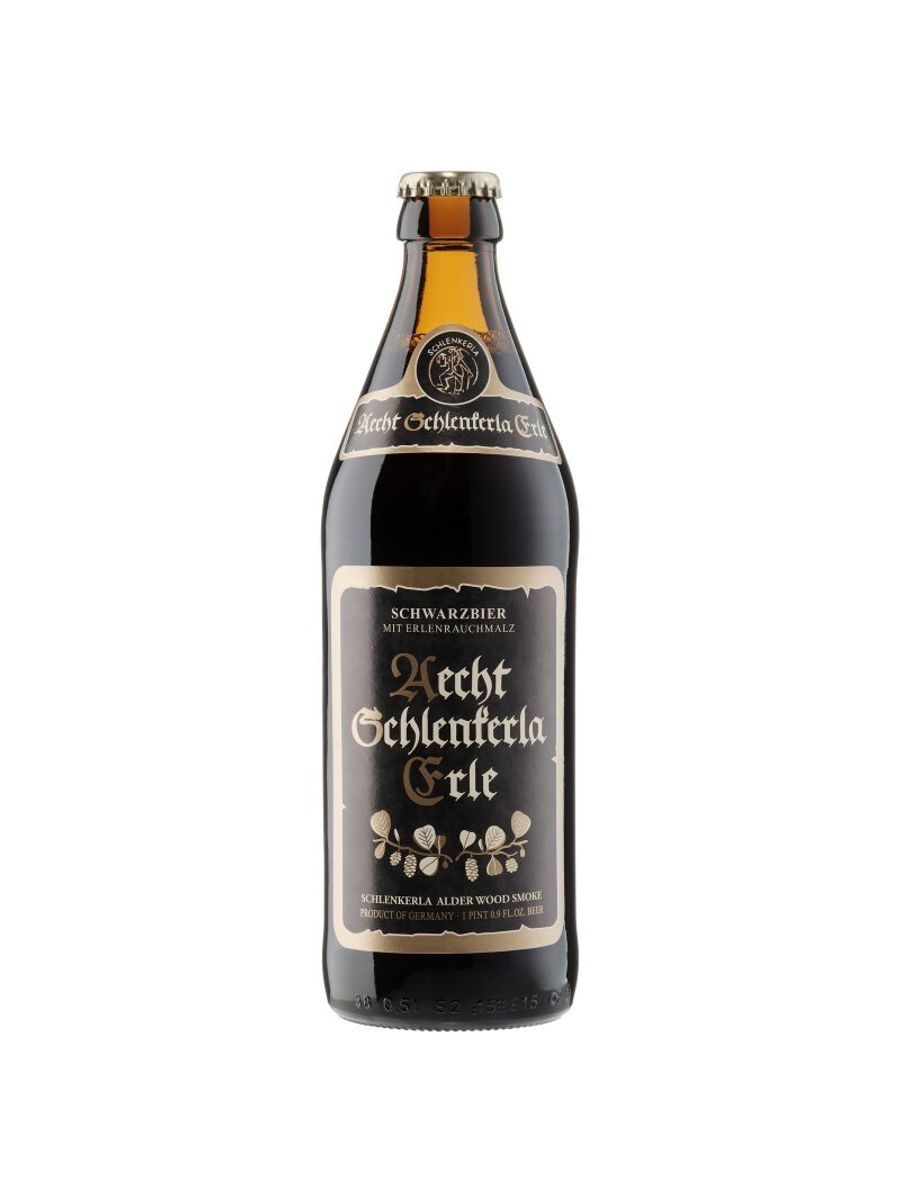
Aecht Schlenkerla Erle Schwarzbier
Brewed by Schlenkerla (Heller-Bräu Trum)
Alderwood smoke, dark roast and modest strength create a black lager that tastes intricate without becoming heavy or harsh.
BAR NOTES
Erle uses alder-smoked malt for a finer, less spicy smoke than the brewery’s standard beechwood profile. A high proportion of roasted malt adds coffee and cocoa while clean fermentation keeps the nearly black beer agile.
Pair it with grilled mushrooms, smoked fish or roast chicken and avoid treating it like stout. Its 4.2% strength and dry lager close make it one of the easiest Schlenkerla variants to finish.
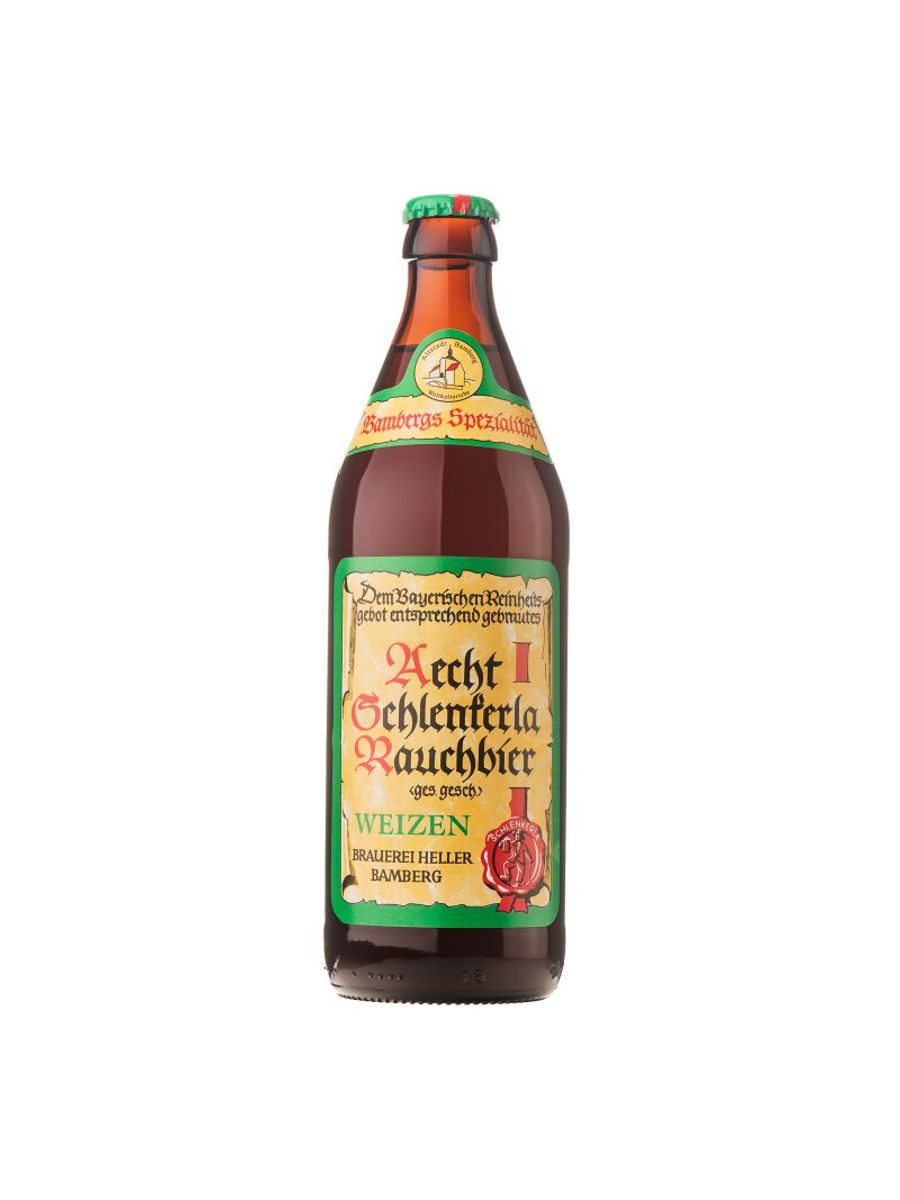
Aecht Schlenkerla Rauchweizen
Brewed by Schlenkerla (Heller-Bräu Trum)
Banana, clove, soft wheat and beech-smoked barley meet in a bottle-conditioned wheat beer that is gentler than it sounds.
BAR NOTES
Rauchweizen blends unsmoked wheat malt with barley malt dried over beechwood, then bottle conditions the beer with expressive top-fermenting yeast. Banana and clove soften the smoke and turn the aroma toward spiced bread.
Roll the bottle gently if you want the yeast fully suspended, then serve in a tall wheat glass with roast chicken, weisswurst or soft cheese. The lively carbonation makes this a useful late-flight reset.
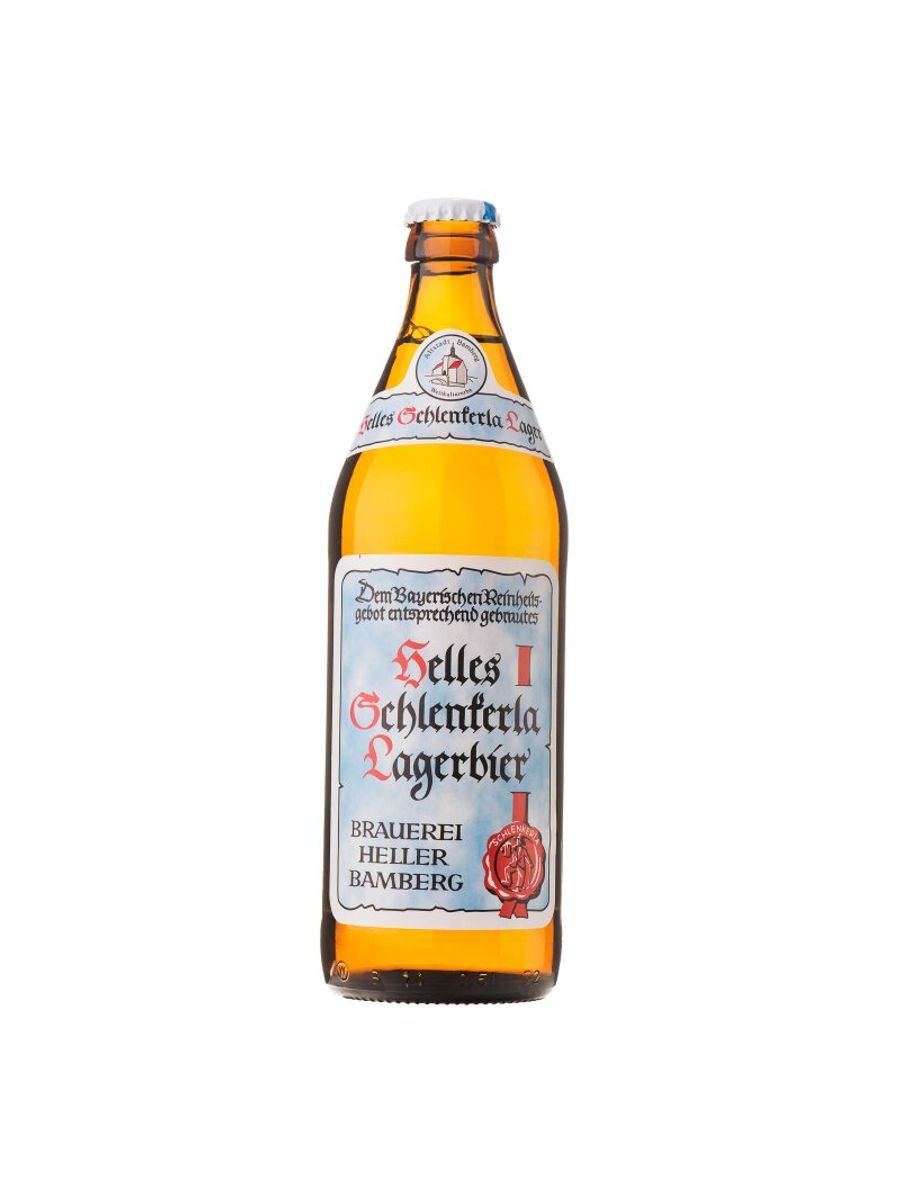
Helles Schlenkerla Lagerbier
Brewed by Schlenkerla (Heller-Bräu Trum)
A pale Helles with no smoked malt, yet the shared kettles, yeast and cellar leave a faint Schlenkerla smoke signature.
BAR NOTES
Helles Lagerbier is the fascinating exception: Schlenkerla uses no smoked malt, but the same copper kettles, house yeast and brewery environment leave a subtle smoky impression beneath pale grain and Spalt hops.
Finish the flight here to see how little smoke is needed once your palate is tuned. Serve cold with pretzels, mild sausage or fried fish, then compare it with a standard Helles lager.
How to run a Rauchbier tasting
Start with Spezial, Weiherer and Helles Schlenkerla before opening the flagship Märzen. Continue through Dovetail and Smoke & Dagger, then move into Weichsel, Erle and Rauchweizen. Finish with Urbock, Eiche and Alaskan Smoked Porter as strength and dark malt increase.
Use four-ounce pours around 44–50°F and serve plain bread between beers. Smoke compounds cling to the palate, so a smaller flight with deliberate resets reveals more than twelve full bottles opened at once.
Frequently asked questions
Why does Rauchbier sometimes taste like bacon?
Beechwood-smoked malt can create aromas people associate with cured meat, campfire and smoked ham. The beer contains no bacon; your brain is connecting familiar smoke compounds with the foods where it usually encounters them.
Is all smoked beer Rauchbier?
In the literal German sense, Rauchbier means smoked beer. In style discussions it usually points to Bamberg-style smoked lager, while smoked porter, Grodziskie, smoked wheat beer and experimental ales belong to the wider smoked-beer family.
What food works best with Rauchbier?
Grilled sausage, roast pork, mushrooms, firm cheese and pretzels are reliable. Smoked meat can work, but doubling heavy smoke on both sides may flatten the experience; grilled or roasted food often gives better contrast.
Follow the Smoke Beyond Bamberg
Rauchbier begins with fire-dried malt, but the trail keeps moving through German lager, black beer, wheat beer and American smoked porter. Compare the branches or build the smoke into your own brew day.
DRINK DEEPER
BREW IT YOURSELF

better beer.