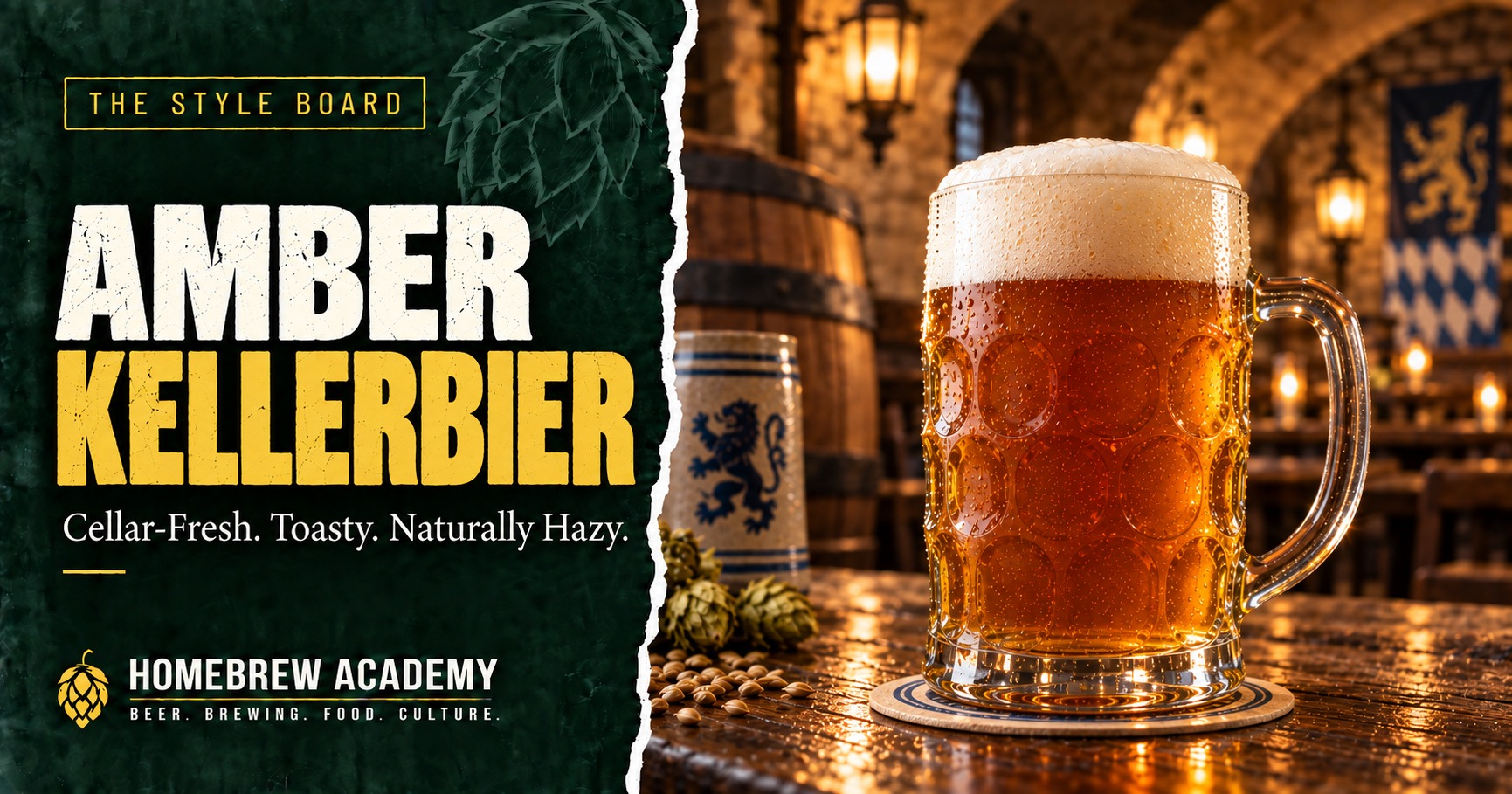
Amber Kellerbier: Top 10 Current Beers and Style Guide

FRANCONIA’S ORIGINAL CELLAR BEER

Amber Kellerbier is a young, unfiltered Franconian lager with bread-crust malt, spicy hops and a rustic balance built for freshness and local service.

Color and balance vary from gold to deep reddish amber, but drinkability matters more than hitting one narrow visual target.

The site retains its 2015 Category 7 navigation for continuity. In the 2021 BJCP guidelines, Kellerbier is covered under 27A Historical Beer, with the underlying lager style stated; Category 7 contains Vienna Lager and Altbier. The pale and amber branches here remain useful tasting guides, rather than separate current competition categories.

The quick answer

Expect moderate haze to clarity depending on age, an off-white head and color ranging from gold through reddish amber. Malt suggests bread, toast and crust, while spicy or herbal hops remain more apparent than in Märzen.

Measure2015 BJCP reference range
Original gravity1.048–1.054
Final gravity1.012–1.016
Bitterness25–40 IBU
Color7–17 SRM
Alcohol4.8–5.4%

What Amber Kellerbier tastes like

Bread crust and lightly toasted malt provide the center, supported by spicy, floral or herbal hops. The balance may lean dry and hoppy or darker and maltier, but the finish should remain fully fermented and uncloying.

Yeast texture and low fermentation character can remain, yet the beer must taste clean enough for repeated pours. Muddy haze, butter, green apple, oxidation or rough bitterness work against the style’s simple freshness.

How Amber Kellerbier is brewed

Local Pilsner, Vienna or Munich malt combinations shape the color and bread-like depth. Continental hops are often more expressive than in polished amber lager, providing both bitterness and fresh aroma.

The beer is fully fermented as a lager and may be served from cellar vessels or casks, or packaged without filtration. Maturation varies by brewery; freshness and careful oxygen control preserve the malt, hop and yeast-texture balance.

Franconian cellar culture

Amber Kellerbier is the older Franconian expression of cellar beer. It developed as local beer served before long lagering had dropped it bright, especially during warm-weather festivals and brewery-cellar gatherings.

Because it is a method and serving context as much as a fixed formula, village examples can differ substantially. The shared standard is local ingredients, freshness and easy drinking.

Top 10 current Amber Kellerbier references

These ten current editorial picks focus on Franconian amber cellar beer, followed by a lighter amber Austrian comparison. Local color, carbonation and bitterness vary, so the notes identify what each beer contributes to the flight. This is an editorial tasting route, not a blind-tasting ranking; current listings do not guarantee local stock.
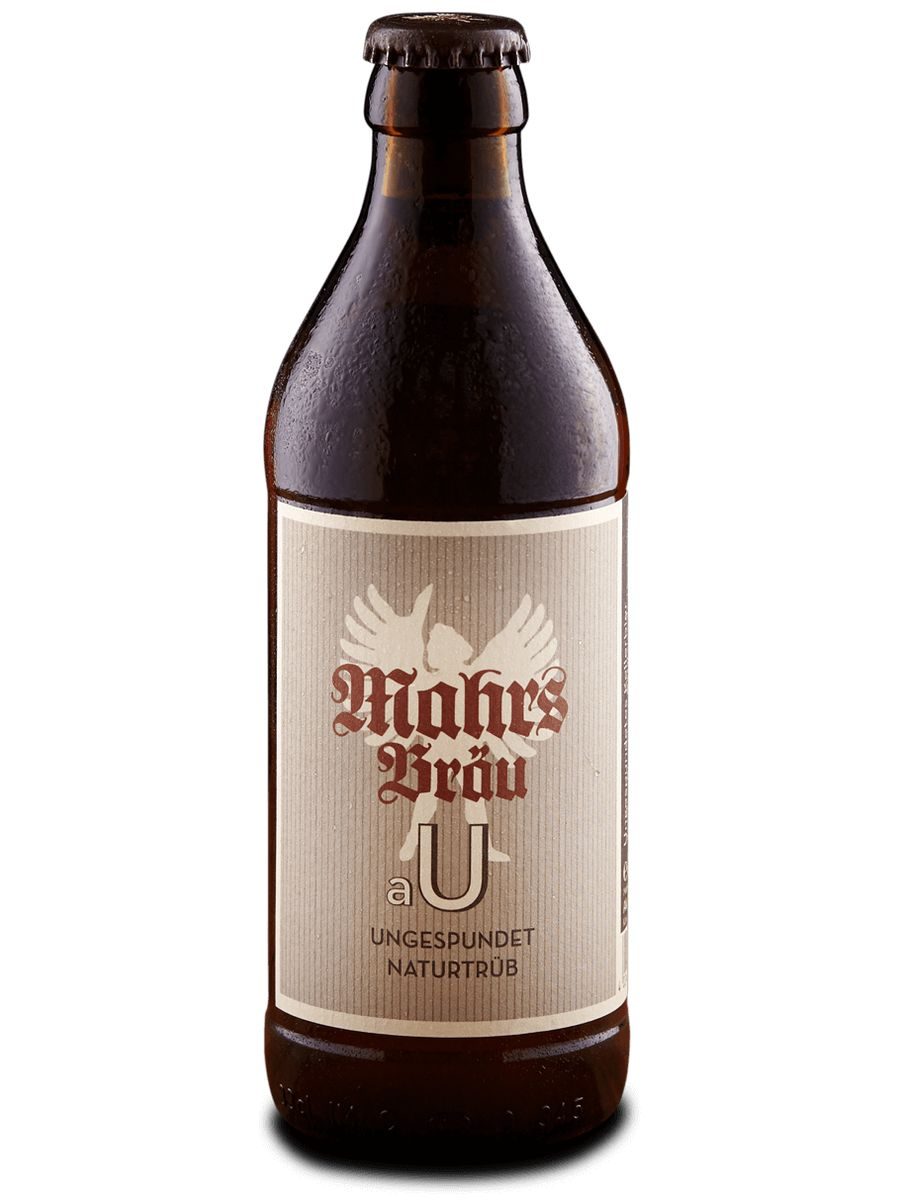
Mahrs Bräu U Ungespundet Naturtrüb
#1 in this roundup
Beer profile

Mahrs Bräu U Ungespundet Naturtrüb

Brewed by Mahrs Bräu

StyleAmber Kellerbier
ABV5.2%
Cellar profileLow carbonation · Bamberg benchmark
Brewed inBamberg, Germany

Soft malt, cellar yeast and a gently bitter finish.

BAR NOTES

Mahrs U is a central reference for the amber branch: the current brewery listing specifies amber color, bottom fermentation and 5.2%. Hallertauer Perle supports a soft malt profile, while the deliberately low carbonation changes how that fullness feels.

The BJCP names Mahrs as a Märzen-based Kellerbier example. Compare it with our Oktoberfest beer selection to hear the difference between malt richness and sweetness; cellar handling can retain texture while the beer still finishes fully fermented.

Eichhorn Kellerbier
#2 in this roundup
Beer profile

Eichhorn Kellerbier

Brewed by Brauerei Eichhorn

StyleFranconian Kellerbier
ABV5.0%
Cellar profileUngespundet · hop-bitter balance
Brewed inDörfleins / Hallstadt, Germany

Natural yeast haze, balanced grain and a firm hop edge.

BAR NOTES

Eichhorn’s producer calls this its leading Franconian specialty and explicitly describes it as ungespundet: naturally yeast-cloudy with little carbonation. The brewery emphasizes a harmonious but hop-bitter taste, distinguishing it from simply sweet, cloudy amber lager.

Low fizz allows bitterness and grain to feel different from a highly carbonated bottle. Compare the finish with our Altbier selection while remembering the fermentation distinction: Eichhorn is a lager reference, whereas Düsseldorf Alt reaches amber balance through cool ale fermentation.

Klosterbräu Bamberger Kellerbier
#3 in this roundup
Beer profile

Klosterbräu Bamberger Kellerbier

Brewed by Klosterbräu Bamberg

StyleAmber Kellerbier
ABV5.3%
Cellar profile25 IBU · copper cellar lager
Brewed inBamberg, Germany

Nutty malt, restrained caramel and balanced hop bitterness.

BAR NOTES

Klosterbräu provides one of the clearest copper-colored references, with 5.3% alcohol and 25 bitterness units on its current product page. Pilsner, Munich and caramel malts support a nutty malt center while Perle and Tradition provide the hop framework.

Use it to compare copper color across different beer families. The beers in our Vienna lager roundup offer toast with a more polished presentation, while this Bamberg Kellerbier keeps an unfiltered texture and a substantial malt impression.

Leikeim Kellerbier
#4 in this roundup
Beer profile

Leikeim Kellerbier

Brewed by Brauhaus Leikeim

StyleAmber Kellerbier
ABV4.9%
Cellar profileGold-brown · swing-top reference
Brewed inAltenkunstadt, Germany

Firm malt body, natural yeast and a gently refreshing close.

BAR NOTES

Leikeim’s current description specifies gold-brown color, natural haze and a substantial malt body at 4.9%. That lower strength makes the beer useful for learning that richness in Kellerbier can come from grain and yeast texture rather than extra alcohol.

Pour a fresh swing-top bottle next to the pale guide’s Ayinger or ABK reference. Our broader Kellerbier collection shows how much the family varies; look for bread and balance rather than assuming the cloudiest beer is automatically the most traditional.

Krug Bräu Ur-Stoff Kellerbier
#5 in this roundup
Beer profile

Krug Bräu Ur-Stoff Kellerbier

Brewed by Krug Bräu

StyleFranconian Kellerbier
ABV5.4%
Cellar profileFuller malt · brewery-listed strength
Brewed inBreitenlesau, Germany

Full-bodied grain with a rustic, spicy lager character.

BAR NOTES

Krug’s current brewery catalog separates Ur-Stoff from its filtered dark lager and pale Helles. The unfiltered Kellerbier is described as full-bodied and spicy at approximately 5.4%, making it a substantial reference without moving into bock strength.

Use the clearly named Ur-Stoff bottle; the brewery’s other lagers are different products. Our malt-forward beer collection is a useful next step for distinguishing grain depth from caramel sweetness, with grilled sausages or roast vegetables alongside the comparison.

Hummel Kellerbier
#6 in this roundup
Beer profile

Hummel Kellerbier

Brewed by Brauerei Hummel

StyleFranconian Kellerbier
ABV5.0%
Cellar profileYear-round · low carbonation
Brewed inMerkendorf, Germany

Amber-to-gold malt and a soft, rustic drinking texture.

BAR NOTES

Hummel lists Kellerbier as a year-round specialty with amber-to-gold color and approximately 5.0% alcohol. Its ungespundet handling and low carbon dioxide are defining details, so expect the drinking texture to matter as much as the shade in the glass.

Choose the unsmoked Kellerbier for this flight: Hummel’s Räucherla is a separate product. Our Rauchbier roundup makes that distinction easy to explore when you want the same regional brewing landscape with smoke added to the malt profile.

Aufsesser Zwickl
#7 in this roundup
Beer profile

Aufsesser Zwickl

Brewed by Aufsesser Brauerei Rothenbach

StyleAmber Zwickl / Kellerbier
ABV4.8%
Cellar profile27 IBU · matured unfiltered lager
Brewed inAufseß, Germany

Bread, gentle caramel and spicy-herbal hop balance.

BAR NOTES

Aufsesser confirms that its Zwickl reaches the bottle unfiltered after cold cellar maturation. The current retail specification lists 4.8% and 27 IBU, making it a useful lower-strength comparison inside the older amber Kellerbier statistics.

The brewery describes six to eight weeks of maturation for its beer, challenging any rule that Kellerbier must skip conditioning. Compare it with Czech amber lager picks to examine bread, hopping and texture across two neighboring European lager traditions.

Hertl Opa’s Liebling
#8 in this roundup
Beer profile

Hertl Opa’s Liebling

Brewed by Braumanufaktur Hertl

StyleFranconian Kellerbier
ABV4.8%
Cellar profileCurrent producer listing · family flagship
Brewed inThüngfeld / Schlüsselfeld, Germany

Caramel malt, floral hops and rounded cellar-beer character.

BAR NOTES

Hertl’s current shop page lists Opa’s Liebling at 4.8%, replacing the 5.2% carried in the old roundup. The brewer identifies it as a tribute to his grandfather Franz, with caramel malt included in the present ingredient list.

This family flagship adds a modern small-brewery interpretation to the village-lager flight. Serve it beside Mahrs or Klosterbräu to compare grain depth and hop balance, keeping both fresh; the family name is part of its story, not proof of a competition classification.

Günther Bräu Kellerbier
#9 in this roundup
Beer profile

Günther Bräu Kellerbier

Brewed by Privatbrauerei Günther

StyleAmber Kellerbier / Zwickl
ABV4.9%
Cellar profileAmber · naturally cloudy
Brewed inBurgkunstadt, Germany

Grain-led malt, mild hop bitterness and lively carbonation.

BAR NOTES

Günther’s current page identifies its Kellerbier as naturally cloudy and amber, with bottom fermentation and 4.9% alcohol. The producer describes a grain-led profile that gives way to restrained bitterness, offering a less aggressive example of Franconian balance.

Its lively presentation contrasts with the low-carbonation ungespundet pours earlier in the list. The Pale Kellerbier guide helps isolate color and malt differences; compare similar strengths before deciding whether darker color necessarily feels heavier.

Stiegl-Paracelsus Bio-Zwickl
#10 in this roundup
Beer profile

Stiegl-Paracelsus Bio-Zwickl

Brewed by Stieglbrauerei zu Salzburg

StyleLight-amber Austrian Zwickl
ABV5.2%
Cellar profileRegional comparison · organic grains
Brewed inSalzburg, Austria

Soft malt, silky texture and a gentle amber impression.

BAR NOTES

Stiegl describes Paracelsus as a light-amber, bottom-fermented organic specialty at 5.2%. Its barley and wheat malts include Laufener Landweizen grown and malted through Stiegl’s Wildshut estate, making it an explicitly Austrian comparison rather than a Franconian recipe copy.

The brewery recommends serving at 6–8°C with fish, poultry, creamy soup or soft cheese. This gentler edge of the amber spectrum leads naturally to our Austrian beer roundup; deep color and high bitterness are not prerequisites for every regional Zwickl.

Amber Kellerbier compared with nearby styles

Pale Kellerbier is lighter in color and more focused on pale grain. Vienna Lager is clearer and more polished. Märzen is richer and less hop-forward, while Altbier reaches similar color through top fermentation and stronger bitterness.

KEEP THE FLIGHT GOING

Keep exploring cellar beer

Compare the two cellar branches with clearer lagers, then choose a recipe for a fresh tasting flight.