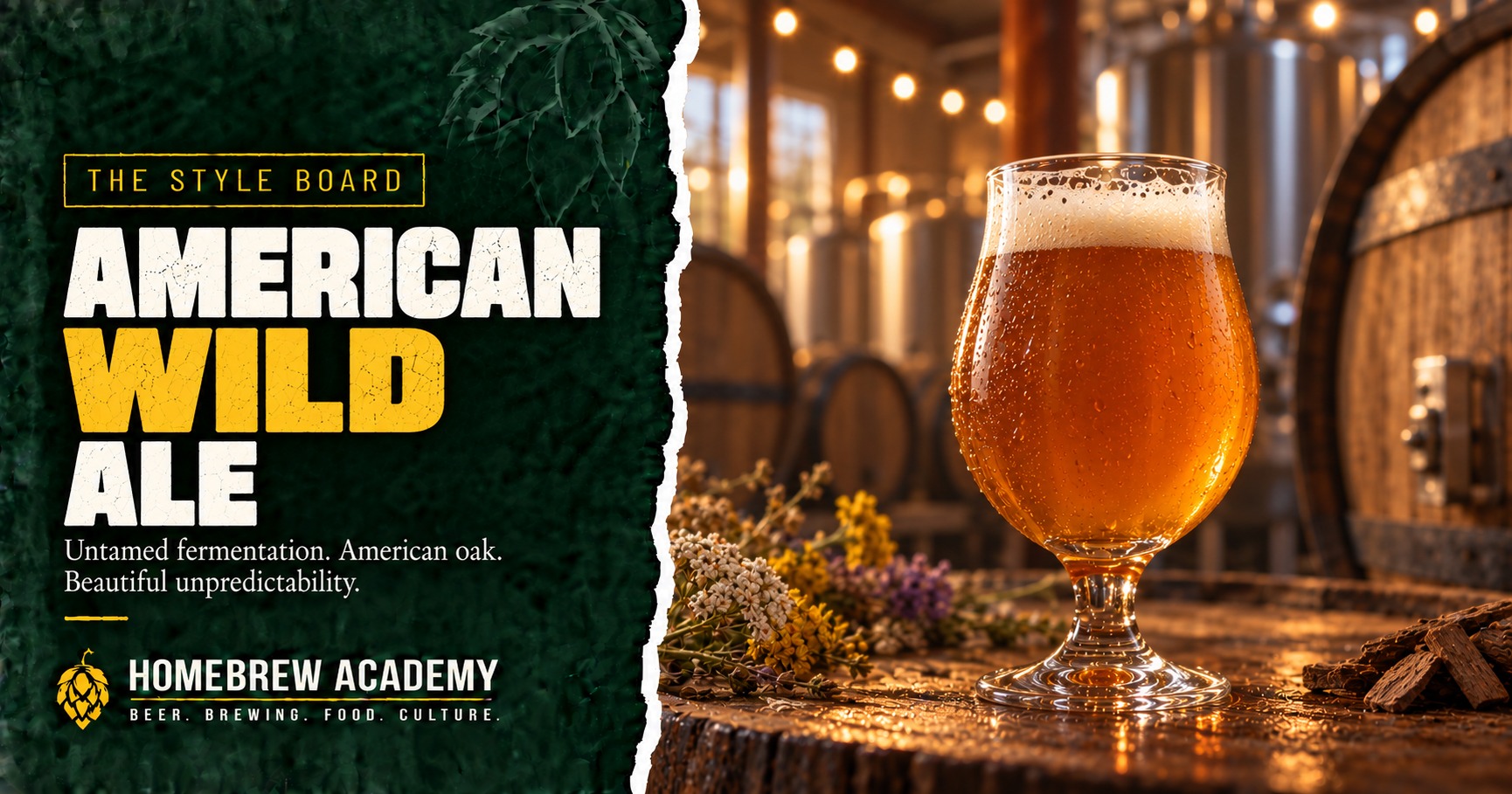
American Wild Ale Family: 10-Beer Comparison Flight and Style Guide
American wild ale is less a single flavor than a way of letting fermentation keep writing the recipe. Brettanomyces, lactic-acid bacteria, native microorganisms, oak, fruit, and time can turn a familiar base beer into something dry, earthy, tart, vinous, or completely singular.
The useful distinction is how the fermentation is built. Brett beer centers Brettanomyces without requiring strong acidity. Mixed-fermentation sour beer combines multiple organisms for layered acid and fermentation character. Wild specialty beer adds another defining idea—fruit, spice, wood, unusual grain, or an unconventional base style.
The Three American Wild Ale Styles in This Category
Brett Beer
Brett beer uses Brettanomyces as a primary strain, a finishing organism, or a bottle-conditioning culture. It can create pineapple, citrus, leather, hay, earth, and dried-herb notes while driving the beer remarkably dry. Brett may coexist with acidity, but the organism itself does not automatically make beer sour.
Mixed-Fermentation Sour Beer
Mixed-fermentation sour beer employs brewing yeast alongside Brettanomyces and acid-producing bacteria such as Lactobacillus or Pediococcus. Months or years of fermentation and maturation develop acidity, funk, fruit, oak, and deep integration. Blending is often as important as the original recipe.
Wild Specialty Beer
Wild specialty beer begins with a wild or mixed fermentation, then adds a feature that changes how the finished beer should be understood. Raspberries, currants, cherries, wine barrels, spices, smoked grain, or an unusual base beer can all qualify when both the specialty ingredient and fermentation remain identifiable.
What “wild” means in American brewing
The word can describe native inoculation, a managed house culture, commercial Brett and bacteria, or a blend of several approaches. It does not guarantee barnyard flavor, and it does not promise uncontrolled fermentation. Excellent wild beer depends on selection, sanitation, patience, and repeated sensory evaluation.
American brewers borrowed important ideas from lambic, Flanders red, saison, and other European traditions, then applied local fruit, wine barrels, hops, and house cultures. The result is a broad creative family rather than a domestic copy of one protected regional style.
Ten American Wild Ale Family references and comparisons
Nine American selections and Belgian Orval map Brett fermentation, bacterial souring, spontaneous fermentation and fruit additions. They provide a comparison flight rather than ten interchangeable styles. The child guides distinguish fermentation methods and identify neighboring controls explicitly; check batch labels when older bottles differ from current brewery specifications.
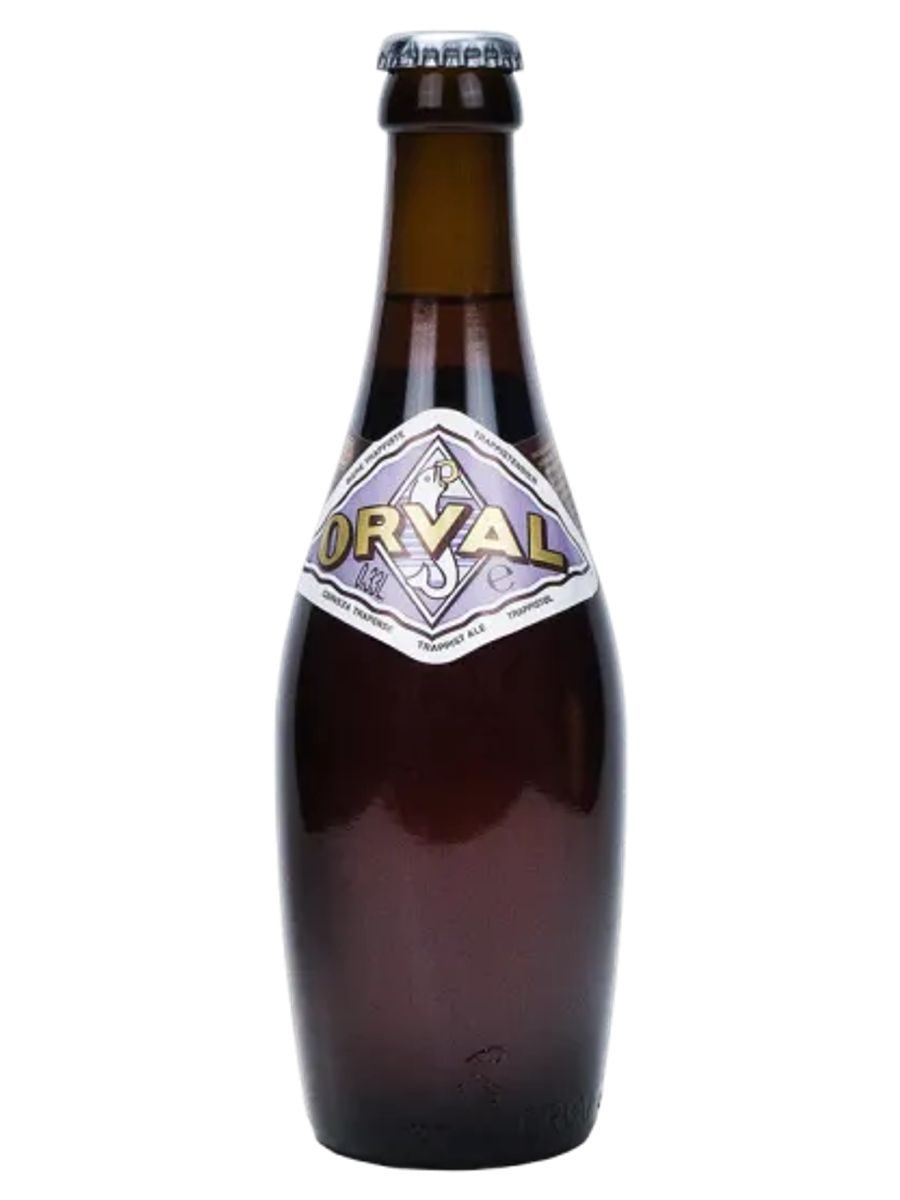
Orval
Brewed by Brasserie d’Orval
Dry hopping and secondary Brett fermentation.
BAR NOTES
Orval is a Belgian Trappist reference with pale and caramel malt, dry hopping and Brettanomyces added during maturation. The producer describes 6.2% after primary fermentation, then bottle refermentation; its dated bottles let a tasting dist