10 Best Breweries in Mississippi with 30 Beers Worth Trying
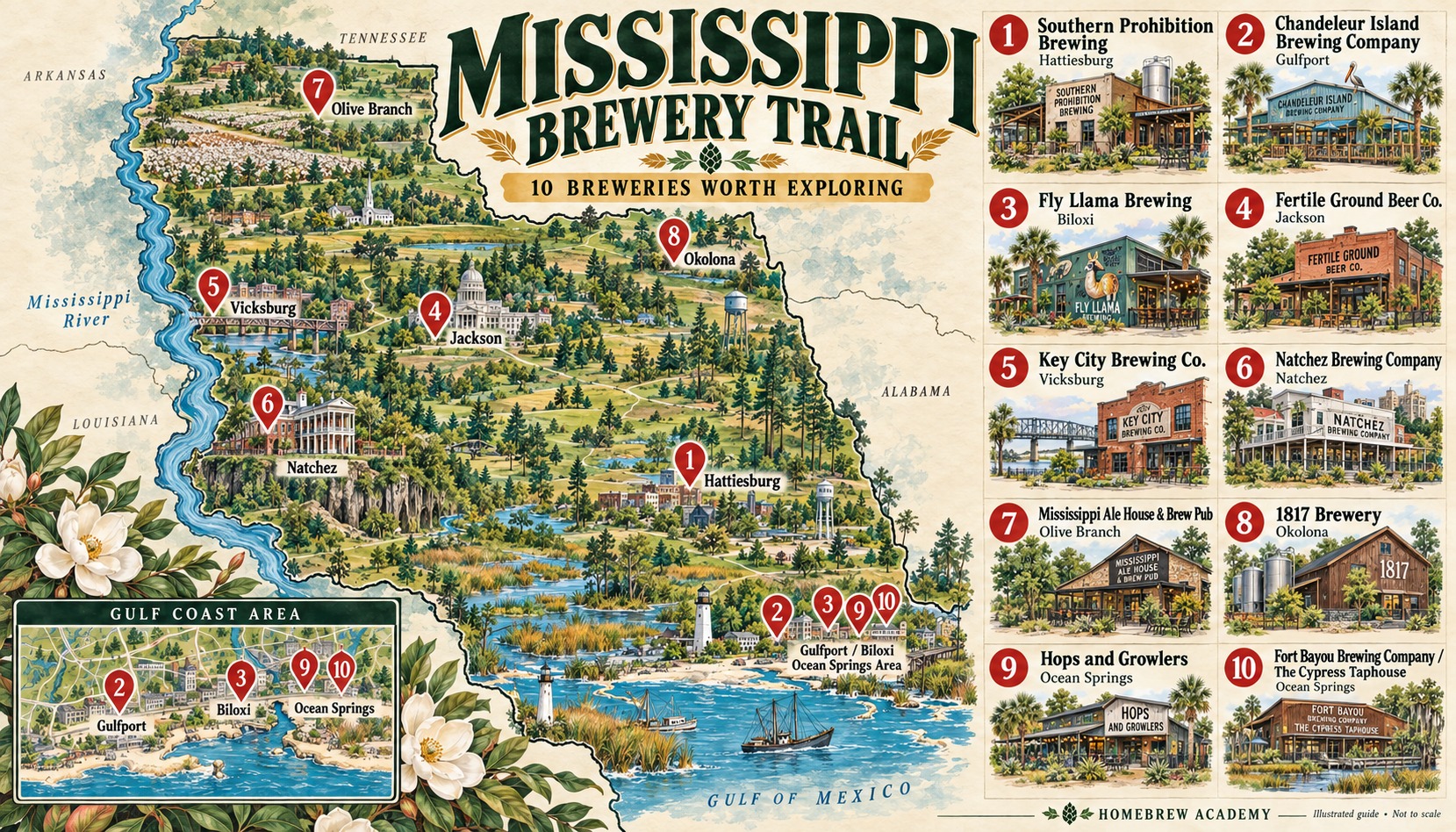
Mississippi brewery routes cross distinct regions: Hattiesburg, the Gulf Coast, Jackson, Vicksburg, Natchez, Olive Branch and Okolona. These ten editorial selections offer thirty named beers across blonde ale, wheat beer, lager, IPA, sour, amber ale, porter and stout. The order is a planning aid rather than a statewide tasting score.
Three beers per producer make useful comparisons, with current producer specifications taking priority over older profiles. Brewery-authored profiles fill identified gaps. Fort Bayou’s three specifications come from independent profiles and require current-menu confirmation; several other house beers also rotate. Check the actual menu, package and serving batch before planning around a particular beer.
Mississippi brewery picks at a glance
| Brewery | Base | Three beers to explore |
|---|---|---|
| Southern Prohibition Brewing | Hattiesburg | Suzy B · Devil’s Harvest · Crowd Control |
| Chandeleur Island Brewing Company | Gulfport | Surfside Pineapple Wheat · Guava Jelly · Curlew’s Toasted Coconut Porter |
| Fly Llama Brewing | Biloxi | Amber Coastal Lager · Bridget · Fly-Pa |
| Fertile Ground Beer Co. | Jackson | Forgotten Space · Lingering Leed · Colson’s Original |
| Key City Brewing Co. | Vicksburg | Mississippi Queen · Mr. Sippi · Death on Two Legs |
| Natchez Brewing Company | Natchez | Bluff City · Capital · Uncle Neville the Devil |
| Mississippi Ale House & Brew Pub | Olive Branch | Arm Chair Amber · Ale House Light · Old Towne IPA |
| 1817 Brewery | Okolona | Amber · Hill Country IPA · Honey Bee |
| Hops and Growlers | Ocean Springs | Blood Orange IPA · You Got The Beet · O.S. Coffee Stout |
| Fort Bayou Brewing Company / The Cypress Taphouse | Ocean Springs area | FYIG Chocolate Coffee Milk Stout · FYIG Vienna Lager · Mango Heffe |
1. Southern Prohibition Brewing
Southern Prohibition anchors this Hattiesburg selection with three different strengths: an unfiltered blonde ale, session IPA and imperial IPA. Its current taproom ordering menu verifies the named beers, while the brewery-authored profiles supply additional recipe details.
The flight follows malt balance into two different hop presentations. It replaces the older guide’s misclassification of Suzy B as a pale ale and avoids treating tasting descriptors such as mango as verified fruit additions.
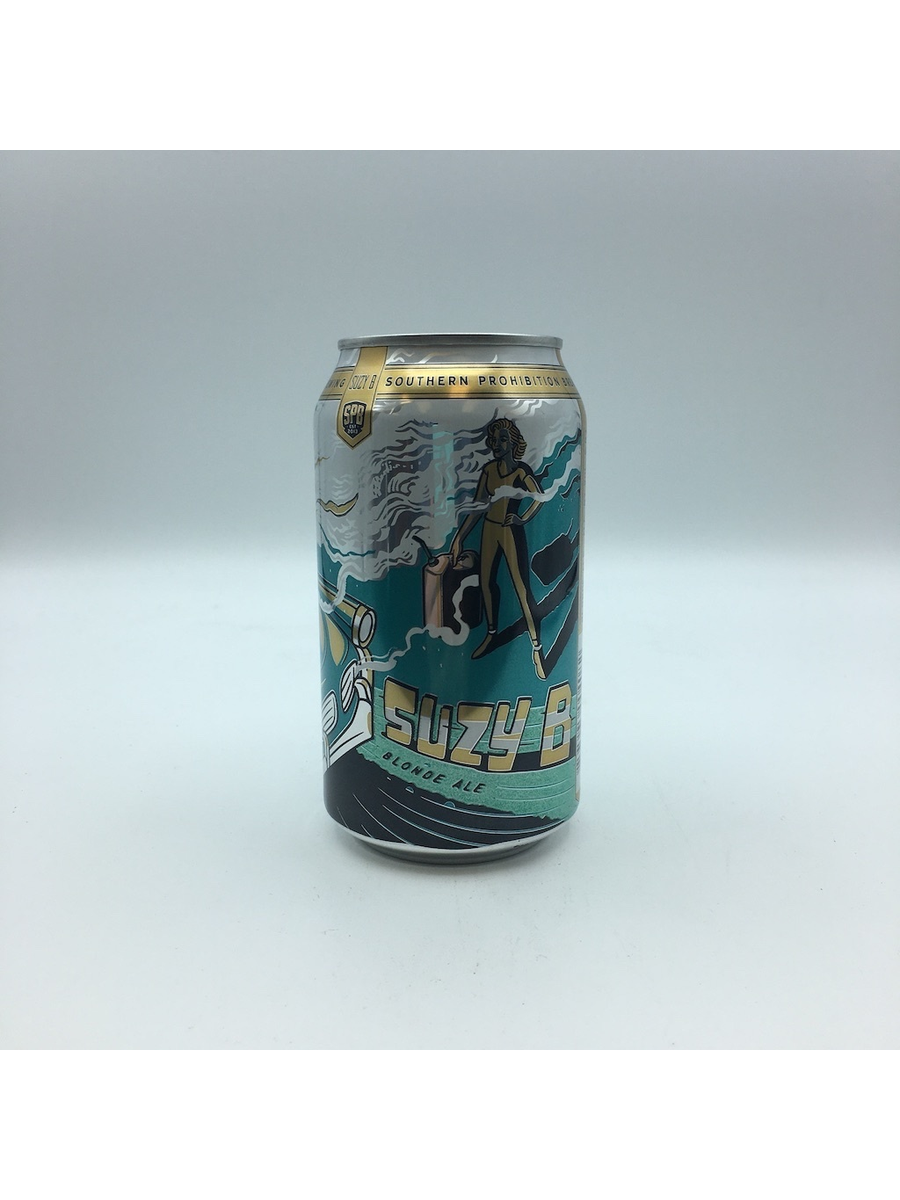
Suzy B
Brewed by Southern Prohibition Brewing
Unfiltered blonde ale with a malt backbone and balanced hop character.
BAR NOTES
Suzy B gives this Hattiesburg flight a useful starting point: an unfiltered blonde ale at 5%, with the brewery describing a malt foundation and balanced bitterness. Its pleasant hop aroma does not turn it into a pale ale, which was an incorrect classification in the older guide.
Use Suzy B as the lower-strength reference before the two IPAs. Compare the malt impression and finish rather than treating pale color as a promise of identical flavor. The brewery’s description identifies an unfiltered beer; it does not establish a fruit addition or a particular dietary certification.
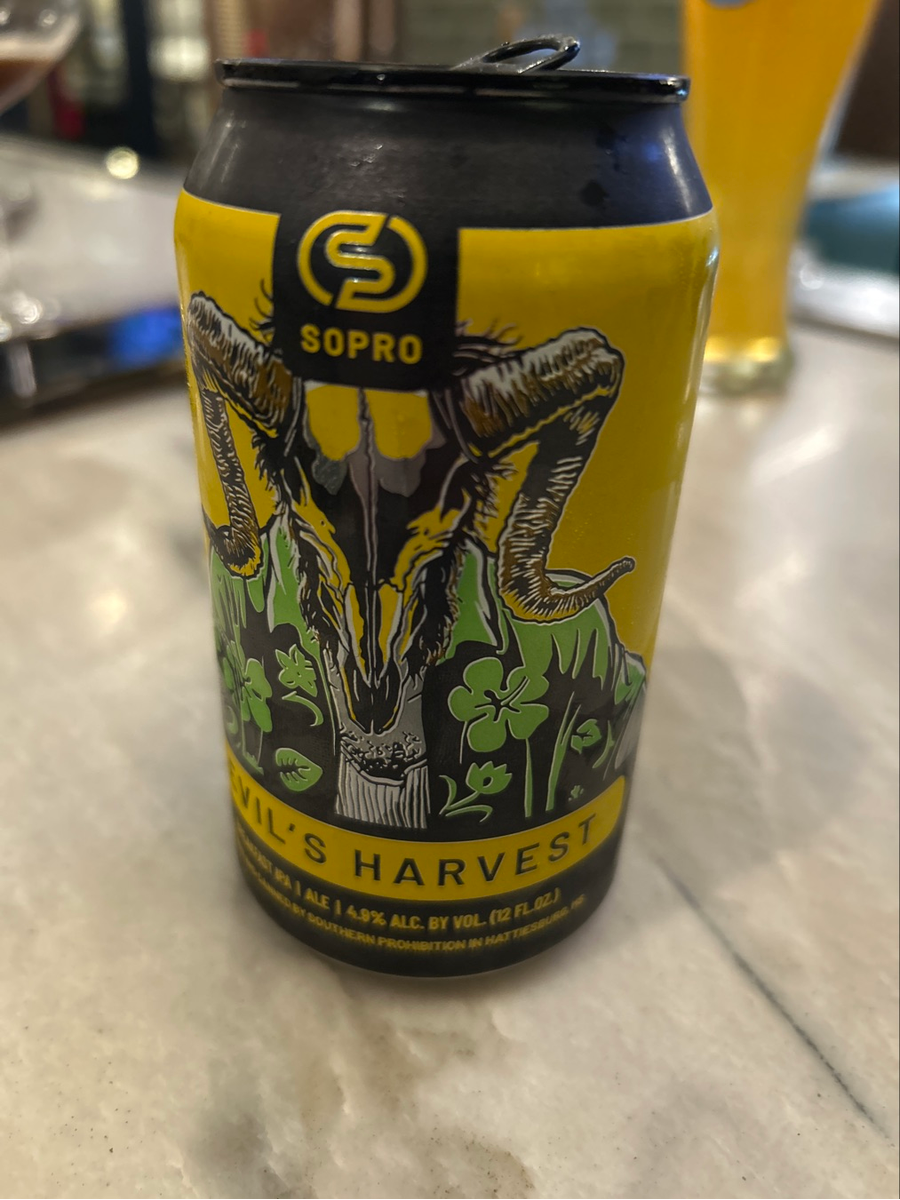
Devil’s Harvest
Brewed by Southern Prohibition Brewing
Session IPA with oats, Citra and Mosaic; aroma emphasized through whirlpool and dry hopping.
BAR NOTES
Devil’s Harvest is the session IPA in this trio, listed at 4.9% on the brewery-authored profile. Oats support its cloudy presentation, while Citra and Mosaic provide the hop focus. The brewer specifically describes whirlpool and dry hopping as ways to emphasize aroma while limiting bitterness.
This is a useful comparison with Crowd Control because the hop-forward character arrives at a much lower alcohol strength. Taste how aroma, body and finish relate before assuming that more hops must mean more bitterness. The selected beer is regular Devil’s Harvest, rather than a separately named variant.
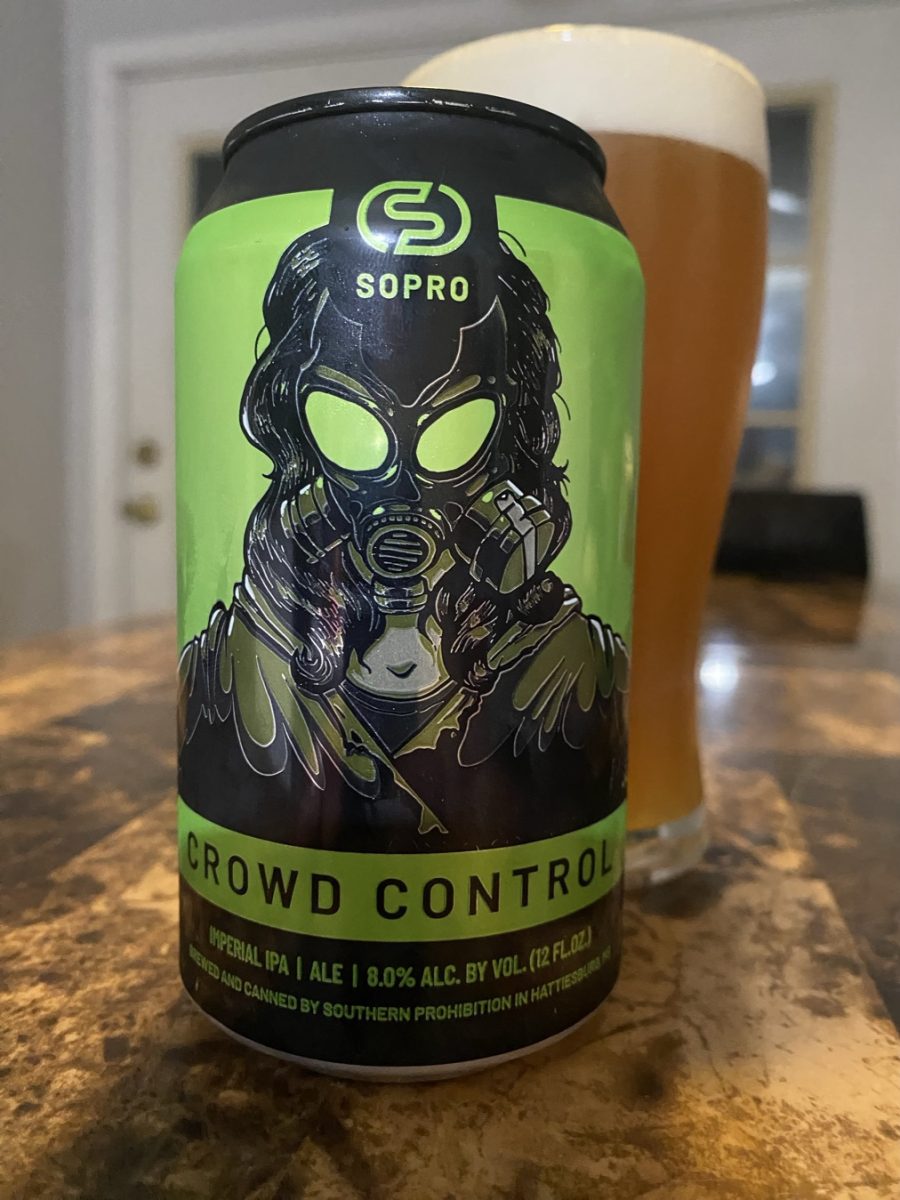
Crowd Control
Brewed by Southern Prohibition Brewing
Imperial IPA featuring Mosaic and a substantial malt foundation.
BAR NOTES
Crowd Control moves the same brewery flight to 8% ABV. The brewery-authored description emphasizes Mosaic hops, dry hopping and a solid malt backbone, while the current menu describes citrus, pine and mango notes. Those are flavor descriptions; they do not establish added mango or citrus juice.
Place this stronger beer after Suzy B and Devil’s Harvest if you are comparing the three in small pours. Its imperial IPA identity is the useful distinction, with more alcohol than either companion. Do not treat the three selections as interchangeable simply because all can show some hop aroma.
2. Chandeleur Island Brewing Company
Chandeleur’s Gulfport portfolio spans wheat beer, fruited sour and porter. The current producer page separates year-round beers from the Gulf Sour Series and rotating releases, so this trio carries those distinctions into its availability notes.
Surfside’s brewery description explicitly identifies pineapple juice. Guava Jelly belongs to the sour series, while Curlew is rotating. The three selections explore different base styles rather than promising that all three are on every tap list.
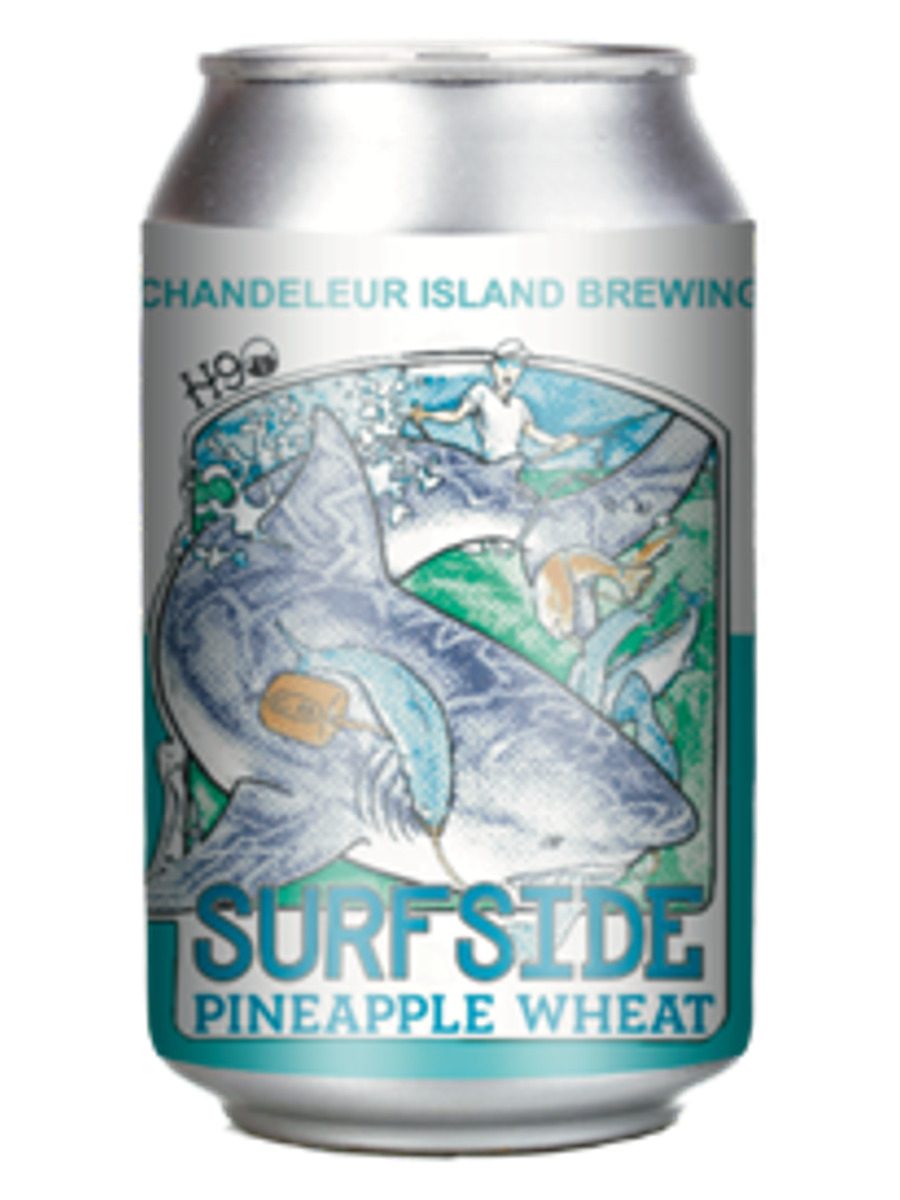
Surfside Pineapple Wheat
Brewed by Chandeleur Island Brewing Company
Pineapple wheat beer whose brewery profile specifies real pineapple juice during fermentation.
BAR NOTES
Surfside combines a wheat-beer base with a specific fruit ingredient: the brewery-authored profile says real pineapple juice is added during fermentation. White and red wheat contribute to the described soft mouthfeel. The producer places Surfside in its year-round portfolio, rather than its rotating-beer group.
Compare this 4.8% wheat beer with Guava Jelly’s sour identity before deciding that every tropical fruit beer tastes alike. Pineapple is an actual recipe claim here, unlike the pineapple tasting language used for some IPAs elsewhere in the guide. Year-round portfolio status still does not guarantee today’s stock.
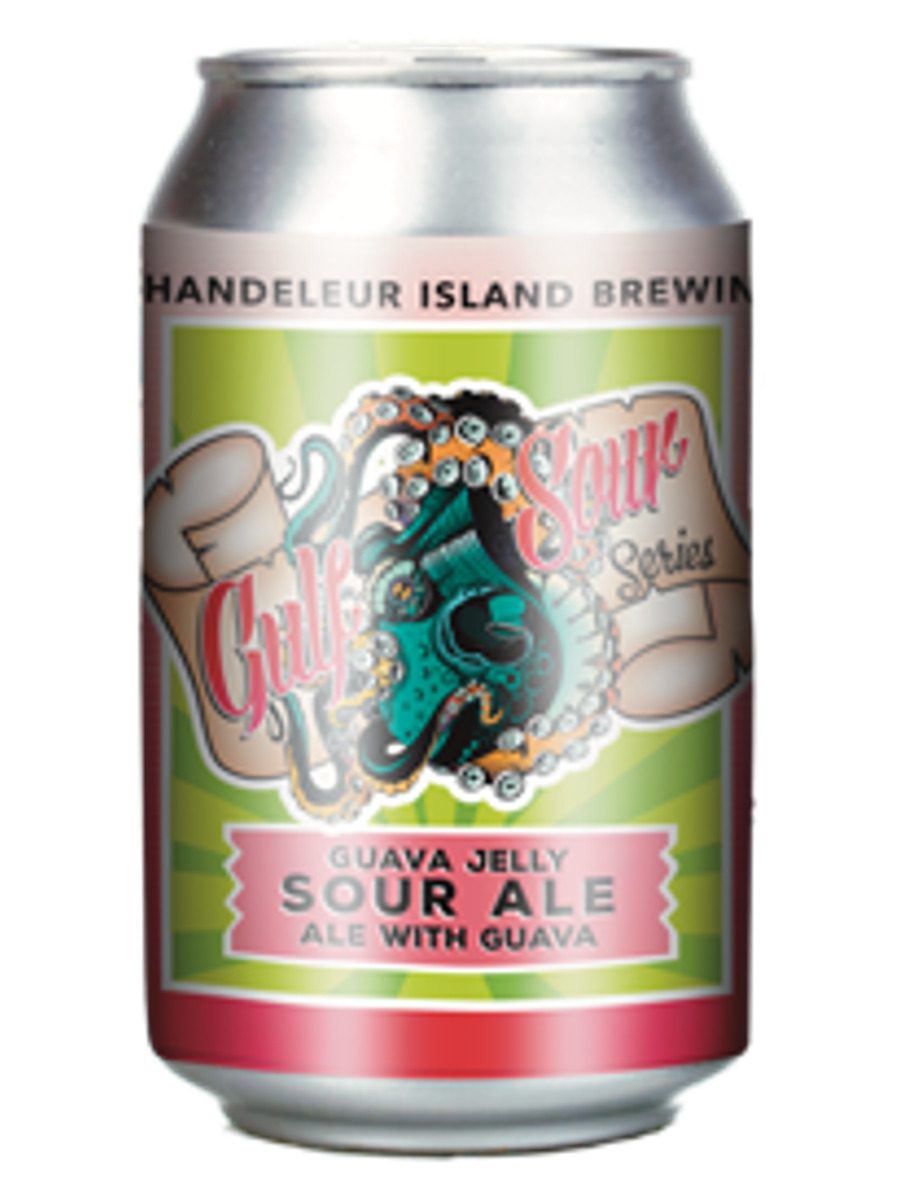
Guava Jelly
Brewed by Chandeleur Island Brewing Company
Fruited sour with guava puree added during secondary fermentation.
BAR NOTES
Guava Jelly occupies the sour side of this Gulfport trio. Chandeleur’s producer sales sheet lists 6% ABV and explains that a golden ale is soured with the house culture before guava puree is added during secondary fermentation. This is an explicit fruit ingredient, not a guessed tropical flavor addition.
Compare its tartness and guava presentation with Surfside’s pineapple-and-wheat base. The sales sheet also mentions banana, pear and other tropical fruits as flavor comparisons; it does not identify all of those as additions. The producer’s Gulf Sour Series listing describes this release without guaranteeing continuous availability.
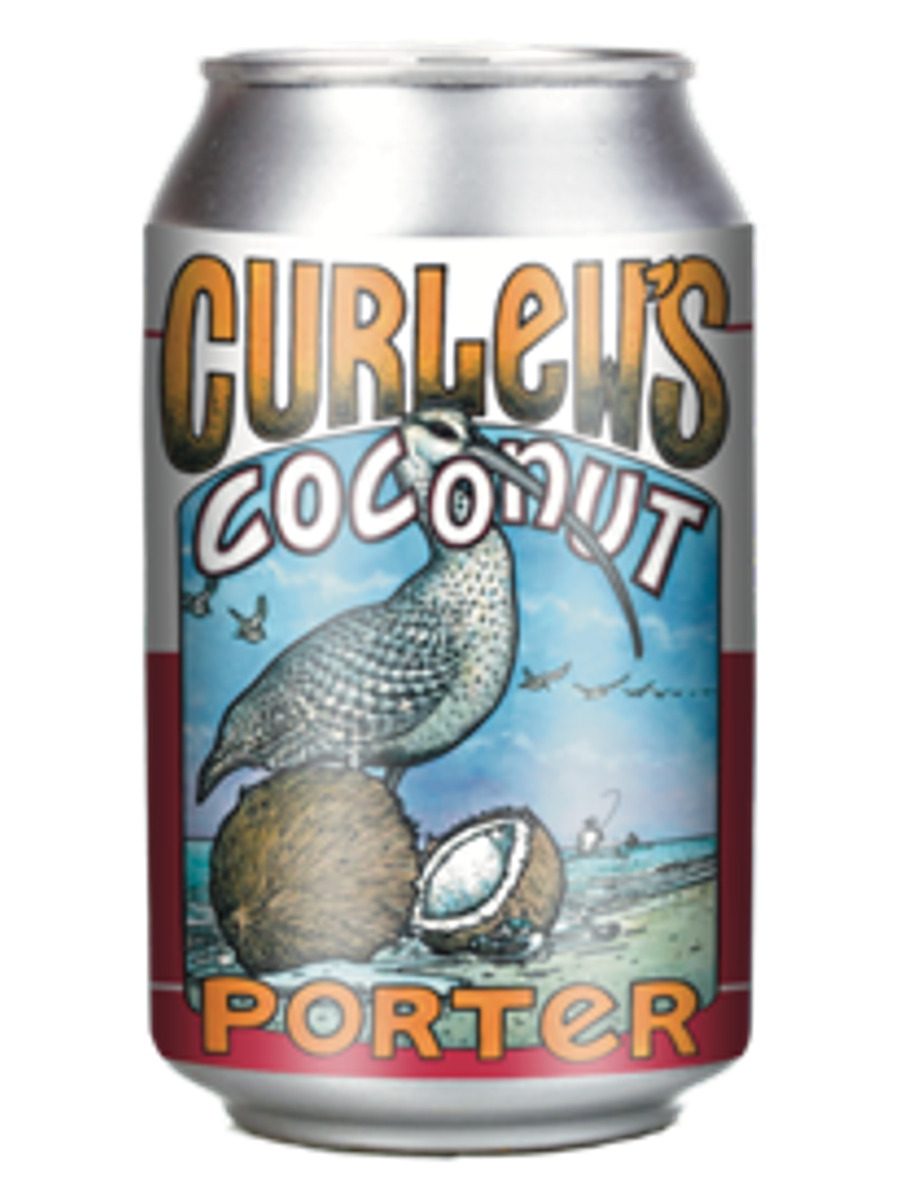
Curlew’s Toasted Coconut Porter
Brewed by Chandeleur Island Brewing Company
Porter with coconut added in the aging tanks; listed among the producer’s rotating beers.
BAR NOTES
Curlew’s Toasted Coconut Porter adds a darker beer to the flight, with a 5.8% strength on the producer’s sales sheet. The brewer describes coconut being added to the aging tanks. Its portfolio places Curlew among rotating beers, a distinction that matters when planning around a particular draft.
Use the porter to explore a different malt foundation after the wheat and sour selections. The producer attributes coffee, chocolate and toffee notes to roasted malts, while coconut is an actual addition. That distinction does not establish added coffee or lactose; confirm the actual formulation when an ingredient restriction matters.
3. Fly Llama Brewing
Fly Llama’s current Biloxi website features Amber Coastal Lager, Bridget and Fly-Pa alongside a separate hard-seltzer lineup. This guide selects the three beers and keeps seltzers outside the beer count.
Amber Coastal Lager has its own exact profile at 5%; the older pale Fly Llager profile is a different named listing. Bridget’s peel and spices and Fly-Pa’s dry hop give the flight distinct brewing directions without assigning older details to new packaging.
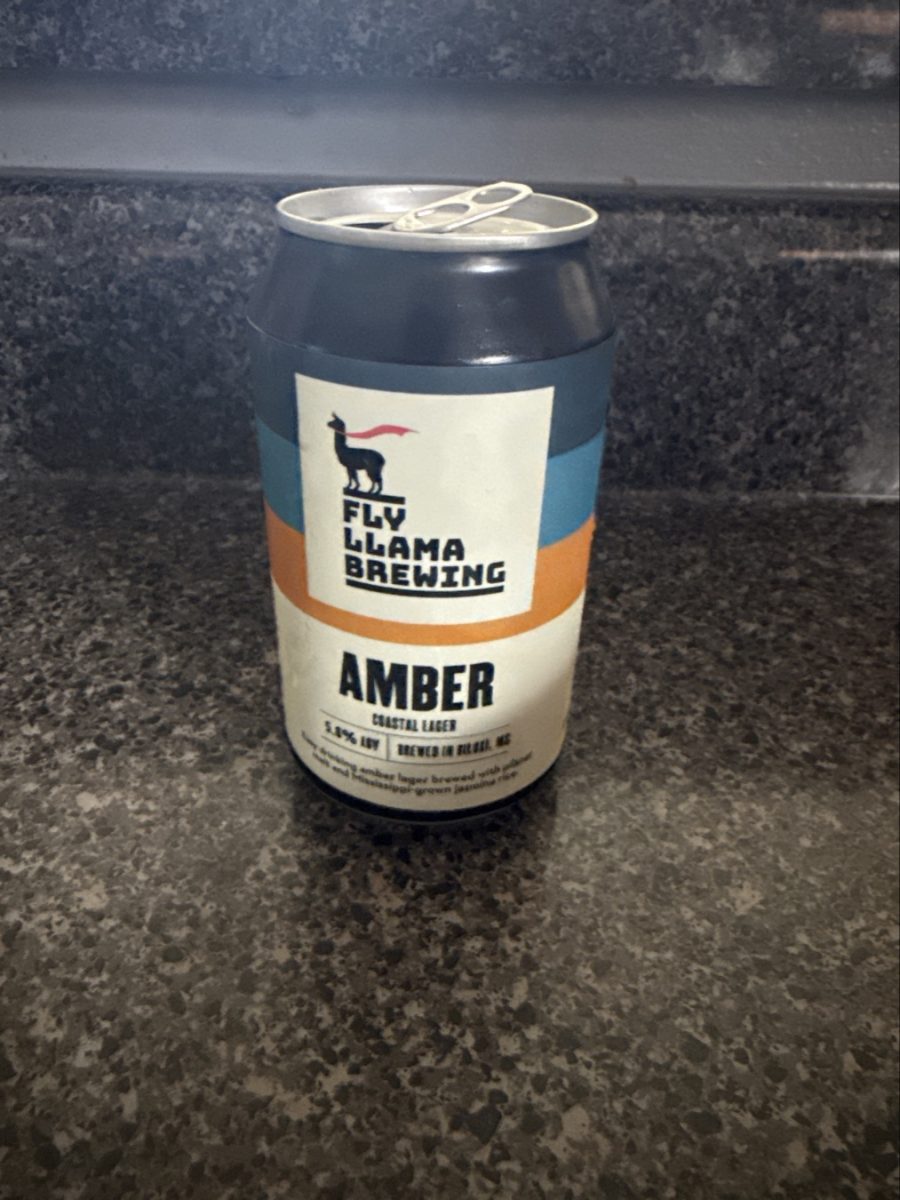
Amber Coastal Lager
Brewed by Fly Llama Brewing
Current Amber Coastal Lager, distinct from the older Fly Llager listing.
BAR NOTES
Amber Coastal Lager is the beer featured by name on Fly Llama’s current home page, and its exact profile records 5% ABV. It is an amber lager selection, not the older pale Fly Llager profile at 4.7%. Keeping those names separate avoids attaching an older beer’s details to current packaging.
Start the Biloxi comparison with this lager, then move to Bridget’s wheat-and-yeast identity and Fly-Pa’s hop emphasis. Color can help organize the flight, but it cannot supply an ingredient list. The producer’s older beer-page heading remains ambiguous, so this card avoids transferring its rice claim to Amber Coastal Lager.
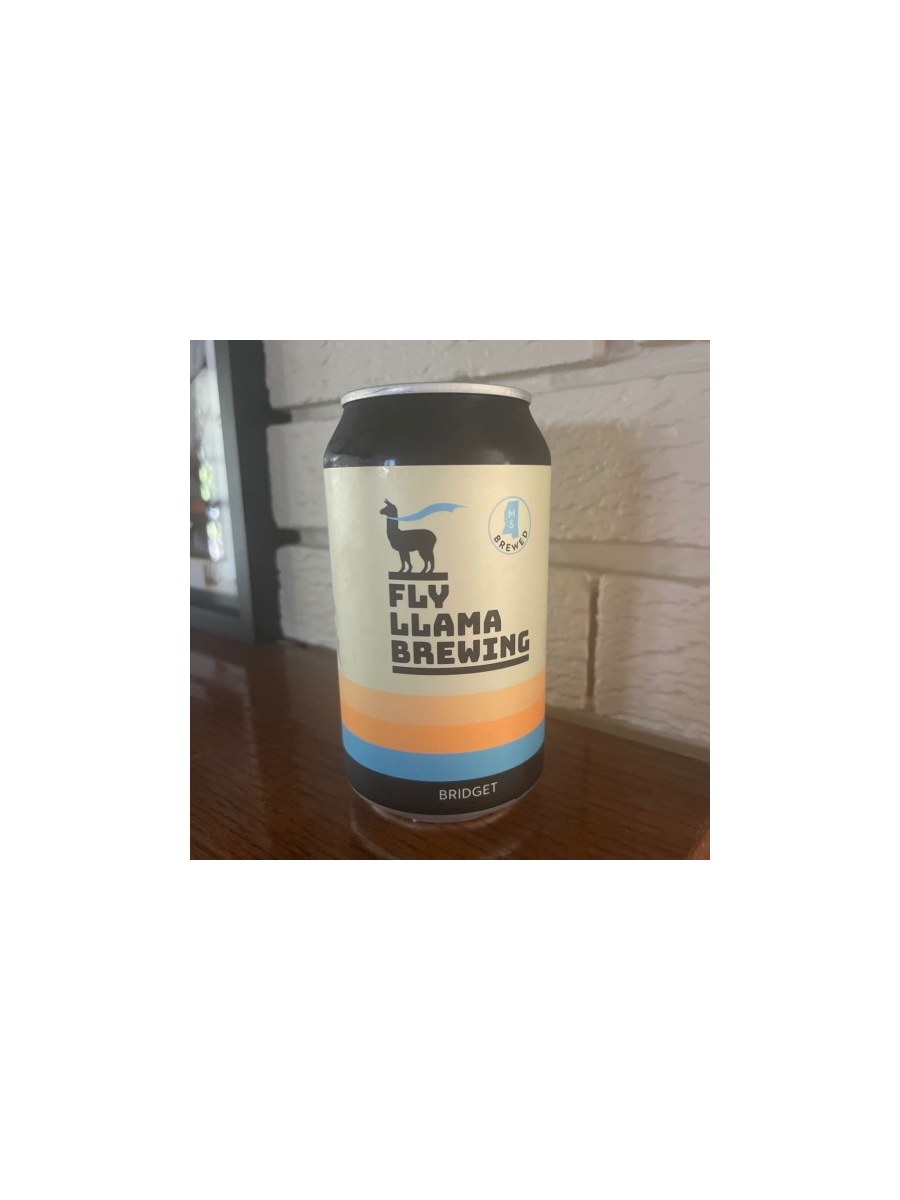
Bridget
Brewed by Fly Llama Brewing
Belgian-style witbier with citrus peel, spices and delicate yeast character.
BAR NOTES
Bridget is a Belgian-style witbier at 5.1% on the producer’s beer page and exact profile. The brewery explicitly identifies citrus peel and spices alongside delicate yeast character. Those recipe details distinguish it from a plain wheat ale, even when both can pour pale and lightly cloudy.
Compare Bridget’s spice-and-yeast impression with Fly-Pa’s hop-derived citrus language. Here, citrus peel is an actual brewing ingredient, while the IPA’s tropical and citrus notes describe its hop presentation. The available description does not name every spice, so it should not be expanded into a guessed recipe.
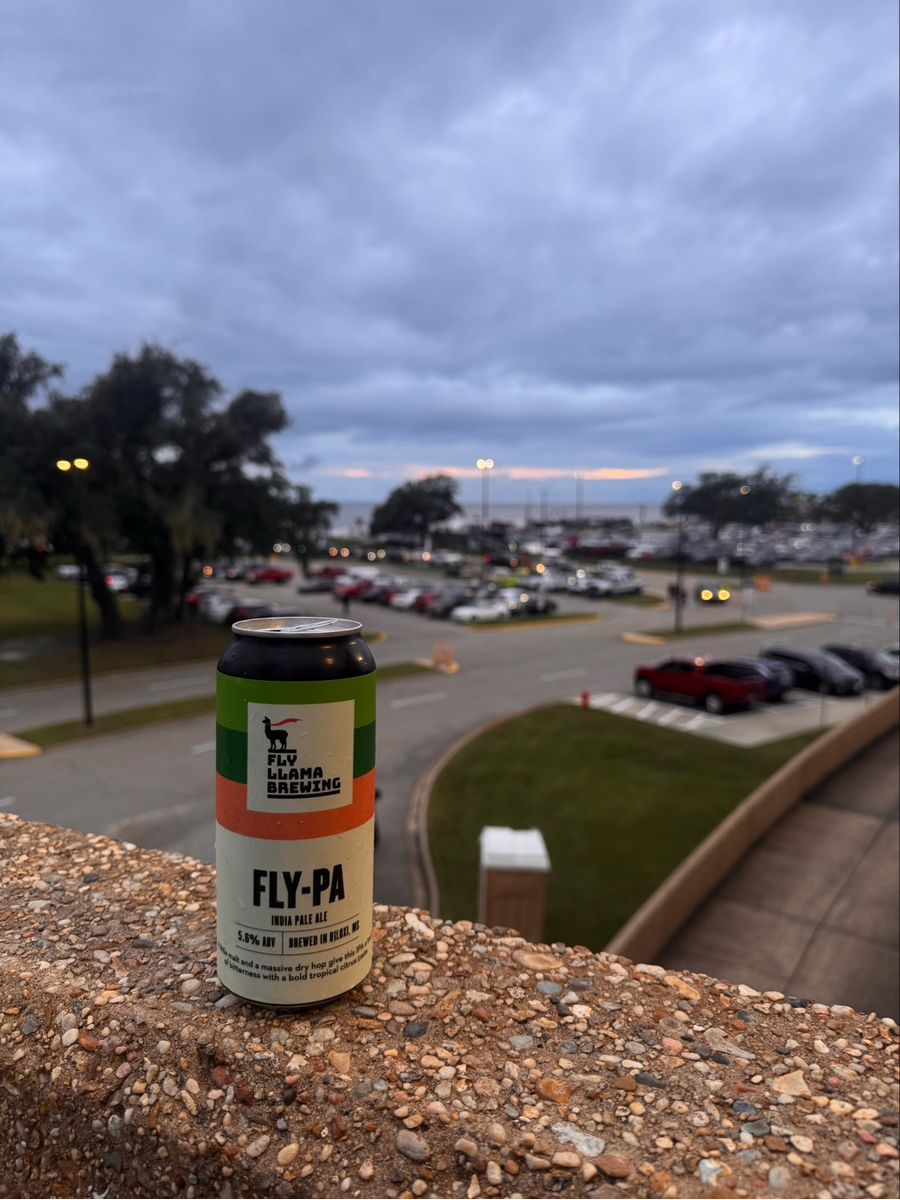
Fly-Pa
Brewed by Fly Llama Brewing
American IPA with a large dry hop and tropical-citrus flavor language.
BAR NOTES
Fly-Pa completes Fly Llama’s trio as an American IPA at 5.6%. The producer describes a little malt, a large dry hop, some bitterness and a bold tropical-citrus impression. This is the hop-focused comparison beside Amber Coastal Lager and Bridget, rather than another flavored wheat beer.
A useful flight follows the source of flavor: lager structure, witbier peel and spices, then IPA hops. Fly-Pa’s description does not establish added tropical fruit, even though those words appear in the tasting language. Follow the actual package and batch if a newer release changes the stated strength.
4. Fertile Ground Beer Co.
Fertile Ground’s Jackson producer pages provide unusually clear specifications for this trio: Forgotten Space IPA, Lingering Leed helles and Colson’s Original golden ale. Each is listed in the producer’s year-round portfolio.
The current Lingering Leed product page lists 4.4%, ahead of the older 4.3% profile. These cards use current producer strengths and recipe descriptions, with day-to-day inventory left to the actual tap list.
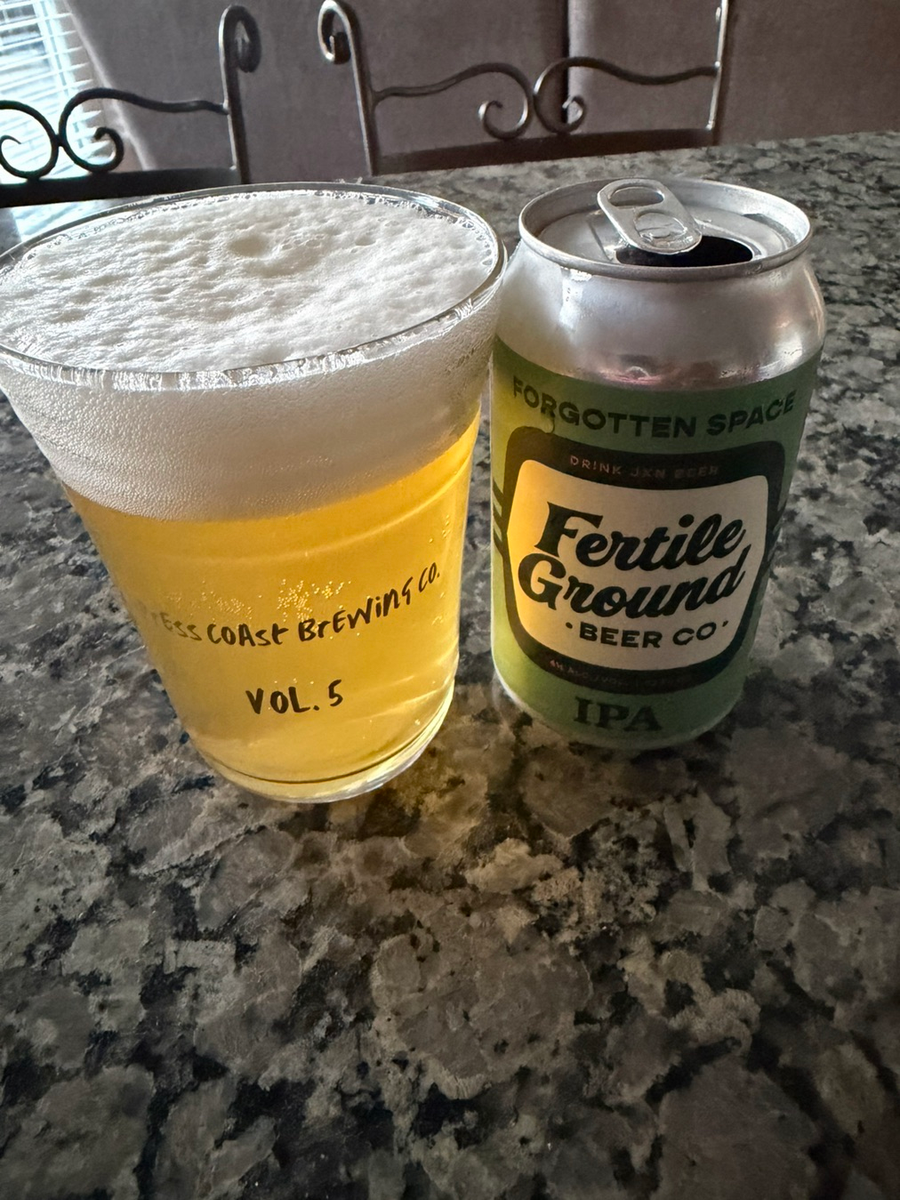
Forgotten Space
Brewed by Fertile Ground Beer Co.
IPA dry-hopped with Galaxy, Citra, El Dorado, Cashmere and Pacific Sunrise.
BAR NOTES
Forgotten Space is the hop-led member of Fertile Ground’s Jackson trio. Its producer page lists 6% ABV and names Galaxy, Citra, El Dorado, Cashmere and Pacific Sunrise in the dry hop. The description emphasizes a soft tropical-fruit impression followed by subtle bitterness.
Those named hops give the beer a concrete point of comparison with the guide’s other IPAs, but the tropical language does not prove fruit was added. Explore how the finish differs from Lingering Leed’s malt-led lager character. The producer’s year-round designation describes the portfolio rather than guaranteeing a particular visit’s pour.
Lingering Leed
Brewed by Fertile Ground Beer Co.
Munich-style helles lager; current producer strength is 4.4%.
BAR NOTES
Lingering Leed is a Munich-style helles lager described by Fertile Ground as clean, malty and crisp, with low floral or herbal hop flavor. The current producer page lists 4.4% ABV. Its older beer profile retains 4.3%, so this card uses the producer figure without averaging the two.
The producer describes four to six weeks of lagering and natural carbonation, useful process details beside Forgotten Space’s dry-hop focus. Compare the malt balance and restrained hop impression with Mr. Sippi’s pilsner later in the guide. Check the actual batch if the label or tap menu gives a newer strength.
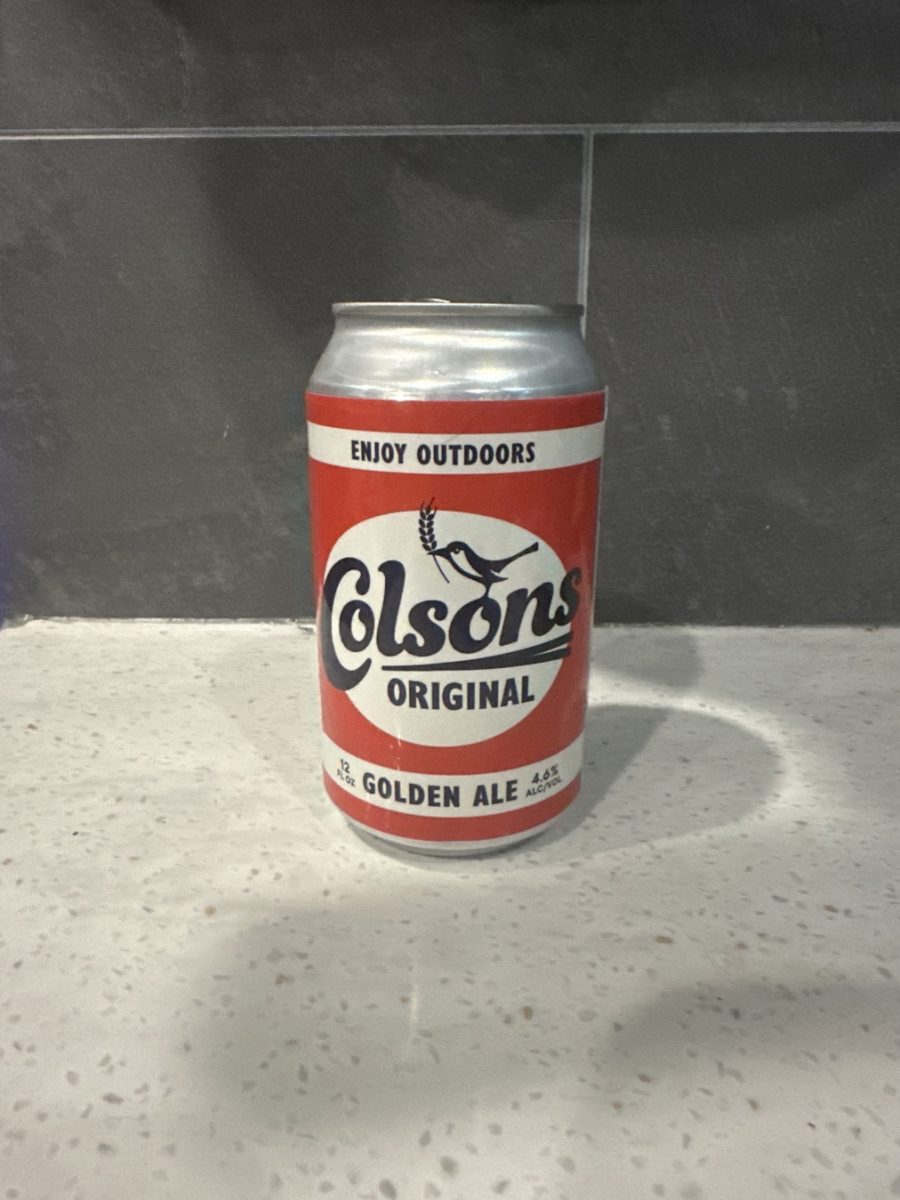
Colson’s Original
Brewed by Fertile Ground Beer Co.
Golden ale with the producer describing light citrus and fruity notes.
BAR NOTES
Colson’s Original is Fertile Ground’s golden ale at 4.6% ABV on its own product page. The producer describes light citrus and fruity notes rather than documenting an added fruit ingredient. That makes it a separate point of comparison from both the helles lager and the IPA in this trio.
Golden ale and helles can occupy similar-looking places in a flight while reflecting different beer identities. Compare the described fruity character with Lingering Leed’s malt and restrained floral-herbal hops. Keep Colson’s Original tied to its exact name and formulation; a pale appearance alone does not establish the same recipe.
5. Key City Brewing Co.
Key City’s Vicksburg producer pages identify these three beers as core releases with draft and twelve-ounce can formats. A blonde ale, pilsner and double IPA make a wide-ranging flight without assuming that core status guarantees stock.
Current Mr. Sippi is 4.5% on the producer page, although its older profile retains 4.2%. Death on Two Legs is 9.5% on the producer page. The separately named red-ale listings are excluded rather than silently treating a possible rename as the same product.
Mississippi Queen
Brewed by Key City Brewing Co.
Core blonde ale described by Key City as bright and toasty.
BAR NOTES
Mississippi Queen is a core blonde ale at 5.2% on Key City’s producer page. The brewery describes a bright, toasty character and lists both draft and twelve-ounce cans. Its history on the producer page establishes it as an early brewery beer, without making today’s inventory a certainty.
Use Mississippi Queen to compare a blonde ale with Mr. Sippi’s pilsner identity in the same Vicksburg flight. Similar color does not establish the same fermentation or finish. The brewery’s toasty description supplies a tasting direction; it does not justify inventing a specific malt bill or hop variety.
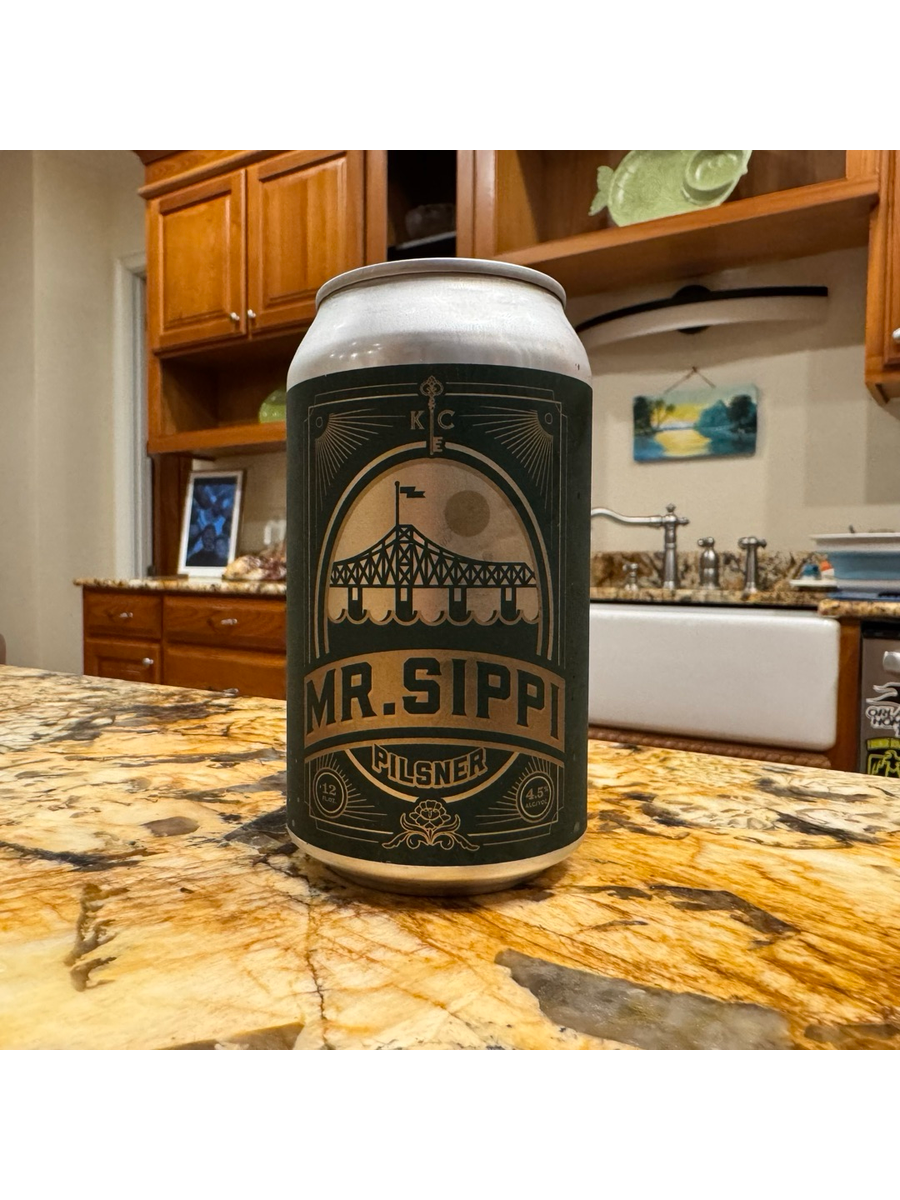
Mr. Sippi
Brewed by Key City Brewing Co.
Pilsner with doughy-bread and honeysuckle notes; current producer strength is 4.5%.
BAR NOTES
Mr. Sippi is the pilsner in Key City’s core portfolio, with the producer describing doughy bread, honeysuckle and slight bitterness. Its current product page lists 4.5% ABV, while the older exact profile retains 4.2%. The current producer figure takes priority in this guide.
Honeysuckle appears as tasting language rather than a verified flower addition, and doughy bread describes the malt impression. Compare that balance with Mississippi Queen’s toastiness before the stronger double IPA. Follow the actual serving batch if an updated package or menu supersedes either of the retained online strengths.
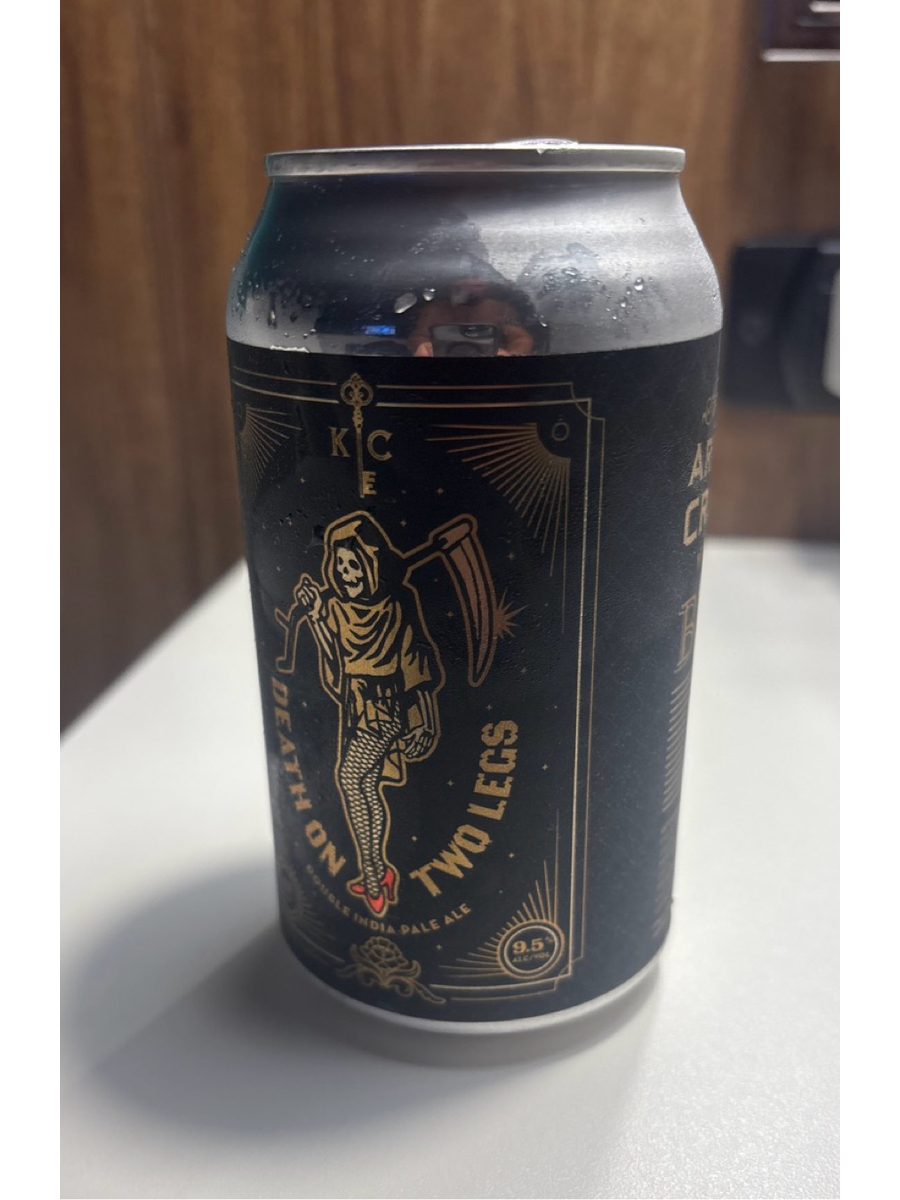
Death on Two Legs
Brewed by Key City Brewing Co.
Core double IPA with dank hops and tropical-citrus tasting language.
BAR NOTES
Death on Two Legs is Key City’s double IPA at 9.5% on its producer page. The brewery’s tasting language moves through dank hops, pineapple, orange marmalade, blood orange and a pithy stone-fruit finish. Those descriptors are not a documented list of fruit ingredients.
This is the strongest beer selected in the Mississippi guide, so a small comparison pour helps keep its role distinct from the blonde ale and pilsner. The producer identifies a core beer available in draft and cans. Core status does not establish the current inventory, and the actual package should settle batch-specific details.
6. Natchez Brewing Company
Natchez Brewing Company’s venue menu currently lists Bluff City, Capital and Uncle Neville the Devil. That menu snapshot supports a blonde-ale, hazy-IPA and red-IPA comparison; the exact brewery-authored profiles add recipe information.
Capital is 6%, not an invented stronger Old Capital selection. Uncle Neville’s specific malt and hop description gives a grounded contrast with the hazy IPA. Check the present menu before traveling, since the retained listing is a snapshot.
Bluff City
Brewed by Natchez Brewing Company
American blonde ale with a light body and restrained hop character.
BAR NOTES
Bluff City is Natchez’s American blonde ale, listed at 4.5% on the venue’s online draft menu and its exact profile. The brewery-authored description identifies a straw-colored, light-bodied beer with a hint of hops. It offers a lower-strength reference beside Capital and Uncle Neville the Devil.
Compare Bluff City with Mississippi Queen to explore two breweries’ blonde-ale descriptions without claiming they share a recipe. The Natchez selection is tied to the named beer on the current menu snapshot. Check the day’s actual menu before travel, because a retained online listing cannot guarantee the next keg.
Capital
Brewed by Natchez Brewing Company
New England-style hazy IPA dry-hopped with Citra, El Dorado and Mosaic.
BAR NOTES
Capital is a New England-style hazy IPA at 6% on the brewery venue’s online menu and exact profile. Natchez’s brewery-authored description identifies Citra, El Dorado and Mosaic in the dry hop. The selected beer is Capital, with that exact name and strength, rather than an invented Old Capital variant.
Compare its hop combination with Forgotten Space’s five-variety dry hop, then consider the red IPA beside it in this flight. Haze and hop aroma are useful tasting observations, but they do not establish added juice. The beer description supplies hops, not a complete recipe or a promise of stock on every visit.
Uncle Neville the Devil
Brewed by Natchez Brewing Company
Red IPA with caramel malt structure and Cascade-Centennial hop emphasis.
BAR NOTES
Uncle Neville the Devil is a red IPA at 7% on Natchez’s online venue menu. The brewery-authored profile names two-row, Carahell, Caramunich and a little chocolate malt, alongside Cascade and Centennial in the whirlpool and dry hop. Its described citrus-pine character sits over a caramel malt foundation.
This selection gives the Natchez flight a malt-and-hop comparison beyond the hazy IPA. Chocolate malt is a named grain here, not proof of added chocolate confectionery. Compare how the richer malt impression changes the hop presentation while keeping the profile’s formulation separate from any later recipe revision.
7. Mississippi Ale House & Brew Pub
Mississippi Ale House & Brew Pub in Olive Branch has a broad rotating tap collection and its own claimed brewery profile. This guide selects three beers attributed to the house producer rather than counting guest breweries as its own output.
Arm Chair Amber, Ale House Light and Old Towne IPA are profile-backed selections with 5.3%, 4.2% and 6.2% published strengths. Their present presence on the house menu needs confirmation, and sparse recipe entries remain sparse instead of becoming invented tasting notes.
Arm Chair Amber
Brewed by Mississippi Ale House & Brew Pub
American amber ale identified on Mississippi Ale House’s brewery-authored profile.
BAR NOTES
Arm Chair Amber is the exact name on Mississippi Ale House’s brewery-authored profile, with a strength of 5.3% ABV. The profile classifies it as an American amber ale. It is a house-beer selection for comparison, while the venue’s wider rotating tap collection also includes beers from other producers.
Compare Arm Chair Amber with Ale House Light before the more hop-forward Old Towne IPA. The available profile provides style and strength but little recipe detail, so this guide does not invent a malt bill or a guaranteed caramel flavor. Ask for the current house-beer list when visiting Olive Branch.
Ale House Light
Brewed by Mississippi Ale House & Brew Pub
Lower-strength blonde/golden ale, rather than a verified light lager.
BAR NOTES
Ale House Light is listed at 4.2% on Mississippi Ale House’s brewery-authored profile and classified as a blonde or golden ale. The word Light does not establish a lager, a calorie count or a dietary claim. Its lower alcohol strength is the documented contrast within this three-beer selection.
Use it as the starting point if the current house menu includes all three selections, then compare the amber and IPA. The profile does not provide a complete ingredient list or process description. This card keeps the limited evidence visible rather than supplying an assumed adjunct recipe from the beer’s name.
Old Towne IPA
Brewed by Mississippi Ale House & Brew Pub
American IPA whose brewery-authored description identifies Centennial hops.
BAR NOTES
Old Towne IPA is the house American IPA listed at 6.2% on Mississippi Ale House’s brewery-authored profile. Its description identifies Centennial hops, giving it a concrete comparison point with Natchez’s Cascade-and-Centennial red IPA. Shared hops do not establish the same malt foundation or fermentation profile.
This selection completes an Olive Branch flight across a lower-strength blonde ale, amber ale and IPA. Check whether all three house beers are actually available rather than treating the venue’s many taps as proof. The retained beer profile documents the named recipe, while the current tap list settles what can be ordered.
8. 1817 Brewery
1817 Brewery is based in Okolona, with a claimed brewery profile documenting Amber, Hill Country IPA and Honey Bee. These selections use the producer-authored descriptions for medium-bodied amber ale, floral IPA and honey cream ale.
Confirm current distribution and public visitor access before planning a dedicated brewery stop. The brewery location alone does not establish taproom hours, and the beer profiles establish published identities rather than today’s retail inventory.
Amber
Brewed by 1817 Brewery
1817’s American amber ale with a medium-body description on its claimed brewery profile.
BAR NOTES
1817’s Amber is an American amber ale at 5.1% on the brewery’s claimed profile. Its description identifies a medium body and natural fermentation. That evidence supports a malt-oriented comparison with Hill Country IPA and Honey Bee, without supplying a detailed grain bill or a claimed tasting score.
The brewery is based in Okolona, but a brewery location is not automatically a visitor-facing taproom schedule. Confirm where its beers are currently sold and whether public access is available. Compare Amber with Mississippi Ale House’s amber selection when both are obtainable, keeping producer identity and batch information attached to each.
Hill Country IPA
Brewed by 1817 Brewery
American IPA described with a floral hop aroma and natural carbonation.
BAR NOTES
Hill Country IPA is 1817’s American IPA at 6.4% on its brewery-authored profile. The brewer describes a floral hop aroma and natural carbonation. Those are useful distinctions from the amber ale beside it, although the retained description does not identify individual hop varieties.
Use Hill Country as a floral counterpoint to the guide’s IPAs described with tropical or citrus language. Do not expand that comparison into an unsupported ingredient list. Its profile establishes the named beer’s published specifications; a current retailer, venue or producer confirmation is still needed to establish availability for your visit.
Honey Bee
Brewed by 1817 Brewery
Cream ale whose brewery-authored description specifies real local Tupelo honey.
BAR NOTES
Honey Bee is 1817’s cream ale at 5% on the brewery-authored profile, and its description explicitly identifies real local Tupelo honey. Here honey is a recipe claim, unlike a honey-like malt note elsewhere. The cream-ale style name itself does not establish lactose or another dairy ingredient.
Compare Honey Bee with Amber and Hill Country IPA to examine three different recipe directions from one brewery. The source does not justify a claim about residual sugar, calories or a complete ingredient list. Ask the producer about the actual formulation when an ingredient restriction affects your order.
9. Hops and Growlers
Hops and Growlers’ current Ocean Springs website describes its in-house brewing operation. Its claimed brewery profiles document three notably different ingredient directions: blood-orange IPA, beet-and-ginger sour and Kona-coffee stout.
The cards retain those explicit additions and keep them separate from flavor descriptors used elsewhere. They describe named house beers, with current serving availability left to the venue rather than inferred from a long-lived profile.
Blood Orange IPA
Brewed by Hops and Growlers
American IPA with Citra, Galaxy and fresh blood orange in the brewery’s description.
BAR NOTES
Blood Orange IPA is listed at 6.75% on Hops and Growlers’ brewery-authored profile. The description names Citra and Galaxy hops and fresh blood orange, making the fruit addition explicit rather than inferred from citrus tasting language. It provides a hop-and-fruit comparison within the Ocean Springs selection.
Compare its documented orange addition with Fly-Pa’s hop-derived citrus descriptors or Surfside’s pineapple juice. Those are different source claims, even if the beers can all sound fruity. Confirm that the current house lineup includes this exact IPA and follow the serving batch if the published strength has changed.
You Got The Beet
Brewed by Hops and Growlers
Berliner weisse-style sour described with beet and ginger.
BAR NOTES
You Got The Beet is Hops and Growlers’ Berliner weisse-style sour at 5% on the brewery-authored profile. The brewer’s description identifies beet and ginger. That combination makes it a different sour-beer comparison from Chandeleur’s Guava Jelly, rather than another anonymous fruit-sour entry.
The vegetable and spice references describe the recipe; they do not establish a health benefit or a nutritional advantage. Compare the tartness and ingredient presentation if the beer is on the current menu. The exact profile supports its identity, while the venue must confirm whether that batch is available today.
O.S. Coffee Stout
Brewed by Hops and Growlers
Coffee stout described by the brewery as aged on Kona coffee.
BAR NOTES
O.S. Coffee Stout is listed at 8% on Hops and Growlers’ brewery-authored profile, which specifically describes aging on Kona coffee. Coffee is therefore an actual brewing claim here, rather than merely a roasted-malt flavor descriptor. It is the strongest beer in this Ocean Springs trio.
Use the stout as a contrast with the blood-orange IPA and beet-and-ginger sour, following how ingredients interact with different base styles. The source does not establish lactose, barrel aging or a complete formulation. Ask about the current batch rather than extending the coffee claim into other unsupported additions.
10. Fort Bayou Brewing Company / The Cypress Taphouse
Regional tourism documents Fort Bayou Brewing Company at The Cypress Taphouse in the Ocean Springs area, including a current venue event listing. The three beer specifications below come from exact independent profiles, not claimed brewery-authored pages.
This is the guide’s most qualified selection: the venue is documented, but current stock of the stout, Vienna lager and Mango Heffe is unconfirmed. Ask for the house-beer menu before planning around any particular release; the older guide’s unverified Oatmeal Stout name is removed.
FYIG Chocolate Coffee Milk Stout
Brewed by Fort Bayou Brewing Company
Fort Bayou’s named chocolate-coffee milk stout; specifications come from an independent beer profile.
BAR NOTES
FYIG Chocolate Coffee Milk Stout is a Fort Bayou beer listed at 5.5% on its exact independent profile. That profile is not a claimed brewery-authored source, so its specification carries less authority than the producer pages used elsewhere. The name and milk-stout classification are retained without inventing a complete recipe.
The Cypress Taphouse is documented as a current venue by regional tourism, but that does not prove this particular stout is pouring. Ask for the house-beer menu before making it the reason for a trip. Compare it with O.S. Coffee Stout only when the actual serving batch and ingredient information are confirmed.
FYIG Vienna Lager
Brewed by Fort Bayou Brewing Company
Vienna-style lager identified on Fort Bayou’s exact independent beer profile.
BAR NOTES
FYIG Vienna Lager is listed at 6.5% on Fort Bayou’s exact independent profile and classified as a Vienna lager. The retained source provides little recipe detail and is not brewery-authored. This card therefore supplies a named lager comparison without manufacturing a malt bill, hop variety or claimed tasting experience.
Its published strength is higher than the other two Fort Bayou selections, which illustrates why beer color or familiar style names cannot settle alcohol strength. Confirm both the beer’s presence and its actual batch at The Cypress Taphouse. Current venue activity supports visiting the venue, not assuming every historical profile remains available.
Mango Heffe
Brewed by Fort Bayou Brewing Company
Mango-named hefeweizen from Fort Bayou’s independent beer profile.
BAR NOTES
Mango Heffe is the wheat-beer selection from Fort Bayou’s exact independent profile, which lists a hefeweizen at 5% ABV. The available entry does not provide a full formulation. The product name is retained without asserting whether mango juice, puree, flavoring or another ingredient supplied that character.
If the current house menu includes it, compare the hefeweizen identity with Bridget’s witbier and Surfside’s pineapple wheat beer. Those style and recipe differences matter more than grouping all three as fruit beers. Confirm the actual batch and ingredients with the venue, because the independent listing does not establish today’s stock.
Plan a Mississippi brewery route by region
Southern Prohibition belongs to a Hattiesburg visit. Gulfport’s Chandeleur, Biloxi’s Fly Llama and the Ocean Springs-area selections form a separate coastal route. Fertile Ground anchors Jackson, Key City Vicksburg and Natchez Brewing Company Natchez. Olive Branch and Okolona are northern Mississippi selections. Check travel distance, transportation, venue access and the current menus before joining these into one itinerary; 1817’s production base does not establish public taproom access.
Mississippi brewery questions
Are all thirty beers pouring today?
No current-source snapshot can guarantee that. Chandeleur labels Curlew as rotating, several house beers are profile-backed selections, and Fort Bayou’s three beers have unconfirmed present stock. Check the venue’s actual menu before traveling for one particular beer.
Why are older well-known breweries absent?
This guide prioritizes producers and venues whose current activity could be documented. Older directories do not establish that a former brewery is still a present visitor stop. An omission is not a declaration of a closure date or ownership change.
Why do some ABVs differ from the beer profiles?
Fertile Ground’s current Lingering Leed page lists 4.4%, ahead of the older 4.3% profile. Key City’s Mr. Sippi page lists 4.5%, ahead of the older 4.2% profile. Current producer pages take priority, and the actual serving batch should settle any later revision.
Is Fly Llager the same as Amber Coastal Lager?
They have separately named profiles. The current home page features Amber Coastal Lager, with its exact profile at 5%. The older pale Fly Llager profile records 4.7%. This guide does not transfer the older beer’s formulation to the current amber lager.
Which fruit and coffee ingredients are explicit?
Surfside’s description specifies pineapple juice; Guava Jelly’s producer sales sheet specifies guava puree; Blood Orange IPA’s brewery profile specifies fresh blood orange. You Got The Beet names beet and ginger, while O.S. Coffee Stout is described as aged on Kona coffee. Other fruit or coffee words can be flavor descriptors rather than additions.
Does Honey Bee’s cream-ale name prove dairy?
No. Its brewery-authored description specifies real local Tupelo honey, while the cream-ale style name does not establish lactose. Ask about the actual formulation when a particular ingredient matters; the style name and available description are not a complete ingredient list.
How strong is the Fort Bayou evidence?
Regional tourism documents The Cypress Taphouse as a current venue, but the three beer specifications come from independent profiles rather than claimed brewery-authored sources. Their present availability remains unconfirmed. The cards identify that limitation and avoid inventing recipes or a current tap list.
Choose your next Mississippi beer trail.
Compare ingredient additions with tasting notes, follow three IPA strengths, or explore a wheat beer beside a lager.