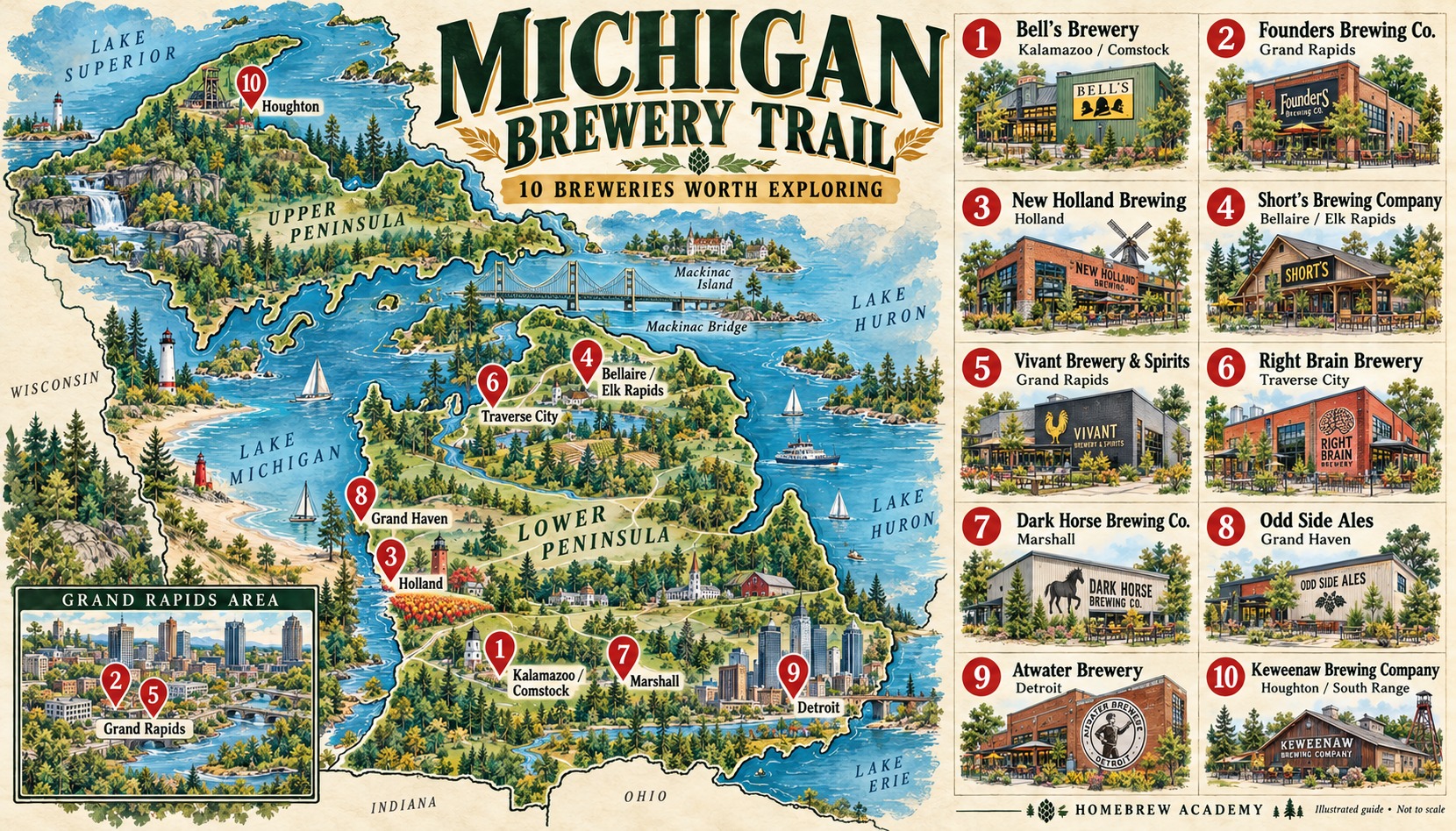
10 Best Breweries in Michigan with 30 Beers Worth Trying
Michigan brewery routes span southwest Michigan, Grand Rapids, Bellaire and Traverse City, the Detroit area and the Upper Peninsula. These ten editorial picks offer thirty beers across American IPA, wheat ale, stout, barrel-aged stout, fruit ale, farmhouse ale, festbier, amber ale, porter, pale ale, blonde ale and light lager.
Three beers per brewery make the differences useful. The order is an editorial selection, not a statewide tasting score. Current producer specifications and brewery-authored beer profiles support the cards. Historical listings can retain older strengths, names and labels; check the actual package, venue menu and batch before travel.
Michigan brewery picks at a glance
| Brewery | Base | Three beers to explore |
|---|---|---|
| Bell’s Brewery | Kalamazoo and Comstock, Michigan | Two Hearted IPA · Oberon Ale · Expedition Stout |
| Founders Brewing Co. | Grand Rapids, Michigan | All Day IPA · Breakfast Stout · KBS |
| New Holland Brewing | Holland, Michigan | Dragon’s Milk · Mad Hatter · The Poet |
| Short’s Brewing Company | Bellaire and Elk Rapids, Michigan | Huma Lupa Licious · Soft Parade · Local’s Light |
| Vivant Brewery & Spirits | Grand Rapids, Michigan | Farm Hand · Big Red · Coqtoberfest |
| Right Brain Brewery | Traverse City, Michigan | CEO Stout · Northern Hawk Owl · Pig Porter |
| Dark Horse Brewing Co. | Marshall, Michigan | Crooked Tree IPA · Raspberry Ale · Boffo Brown Ale |
| Odd Side Ales | Grand Haven, Michigan | Citra Pale Ale · Bean Flicker · Mayan Mocha Stout |
| Atwater Brewery | Detroit, Michigan | Dirty Blonde · Vanilla Java Porter · Atwater Light |
| Keweenaw Brewing Company | Houghton and South Range, Michigan | Widow Maker Black Ale · Pick Axe Blonde Ale · Red Jacket Amber Ale |
1. Bell’s Brewery
Bell’s Kalamazoo Eccentric Café and its Comstock brewery are distinct destinations. Two Hearted, Oberon and Expedition Stout span American IPA, summer wheat ale and Russian imperial stout. The name Two Hearted refers to Upper Peninsula waters rather than the production location of that IPA.
The current beer pages make availability meaningful: Two Hearted is year-round, Oberon is late March through September while supplies last, and Expedition is a limited-time specialty. Confirm the venue’s present taps and the exact Hearted or Oberon family member instead of borrowing a related beer’s specification.
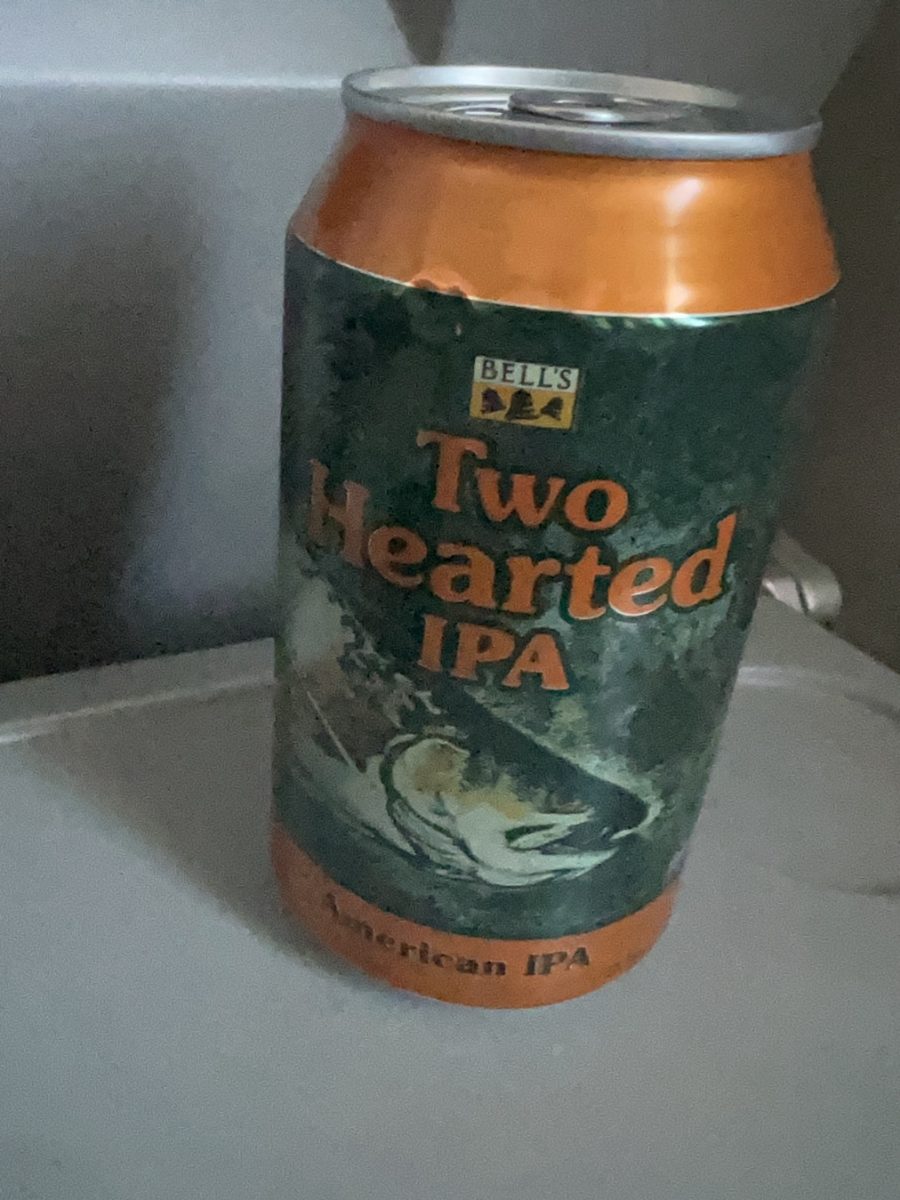
Two Hearted IPA
Brewed by Bell’s Brewery
Centennial-only hopping gives Bell’s flagship IPA its pine and grapefruit direction.
BAR NOTES
Two Hearted is Bell’s year-round American IPA at 7.0%, brewed and dry-hopped with Centennial alone. The name refers to Upper Peninsula fishing waters; the brewery’s Comstock production site and Kalamazoo café are separate from that geographic inspiration. Pine and grapefruit are hop impressions rather than a disclosed fruit addition.
Begin an IPA comparison with Two Hearted before Huma Lupa Licious or Mad Hatter. A single named hop provides a useful aromatic reference against their multiple-variety recipes. Check the package’s freshness marking and follow the finish as well as the aroma. American IPA brewing principles explain a related malt-and-hop balance.
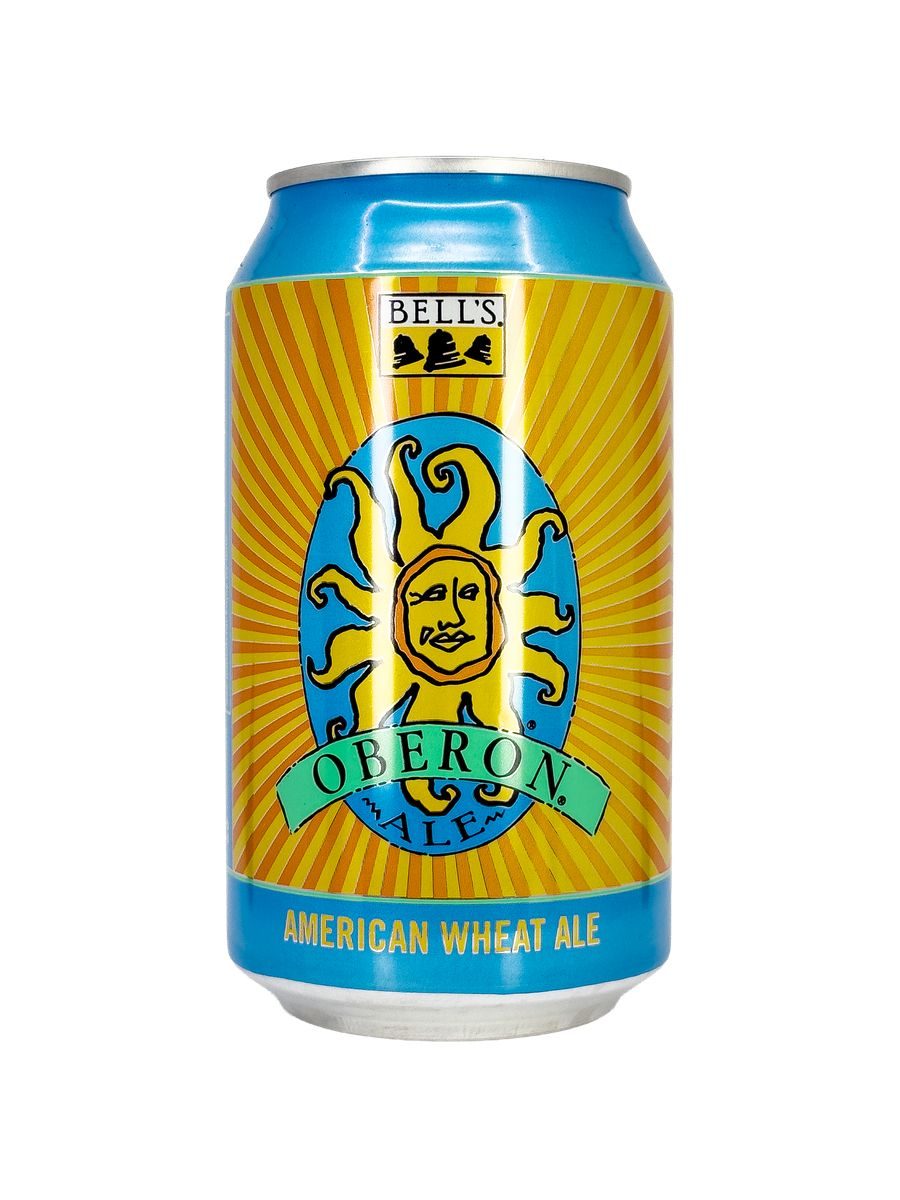
Oberon Ale
Brewed by Bell’s Brewery
A seasonal 5.8% wheat ale with citrus character from its grain, hops and house yeast.
BAR NOTES
Oberon is Bell’s 5.8% American wheat ale, listed from late March through September while supplies last. The stated ingredients are water, barley, wheat, hops and house ale yeast. Its citrusy character does not establish an orange addition, and the standard beer is distinct from Oberon Eclipse and Oberon Light.
Put Oberon before Two Hearted if arranging a brewery flight, letting wheat texture and yeast character register before stronger hop bitterness. A citrus garnish is a serving choice rather than proof of an ingredient in the beer. The American wheat beer reference explores the style without claiming Bell’s commercial recipe.
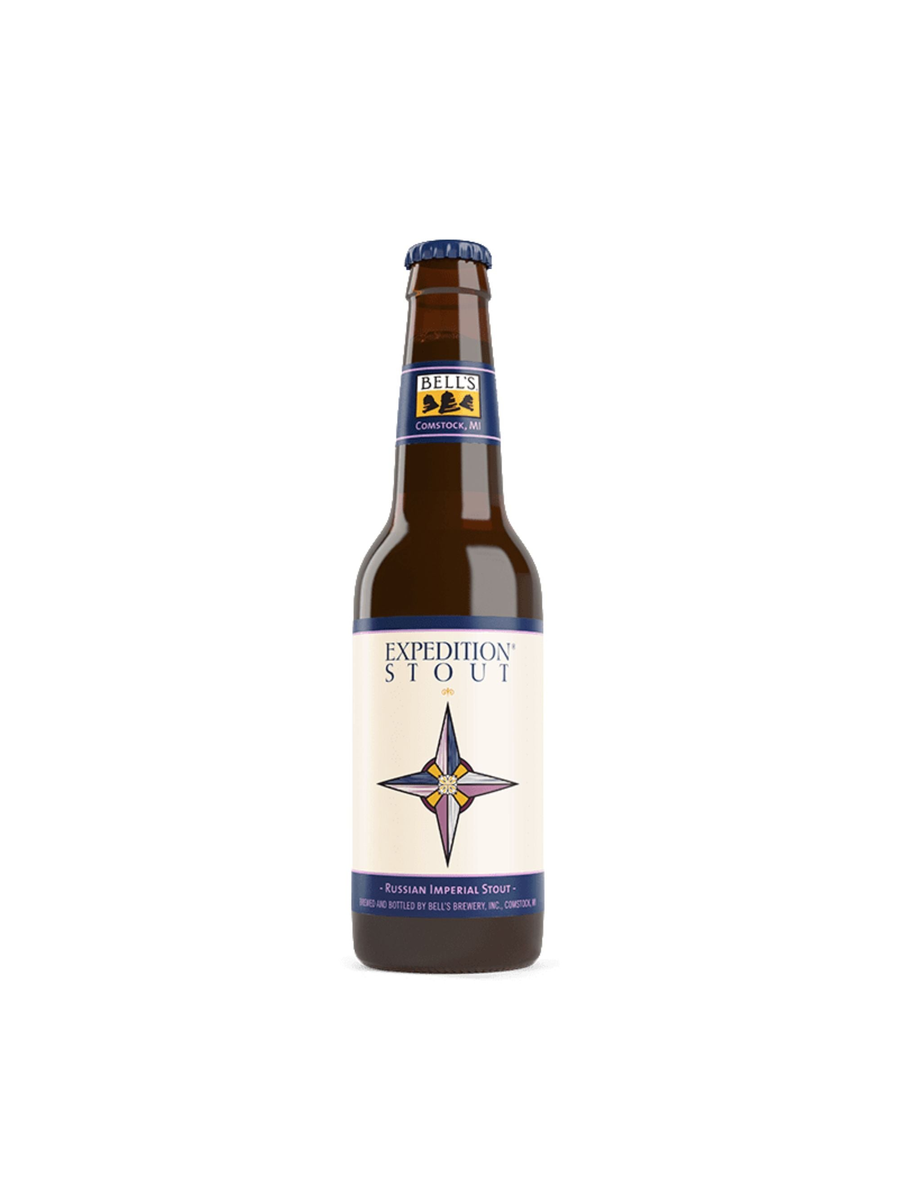
Expedition Stout
Brewed by Bell’s Brewery
A 10.5% Russian imperial stout built for rich malt character and evolving flavor.
BAR NOTES
Expedition Stout is Bell’s limited-time Russian imperial stout at 10.5%. Its current product page describes a large malt body and chocolate and dark-fruit aromas, with water, malt, hops and house ale yeast as ingredients. It is the standard stout, distinct from the separately named barrel-aged edition.
A small serving after the lighter Bell’s beers makes the strength and roast easier to assess. Compare a fresh bottle with a carefully stored older one only when its condition and date are known; aging changes flavor and does not guarantee improvement. The imperial stout recipe supplies context for balancing a substantial malt bill.
2. Founders Brewing Co.
Founders’ Grand Rapids brewery and taproom are at 235 Cesar E. Chavez Avenue SW. All Day IPA, Breakfast Stout and KBS create a progression from session hopping through explicit coffee and chocolate additions to a bourbon barrel-aged imperial stout. Current product pages list all three year-round.
The brand portfolio contains multiple All Day and KBS variations. These three selections use the base names, with current strengths of 4.7%, 8.3% and 12.0%. Check the actual format and vintage rather than assuming a similarly named flavored release shares every specification.
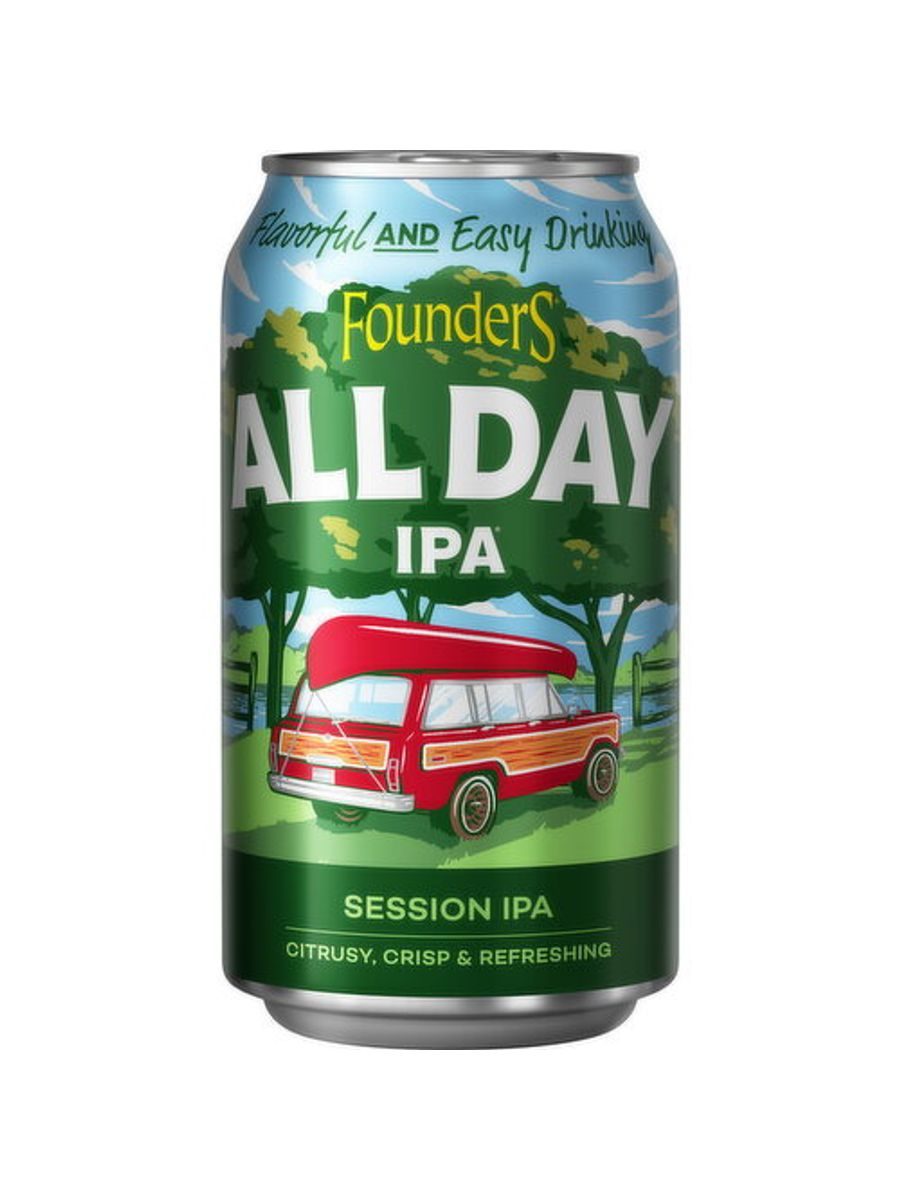
All Day IPA
Brewed by Founders Brewing Co.
A year-round 4.7% session IPA with citrus hopping and a crisp finish.
BAR NOTES
All Day IPA is Founders’ 4.7% year-round session IPA, currently specified at 42 IBU. The producer lists Crystal, Cascade, Amarillo and Simcoe hops, with wheat malt, flaked corn, oats and crystal malt among its grain details. Those disclosures support a more specific description than simply calling every session IPA light-bodied.
Compare All Day with Two Hearted to follow strength and malt support alongside hop aroma. Session refers to the lower alcohol of this selection rather than an alcohol-free category. The session IPA collection offers other examples, while the base All Day IPA remains distinct from its separately named family variations.
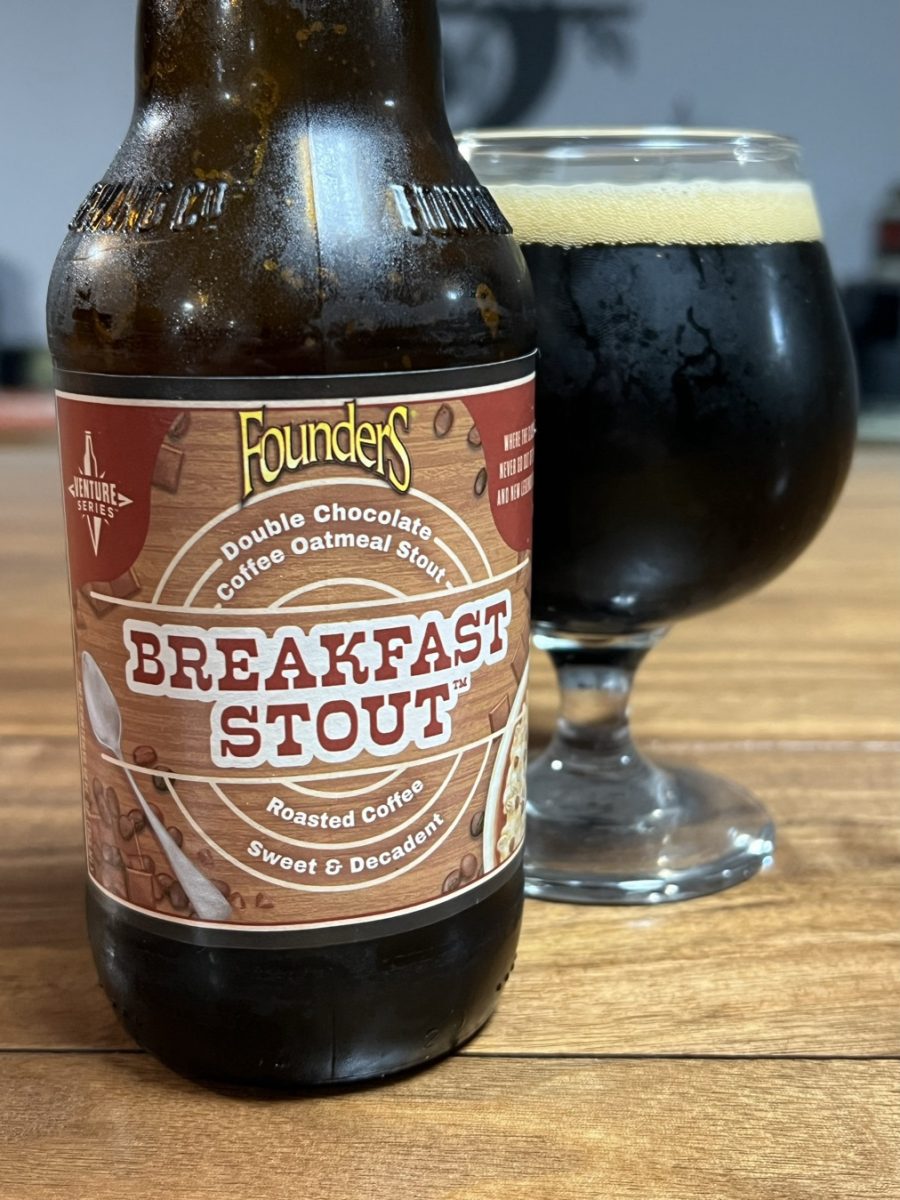
Breakfast Stout
Brewed by Founders Brewing Co.
Flaked oats, chocolate and two coffees shape an 8.3% stout.
BAR NOTES
Breakfast Stout is Founders’ year-round 8.3% stout, brewed with flaked oats, specialty chocolates and two types of coffee according to the current producer page. Coffee and chocolate are explicit additions here. Its breakfast name does not alter its alcohol content or make it equivalent to a cup of coffee.
Use Breakfast Stout beside New Holland’s The Poet to separate added coffee and chocolate from an oatmeal stout’s grain-derived roast. A plain biscuit or modest chocolate dessert keeps that comparison focused. The oatmeal stout brewing guide explains body and grain texture without presenting a Founders clone or its proprietary coffee blend.
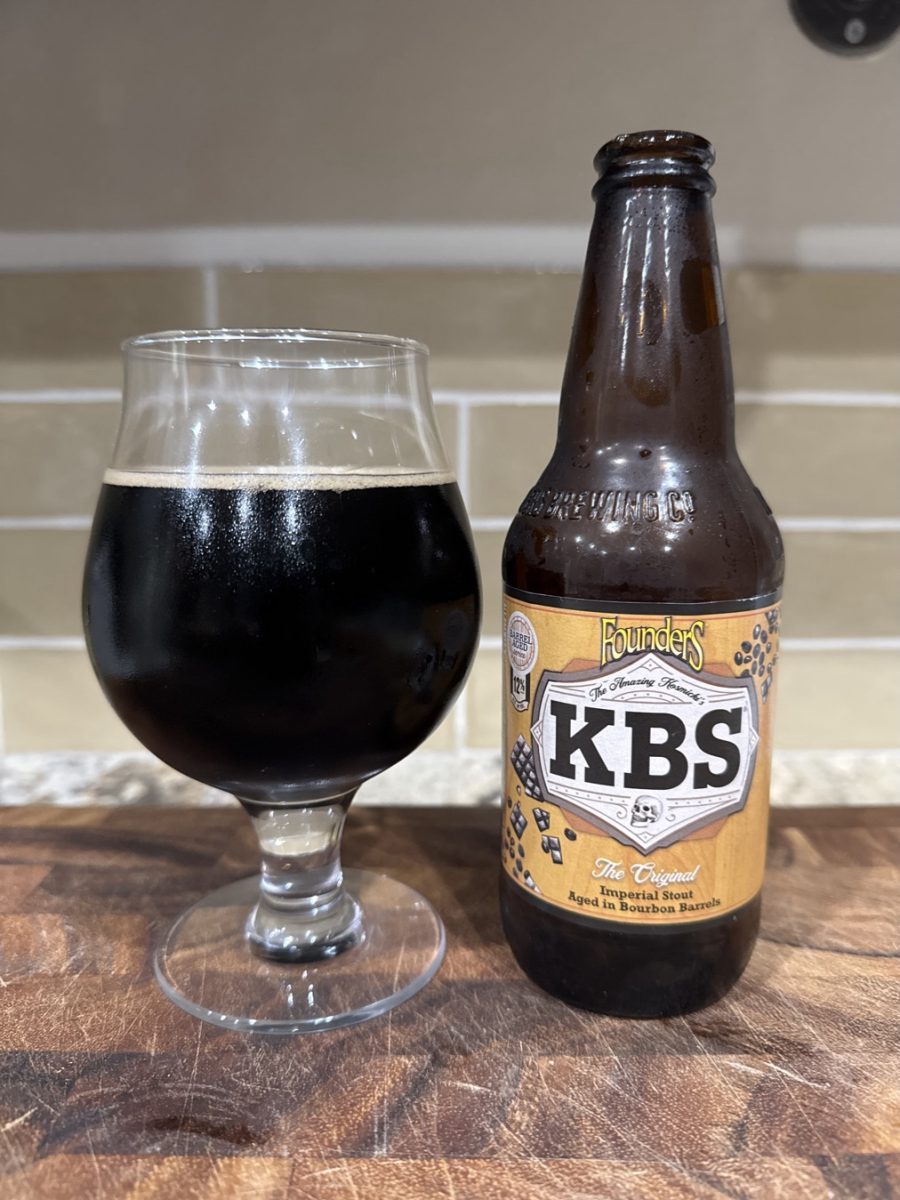
KBS
Brewed by Founders Brewing Co.
Coffee and chocolate imperial stout gains oak and bourbon character through barrel aging.
BAR NOTES
KBS is Founders’ current 12.0% bourbon barrel-aged imperial stout, listed year-round at 45 IBU. The producer explicitly identifies premium chocolate and coffee before bourbon-barrel maturation. Vanilla, cocoa and charred-oak impressions are described as part of that process; KBS variants and CBS are separately named products.
Finish the Founders trio with a small KBS serving after Breakfast Stout. Both use coffee and chocolate, while greater strength and barrel character give KBS a different structure. Let a cool pour warm gradually and revisit aroma before deciding which dominates. The strong stout reference provides a foundation for understanding its scale.
3. New Holland Brewing
New Holland’s Holland brewpub provides a western Michigan base for Dragon’s Milk, Mad Hatter and The Poet. All three appear year-round in the current portfolio, moving between barrel-aged stout, clear Midwest IPA and oatmeal stout. The company also lists brewpubs in other Michigan cities; choose the actual destination.
The Dragon’s Milk family includes multiple beer styles and Reserve flavors as well as spirits. The selected standard stout should not inherit a golden ale’s milk-sugar claim or a Reserve edition’s flavoring. Mad Hatter’s current central portfolio and venue menu differ in hop wording, so the dedicated beer portfolio is used here.
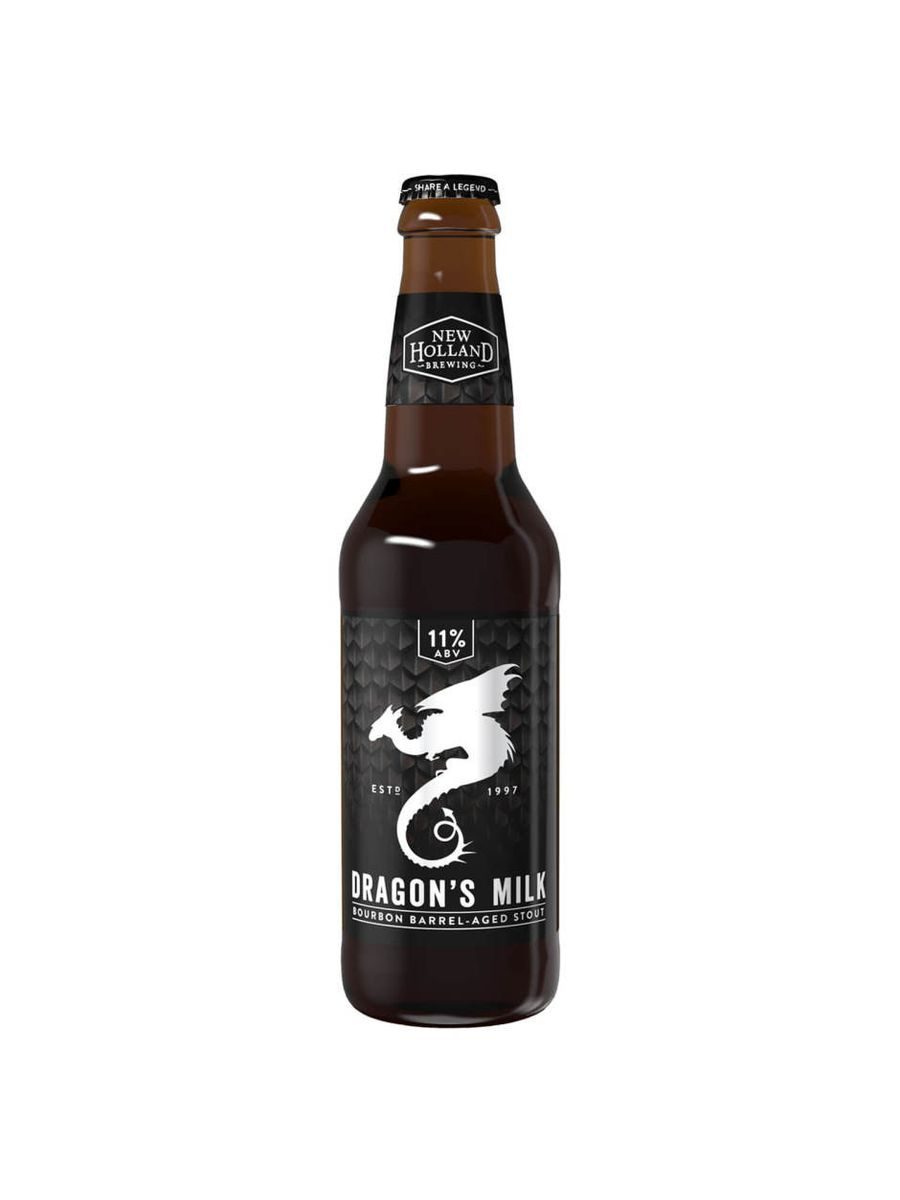
Dragon’s Milk
Brewed by New Holland Brewing
New Holland’s year-round 11.0% bourbon barrel-aged stout anchors the Holland flight.
BAR NOTES
Dragon’s Milk is New Holland’s 11.0% bourbon barrel-aged stout, listed year-round in its current beer portfolio. The base beer has its own identity within a larger family that also includes golden ale, red ale, IPA and Reserve editions. The shared Dragon’s Milk name does not make those recipes interchangeable.
Compare the standard stout with The Poet to follow what higher strength and barrel maturation contribute beyond ordinary oatmeal-stout texture. A smaller serving is useful for a deliberate comparison. The stout guide places different dark-beer families together; consult the exact package when a Reserve flavor, vintage or other Dragon’s Milk product is offered.
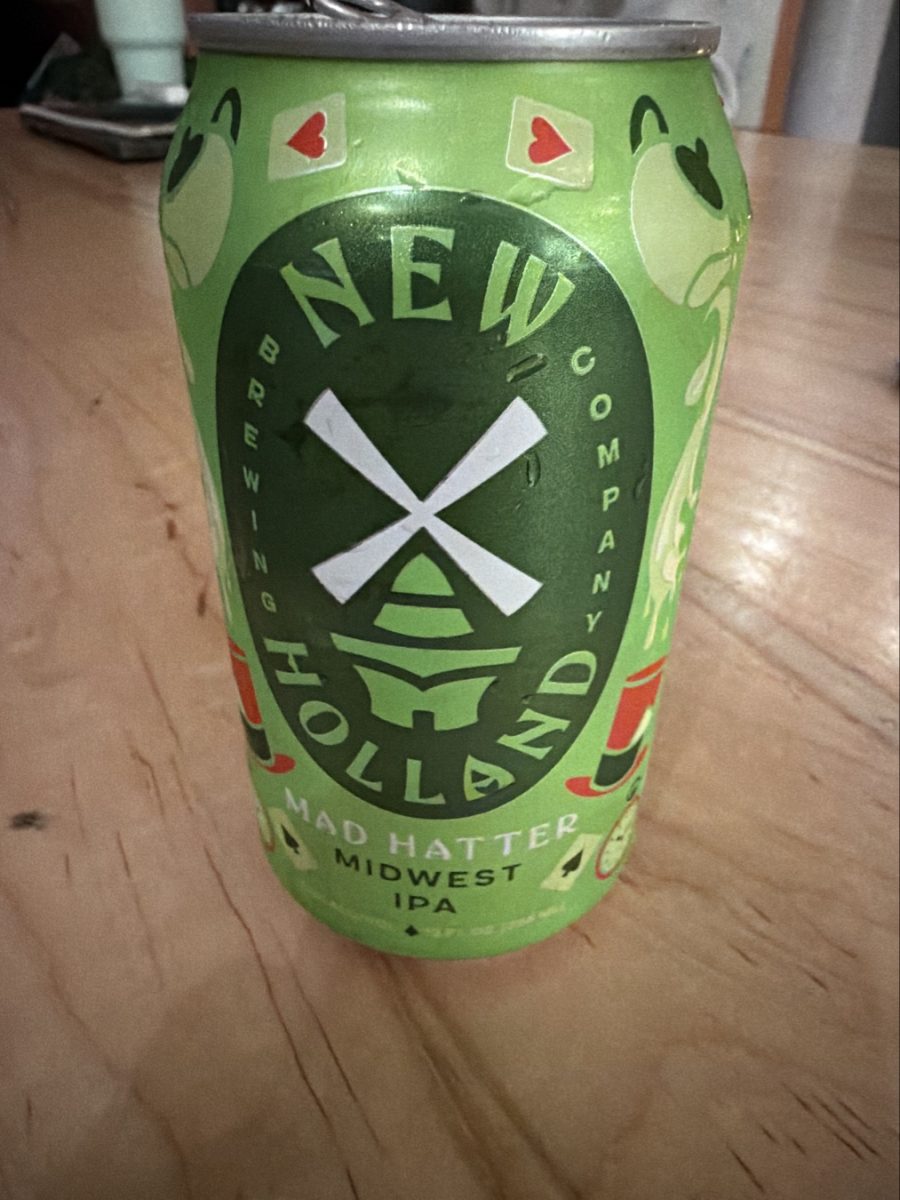
Mad Hatter
Brewed by New Holland Brewing
A clear 7.0% Midwest IPA with citrus, pine and supporting malt.
BAR NOTES
Mad Hatter is New Holland’s current year-round 7.0% Midwest IPA. The central beer portfolio lists Centennial, Citra and Mosaic, describing citrus, pine and a malty backbone. Its Holland venue menu has different hop wording, so this guide follows the dedicated portfolio rather than combining both lists into an invented recipe.
Put Mad Hatter beside Two Hearted to compare a multiple-hop recipe with a Centennial-only IPA. Look at clarity, grain support and the finish separately instead of treating Michigan as exclusively hazy IPA territory. The IPA comparisons extend that discussion; the standard Mad Hatter is distinct from White Hatter and other named interpretations.
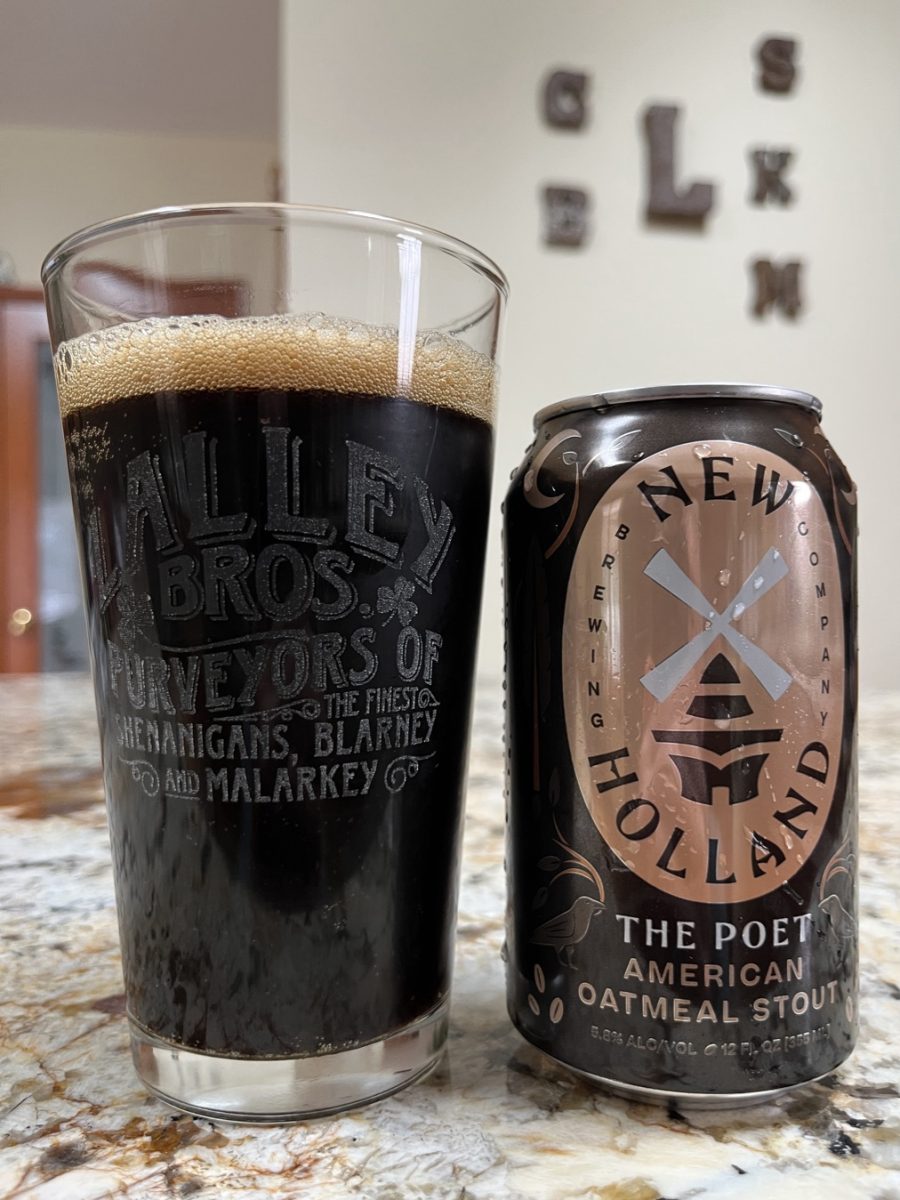
The Poet
Brewed by New Holland Brewing
A 5.8% oatmeal stout with creamy grain texture and roasted malt.
BAR NOTES
The Poet is New Holland’s year-round oatmeal stout at 5.8%. Its current description emphasizes the creaminess and soft mouthfeel of oats against roasted malt. That is a texture claim, not proof of added cream, and the portfolio description does not establish coffee or chocolate additions merely because roast can suggest those flavors.
The Poet makes a useful starting point before Breakfast Stout and the two barrel-aged selections in this guide. Follow grain roast first, then notice what explicit coffee or chocolate additions change. The oatmeal stout reference explains a related brewing approach. A simple roasted dish can accompany the beer without overwhelming its moderate strength.
4. Short’s Brewing Company
Short’s Bellaire Pub and Elk Rapids Pull Barn are distinct northern Michigan stops. Huma Lupa Licious, Soft Parade and Local’s Light are current flagship selections. They compare an assertive Midwest IPA, actual berry additions and a clean all-grain lager at 7.7%, 7.5% and 5.2%.
The current release schedule separates flagships from seasonal and limited products. Soft Parade Shandy, Local’s flavored relatives and nonalcoholic drinks have their own identities. Use the venue’s current list and the precise package name when planning a flight rather than treating the entire portfolio as interchangeable.
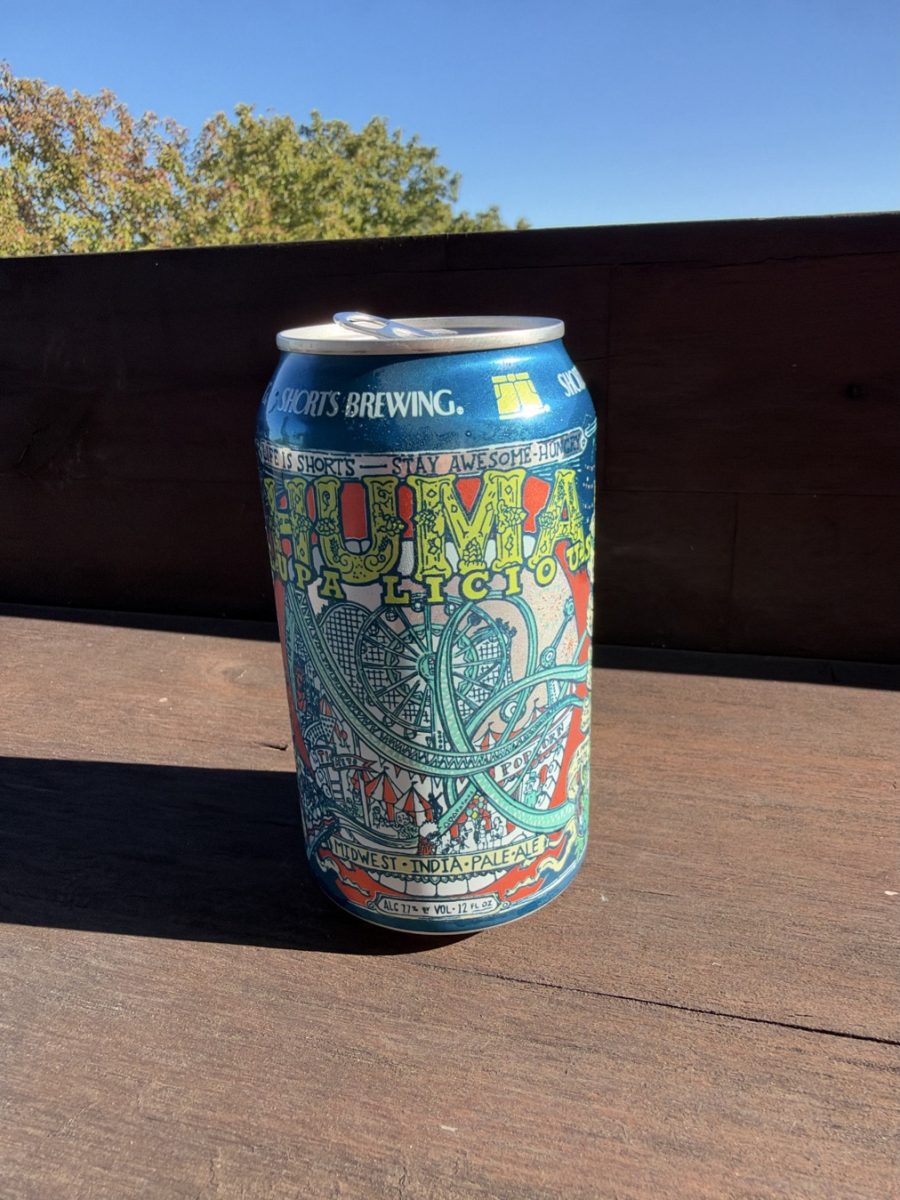
Huma Lupa Licious
Brewed by Short’s Brewing Company
Five hop varieties meet a substantial malt backbone in Short’s 7.7% flagship.
BAR NOTES
Huma Lupa Licious is Short’s 7.7% flagship Midwest IPA, currently specified at 70 IBU. Its page names Columbus, Chinook, Centennial, Palisade and Cascade. The brewery dates the original recipe to its 2004 opening period and describes bitterness, malt, pine, citrus and wildflower character rather than a soft hazy profile.
Taste Huma after Local’s Light when exploring the Short’s trio, keeping the lager’s quieter grain separate from this IPA’s lasting hop presence. Compare it with Mad Hatter to follow two producers’ Midwest interpretations. The American IPA brewing reference gives context for malt support, while the commercial hop quantities and schedules remain undisclosed here.
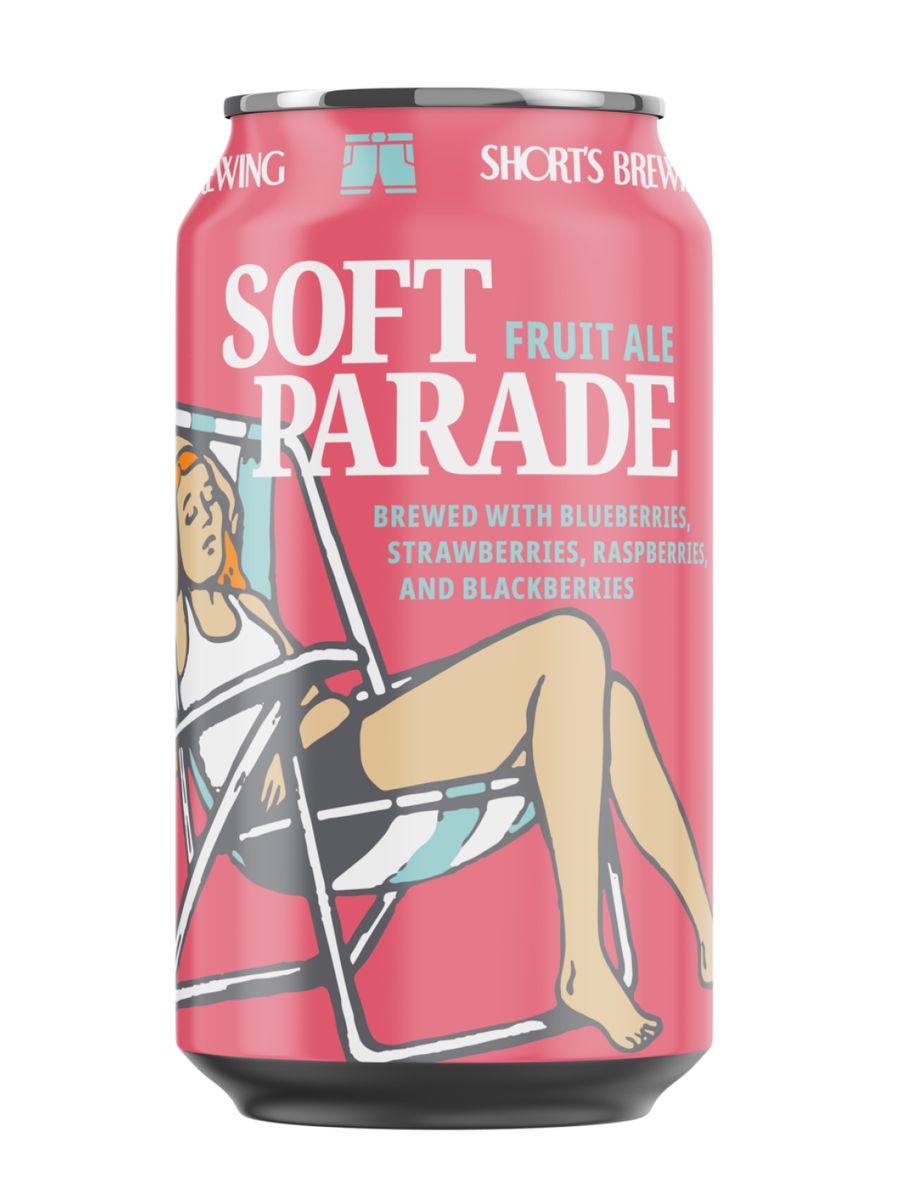
Soft Parade
Brewed by Short’s Brewing Company
Four actual berry purées give a 7.5% fruit ale its rose color and dry finish.
BAR NOTES
Soft Parade is Short’s 7.5% flagship fruit ale, made with strawberry, blueberry, blackberry and raspberry purées. The current producer page describes a dry finish rather than dessert-like sweetness. This is an explicit fruit addition, unlike the grapefruit aromas generated by the hops in Two Hearted or Citra Pale Ale.
Compare Soft Parade with Dark Horse Raspberry Ale to follow four fruits against a single named berry at a lower strength. Fruit color and aroma alone do not establish sweetness or low alcohol. The fruit beer guide explores that range; Soft Parade Shandy and other named variations require their own specifications and should be ordered separately.
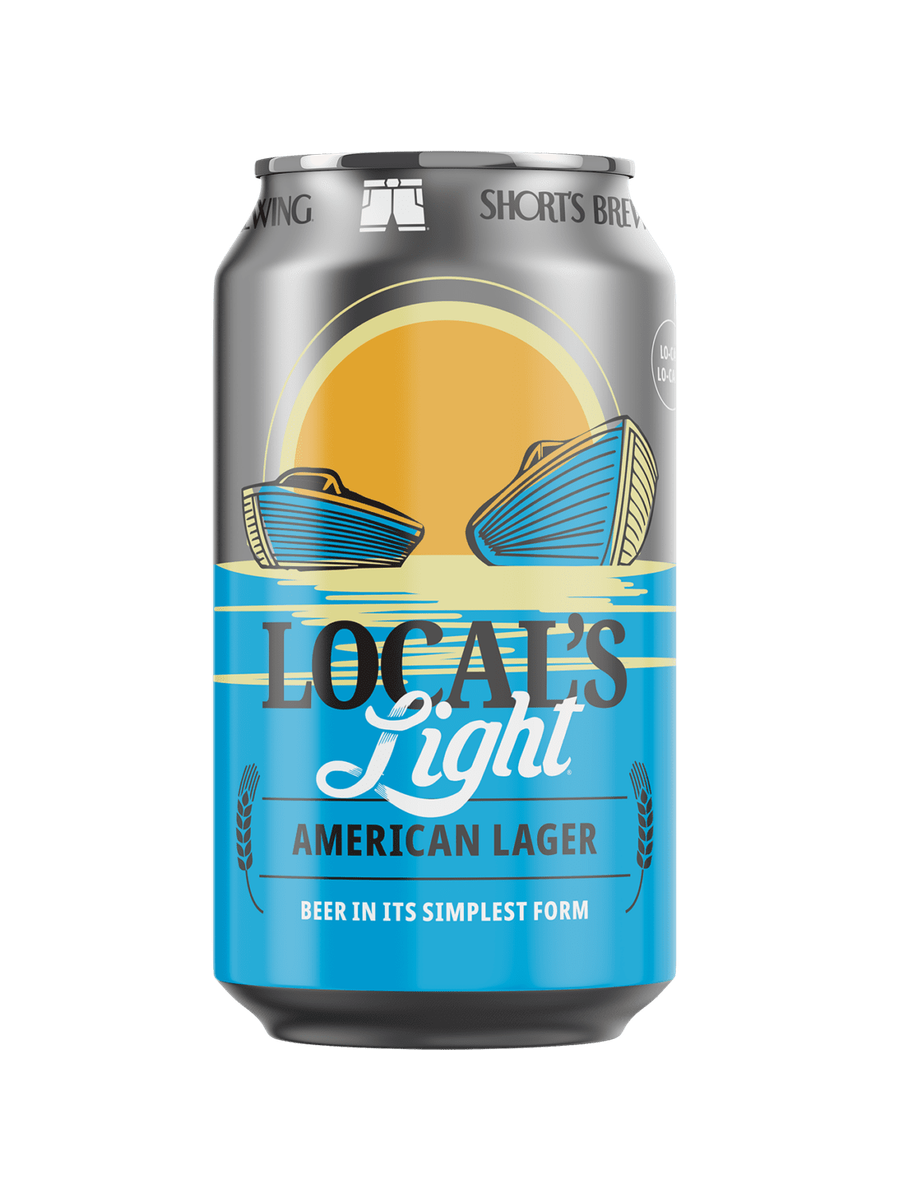
Local’s Light
Brewed by Short’s Brewing Company
An all-grain 5.2% light lager with pilsner malt and Perle hops.
BAR NOTES
Local’s Light is Short’s 5.2% flagship American light lager, listed at 11 IBU. The current page identifies traditional pilsner malt and Perle hops. Its light designation describes the product’s style and presentation; its stated strength is higher than the 4.2% Atwater Light also selected in this guide.
Let Local’s Light open the Bellaire or Elk Rapids comparison before Soft Parade and Huma. Follow clean grain flavor and a modest hop finish before the stronger fruit and IPA selections. The American lager brewing guide offers a neighboring reference; Local’s Amber, Local’s Pineapple and nonalcoholic products are separate selections rather than alternate names for this beer.
5. Vivant Brewery & Spirits
Vivant now uses the name Vivant Brewery & Spirits at its Grand Rapids destination, 925 Cherry Street SE. Farm Hand, Big Red and fall Coqtoberfest provide three beer directions without substituting a Broad Leaf beer simply because it is available at the pub.
The current menus list Farm Hand at 5.5%, Big Red at 6.5% and Coqtoberfest at 5.6%, differing from some historical profiles and printed menus. The present producer menu is used for these cards. Check the actual serving or package when a label retains an older specification.
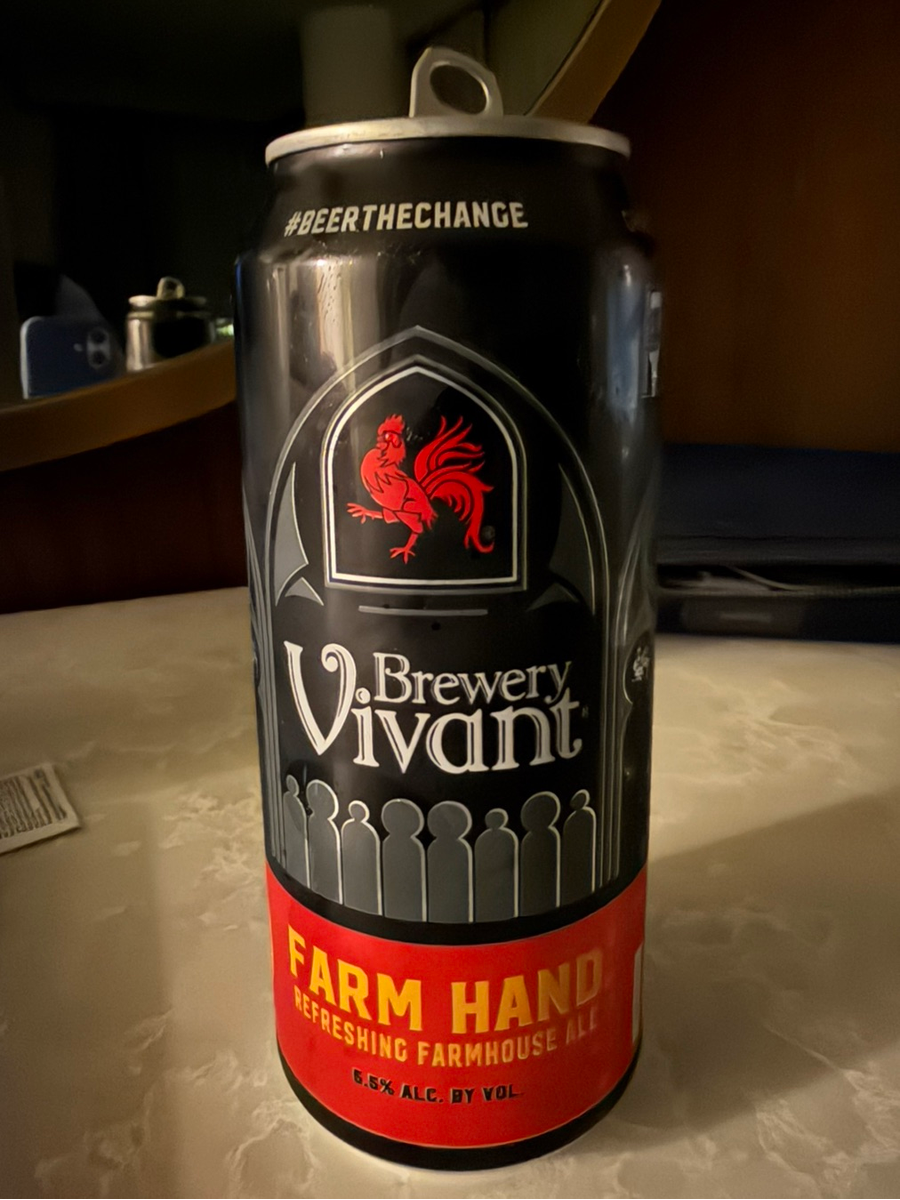
Farm Hand
Brewed by Vivant Brewery & Spirits
Vivant’s current 5.5% flagship saison retains a light, rustic grain character.
BAR NOTES
Farm Hand is listed at 5.5% on Vivant’s current packaged-beer menu, which describes a light body, mild sweetness and cloudiness from simple unmalted grains. Older brewery-authored profiles show 5.0%. This guide follows the present menu and keeps the difference explicit rather than assigning a historical label to the current beer.
Order Farm Hand before Big Red to follow fermentation and grain character before assertive Citra hopping. The brewery’s farmhouse language does not mean every saison is sour or made with wild organisms. The saison brewing reference provides style context; check the actual can or draft menu when a batch’s strength differs from older listings.
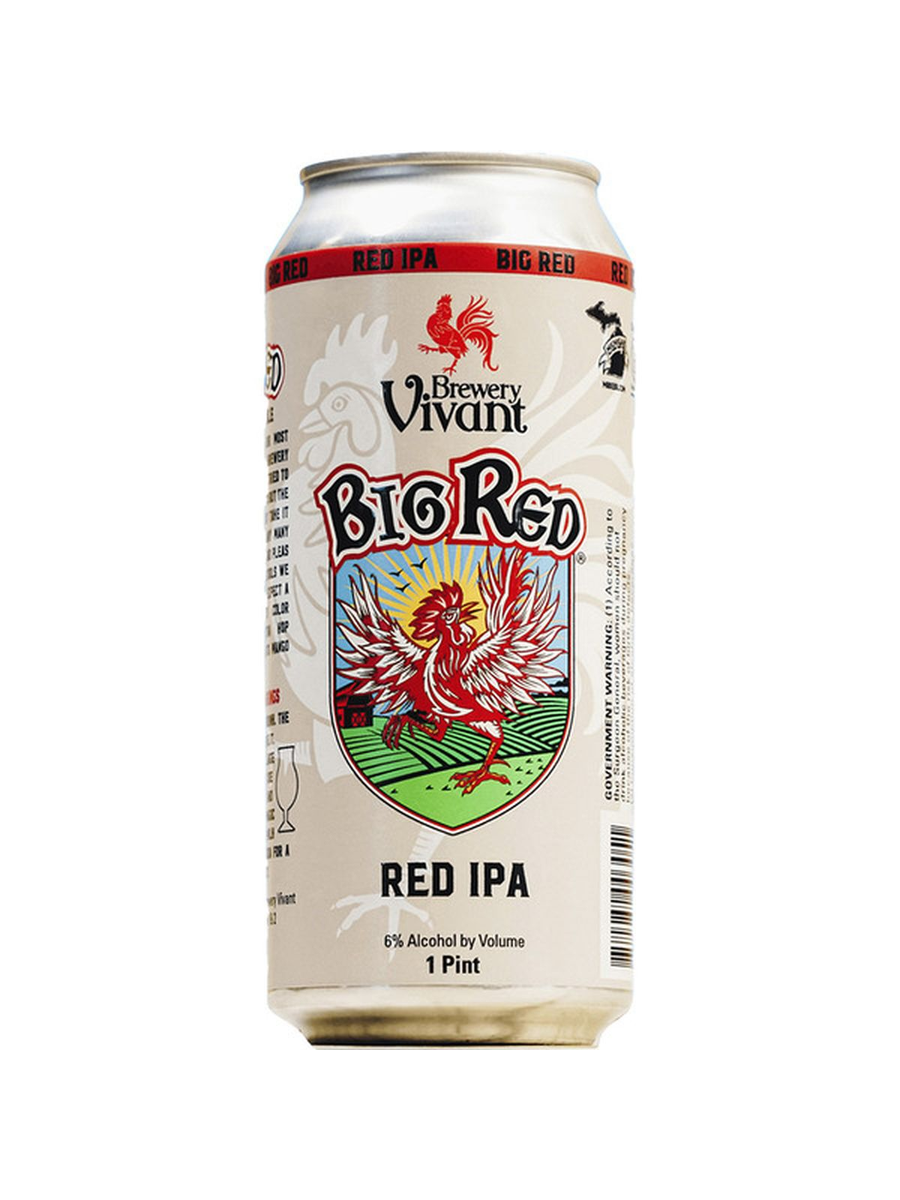
Big Red
Brewed by Vivant Brewery & Spirits
Crystal malt and Citra hops give Vivant’s current 6.5% red IPA its balance.
BAR NOTES
Big Red is Vivant’s current 6.5% red IPA, described with medium and dark crystal malts and ample Citra hops. Caramel, toffee, toast and citrus meet apricot and stone-fruit yeast aromas. Older profiles and the Big Red Coq name appear in past material; the current menu wording governs this selection.
The producer recommends a tulip glass to show its color and aroma. Compare Big Red with the amber ales from Right Brain and Keweenaw to follow how assertive hopping changes malt-forward red beer. The amber ale brewing guide offers a grain-balancing reference without silently reclassifying this IPA as an ordinary amber ale.
Coqtoberfest
Brewed by Vivant Brewery & Spirits
A fall festbier listed at 5.6% on Vivant’s current draft and packaged menus.
BAR NOTES
Coqtoberfest is Vivant’s seasonal festbier, currently listed at 5.6% on both its draft and packaged menus. Older printed menus carry other strengths. Its selection is grounded in the current fall menu, so an archived specification or historical package should not override the beer being served today.
Put Coqtoberfest before Big Red in a Vivant flight if comparing lager grain with red-IPA hopping. The name connects it with autumn without implying a pumpkin or spice addition. The Oktoberfest beer guide distinguishes festbier from other festival interpretations; confirm the present menu and package because a fall listing is not year-round availability.
6. Right Brain Brewery
Right Brain is at 225 East 16th Street in Traverse City. The selected CEO Stout, Northern Hawk Owl and Pig Porter all appear on the producer’s current tap list, ranging from coffee stout to amber ale and an unusual smoked culinary porter.
The legacy guide repeats Earthen Ales beer names under Right Brain. Those misattributions are replaced here with Right Brain’s own menu. Pig Porter explicitly uses smoked pig heads and bones rather than smoked malt, while CEO identifies espresso beans; ingredient distinctions matter more than assuming every dark beer shares one recipe.
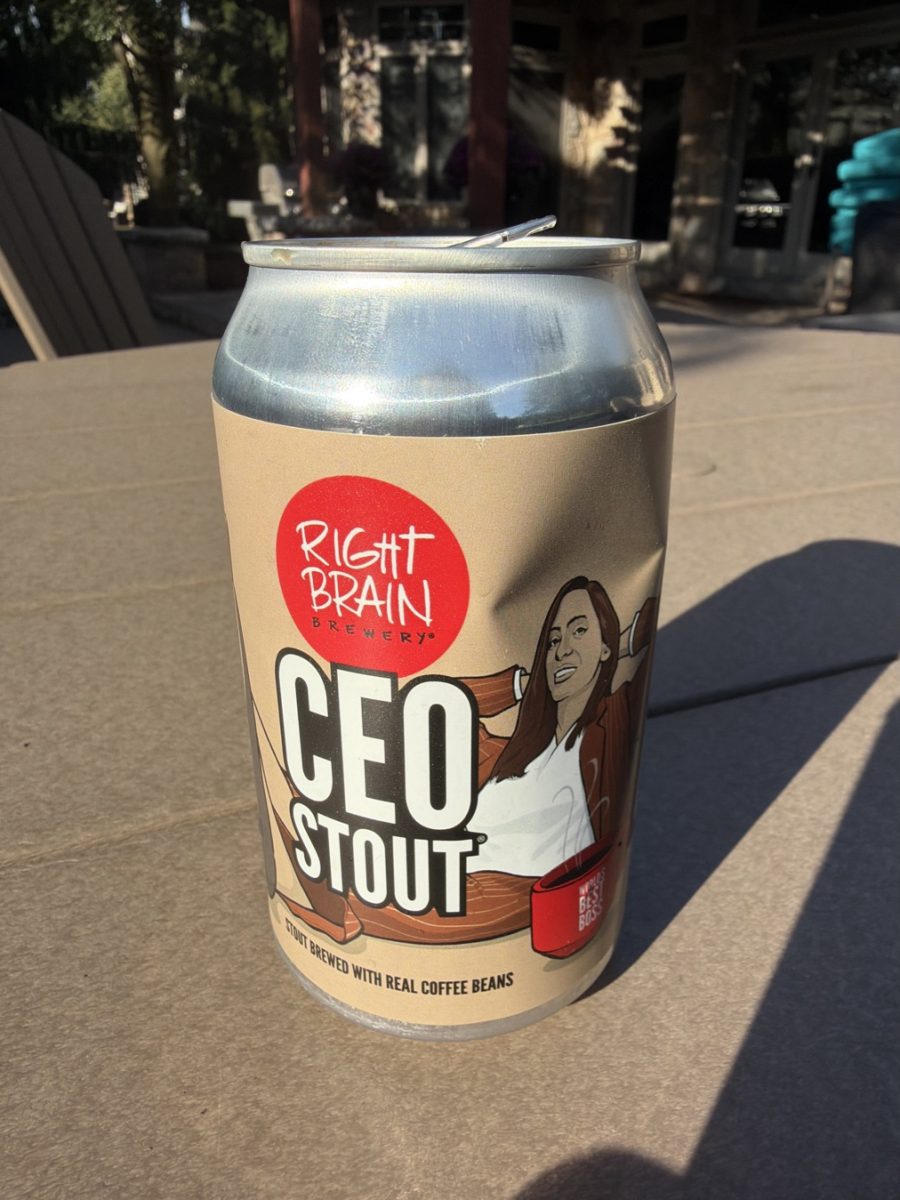
CEO Stout
Brewed by Right Brain Brewery
A 5.5% American stout brewed with locally roasted espresso beans.
BAR NOTES
CEO Stout is Right Brain’s current 5.5% American stout. The brewery’s tap list specifies espresso beans from Roaster Jack Coffee Co. and describes a relatively light body. CEO stands for chocolate, espresso and oatmeal; the ingredient claim here is the explicitly identified coffee, rather than an assumed full recipe from the acronym.
Compare CEO with Breakfast Stout to follow coffee aroma across two different strengths and textures. The producer notes caffeine, so it should not be described as merely coffee-like roast from malt. The stout collection supplies broader context. A modest plain chocolate accompaniment lets the coffee stand apart from heavy sweetness or added spice.
Northern Hawk Owl
Brewed by Right Brain Brewery
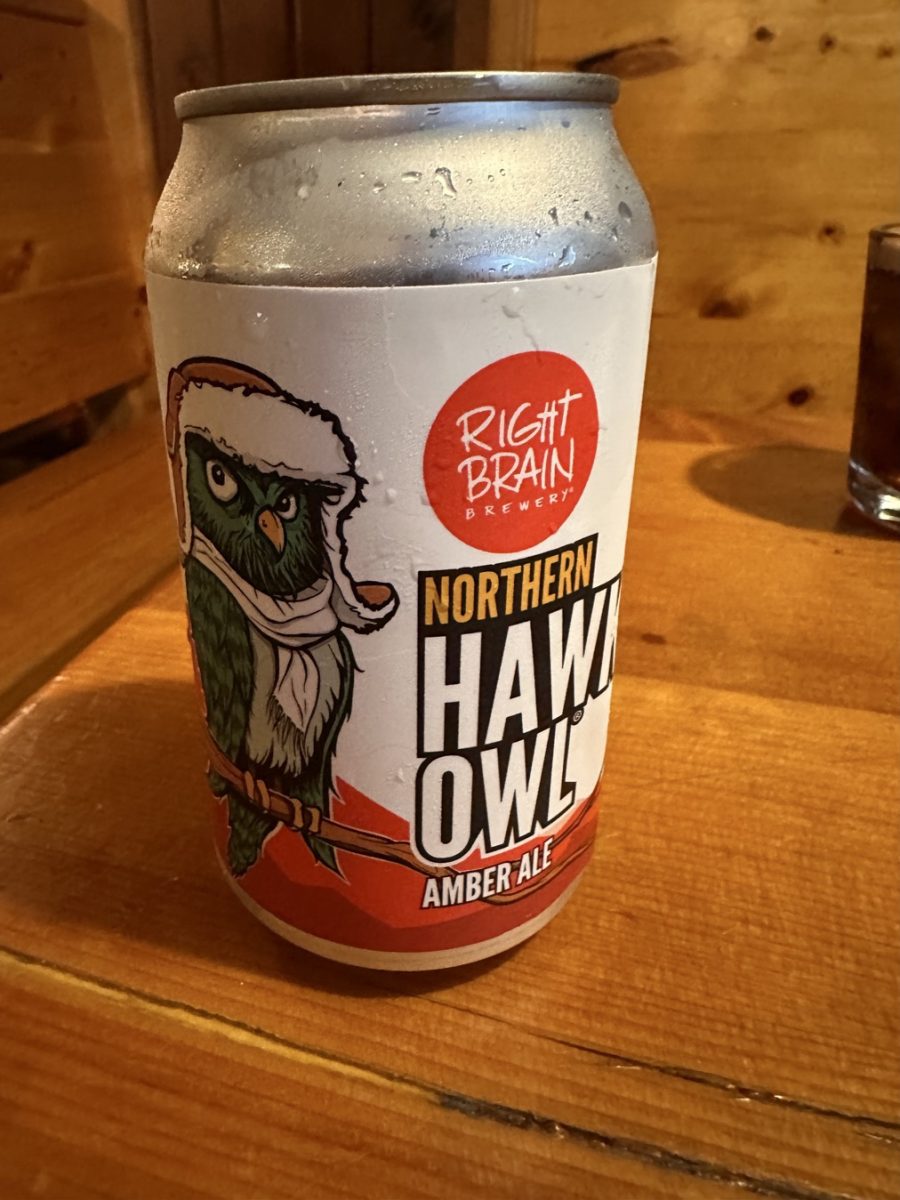
A 5.8% amber ale with caramel and toffee impressions and a clean finish.
BAR NOTES
Northern Hawk Owl is Right Brain’s 5.8% American amber ale on the current tap list. Its medium body, reddish color and caramel and toffee impressions give a malt-focused alternative to the brewery’s culinary additions. The producer describes a clean finish rather than establishing added caramel candy or a sugary ingredient.
Use Northern Hawk Owl as the opening before CEO Stout and Pig Porter if arranging this Traverse City trio by roast and smoke. The American amber ale reference explores the balance of grain and hops. A straightforward roast-chicken dish can accompany the comparison without turning a restrained amber into a dessert pairing.
Pig Porter
Brewed by Right Brain Brewery
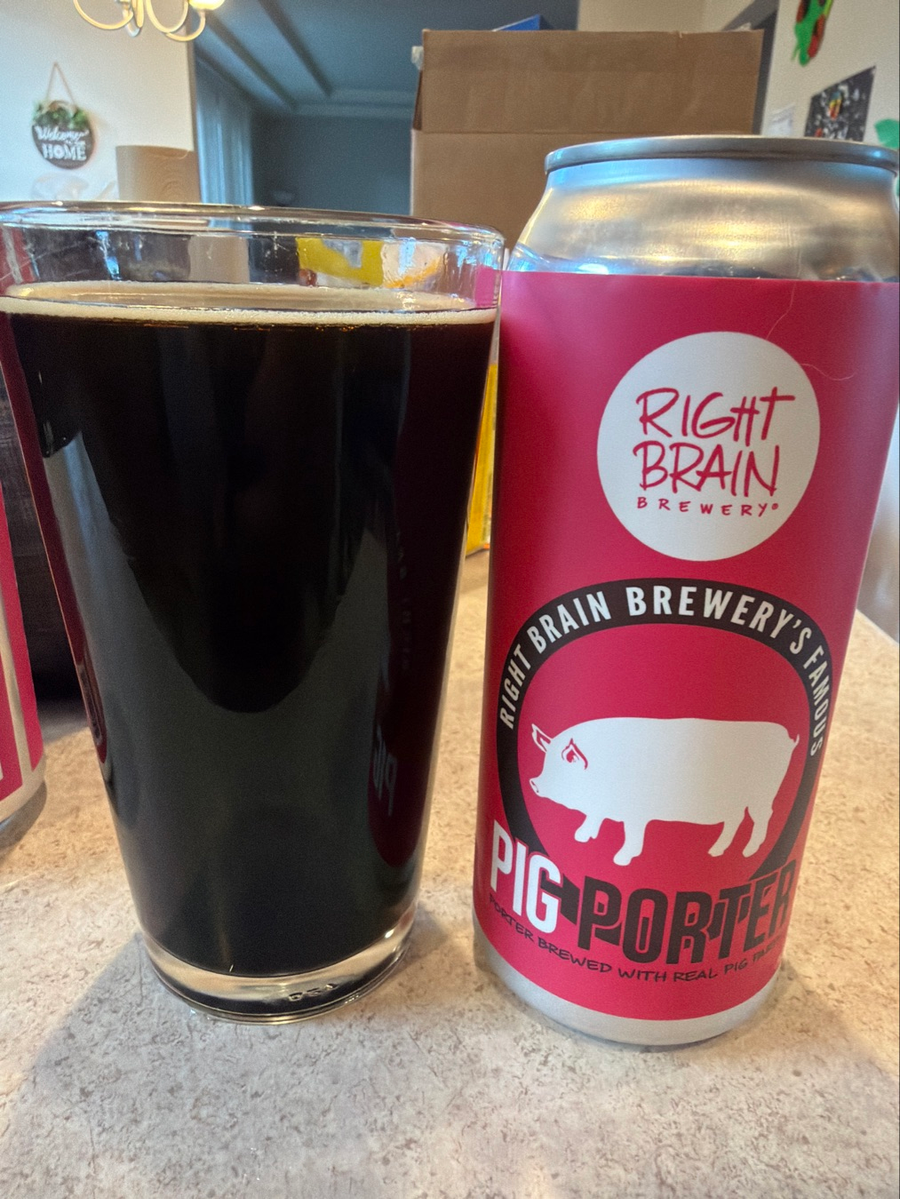
Real smoked pig heads and bones give Right Brain’s 7.0% porter its smoke.
BAR NOTES
Pig Porter is listed at 7.0% on Right Brain’s current tap list. The brewery explicitly says it uses real smoked pig heads and bones, and no smoked malt, to develop the smoke character. That distinction is central to the beer’s culinary identity and makes it unsuitable for a vegetarian beer selection.
Place a small Pig Porter pour last in the Right Brain comparison because smoke can linger over the lighter ale and coffee stout. Read the exact menu name and ingredients rather than assuming every smoked porter derives its character from grain. The porter brewing reference supplies a dark-ale framework without reproducing this unusual commercial process.
7. Dark Horse Brewing Co.
Dark Horse’s Marshall brewery is at 511 South Kalamazoo Avenue. Crooked Tree IPA, Raspberry Ale and Boffo Brown Ale are selected from the current Dark Horse brand page. The lineup spans a dry-hopped IPA, actual raspberry addition and stronger malt-driven brown ale.
Its family-of-brands site also contains beers from other producers, so these cards retain Dark Horse attribution. Hazy Crooked Tree, Double Crooked Tree and the standard IPA are different products. Confirm the Marshall taproom’s current offerings rather than turning a portfolio entry into a promise of today’s draft availability.
Crooked Tree IPA
Brewed by Dark Horse Brewing Co.
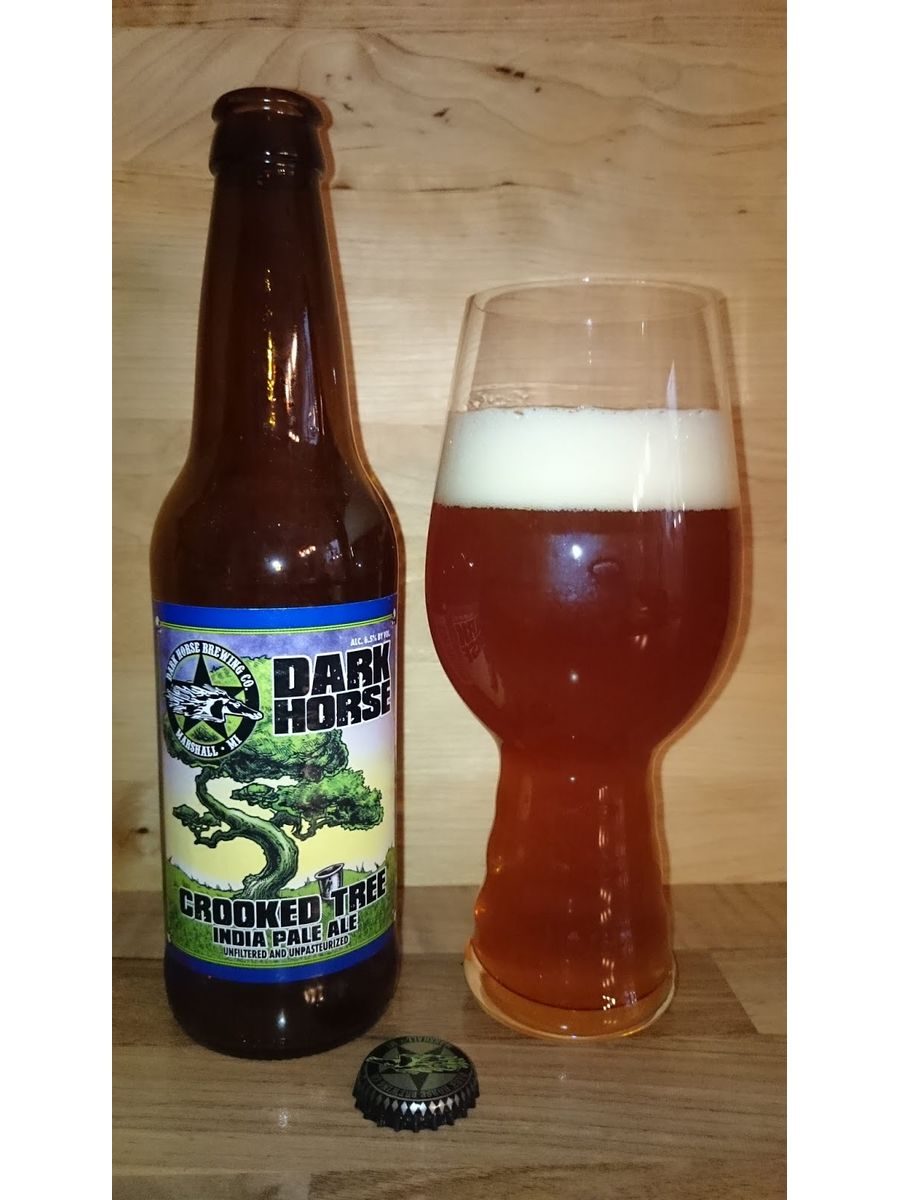
A 6.5% dry-hopped IPA with pine, grapefruit impressions and a crisp finish.
BAR NOTES
Crooked Tree is Dark Horse’s current 6.5% American IPA. Its dedicated brand page describes heavy dry hopping, pine and citrus, balanced malt and a dry finish. Grapefruit is a hop-derived flavor description here. Hazy Crooked Tree, Double Crooked Tree and the standard IPA are separately named beers with different strengths and recipes.
Compare Crooked Tree with Two Hearted before choosing between them on bitterness alone. Both describe citrus, while only Bell’s specifies Centennial as the sole hop variety in the selected recipe. The IPA guide expands that comparison. A fresh package and clean glass give the aromatic dry hopping the best chance to register.
Raspberry Ale
Brewed by Dark Horse Brewing Co.
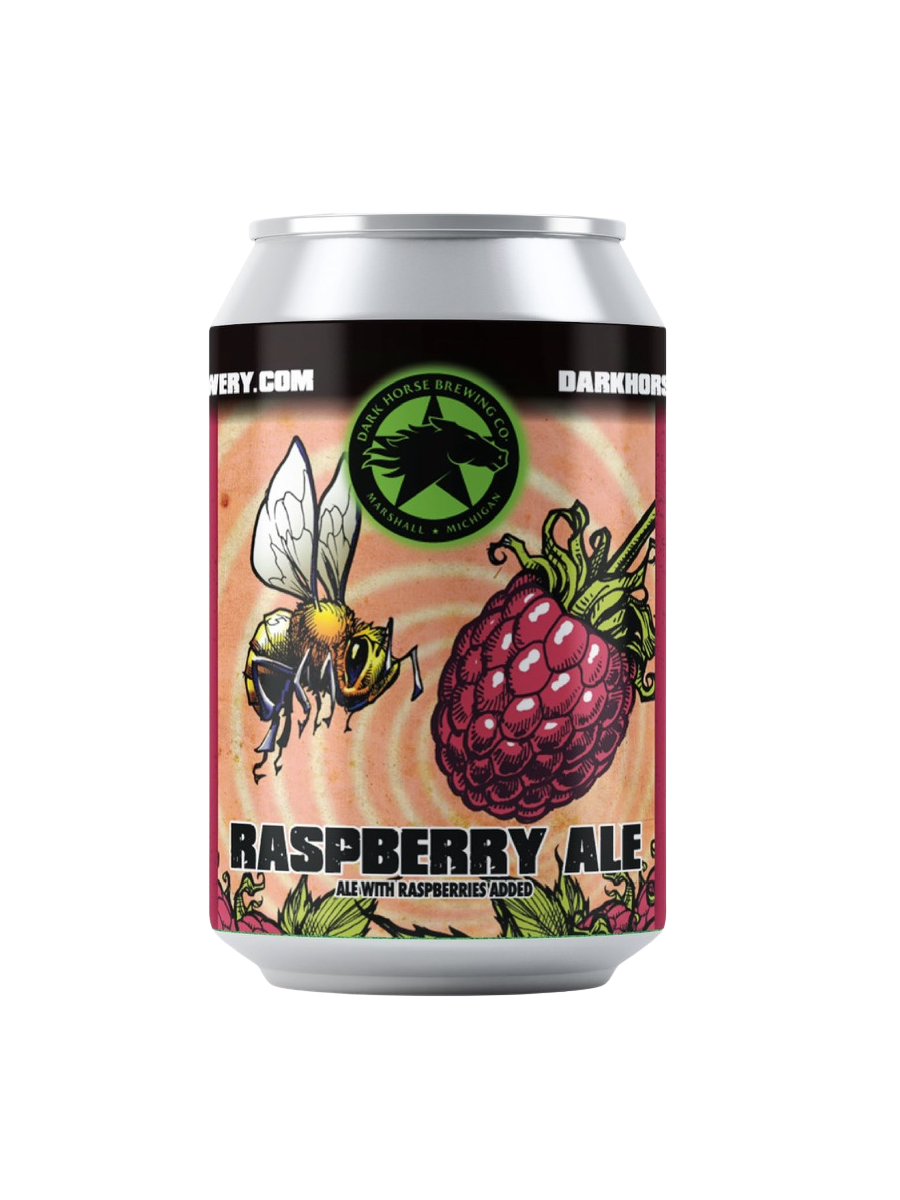
Real raspberries added late in fermentation define a restrained 5.0% fruit ale.
BAR NOTES
Raspberry Ale is Dark Horse’s current 5.0% fruit beer. The brand page explicitly identifies real raspberries added late in fermentation and a balanced malt profile. Its lighter fruit emphasis is a stated brewing approach, distinct from assigning every raspberry beer the dense sweetness or texture of a pastry-style sour.
Put Raspberry Ale beside Soft Parade to compare a single fruit against a four-berry recipe, retaining their different strengths. The fruit beer comparisons show how fruit can coexist with a recognizable beer base. A mild cheese or plain cracker gives the berry aroma space without assuming that fruit automatically means a sour fermentation.
Boffo Brown Ale
Brewed by Dark Horse Brewing Co.
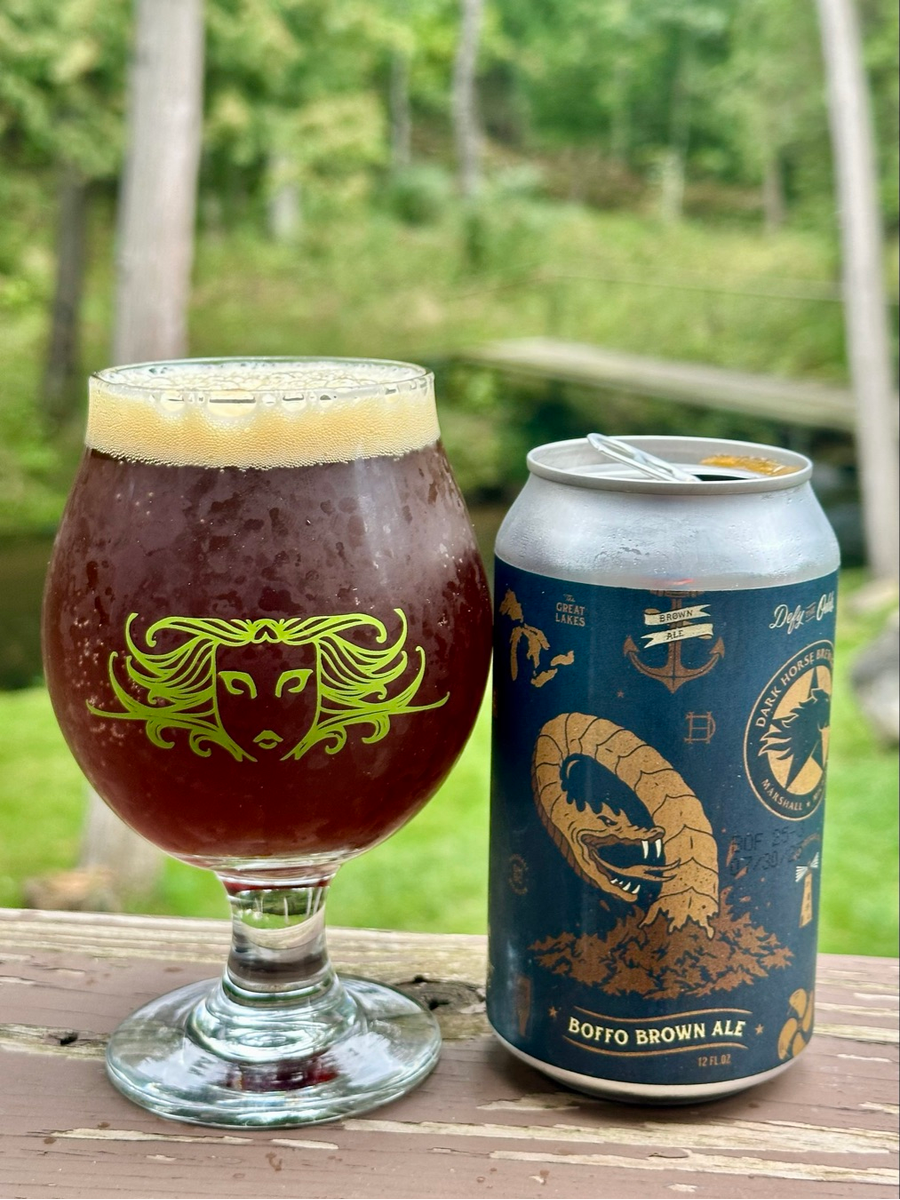
A full-bodied 7.0% brown ale with caramel, toffee and an earthy finish.
BAR NOTES
Boffo Brown Ale is listed at 7.0% on Dark Horse’s current brand page. The producer describes a dark brown color, soft mouthfeel, caramel and toffee flavors and an earthy, nutty finish. Those impressions are malt descriptions rather than confirmation of nut, candy or caramel additions to the recipe.
Place Boffo after Raspberry Ale in the Marshall flight, then compare its darker grain with Northern Hawk Owl’s amber profile. The American brown ale reference helps explain how roast, sweetness and hop support can be balanced. A hearty roast or mushroom dish is a practical pairing direction for this stronger brown ale.
8. Odd Side Ales
Odd Side’s original Grand Haven destination is at 41 Washington Avenue, with a separate Social Brews venue in Fruitport. Citra Pale Ale, Bean Flicker and Mayan Mocha illustrate single-variety hops, coffee in pale beer and spiced coffee stout. Current brewery-authored profiles support their recipe descriptions.
The producer’s present website links separate tap and to-go lists, so check the chosen venue before traveling for a particular beer. The standard Mayan Mocha is distinct from its imperial, barrel-aged and blonde relatives; Bean Flicker variants also require exact label checks. No hard seltzer is substituted for one of these thirty beers.
Citra Pale Ale
Brewed by Odd Side Ales
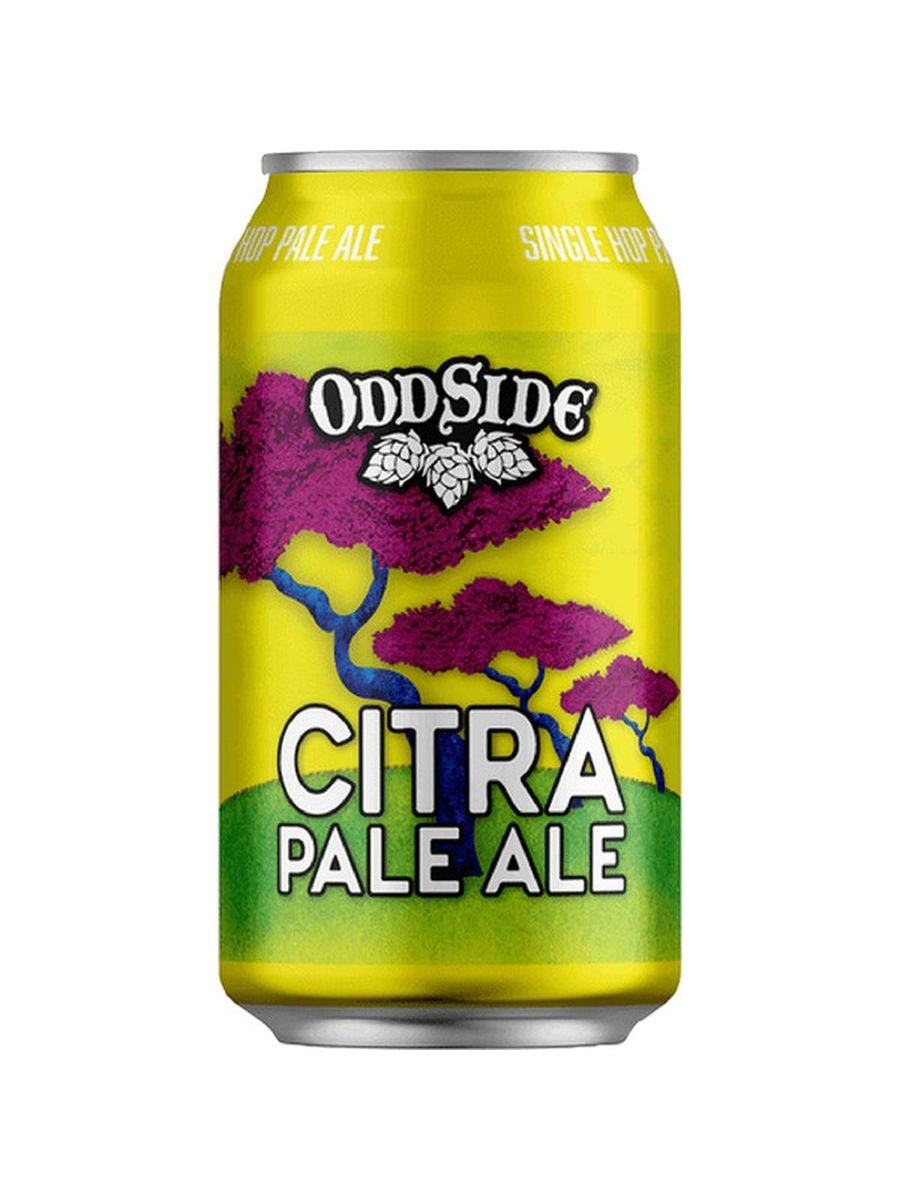
Citra-only hopping shapes Odd Side’s 5.75% flagship pale ale.
BAR NOTES
Citra Pale Ale is Odd Side’s flagship at 5.75% in its brewery-authored profile. The description specifies Citra alone, with grapefruit, tropical fruit, lemon and pine aromas. It remains a pale ale here, rather than being promoted into an IPA solely because the hop character is prominent.
Compare Citra Pale Ale with Two Hearted to follow Citra against Centennial while retaining the different styles and strengths. The American pale ale recipe explores a supporting grain structure. Black Citra, Citra Radler and other named relatives require their own label checks; the standard beer’s fruit aromas do not prove actual fruit additions.
Bean Flicker
Brewed by Odd Side Ales
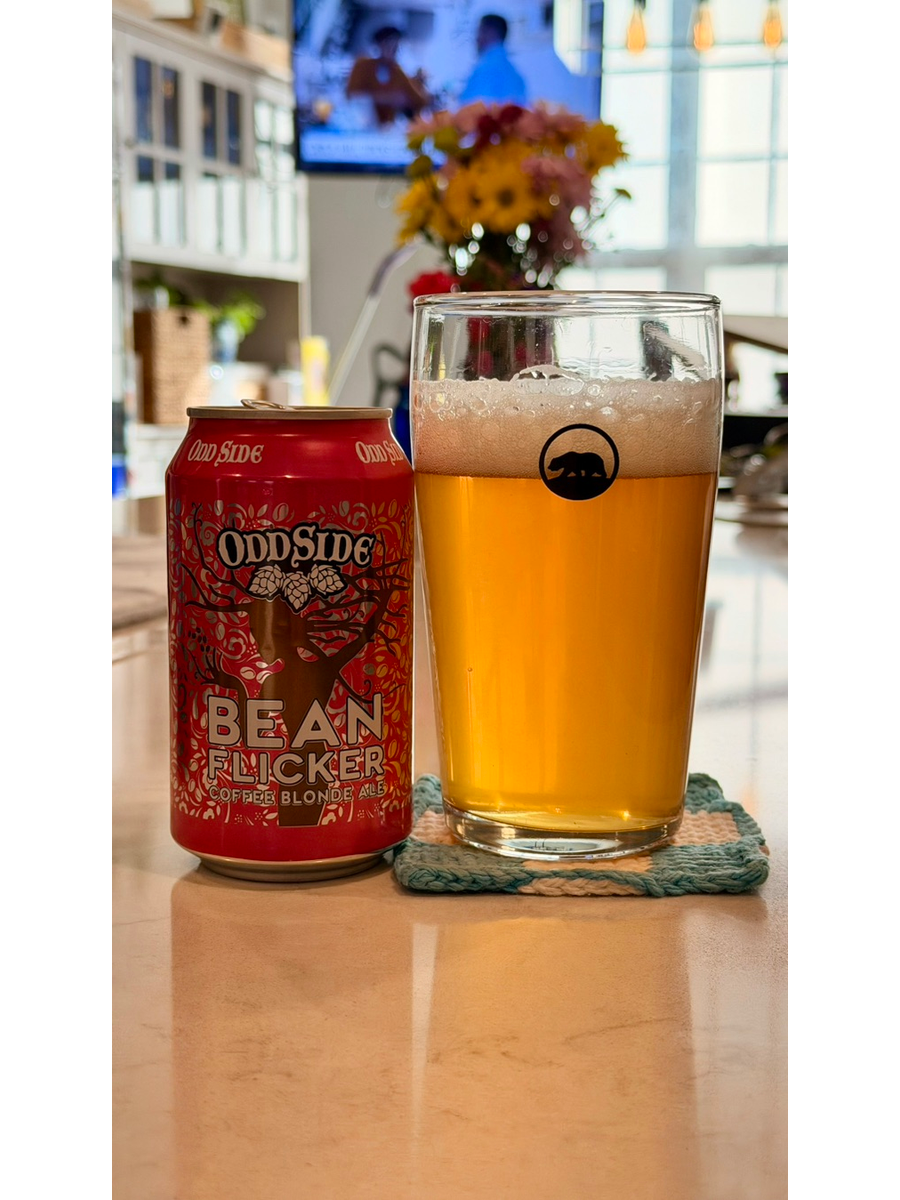
A 4.5% coffee blonde ale that separates coffee flavor from dark beer color.
BAR NOTES
Bean Flicker is Odd Side’s 4.5% coffee blonde ale in its current brewery-authored profile. The description emphasizes light coffee notes and gentle grain despite its pale appearance. It is distinct from stronger stout-based coffee beers, flavored Bean Flicker variants and older listings with different alcohol figures.
Let Bean Flicker precede Mayan Mocha in a Grand Haven comparison. Follow coffee aroma before roasted color or spice changes your expectation, then compare it with the dark CEO Stout. The blonde ale brewing reference supplies a base-style framework rather than the proprietary coffee recipe. A simple biscuit keeps the grain and coffee comparison clear.
Mayan Mocha Stout
Brewed by Odd Side Ales
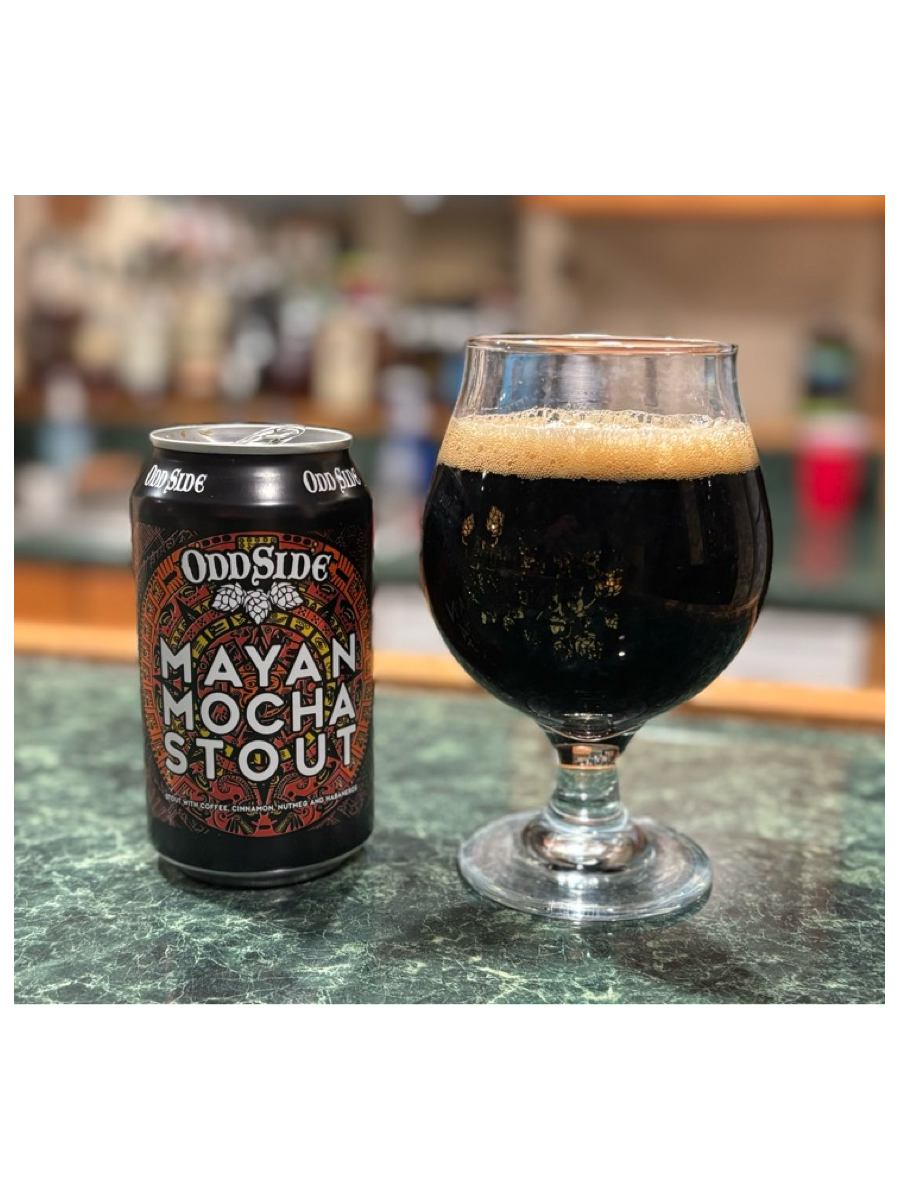
A 6.0% stout with coffee, cinnamon, nutmeg and habanero heat.
BAR NOTES
Mayan Mocha Stout is Odd Side’s 6.0% coffee stout in its brewery-authored profile. The producer describes Dutch chocolate coffee, cinnamon, nutmeg and habaneros, inspired by Mexican hot chocolate. It is the standard beer rather than Imperial Mayan Mocha, the bourbon barrel-aged version or the separately named Mayan Blanco.
Put Mayan Mocha last in the Odd Side trio because spice and pepper warmth can persist after a sip. The American stout brewing reference explains a dark-ale foundation, while the named spices and coffee belong to this commercial interpretation. Try a small pour before pairing it with strongly seasoned food that might mask the beer’s own heat.
9. Atwater Brewery
Atwater’s Detroit taproom is at 237 Jos Campau in Rivertown. Dirty Blonde, Vanilla Java Porter and Atwater Light are listed year-round on current product pages. The trio supplies orange-and-coriander wheat beer, coffee-flavored dark beer and light lager, with separate formats and strengths.
The company lists other Michigan taprooms, so Detroit origin and the chosen visitor location should be distinguished from a specific package’s production details. Current Atwater Light is 4.2%, despite an older 4.0% profile. Dirty Blonde’s explicit citrus and spice additions are also different from inferring fruit ingredients solely from hop aromas.
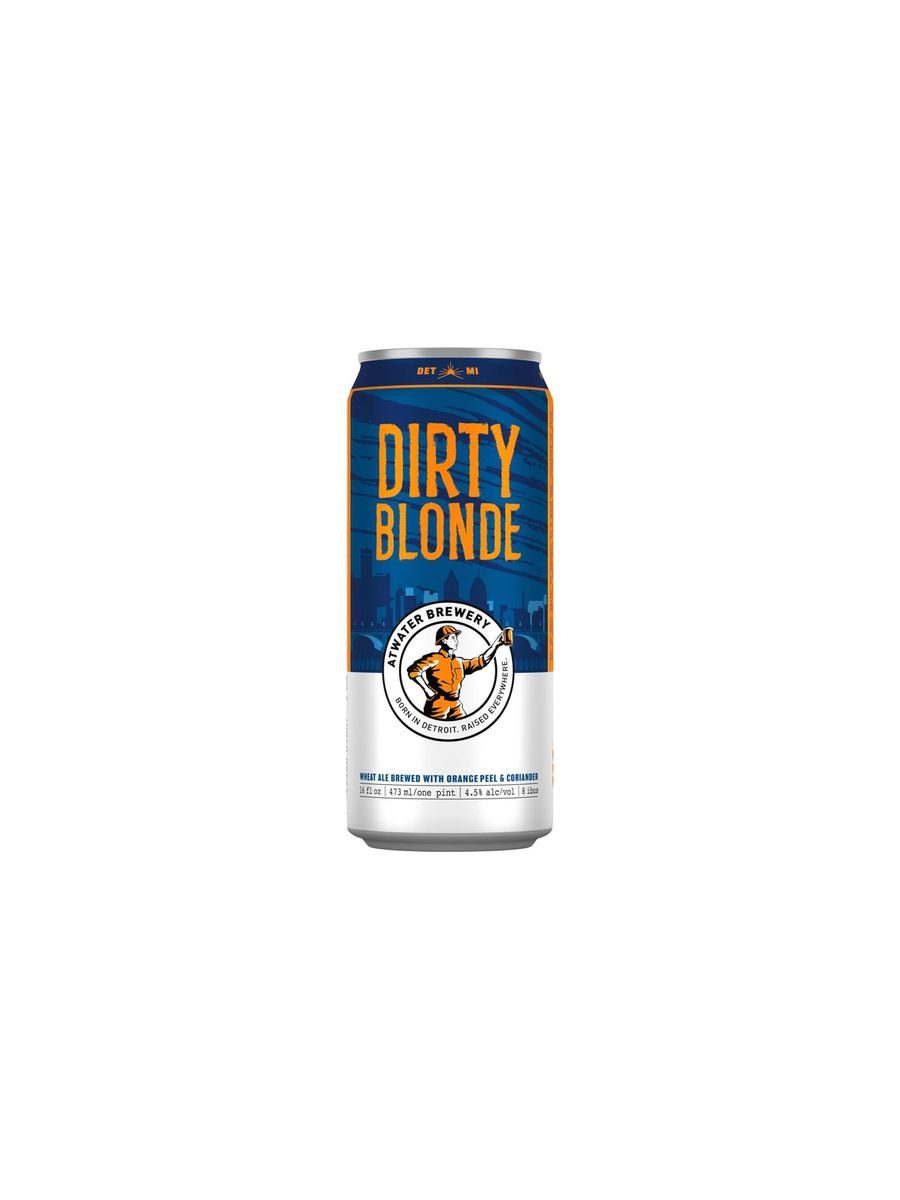
Dirty Blonde
Brewed by Atwater Brewery
Orange peel and coriander join wheat in Atwater’s year-round 4.5% ale.
BAR NOTES
Dirty Blonde is Atwater’s year-round 4.5% wheat ale, with orange peel and coriander explicitly identified on its current product page. Those additions make its citrus-and-spice description different from Oberon’s stated grain, hops and yeast recipe. The blonde name alone should not erase its wheat-based identity.
Compare Dirty Blonde with Oberon to follow two wheat ales with different ingredient statements. A fresh pour lets coriander and citrus aroma register before moving to Vanilla Java Porter. The witbier brewing guide provides a neighboring spice-and-wheat reference without claiming that Atwater uses its exact formulation or assigning a full undisclosed malt bill.
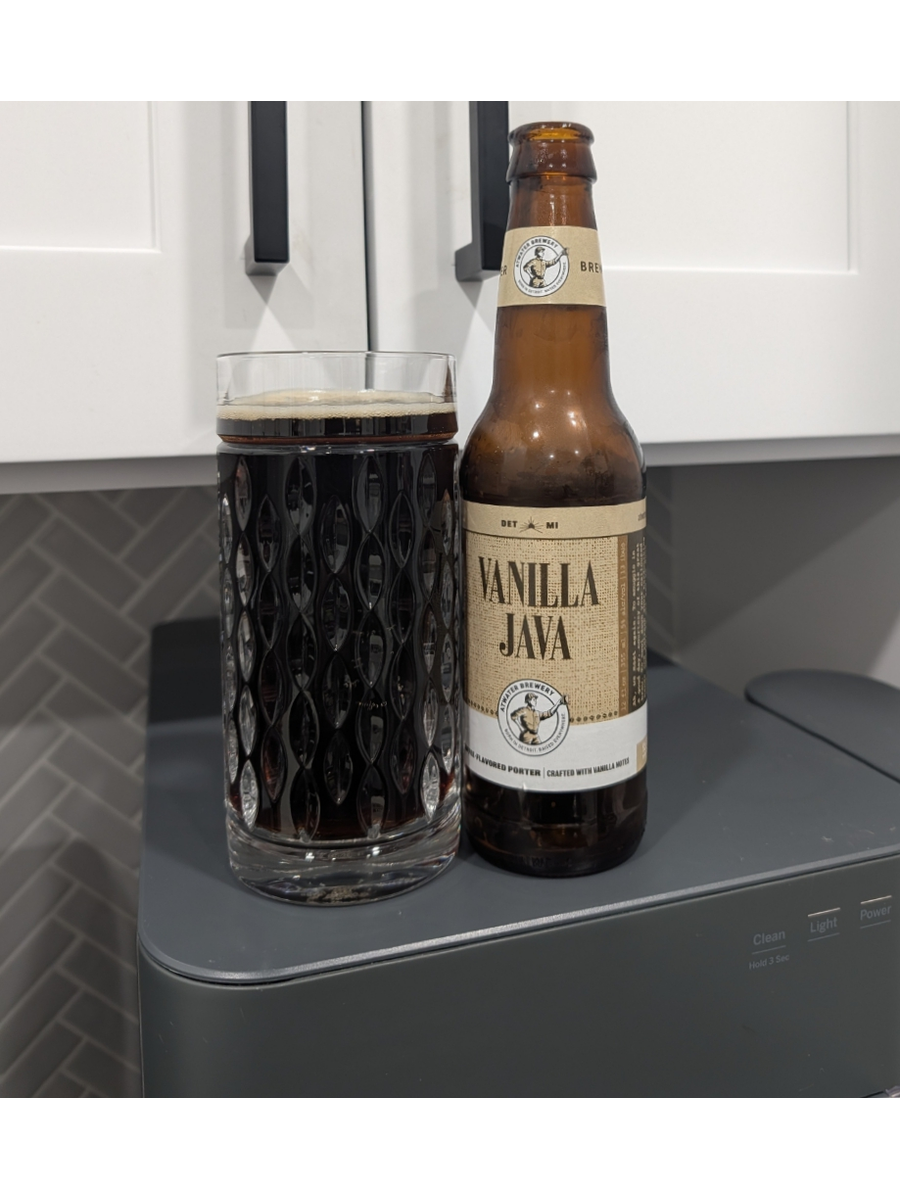
Vanilla Java Porter
Brewed by Atwater Brewery
A year-round 5.0% porter described with coffee and sweet-vanilla character.
BAR NOTES
Vanilla Java Porter is Atwater’s current year-round 5.0% dark beer. Its producer page describes coffee-flavored character, vanilla and a smoky English-style porter impression. These descriptions support the tasting direction, while the page does not publish a complete ingredient or flavoring specification that would justify inventing added cream or sugar.
Use Vanilla Java Porter after Dirty Blonde to follow dark malt and coffee character without jumping to imperial-stout strength. Compare it with The Poet’s oatmeal texture and CEO’s expressly identified espresso beans. The English porter reference explores a related structure; the serving and food comparison here are suggestions rather than additional recipe claims.
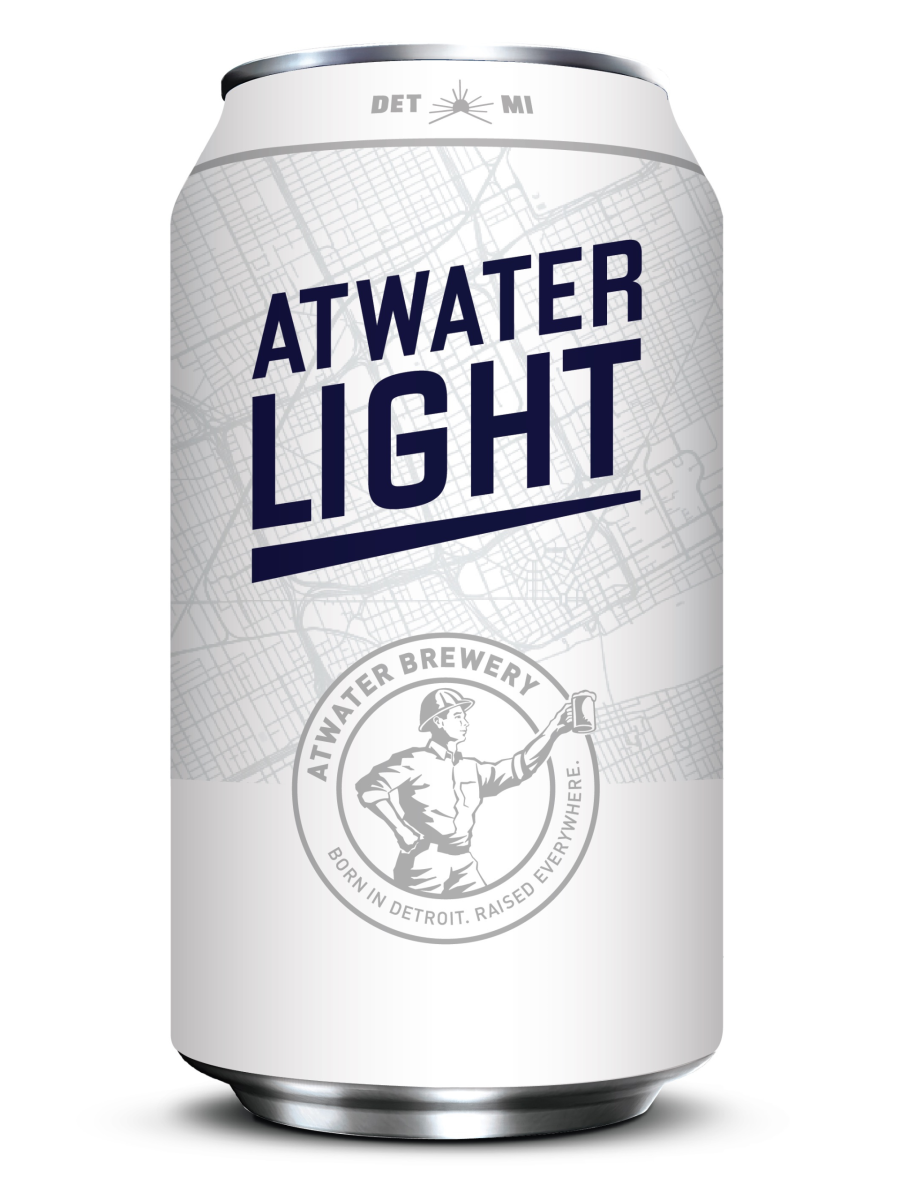
Atwater Light
Brewed by Atwater Brewery
Atwater’s current 4.2% light lager offers the Detroit trio’s lightest opening.
BAR NOTES
Atwater Light is listed at 4.2% on its current product page, with year-round cans and draft formats. An older brewery profile retains 4.0%. The current producer specification governs this guide, and the actual package or draft menu should resolve a batch-level discrepancy rather than mixing the two numbers.
Order Atwater Light before Dirty Blonde and Vanilla Java Porter to follow a clean lager through spiced wheat and darker coffee character. Its lower strength is a product specification rather than an alcohol-free claim. The American lager brewing reference helps frame the comparison; Atwater’s Lager is a separately named product and should not supply this beer’s photo or facts.
10. Keweenaw Brewing Company
Keweenaw’s Houghton taproom and South Range brewery belong to an Upper Peninsula trip, well beyond the lower-peninsula routes. Widow Maker Black Ale, Pick Axe Blonde and Red Jacket Amber are all listed year-round at 5.0% on the current producer page.
The legacy guide puts seasonal beers in its Keweenaw description; this selection uses three current core ales. Historical profile strengths differ, so check the actual package. Widow Maker’s modest hopping and black-ale description should not be replaced with a black-IPA assumption based only on its color.
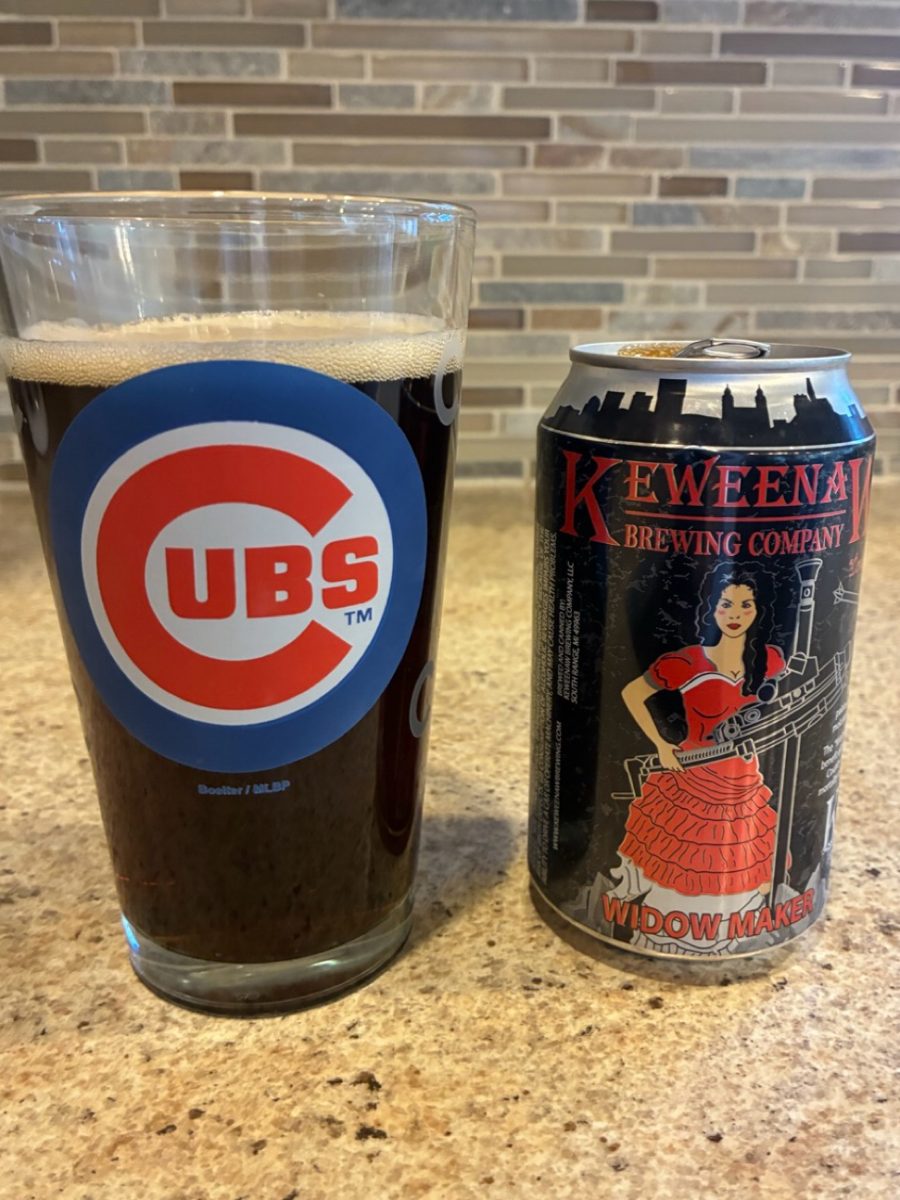
Widow Maker Black Ale
Brewed by Keweenaw Brewing Company
A light-bodied 5.0% black ale with roasted grain and modest hopping.
BAR NOTES
Widow Maker Black Ale is currently listed at 5.0% and 15 IBU by Keweenaw. Two-row, black and chocolate malts provide a malt-focused dark ale, which the producer describes as clean and light-bodied. Historical profiles carry other strengths; the current page does not classify this selection as an assertively hopped black IPA.
Place Widow Maker after Pick Axe and Red Jacket to follow how darker grain changes the same producer’s modest-strength ales. The dark beer guide broadens the comparison without making color a measure of weight or alcohol. A plain roasted dish can accompany the light body, and the actual label should be checked against older strength references.
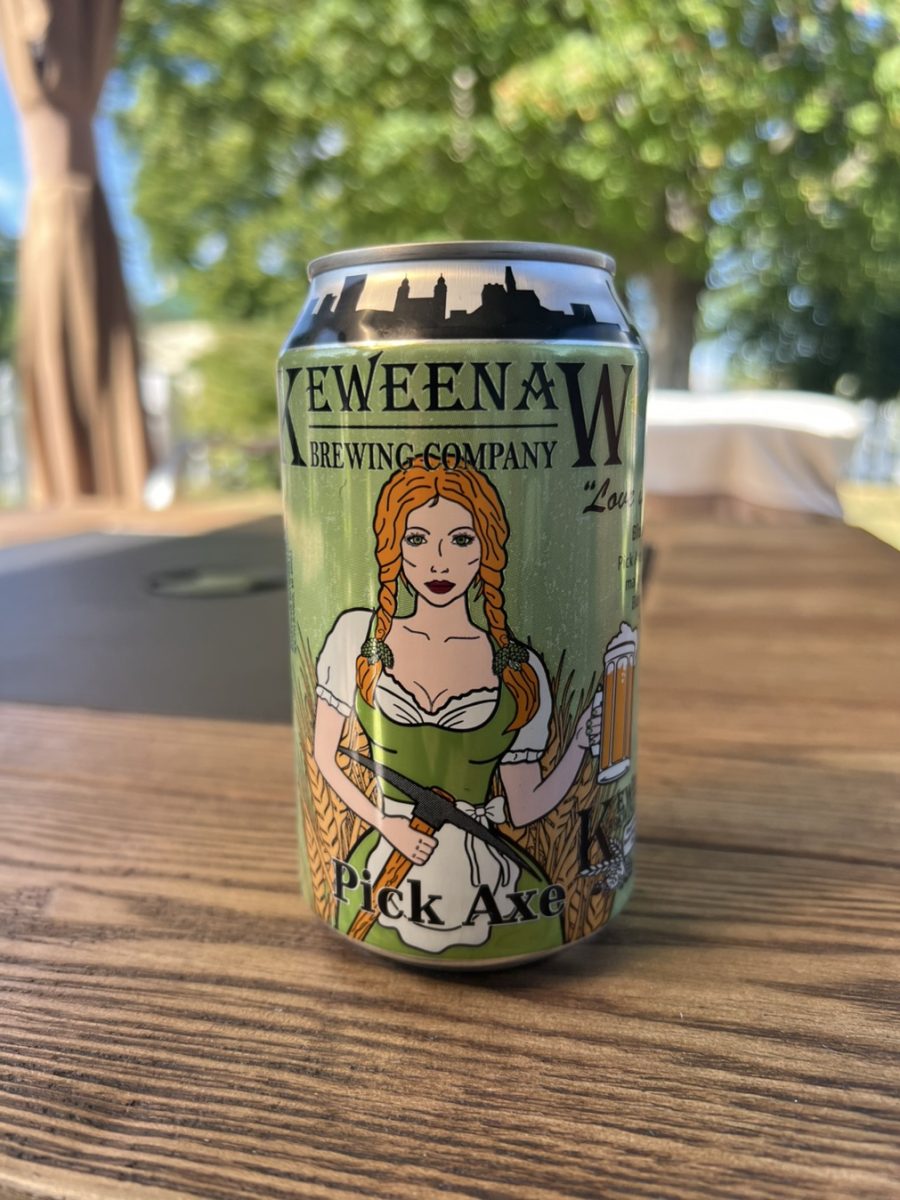
Pick Axe Blonde Ale
Brewed by Keweenaw Brewing Company
A single-malt 5.0% blonde ale with a light hop finish.
BAR NOTES
Pick Axe Blonde Ale is Keweenaw’s current 5.0% blonde at 15 IBU. Its producer page describes a single-malt recipe using malted barley and hops, emphasizing light golden color and grain flavor. Older profiles show lower strengths; that history is retained as a label-check issue rather than replacing the current specification.
Let Pick Axe begin the Houghton comparison before Red Jacket and Widow Maker. A restrained hop finish makes the grain easier to follow, while all three currently share the same listed alcohol strength. The blonde ale reference explores a related brewing balance. A lighter food accompaniment helps preserve that subtle grain comparison.
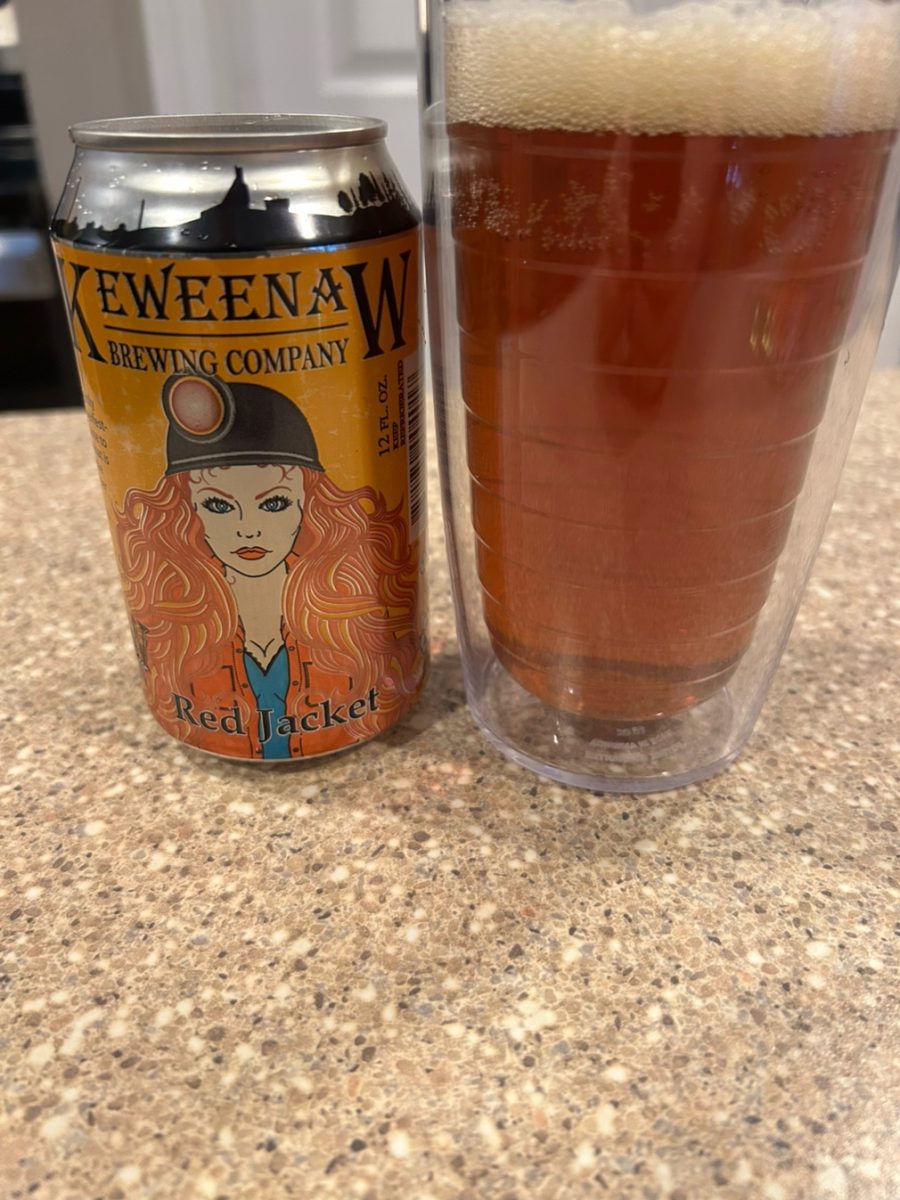
Red Jacket Amber Ale
Brewed by Keweenaw Brewing Company
A current 5.0% amber ale with base and crystal malts at 20 IBU.
BAR NOTES
Red Jacket Amber Ale is Keweenaw’s current 5.0% amber, specified at 20 IBU with base and crystal malts and hops. Historical brewery profiles describe an Oktoberfest-style ale and carry a different strength. The current product is kept as an ale rather than being silently recast as a German lager.
Compare Red Jacket with Pick Axe to follow crystal-malt contribution at the same current strength, then finish with Widow Maker’s darker grain. The amber ale brewing reference adds context for the grain balance. Houghton’s taproom and South Range production location are distinct parts of the brewery; check the venue and exact served package before travel.
Plan a Michigan brewery route by region
Bell’s Kalamazoo destination and Comstock production base belong to a southwest Michigan route. Holland’s New Holland brewery and Grand Rapids’ Founders and Vivant can anchor a west Michigan trip, with Odd Side in Grand Haven on the lakeshore. Bellaire’s Short’s and Traverse City’s Right Brain are separate northern Lower Peninsula stops. Dark Horse in Marshall and Atwater in Detroit require their own travel planning. Keweenaw’s Houghton taproom and South Range production facility belong to an Upper Peninsula visit. Check venue hours, transportation and distance before combining regions.
Michigan brewery questions
Are all thirty beers always available?
No. Oberon Ale has a seasonal window, Coqtoberfest is a fall selection and Expedition Stout has a limited specialty schedule. A portfolio or historical profile describes the beer; today’s venue menu and local inventory determine what can be ordered.
Why do some ABVs differ from older beer profiles?
Current brewery menus take priority where they state a clear strength. Vivant lists Farm Hand at 5.5%, Big Red at 6.5% and Coqtoberfest at 5.6%. Keweenaw’s current pages list Widow Maker, Pick Axe and Red Jacket at 5.0%. Historical listings and older physical labels may differ. Check the package or draft batch you receive.
Does Oberon contain orange juice?
Bell’s states that Oberon Ale uses water, barley, wheat, hops and house ale yeast without added citrus fruit. Its seasonal American wheat ale is distinct from Oberon Eclipse and Oberon Light. Atwater’s Dirty Blonde, by contrast, explicitly uses orange peel and coriander.
Is Pig Porter suitable for a vegetarian?
Right Brain explicitly states that Pig Porter uses smoked pig heads and bones rather than smoked malt. That makes its unusual ingredient process relevant to a dietary choice. Confirm current preparation with the brewery for any dietary restriction.
Are KBS and Dragon’s Milk interchangeable?
Both involve bourbon barrels, but their base beers and published specifications differ. Founders lists original KBS at 12.0%, with chocolate and coffee. New Holland lists regular Dragon’s Milk at 11.0%. Separately named variants and special releases need their own checks.
Does the word black mean Widow Maker is a black IPA?
No. Keweenaw calls Widow Maker a black ale and describes restrained bitterness and a lighter body. Its dark malts belong to a different balance from a hop-led black IPA. Likewise, Red Jacket’s historical Oktoberfest language does not change its stated amber ale fermentation.
Choose your next Michigan beer trail.
Follow a hop variety, compare coffee and roasted grain, or explore the fermentation behind the next pour.