Commercial Specialty Beer: Reference, Interpretation & Clone
Commercial Specialty Beer is built around a named commercial reference that does not fit another defined style. It may be a close clone, a thoughtful interpretation, or a beer aimed at the broader profile represented by the original.
That makes “clone beer” an incomplete label. Exact duplication is not required, and technical faithfulness matters less than whether the finished beer convincingly matches the declared sensory target.
When this category applies
Start by checking every established style. If the commercial reference fits Belgian Tripel, American IPA, Fruit Beer, or another defined category, use that category. Commercial Specialty exists for distinctive products that remain homeless after that check.
The named beer is essential. Without it, a judge has no stable basis for deciding whether the entry succeeded. Useful information includes ABV, bitterness, color, ingredients, fermentation character, and a brief sensory description.
Clone versus interpretation
A clone tries to reproduce ingredients, process, and finished character as closely as practical. An interpretation can use different ingredients or equipment while still targeting the same overall experience. Water, yeast health, fermentation temperature, packaging, and freshness often matter more than matching a grain bill line by line.
Side-by-side tasting is the fastest feedback. Compare aroma before drinking, then bitterness, malt, fermentation profile, body, carbonation, finish, and aftertaste. Change one major variable at a time so the next batch teaches something.
The brewer must declare the target
Competition entries should provide the reference beer, vital statistics, and either ingredients or a concise sensory target. Judges are not expected to guess an obscure beer from a poetic name.
The goal is resemblance, not counterfeiting. Homebrew clone work is an educational exercise in sensory analysis and process control; commercial branding, trademarks, and packaging remain someone else’s property.
Ten Commercial Specialty Beer references and comparisons
Orval and La Chouffe are the two listed commercial examples. The remaining eight cards supply mixed-style, wood, spice, wild and historical controls that help decide when another defined category applies. This is a ten-beer reference and routing exercise, not ten strict 34A examples.
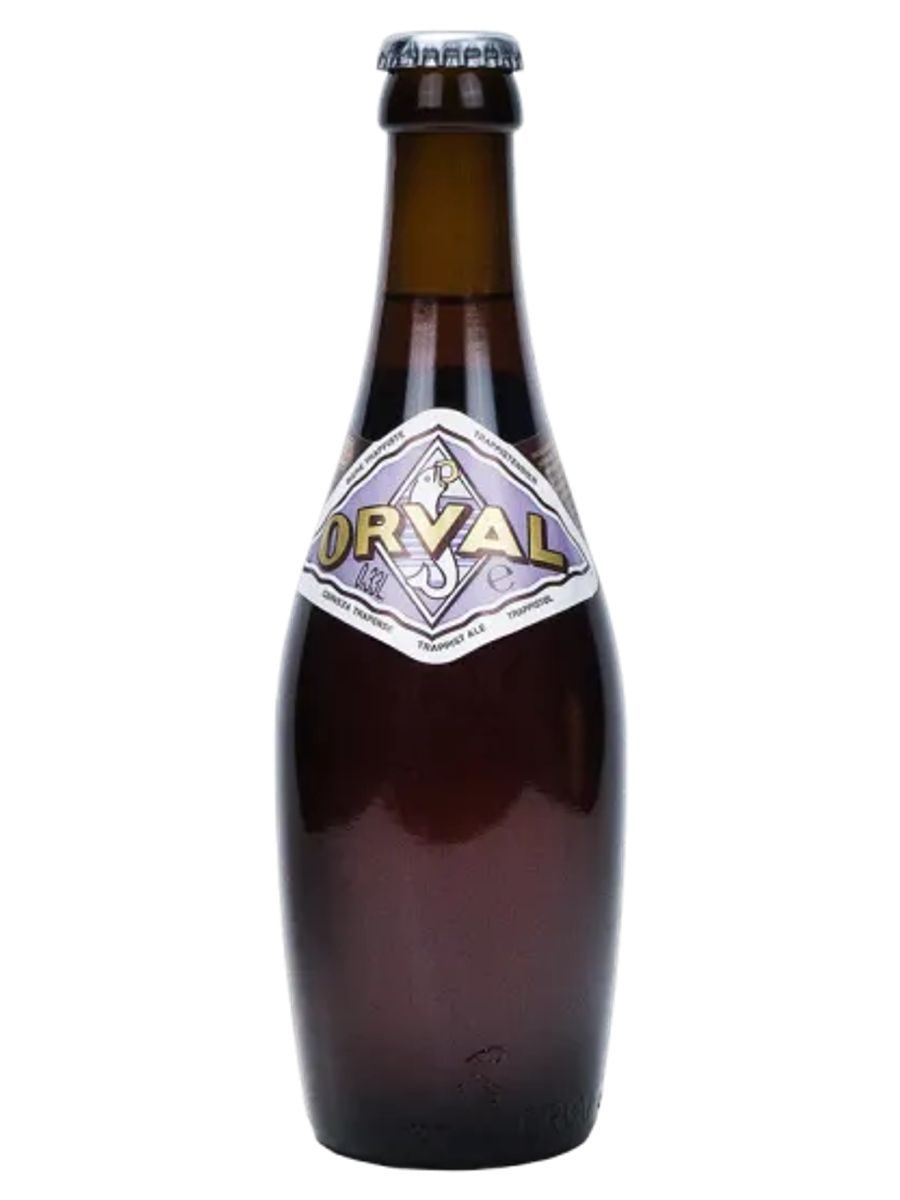
Orval
Brewed by Brasserie d’Orval
A named commercial reference whose bottle age matters.
BAR NOTES
Orval combines dry hopping with bottle conditioning involving Brettanomyces at its labeled 6.2 percent alcohol. It is one of the two listed Commercial Specialty examples. Fresh hop character and later fermentation development create different sensory targets, so an interpretation should declare which expression it intends to reproduce.
Orval is the first direct commercial-reference anchor, with bottle age an essential part of the declaration. Compare aroma and finish at the same temperature before altering a recipe; copying the label’s alcohol figure alone cannot reproduce the difference between young hops and developed Brett character.