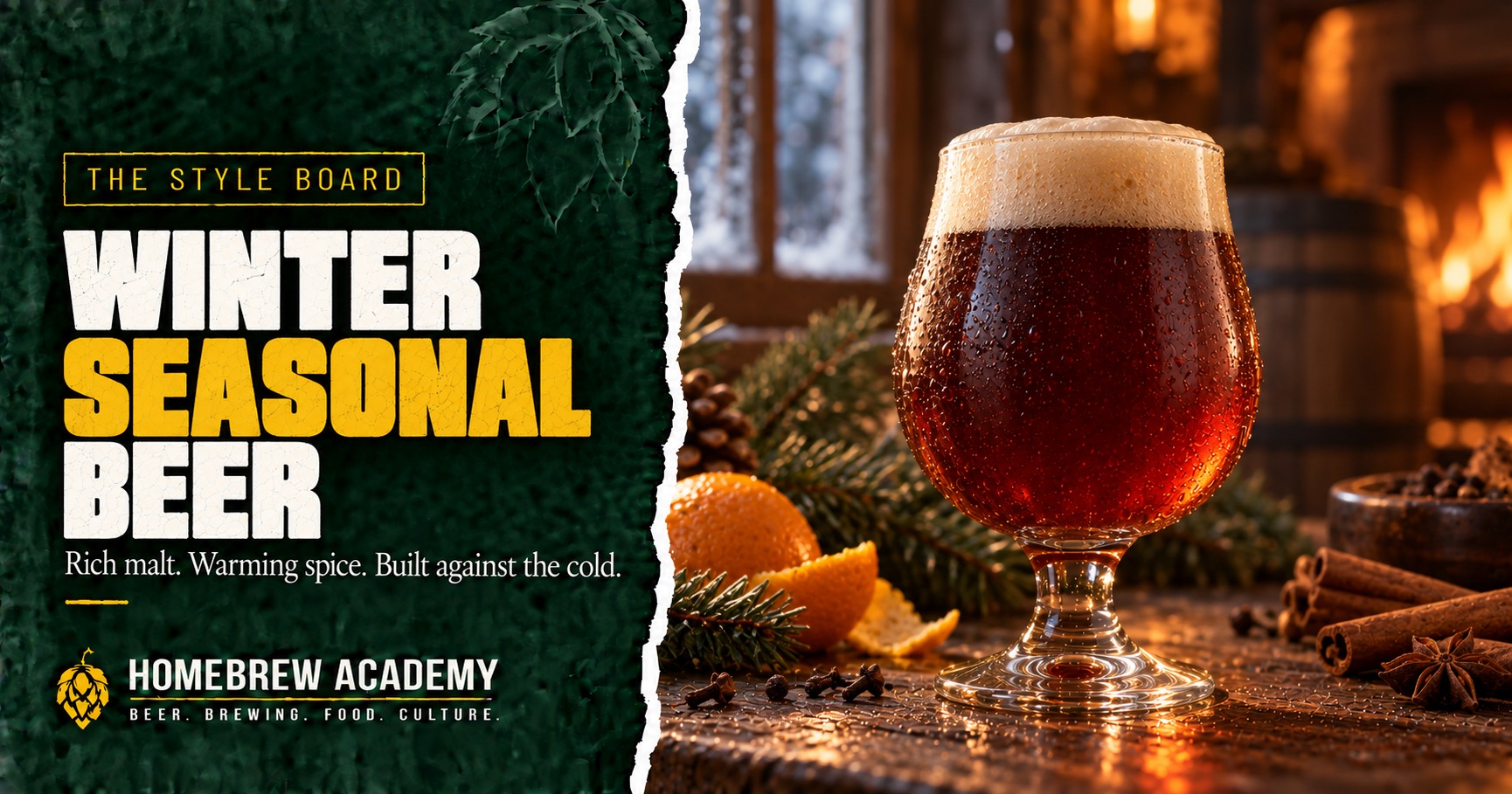
Winter Seasonal Beer: 10-Beer Comparison Flight and Style Guide
Winter seasonal beer is built for a slower pour: maltier, warmer, and often more aromatic than everyday beer. Some examples use cinnamon, ginger, orange peel, honey, or vanilla. Others create a festive impression entirely through dark malt, fruit-forward fermentation, and elevated strength.
That flexibility is the point. Winter seasonal is a concept-driven family rather than one narrow recipe, but the beer should still feel coherent and suited to its declared holiday or cold-weather theme.
What to expect
Color can range from gold to near-black, though amber and brown are common. Malt flavors may suggest toast, caramel, molasses, nuts, chocolate, or dark fruit. Hop aroma usually stays secondary, and alcohol may add warmth without becoming solvent-like.
Spiced versions often borrow from holiday baking, mulled wine, or gingerbread. Unspiced versions lean on expressive yeast, dark sugar, dried fruit, and strong-ale depth. Sweetness varies, but a balanced finish prevents the beer from becoming tiring.
Spice and strength need structure
Cinnamon and clove can turn woody or medicinal at high levels. Ginger adds brightness as well as heat. Orange peel lifts a heavy malt base, while honey can ferment surprisingly dry. Every addition changes not only flavor but the perceived balance of sweetness, bitterness, and alcohol.
Strong beer carries generous seasoning more easily, yet it also magnifies mistakes. A moderate brown ale with a precise spice touch can be more convincing than a massive beer in which sugar, alcohol, and clove compete for attention.
Should winter beer be aged?
Age strong, malt-rich bottles only when you enjoy the tradeoff. Alcohol may soften and dark-fruit notes may deepen, but ginger, citrus, and fresh spice will fade. Buy two bottles when possible: one for the bright release profile and one for comparison later.
Serve moderate examples in a pint or tulip and strong versions in a smaller stemmed glass. Roast meats, aged cheese, gingerbread, fruitcake, and chocolate desserts all work, depending on the beer’s dominant flavors.
Ten Winter Seasonal Beer references and comparisons
Old Fezziwig and Schlafly Christmas Ale provide declared culinary-spice winter examples. Mad Elf retains its cherry, honey and Belgian-yeast character. Gouden Carolus supplies another declared spice blend, while Delirium and St.Bernardus compare Belgian winter aroma without invented ingredient lists, while Samichlaus, Aventinus, La Trappe and Harvey’s Old Ale compare seasonal strength, fermentation and malt. The flight does not relabel ten beers as strict BJCP Winter Seasonal entries.
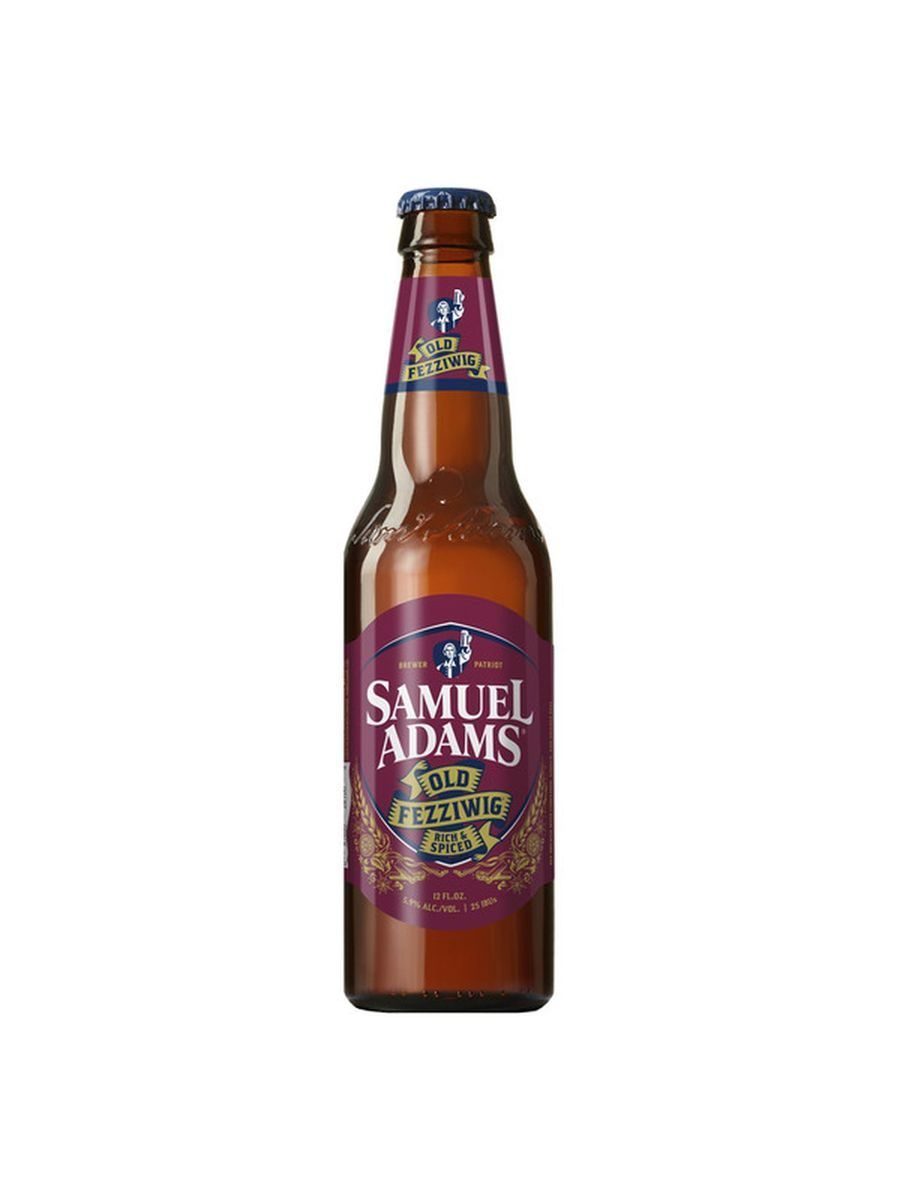
Old Fezziwig
Brewed by Samuel Adams
A brown-ale holiday spice reference.
BAR NOTES
Old Fezziwig is the comparatively moderate holiday reference in this flight. Samuel Adams describes a spiced brown ale with toffee and dark caramel alongside ginger and orange peel; its current listed strength is 5.9 percent.
Begin with the brown-ale base and identify ginger separately from orange peel. Its moderate strength gives the heavier holiday bottles a useful starting point; compare aroma after warming slightly rather than judging spice only at refrigerator temperature.
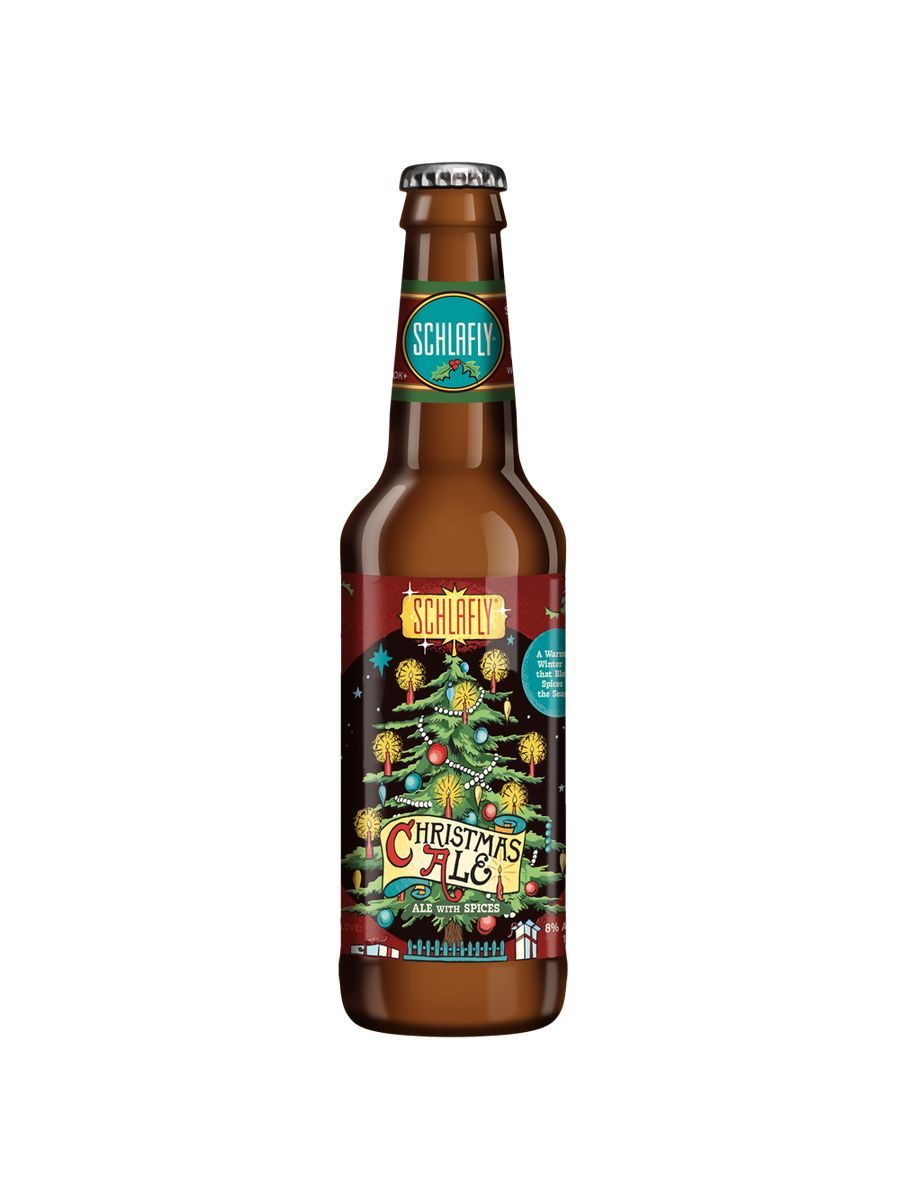
Christmas Ale
Brewed by Schlafly
A declared culinary-spice winter example.
BAR NOTES
Schlafly’s current special-release list gives Christmas Ale eight percent alcohol and twenty-two IBU. A declared blend of spices supplies its holiday seasoning, providing a direct added-ingredient comparison beside Belgian ales whose spicy impressions may arise from fermentation.
Taste beside Old Fezziwig to compare two declared holiday seasonings. The spice blend can read differently against malt sweetness; record the finish before moving into the Belgian strong ales, where yeast adds another source of spicy aroma.
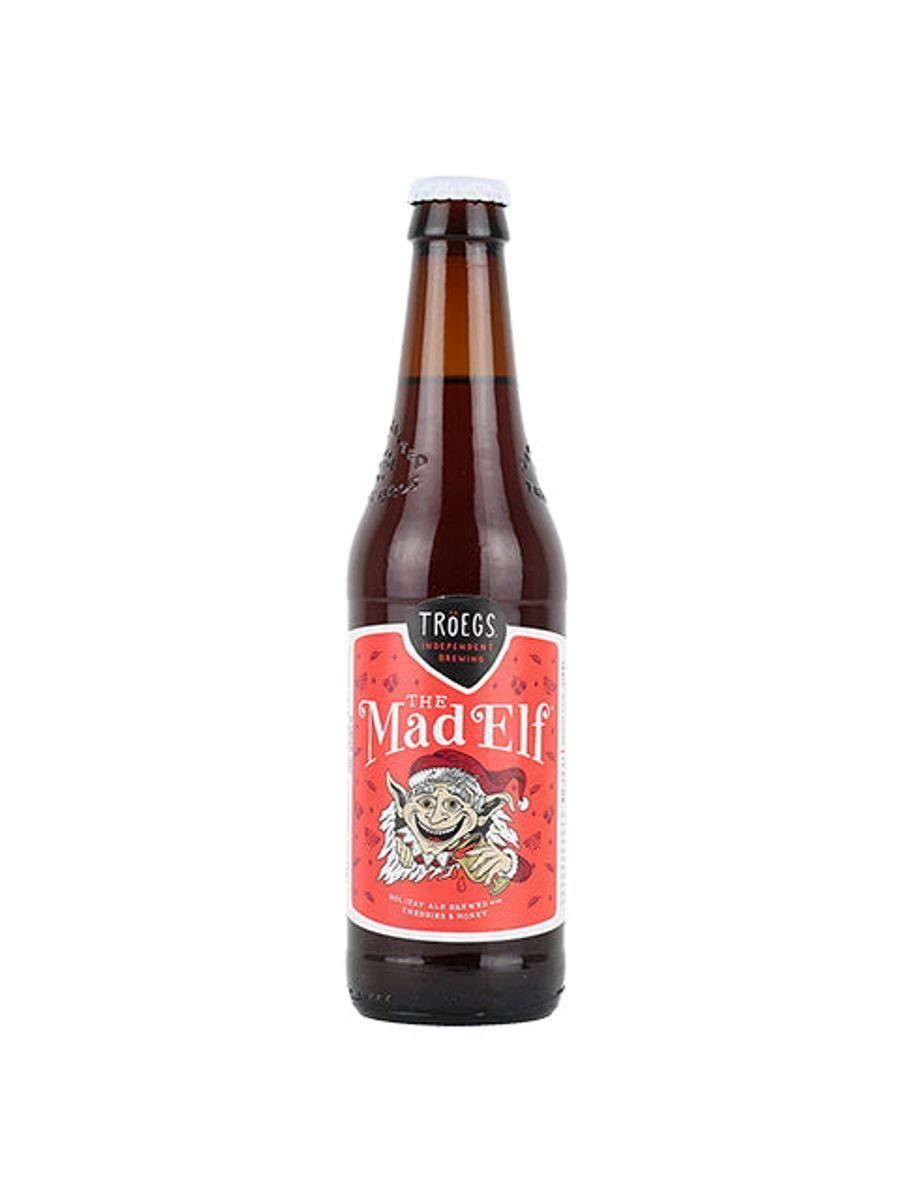
Mad Elf
Brewed by Tröegs Independent Brewing
Chocolate malt is not added cocoa.
BAR NOTES
Honey and five cherry varieties shape Mad Elf, while chocolate malt supplies part of its dark backbone. The brewery describes cinnamon, clove and allspice impressions from Belgian yeast; those aromas do not establish added culinary spices.
Use Mad Elf as the fruit-and-honey holiday comparison rather than declaring it an added-spice recipe. Cherry character, honey-derived fermentation and yeast aromatics can evoke the season together; a small pour keeps eleven-percent strength from obscuring that distinction.
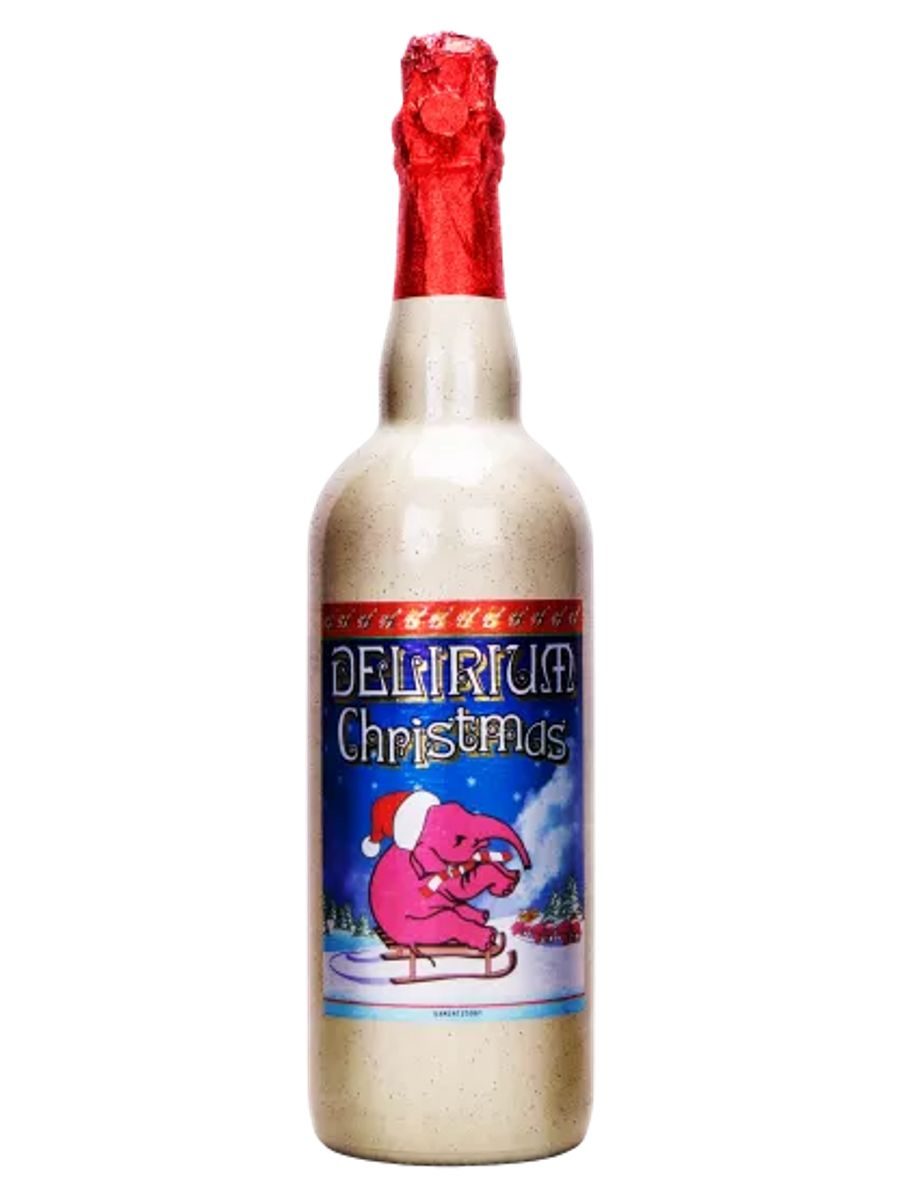
Delirium Christmas
Brewed by Brouwerij Huyghe
Winter spice impressions without an invented ingredient list.
BAR NOTES
Huyghe lists Delirium Christmas at ten percent alcohol and describes caramel, fruit and spice impressions. Those tasting descriptors guide comparison, but they do not by themselves establish an added spice recipe; the Belgian strong-ale identity remains visible.
Keep the brewery’s seasonal identity separate from a formal ingredient declaration. Compare its caramel and fruit impressions with St.Bernardus, asking how fermentation and malt produce winter associations before treating every spicy aroma as a measured kitchen spice addition.
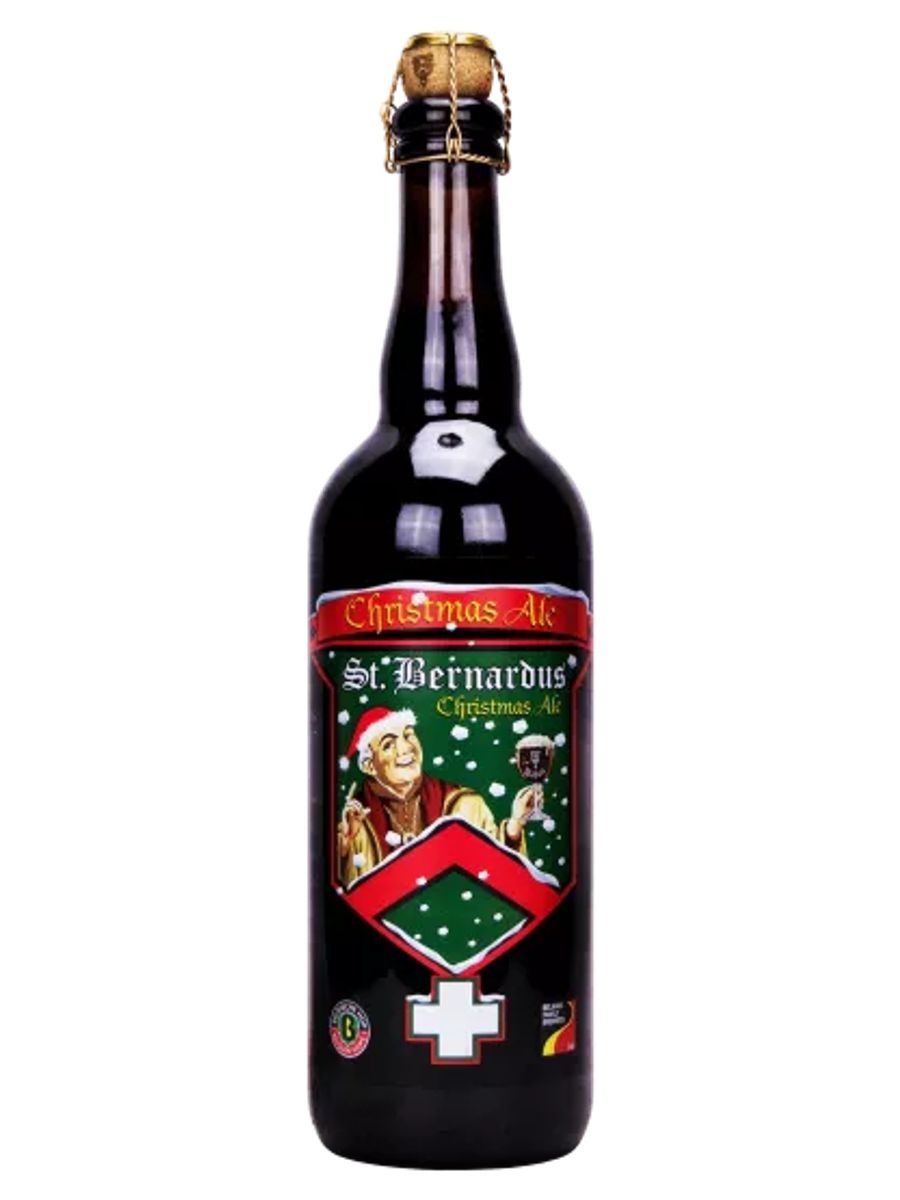
St.Bernardus Christmas Ale
Brewed by Brouwerij St.Bernardus
Aniseed impressions are not proof of added anise.
BAR NOTES
St.Bernardus identifies Christmas Ale as a ten-percent seasonal quadrupel with twenty EBU. Its tasting description includes aniseed, caramel, chestnut, dried fruit and chocolate impressions and emphasizes the house yeast; no added spice or cocoa recipe is inferred here.
Aniseed and chocolate are tasting words here, not a confirmed shopping list. Compare with Schlafly Christmas Ale’s declared blend of spices; this makes the difference between sensory evidence and documented additions easier to recognize in a winter flight.
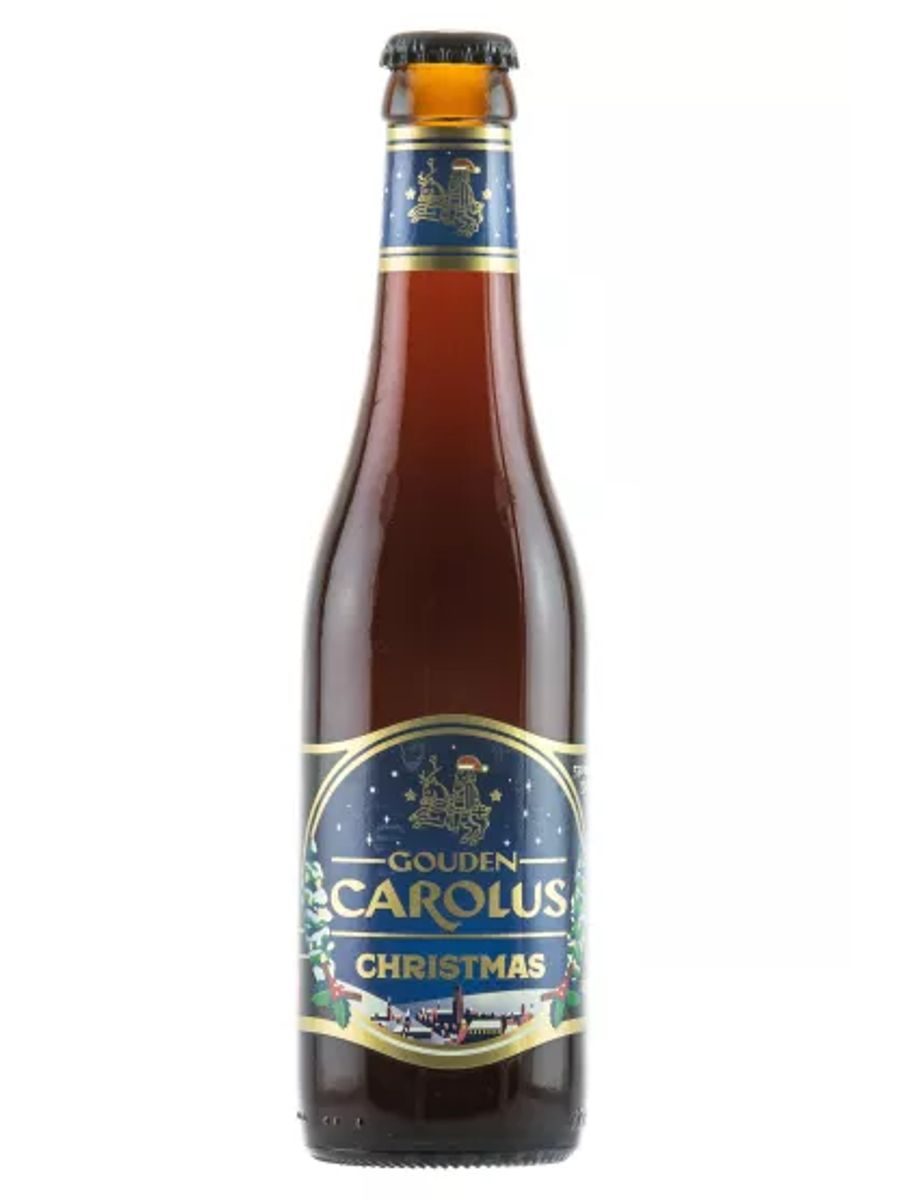
Gouden Carolus Christmas
Brewed by Het Anker
A distinct Belgian holiday seasoning comparison.
BAR NOTES
Het Anker’s current Christmas specification lists ten percent alcohol for this dark seasonal ale. Six added spices and three hop varieties distinguish the declared recipe; compare the selected bottle’s label before applying specifications from older vintages.
Taste this Belgian Christmas interpretation beside Delirium and St.Bernardus, using equal small pours. Differences in sweetness and finish matter as much as festive aroma; retain the selected bottle’s strength rather than assuming every historical release shares one specification.
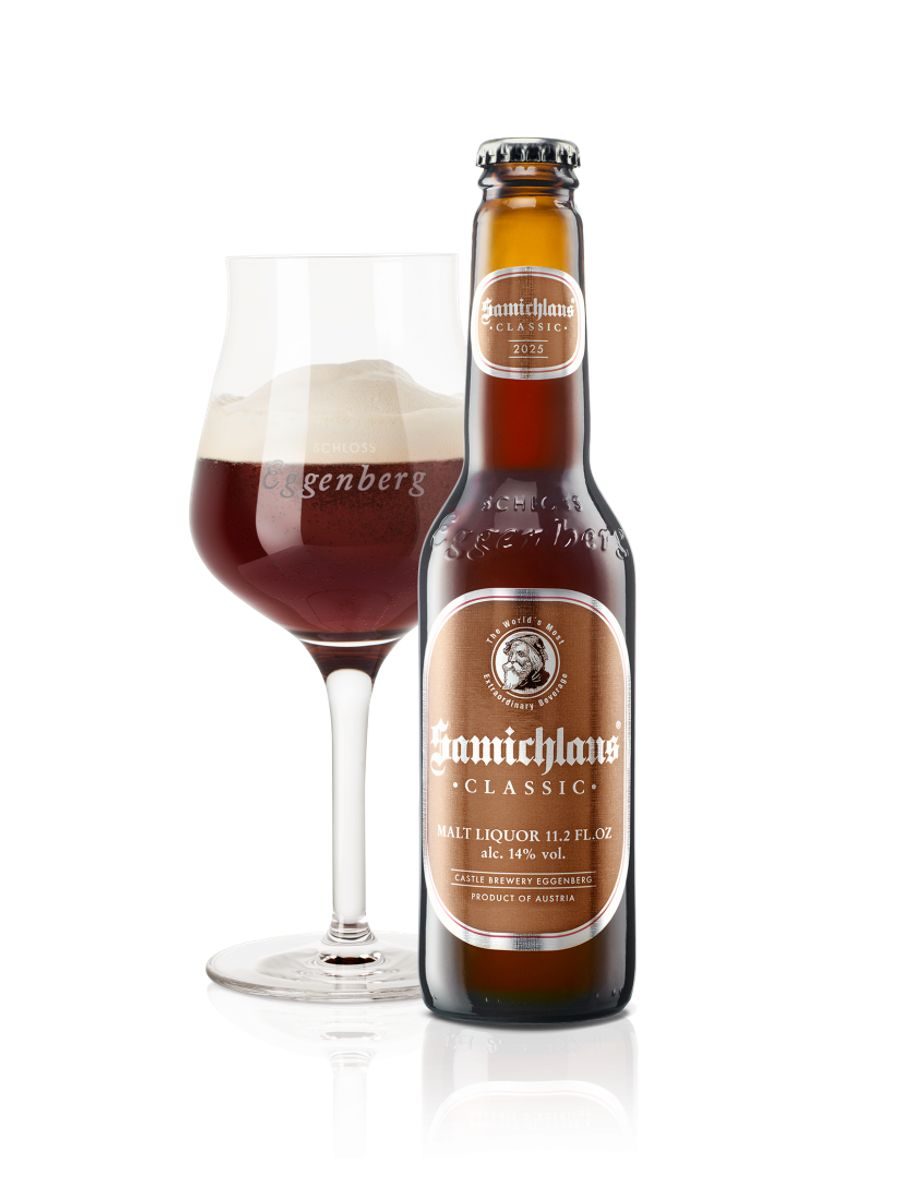
Samichlaus Classic
Brewed by Brauerei Schloss Eggenberg
Seasonal strength and malt without an invented spice addition.
BAR NOTES
Schloss Eggenberg brews Samichlaus Classic on December sixth and lists fourteen percent alcohol. The brewery describes dried plum, malt and caramel aromas; its seasonal tradition and strength are clear, while no culinary spice addition is claimed for this comparison.
Place this fourteen-percent seasonal beer near the end and pour sparingly. Dried-fruit and caramel impressions can come from strong beer itself; compare with an explicitly spiced ale to show why winter tradition alone does not establish added culinary ingredients.
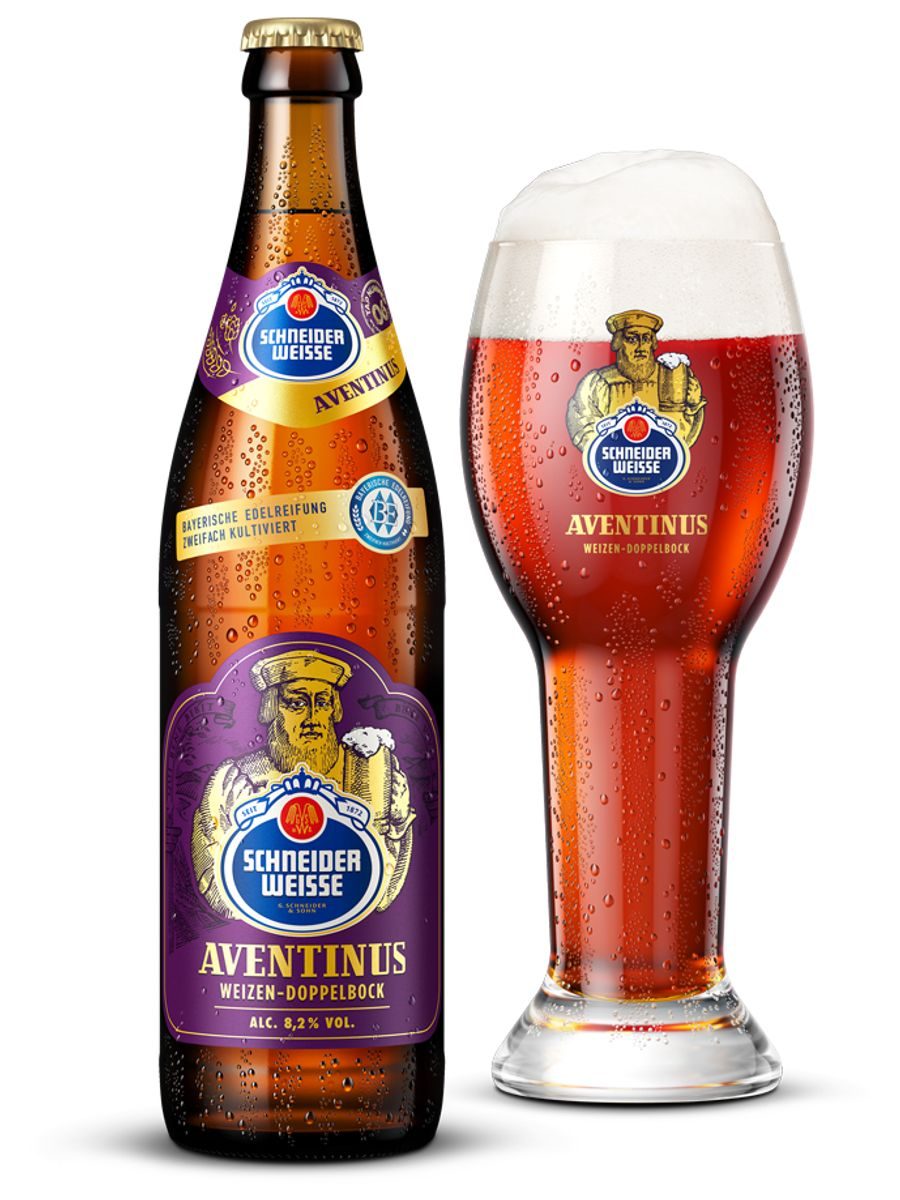
Schneider Aventinus
Brewed by Schneider Weisse
Compare Aventinus with pale Vitus and look for how darker malt changes fruit and spice impressions.
BAR NOTES
Schneider lists Aventinus at 8.2% alcohol, 16 IBU and 18.5% original wort, with open fermentation and bottle maturation. Choose regular Aventinus here; Aventinus Eisbock is a separate, freeze-concentrated product with higher strength.
Aventinus is the established Weizendoppelbock control, with wheat texture and fermentation-derived clove and fruit. Its inclusion compares natural spicy impressions with added holiday seasoning; it does not reclassify the familiar German style as a strict winter specialty entry.
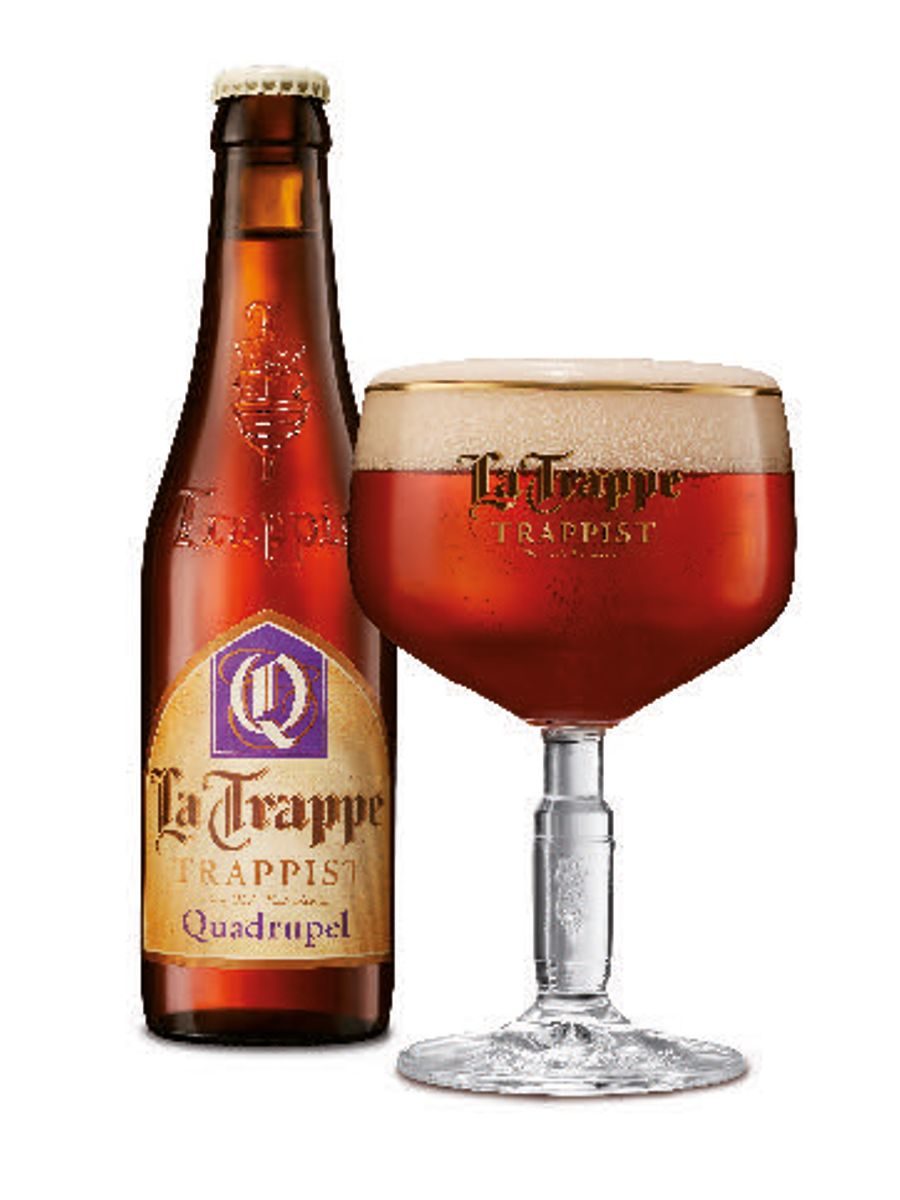
La Trappe Quadrupel
Brewed by Bierbrouwerij de Koningshoeven
A stronger Dutch Trappist reference.
BAR NOTES
La Trappe Quadrupel is currently 10%, confirmed by the International Trappist Association. It is separate from the brewery’s 11% Oak Aged selection, so regular Quadrupel should not acquire barrel-aging claims merely because another version exists.
La Trappe supplies a quadrupel control for the dark Belgian holiday beers. Compare malt, fruit-like fermentation and alcohol warmth at similar serving temperatures; these traits can feel festive without a declared seasonal spice recipe or a new competition identity.
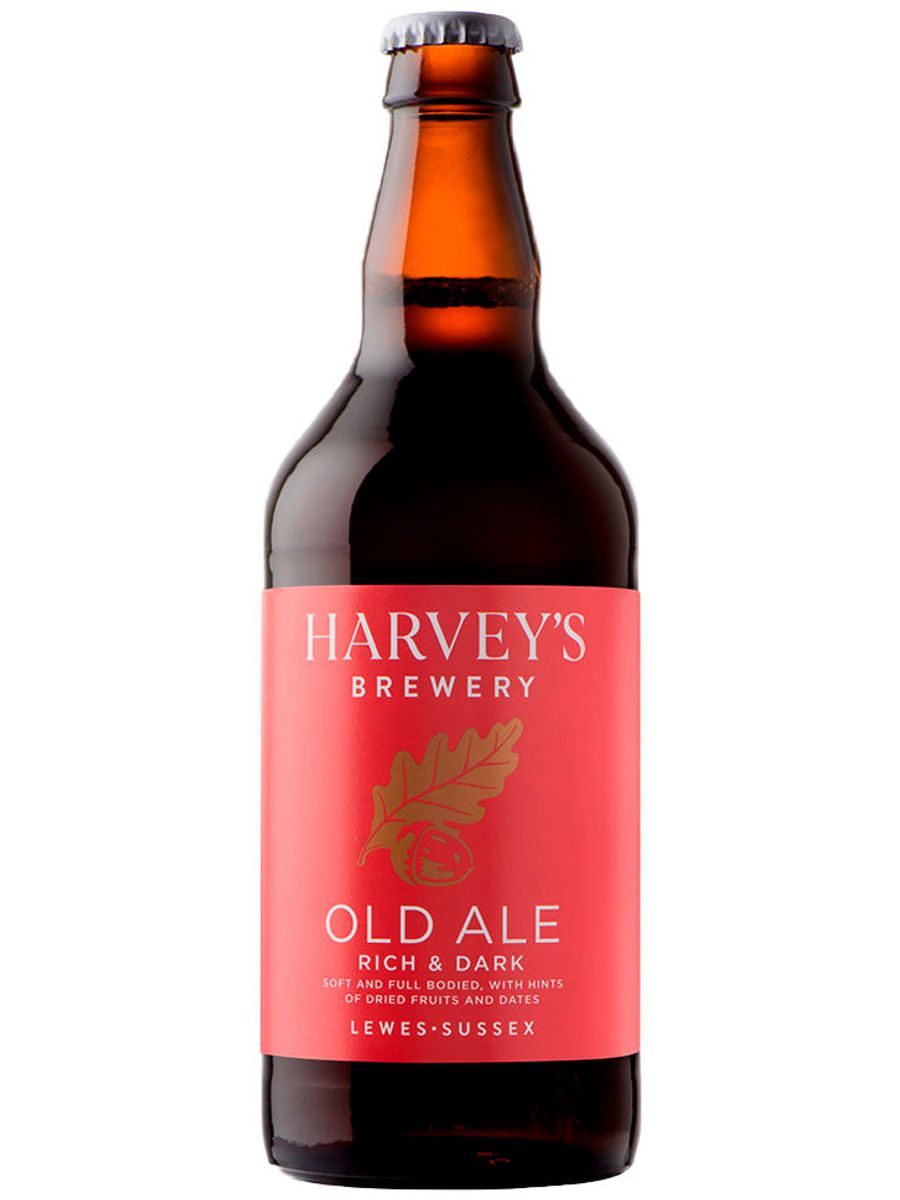
Harvey’s Old Ale
Brewed by Harvey’s Brewery
A 3.6% Old Ale comparison that challenges assumptions about strength and names.
BAR NOTES
Harvey’s bottled Old Ale is currently listed at 3.6%, despite a name that can suggest a much stronger beer. Its brewery notes describe burnt sugars, roasted malt and dried-fruit impressions; this is a neighboring comparison with Mild, not an automatic style reclassification.
Harvey’s seasonal Old Ale provides the lower-strength British malt comparison at the end of the tasting discussion. Keep its Old Ale identity visible; the contrast helps separate comfortable winter drinking and food compatibility from a documented added-spice formulation.
Keep Exploring Spiced Beer
Follow the links below to compare the category, its seasonal branches, and ingredient-led roundups.