10 Best Breweries in Maine with 30 Beers Worth Trying
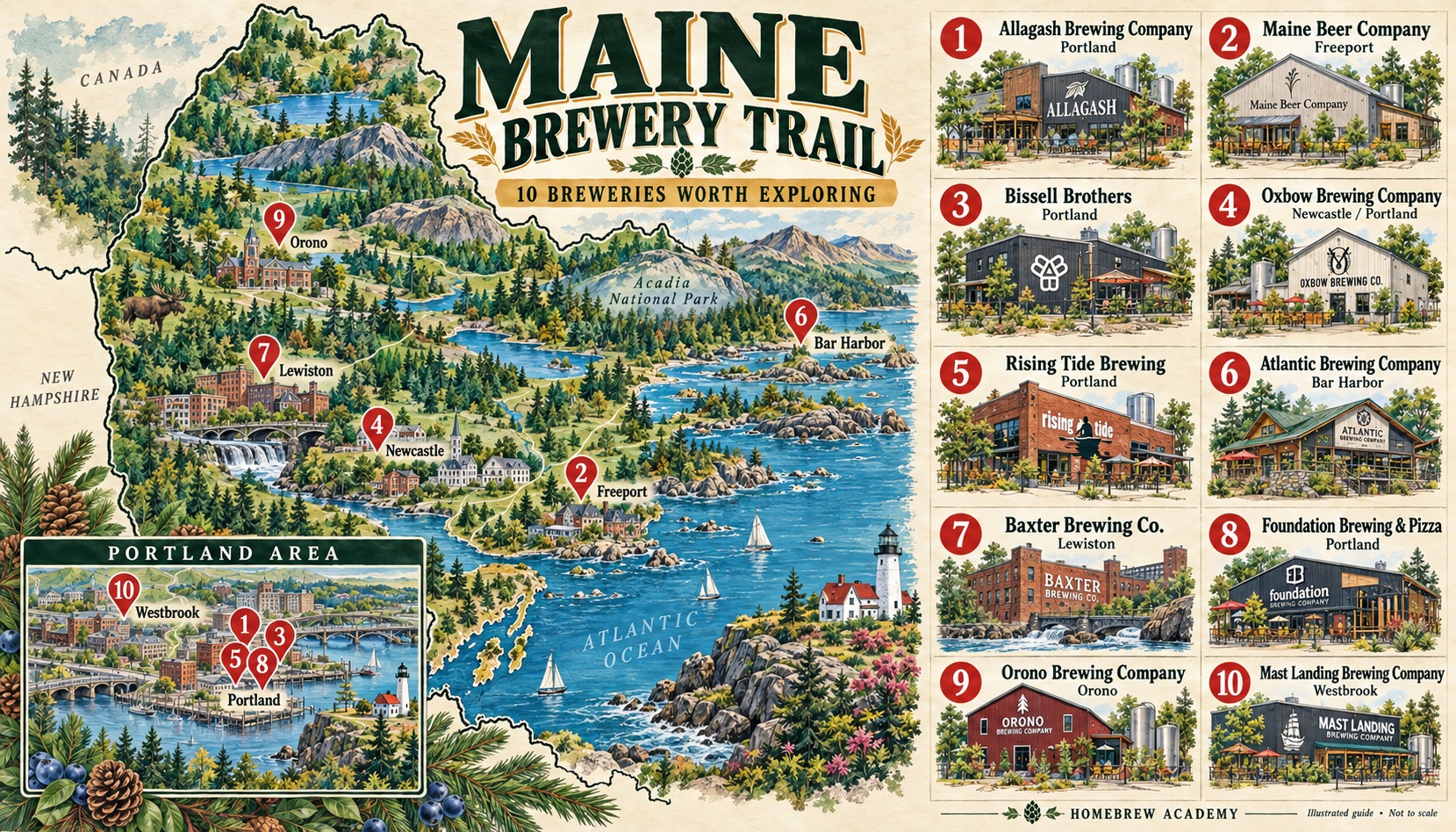
Maine’s beer routes stretch from Portland and Westbrook through Freeport and Lewiston to Orono and Bar Harbor. These ten editorial brewery picks offer thirty selections across wheat beer, tripel, barrel-aged golden ale, saison, pilsner, lager, copper and brown ales, porter, milk stout and several IPA approaches. Three beers per brewery make the comparison practical without pretending one style represents the entire state.
This is an editorial guide, not a statewide tasting score. Current producer pages, brewery-authored recurring profiles and venue menus support the selections. Match the exact beer, batch label, location and format before traveling; older strengths, retired releases and a second taproom’s address can otherwise produce a misleading plan.
Maine brewery picks at a glance
| Brewery | Base | Three beers to explore |
|---|---|---|
| Allagash Brewing Company | Portland, Maine | Allagash White · Tripel · Curieux |
| Maine Beer Company | Freeport, Maine | Lunch · Peeper · Woods & Waters |
| Bissell Brothers | Portland, Maine | The Substance Ale · Lux · Swish |
| Oxbow Brewing Company | Newcastle / Portland, Maine | Farmhouse Pale Ale · Luppolo · Northern Lager |
| Rising Tide Brewing | Portland, Maine | Zephyr · Ishmael · Maine Island Trail Ale |
| Atlantic Brewing Company | Bar Harbor, Maine | Bar Harbor Blueberry Ale · Bar Harbor Real Ale · Coal Porter |
| Baxter Brewing Co. | Lewiston, Maine | Stowaway IPA · Coastal Haze · Logger Road |
| Foundation Brewing & Pizza | Portland, Maine | Epiphany · Burnside · Afterglow |
| Orono Brewing Company | Orono, Maine | Tubular · AOK · Maine Life |
| Mast Landing Brewing Company | Westbrook, Maine | Gunner’s Daughter · On A Mountain in The Clouds · Saccarappa |
1. Allagash Brewing Company
Allagash’s flagship brewery and tasting room is at 50 Industrial Way in Portland. Its separately listed Scarborough Bungalow is another destination, so match the venue when arranging tours, food or a particular draft selection.
White, Tripel and Curieux trace wheat-and-spice brewing, stronger golden fermentation and a bourbon-barrel blend. This trio makes yeast and process central to the visit rather than asking three differently named IPAs to represent the entire brewery.
Allagash White
Brewed by Allagash Brewing Company
Allagash White combines malted and raw wheat with oats, coriander and Curaçao orange peel.
BAR NOTES
Allagash White combines malted and raw wheat with oats, coriander and Curaçao orange peel. The current 5.2% specification identifies a Belgian-style wheat beer, with house yeast contributing to a recipe that has more going on than a fruit garnish.
Compare its grain texture with Tripel before moving to Curieux. The orange peel is a recipe ingredient, whereas citrus in another beer may come from hops or fermentation. The wheat beer collection helps separate those different sources of character.
Tripel
Brewed by Allagash Brewing Company
Tripel is Allagash’s 9% golden Belgian-style ale, built from a comparatively simple grain recipe and house yeast.
BAR NOTES
Tripel is Allagash’s 9% golden Belgian-style ale, built from a comparatively simple grain recipe and house yeast. Its producer describes honey and passion fruit character alongside a dry finish, making fermentation a central part of the comparison.
Take a small pour beside Curieux to explore the starting beer and its barrel-aged relative. A honey-like description does not establish an added honey ingredient. Our tripel brewing guide follows the interplay of strength, attenuation and yeast character.
Curieux
Brewed by Allagash Brewing Company
Curieux spends approximately seven weeks in bourbon barrels before Allagash blends it with fresh Tripel.
BAR NOTES
Curieux spends approximately seven weeks in bourbon barrels before Allagash blends it with fresh Tripel. The current strength is 10.2%, with producer-described vanilla, caramel and oak character. This is a barrel treatment of golden beer rather than dark stout.
The fresh-beer blend is worth following when comparing Curieux with straight Tripel: the finished beer is not simply the base recipe left in wood indefinitely. The tripel brewing guide follows the golden base style before any barrel treatment.
2. Maine Beer Company
Maine Beer Company’s current tasting room is at 525 US Route 1 in Freeport. The business began on Portland’s Industrial Way, but that history should not send a visitor to its former base or to an imagined waterfront taproom.
Lunch and Peeper are year-round selections; Woods & Waters is a rotating Conservation Series IPA. The present beer and venue pages list the formats available now, with bottle stock and draft availability treated as separate questions.
Lunch
Brewed by Maine Beer Company
Lunch is Maine Beer Company’s year-round 7% IPA.
BAR NOTES
Lunch is Maine Beer Company’s year-round 7% IPA. Amarillo, Centennial and Simcoe support a recipe with caramel, wheat and Munich malts. The name refers to a recognizable fin whale, and the producer lists both tasting-room bottles and draft.
Set Lunch beside Peeper to compare strength and malt support within the same brewery. Citrus aroma can coexist with a grain foundation rather than replacing it entirely. The American IPA brewing guide explores those balancing choices without claiming to clone Lunch.
Peeper
Brewed by Maine Beer Company
Peeper is the brewery’s original pale ale, now listed at 5.5% with Amarillo, Cascade and Centennial.
BAR NOTES
Peeper is the brewery’s original pale ale, now listed at 5.5% with Amarillo, Cascade and Centennial. Its producer describes several citrus and orchard-fruit aromas over grain sweetness. The current year-round listing includes both bottles and tasting-room draft.
Peeper and Lux provide a useful pale-ale comparison: one uses several named varieties, while the other focuses on Mosaic and rye. Evaluate aroma and finish separately. Our American pale ale guide gives a brewing reference for the shared style family.
Woods & Waters
Brewed by Maine Beer Company
Woods & Waters is a 6.2% IPA in Maine Beer Company’s rotating Conservation Series.
BAR NOTES
Woods & Waters is a 6.2% IPA in Maine Beer Company’s rotating Conservation Series. The present page lists tasting-room draft availability and names Simcoe, Mosaic, Columbus and Idaho 7, alongside Maine-grown Blue Ox pale, wheat and Vienna malts.
Confirm this limited selection before arranging a Freeport visit around it; current draft availability does not guarantee bottles on your travel date. Compare its hop blend with Lunch. The IPA collection extends that comparison across other breweries and expressions.
3. Bissell Brothers
Bissell Brothers lists its Portland operation at 38 Resurgam Place. Current beer pages specify production location and named Maine-grown grains, giving the visit a useful ingredient focus alongside the brewery’s well-known hop-led releases.
Substance, Lux and Swish span flagship IPA, rye-containing Mosaic pale ale and double IPA. Swish now has a producer-announced year-round schedule; older seasonal advice and related names such as Swish Silver should not replace the exact current selection.
The Substance Ale
Brewed by Bissell Brothers
The Substance Ale is Bissell’s 6.6% flagship IPA, brewed with Maine-grown grain including oats and wheat.
BAR NOTES
The Substance Ale is Bissell’s 6.6% flagship IPA, brewed with Maine-grown grain including oats and wheat. Its hop roster includes Centennial, Chinook, Eureka, Falconer’s Flight and Simcoe. The producer describes citrus, herbal and dank character rather than a single fruit addition.
Ask for the standard Substance when comparing this trio, because Original Recipe Substance and Double Substance are separately named beers. Grain provenance and haze are different observations. Our hazy IPA guide explains the texture and hopping decisions behind the broader style.
Lux
Brewed by Bissell Brothers
Lux is a 5.1% pale ale hopped exclusively with Mosaic and brewed with Maine-grown rye.
BAR NOTES
Lux is a 5.1% pale ale hopped exclusively with Mosaic and brewed with Maine-grown rye. Bissell also lists two-row, Vienna and crystal malts. It gives the brewery’s three selections a lower-strength point of comparison while retaining a specific grain and hop identity.
Compare Lux with Peeper for two pale ales that approach hop selection differently, then consider how rye fits into the grain bill. Avoid treating a spicy impression as proof of an added spice. The pale ale brewing guide supplies the broader framework.
Swish
Brewed by Bissell Brothers
Swish is Bissell’s 8% double IPA, using Citra, Mosaic and Simcoe over Maine Mapleton Gold and wheat.
BAR NOTES
Swish is Bissell’s 8% double IPA, using Citra, Mosaic and Simcoe over Maine Mapleton Gold and wheat. A producer announcement moved it to year-round production, so the older assumption that every Swish purchase requires a winter-only release is outdated.
Distinguish Swish from Swish Silver and Super Swish, which occupy different strengths and recipes. Compare a small pour with Substance to follow the larger beer’s structure. Our double IPA collection offers further examples without substituting them for the exact release.
4. Oxbow Brewing Company
Oxbow began at its Newcastle farmhouse and also operates Portland Blending & Bottling and the Oxford Beer Garden. For this route, use Portland at 49 Washington Avenue; the current Newcastle page lists no regular opening days, so contact the brewery before planning a farmhouse visit.
Farmhouse Pale Ale, Luppolo and Northern Lager compare saison fermentation, dry-hopped pilsner and restrained lager. The selection shows that Oxbow’s farmhouse identity also includes lager brewing, while the current Northern Lager specification supersedes older strength listings.
Farmhouse Pale Ale
Brewed by Oxbow Brewing Company
Farmhouse Pale Ale is Oxbow’s 6% saison, brewed with American-grown hops.
BAR NOTES
Farmhouse Pale Ale is Oxbow’s 6% saison, brewed with American-grown hops. Its current page lists six-packs of twelve-ounce cans and classifies it as fresh farmhouse beer. Despite the name, it is a yeast-led comparison rather than a standard American pale ale.
Place it alongside Luppolo to explore farmhouse fermentation against lager fermentation within one producer. A rustic name does not establish that a particular batch is sour or barrel-aged. The saison brewing guide explains the fermentation decisions behind this style family.
Luppolo
Brewed by Oxbow Brewing Company
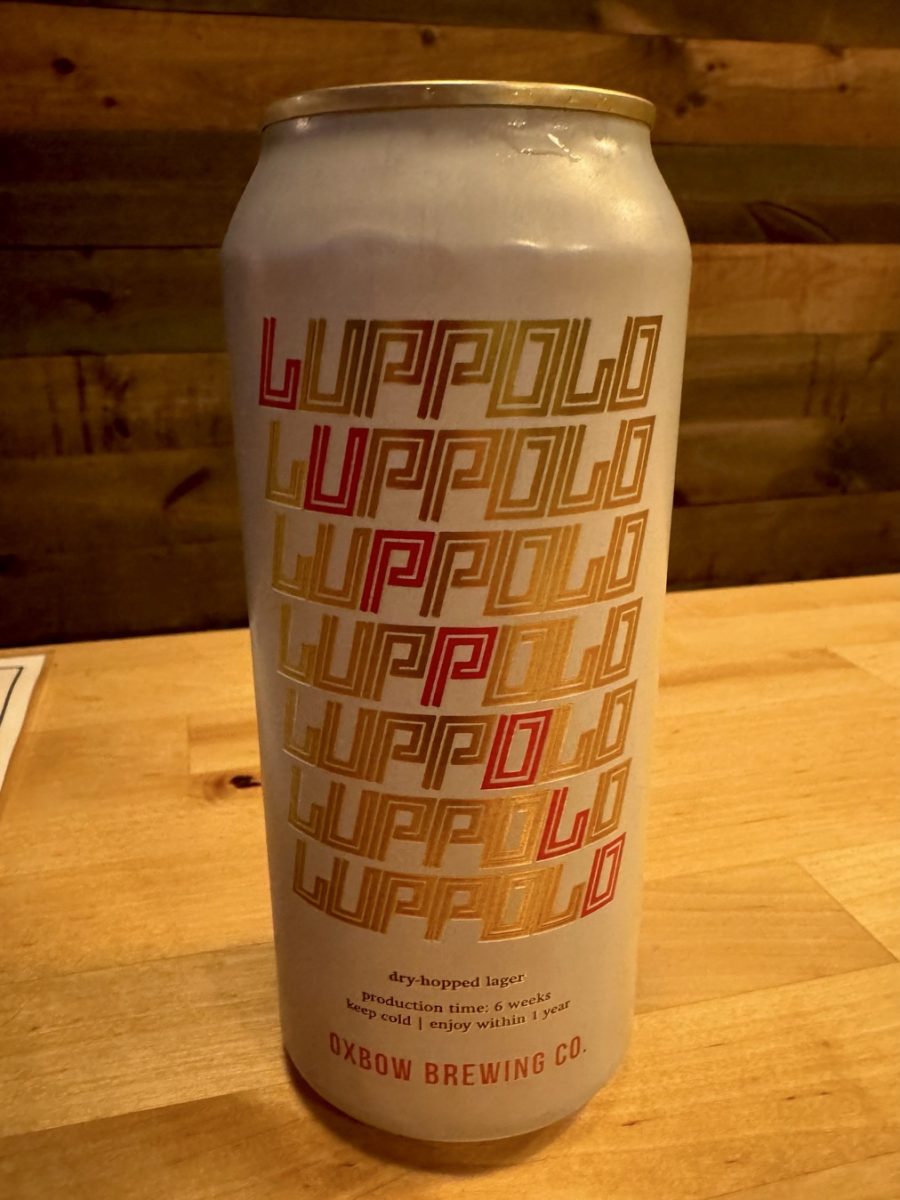
Luppolo is Oxbow’s 5% unfiltered, dry-hopped Italian-style pilsner made with European malts and hops.
BAR NOTES
Luppolo is Oxbow’s 5% unfiltered, dry-hopped Italian-style pilsner made with European malts and hops. The producer lists sixteen-ounce cans in four-packs. Dry hopping contributes aroma while the lager foundation keeps it distinct from the brewery’s farmhouse ale releases.
Compare Luppolo with Northern Lager before returning to Farmhouse Pale Ale. Dry hopping and fermentation are separate decisions, so a fragrant lager need not be classified as an IPA. Our pilsner brewing guide offers a related lager reference for grain and bitterness.
Northern Lager
Brewed by Oxbow Brewing Company
Northern Lager’s current Oxbow page specifies 4.5%, with malted barley and selected hops in twelve-ounce six-packs.
BAR NOTES
Northern Lager’s current Oxbow page specifies 4.5%, with malted barley and selected hops in twelve-ounce six-packs. Older profiles and listings can show a different figure. Use the actual package when comparing batches rather than applying one historical number to every can.
This is the restrained point in the Oxbow trio, useful before the dry hopping of Luppolo and the saison fermentation of Farmhouse Pale Ale. Let the grain remain part of the discussion. The lager brewing guide explores a related set of process choices.
5. Rising Tide Brewing
Rising Tide’s current tasting room is at 103 Fox Street in Portland’s East Bayside neighborhood. Its beer pages distinguish year-round, seasonal and retired releases, which matters more to a visit plan than a long-lived beer profile alone.
Zephyr, Ishmael and Maine Island Trail Ale provide IPA, copper ale and session IPA comparisons. Daymark is marked retired and has been excluded. Zephyr’s current producer strength is 6.5%, while the recurring profile retains an older 6.3% figure.
Zephyr
Brewed by Rising Tide Brewing
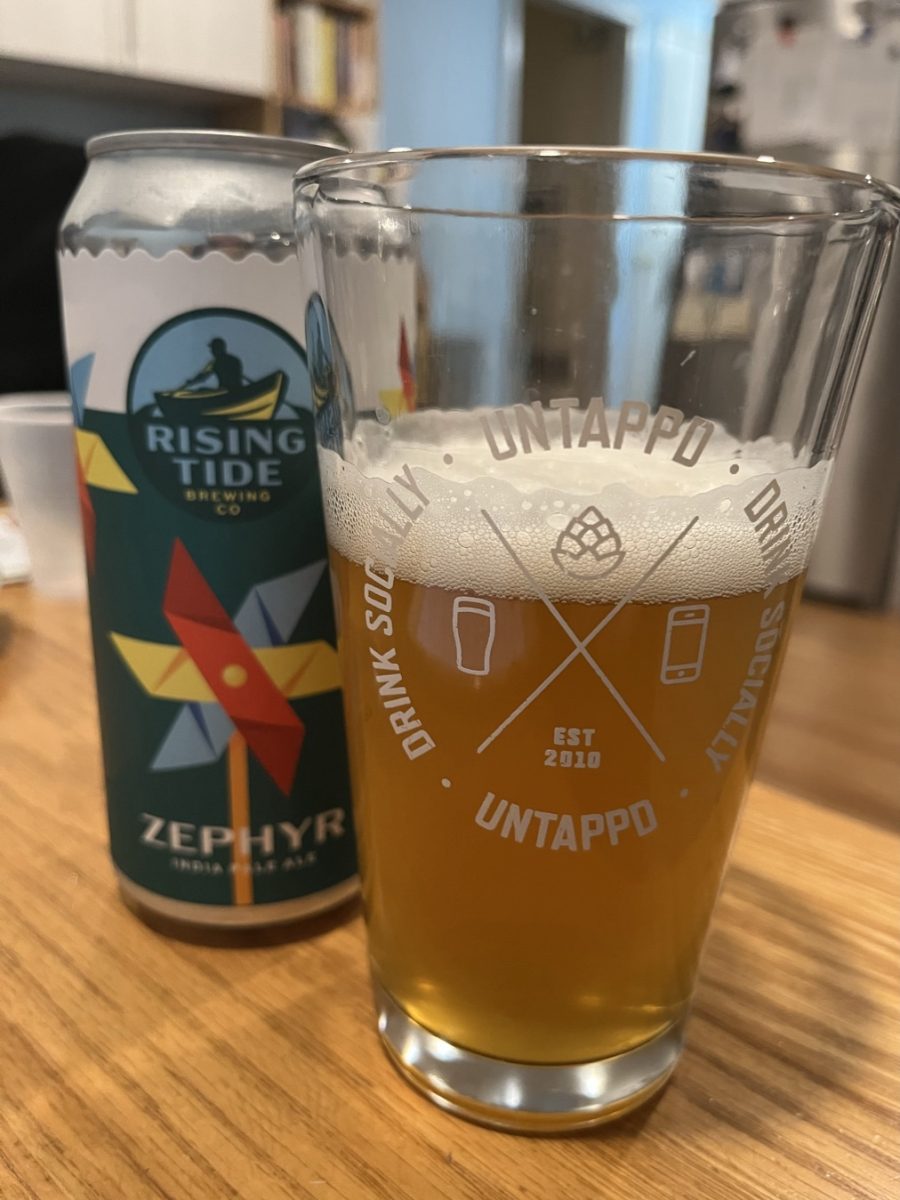
Zephyr is currently a 6.5% year-round IPA with citrus and caramel character on Rising Tide’s producer page.
BAR NOTES
Zephyr is currently a 6.5% year-round IPA with citrus and caramel character on Rising Tide’s producer page. Calypso, Cascade, El Dorado and Magnum appear in the kettle list, with Amarillo also in the dry-hop roster. The recurring profile retains an older 6.3% figure.
Read the strength on the package being served, then compare Zephyr with the lower-strength Maine Island Trail Ale. Shared citrus language does not mean identical grain or hopping. Our American IPA guide provides a framework for following those recipe differences.
Ishmael
Brewed by Rising Tide Brewing
Ishmael is Rising Tide’s 4.9% American copper ale, listed year-round and on tap.
BAR NOTES
Ishmael is Rising Tide’s 4.9% American copper ale, listed year-round and on tap. Maine pale malt, Munich, wheat and pale chocolate malt supply its grain foundation, with Magnum, Mt. Hood and Willamette in the producer’s hop specification.
Try Ishmael between the two IPAs to follow toasted and caramel-toned grain without assuming every copper-colored beer tastes the same. Burnside makes a useful separate brown-ale comparison. The amber ale brewing guide follows the balance of malt, hopping and finish.
Maine Island Trail Ale
Brewed by Rising Tide Brewing
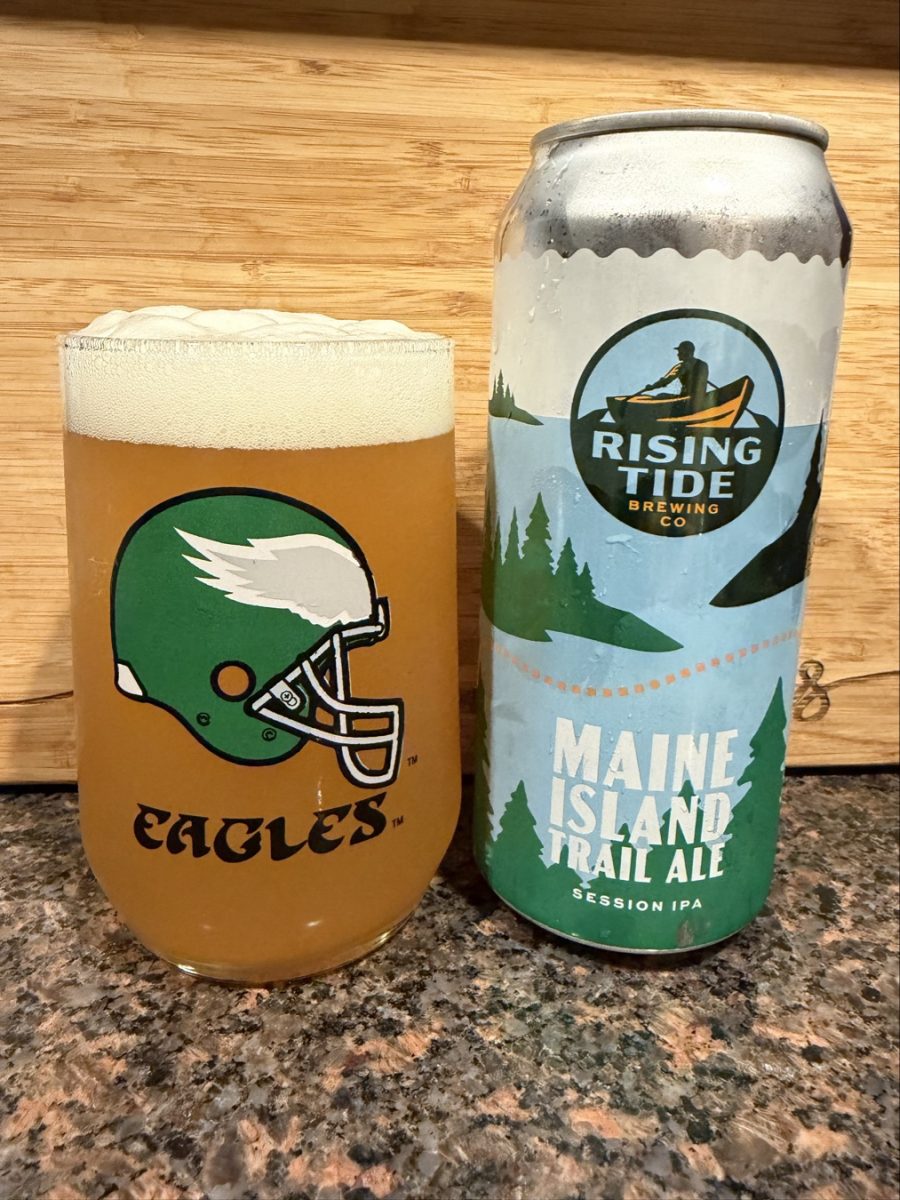
Maine Island Trail Ale is a 4.3% year-round session IPA using Calypso, Citra and Simcoe.
BAR NOTES
Maine Island Trail Ale is a 4.3% year-round session IPA using Calypso, Citra and Simcoe. Rising Tide connects it with the Maine Island Trail Association, while its producer profile emphasizes a light-bodied, dry direction with citrus and pine character.
Use it beside Zephyr to explore a lower-strength hop-led recipe, rather than assuming session means faint aroma. Planning a beer visit and planning time on the water are separate activities. Our IPA collection offers more examples of the family’s range.
6. Atlantic Brewing Company
Atlantic Brewing lists its Town Hill base at 15 Knox Road and its Midtown location at 52 Cottage Street in Bar Harbor. Town Hill’s visitor operation is seasonal, so confirm the chosen property rather than treating both venues as one year-round stop.
Blueberry Ale, Real Ale and Coal Porter emphasize fruit and grain instead of three IPAs. Their current producer strengths are 5.4%, 4.8% and 5.6%, respectively; older profile figures remain a reason to read the package rather than silently combine different batches.
Bar Harbor Blueberry Ale
Brewed by Atlantic Brewing Company
Atlantic currently specifies Bar Harbor Blueberry Ale at 5.4%, with pale, wheat and Munich malts.
BAR NOTES
Atlantic currently specifies Bar Harbor Blueberry Ale at 5.4%, with pale, wheat and Munich malts. Its producer emphasizes a restrained berry finish over an amber-ale foundation. Older beer profiles list different strengths, so the current page and actual package deserve separate attention.
Compare Blueberry Ale with Real Ale to follow fruit layered onto a malt-led beer. Berry color and flavor do not establish sour fermentation or a sweet dessert finish. The wheat beer collection adds examples of another grain tradition frequently paired with fruit.
Bar Harbor Real Ale
Brewed by Atlantic Brewing Company
Bar Harbor Real Ale is Atlantic’s original release, first brewed in 1991.
BAR NOTES
Bar Harbor Real Ale is Atlantic’s original release, first brewed in 1991. The current producer page gives 4.8%, with pale, crystal and black patent malts plus Centennial and East Kent Golding. Older recurring profiles can retain a 5.2% strength.
The beer name alone does not promise cask service: ask about the actual format offered. Compare its caramel-led grain character with Coal Porter’s darker malt selection. Our British brown ale guide provides a related brewing reference for restrained strength and malt balance.
Coal Porter
Brewed by Atlantic Brewing Company
Coal Porter is Atlantic’s 5.6% porter, with crystal, black patent, wheat, chocolate and Munich alongside pale malt.
BAR NOTES
Coal Porter is Atlantic’s 5.6% porter, with crystal, black patent, wheat, chocolate and Munich alongside pale malt. The producer describes chocolate-toned grain and balanced bitterness. Historic listings can show a higher strength, making the served batch’s label a useful final check.
Taste a small pour alongside browned or roasted food to explore malt depth against the meal. Chocolate malt is a named grain ingredient and does not itself establish added cocoa. The porter brewing guide follows the choices behind darker malt character.
7. Baxter Brewing Co.
Baxter’s Lewiston operation combines its brewery with The Pub at Baxter. The producer’s current portfolio separates available-now products from seasonal and non-alcoholic releases, providing a practical starting point for choosing a current beer rather than relying on its early catalog.
Stowaway, Coastal Haze and Logger Road compare two IPA approaches with a lower-strength lager. Pamola is not in the current available-now portfolio used here, so this trio follows today’s named producer listings rather than repeating an older flagship list.
Stowaway IPA
Brewed by Baxter Brewing Co.
Stowaway is Baxter’s currently listed 6.9% IPA.
BAR NOTES
Stowaway is Baxter’s currently listed 6.9% IPA. It provides the brewery’s stronger conventional IPA comparison beside Coastal Haze and Logger Road. The present portfolio marks it available now; confirm the package date and venue rather than relying on a historic retailer stock page.
Set Stowaway beside Coastal Haze and assess finish as well as aroma. The visible clarity of a pour cannot tell you every detail of its grain or fermentation. The IPA collection gives additional examples for comparing different approaches to the style.
Coastal Haze
Brewed by Baxter Brewing Co.
Coastal Haze is Baxter’s 5.9% hazy IPA, currently listed in twelve-ounce six-packs and twelve-packs as well as kegs.
BAR NOTES
Coastal Haze is Baxter’s 5.9% hazy IPA, currently listed in twelve-ounce six-packs and twelve-packs as well as kegs. The brewery describes bright citrus aroma, while its recurring profile names Citra and Mosaic as part of the hop-led character.
Compare its lower strength with Stowaway before considering texture. A softer impression need not imply a fruit-purée addition or the absence of bitterness. Our hazy IPA guide explores how grain, yeast and hopping can shape the wider style family.
Logger Road
Brewed by Baxter Brewing Co.
Logger Road is Baxter’s 3.9% lager, intentionally designed in a pale, clear and restrained direction.
BAR NOTES
Logger Road is Baxter’s 3.9% lager, intentionally designed in a pale, clear and restrained direction. Its current producer page lists twelve-ounce and nineteen-point-two-ounce cans plus draft formats. It expands the brewery trio beyond the two stronger hop-led ales.
Place Logger Road before Stowaway and Coastal Haze when comparing the brewery’s range. Lower alcohol and lighter flavor are separate features, even when a recipe combines them. Our American lager guide explains a related brewing approach to restrained grain and fermentation.
8. Foundation Brewing & Pizza
Foundation Brewing & Pizza lists its tasting room at 1 Industrial Way, Suite 7, in Portland. Its current operation includes Detroit-style pizza, which offers a food context alongside the beers without changing the identity of the brewery selections.
Epiphany, Burnside and Afterglow are all currently listed year-round. The trio spans double IPA, brown ale and American IPA; distinguish plain Burnside from Coffee Burnside, and use the exact named release when matching a current menu or package.
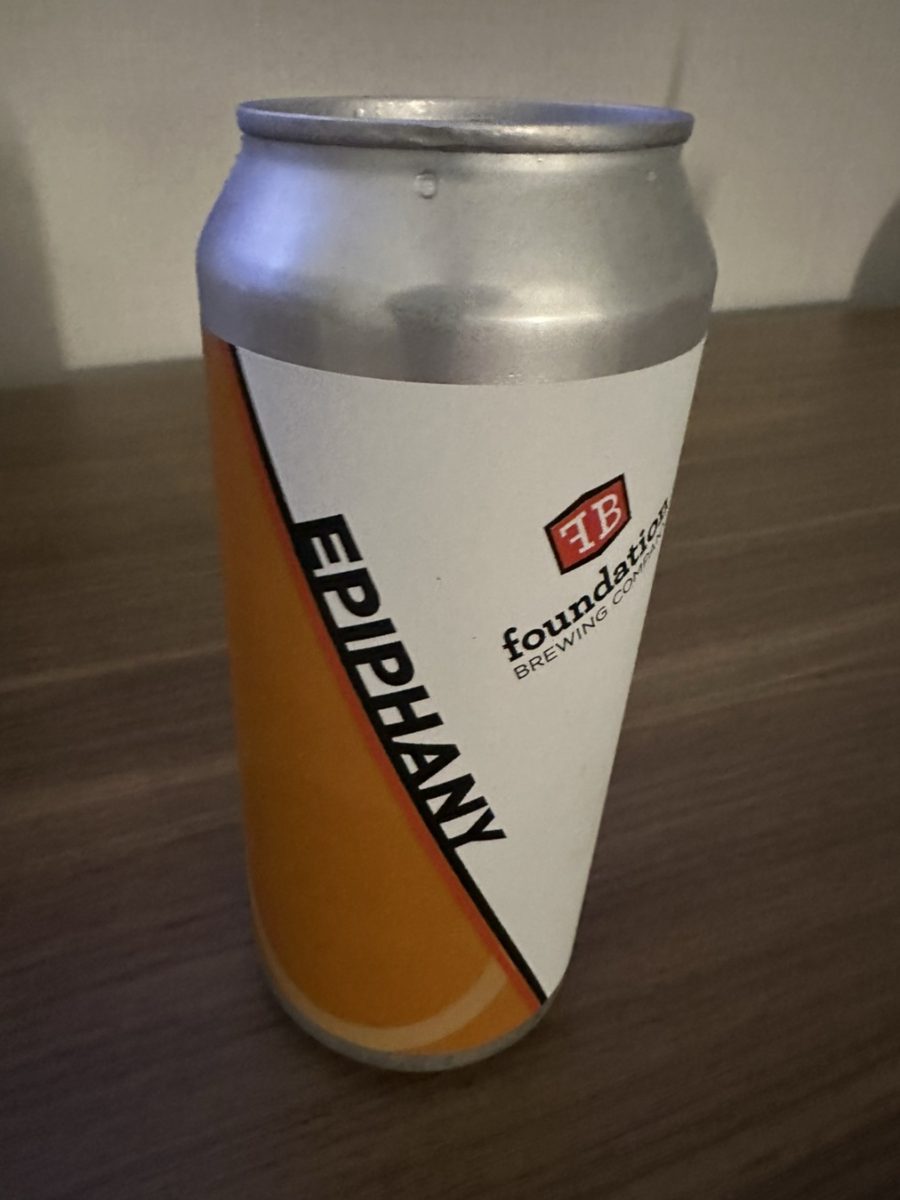
Epiphany
Brewed by Foundation Brewing & Pizza
Epiphany is Foundation’s 8% double IPA, first brewed in 2014 and now listed among its year-round offerings.
BAR NOTES
Epiphany is Foundation’s 8% double IPA, first brewed in 2014 and now listed among its year-round offerings. The current producer description combines citrus, tropical and pine character with a soft grain foundation. It is the strongest selection in this brewery trio.
Compare a smaller pour with Afterglow to explore two distinct hop-led recipes rather than treating strength as a quality ranking. Burnside adds a useful change of grain emphasis. The double IPA collection offers other examples of the stronger style.
Burnside
Brewed by Foundation Brewing & Pizza